Practical ideas from FARM SHOW MagazineSubscribe · Free issue · Send us your shop tip
Subscribe to FARM SHOW
Issues / Vol. 43, No. 1 (2019)

Vol. 43, No. 1 (2019)

Money-Saving Repairs & Maintenance Shortcuts · Printed section pp. 32–35

29 selected entries · Complete text of selected entries

This issue’s section includes reader tips and feature-length shop stories. Held items and editorial notices are not reproduced.

Archive text: prices, coupons, availability and contact details reflect the original publication, not current offers. Reader methods are not universal instructions; follow manufacturer guidance and proper safety practices.

Reader shop tips

From the archive · Full text
Reader shop tip

Paul L. Stine

Paul L. Stine, Renick, W.Va.

“My 2009 L3130 Kubota tractor starts fine when it’s cold but if I shut it off after it’s warmed up, it won’t restart. It only happens on the coldest days of the year and it won’t start again until it gets stone cold once again. I’ve tried everything I can to fix it but no luck.”

From the archive · Full text
Reader shop tip

Ryan Van Der Bill

Ryan Van Der Bill, Sioux Falls, S.Dak.

“It took me 37 years to discover 2-part epoxy glue. It’s a great product for repairing, toys, tools, cars, plastic water bottles, and just about anything else that breaks. I’ve used it more than 12 times in the 2 weeks since I discovered it. I like that it doesn’t harden up until you mix the two gels together. There are several brands on the market that come in side by side tubes. It’s the best $5 I’ve spent in a long time.”

From the archive · Full text
Reader shop tip

Kent Frerichs

Kent Frerichs, Wilmot, S. Dak.

“Plastic paddles for prodding cattle always seem to crack so I wrap the paddles with duct tape, which makes them last a lot longer. I wrap them when new before I even start using them.”

From the archive · Full text
Reader shop tip 1 of 2

Gene Johnson

Individual tip 1 of 2 from this reader’s published contribution.
Gene Johnson, McDermott, Ohio

“Several years ago I switched my 1954 Ford NAA tractor over to electronic ignition. I had been changing points a couple times a year. The new electronic module was only about $70 and took just a half hour to install. The tractor starts and runs better.

From the archive · Full text
Reader shop tip 2 of 2

Gene Johnson

Individual tip 2 of 2 from this reader’s published contribution.
Gene Johnson, McDermott, Ohio

“I use emery boards – the kind women use on fingernails – to clean off corroded terminals on cordless drills. They’re long enough to reach and stiff enough to do a good job cleaning and even to bend the contacts, if necessary. I also use them to file down burned ignition breaker points.”

From the archive · Full text
Reader shop tip

John Lubinski

John Lubinski, Plainview, Minn.

John made a tool cart/cabinet that doubles as a small portable workbench. The 40-in. high cart rides on 6-in. wheels on back and 2 1/2-in. caster wheels on front. He used 2-in. angle iron for the frame and 1/2-in. plywood for the main cabinet, then ran 2 by 6’s around the top to form a basin to hold tools and parts. A removable 1/2-in. thick table lays across the top. The cart is wired for electricity. It can be rolled to any job. Cabinet doors open to hold bigger parts and tools.

From the archive · Full text
Reader shop tip

Chuck Gugino

Chuck Gugino, Middleport, N.Y.

“I had to drill out a broken stud on the exhaust manifold of a Ford 460 engine. I needed a way to put more pressure on the power drill to get the job done. So I modified a bar clamp, adding a 90 degree bracket at one end that hooks onto the engine. Then I just tightened the clamp onto the back of the drill and kept tightening as I drilled.”

From the archive · Full text
Reader shop tip

Gerald Ripps

Gerald Ripps, San Antonio, Texas

“On older Ford tractors there’s a plastic knob on a valve located under the fuel sediment bowl that eventually wears out. To solve the problem, I bought a 1/4-in. female thread, full port valve at Harbor Freight and JB Welded it to the bottom of the fuel filter housing. I stuck a bit of paper towel inside the housing and valve, and the next day used a small screw to pull it out.”

From the archive · Full text
Reader shop tip

Mark Steiner

Mark Steiner, Precision Machine Works, Keenes, Ill.; ph 618 835-2656; mark@ pmwgear.com

“We offer an ultra hard case ring and impeller ring for the Cornell 19-in. liquid manure pump, which is designed to be used in abrasive slurries. We also build up worn back plates with hard surface material and remachine them to specs. We’ve repaired some pretty badly worn back plates at a fraction of the cost of new. We also custom-build rings for other manure pump brands.”

From the archive · Full text
Reader shop tip

Alan Linda

Alan Linda, New York Mills, Minn.

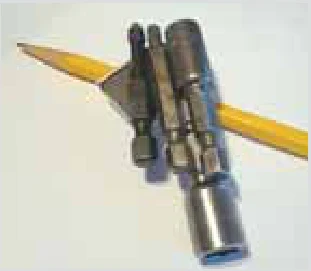
“I always keep a small magnet in my pocket in order to make tiny tools, such as socket and drill bit extensions, easier to grab and use. It also keeps them from getting lost. Coins don’t stick to the magnet.”

From the archive · Full text
Reader shop tip

Charlie Brown

Charlie Brown, Port Orchard, Wash.

“I bought an old knuckle boom crane off Craigslist and mounted it to the floor just inside my big rollup door. I can unload material from outside the door and swing it around to my steel rack. I can also lift things on and off my layout table. I run it with a small gas engine and a 2-stage pump.”

From the archive · Full text
Reader shop tip

Robert Hughes

Robert Hughes, Air-Vac Systems (ph 800 234-2473; www.air-vacsystems.com)

“Hundreds of FARM SHOW readers have bought our shop air cleaners over the years. So we wanted to let you know that we have a new belt-driven design that lets you pick your power source – electric, hydraulic, air power, or lineshaft. The newly designed cabinet is larger and has an access door in the side for easy filter replacement. It removes dust, odors, and even VOC’s from wood finishes and paint.

“It will clean the air in a 2,000 sq. ft. area.

You can add more units in a larger shop. Regular price is $2,390. FARM SHOW readers can deduct $300.”

From the archive · Full text
Reader shop tip

Roy Huntington

Roy Huntington, Joplin, Mo.

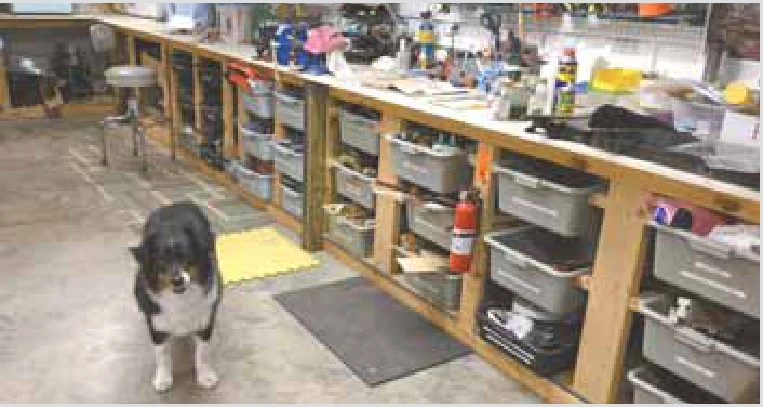
“I use my 2,500 sq. ft. shop to maintain farm equipment, build furniture, and do welding work. I built a 35-ft. long work bench along one wall, but instead of adding shelves or cabinets above I made a series of wooden racks underneath that are designed to hold plastic trays. I bought them at a local restaurant supply house for about $8 apiece. The trays slide in and out of the racks easily.

“I keep tools such as sanders, skilsaws, and routers in the trays along with items such as glues, rags, and sandpaper and label accordingly. I always know right where everything is since nothing is hiding inside a drawer somewhere. The trays have raised edges, which makes it easy to lift and slide them out so I can take them with me to the job site. I’ve expanded the concept to other parts of the shop where I store battery chargers, paints, auto parts and other things. By the way, that’s Amelie The Wonder Dog in the photo.”

From the archive · Full text
Reader shop tip

Mullet’s Machinery & Parts

Mullet’s Machinery & Parts, LLC, 6870 S. State Rd. 5, Topeka, Ind. 46571 ph 260 593-2960

This company sells a wide variety of aftermarket corn picker parts for New Idea pickers.

“We buy old pickers and tear them down for parts. We also rebuild and sell used pickers and parts,” says co-owner LeRoy Mullet.

“We go through about 80 pickers a year and have a good inventory on hand.” Some commonly available parts include snapping rolls, snouts, straw walkers, elevator flighting, conveyor slats, snapping rolls, bearing housings and gearboxes. Call for prices on parts and availability. A free catalog showing all parts is available.

From the archive · Full text
Reader shop tip

Milwaukee Tool

Milwaukee Tool

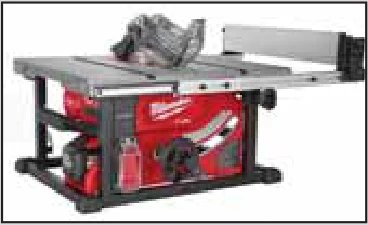
Cordless power tools keep getting larger and one example is the new Milwaukee M18 Fuel 8 1/4-in. cordless table saw. It runs on a single 18-volt M18 battery pack and is equipped with a brushless motor that rotates an 8 1/4-in. blade with enough power to rip any kind of wood, says the company. Handles make the saw easy to carry. It weighs just 40 lbs. The saw offers up to 600 linear ft. of cutting per charge. A larger capacity M18 12-Ah High Output battery is available for a longer run time.

From the archive · Full text
Reader shop tip

Dennis Carpenter Ford Products

Dennis Carpenter Ford Products, ph8004769653; www.dennis-carpenter.com (as printed)

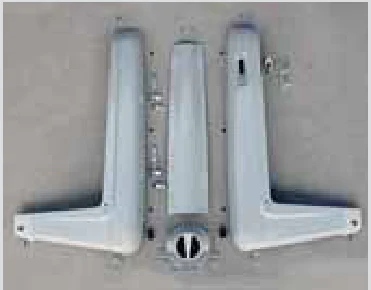
After years of producing “as original” reproduction parts for N-series Ford tractors, the company recently introduced a line of reproduction hood kits for the Ford Jubilee, NAA, 600-800 series, 601-801 series, 2000 and 4000 tractors as well as row crop models. The line includes front hood panels, left and right hood sides, top hood doors, radiator-to-hood bumpers, top hood door catches, springs, and bumpers; air cleaner funnel and louvered door, and assembly hardware.

“As far as I know we’re the only company to offer reproduction hood kits for these tractors,” says Neil Lewis.

“The hoods look just like the original ones and cover tractor models made from 1953 to 1964. Hoods for tractors made from 1953 to 1957 come with the Ford logo in raised letters.” Hood kits for all tractor models sell for $1,195 plus $99.99 shipping.

Shop feature stories

From the archive · Full text
Feature story

Cigar Tube Parts Storage

Featured source: Al Cavasin

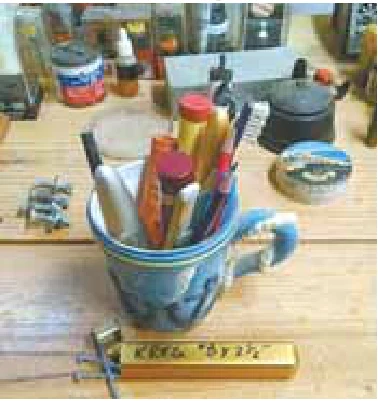
“Over the years I’ve had trouble keeping small parts separated and organized, especially those tiny screws, drill bits and special parts that disappear when thrown into a drawer. My liking for cigars fixed that problem. Now I use aluminum cigar tubes to organize and store about anything that will fit in them,” says Al Cavasin, Concord, Mich. Cavasin uses a Sharpie permanent marker to write the contents on the side of the tube, or a Brother label maker.

“I group the parts in jars, cans, boxes or drawers according to what’s stored in them. That way the parts are always there when I come back to the project,” says Cavasin. He says cigar tubes come in all sorts of shapes, sizes, colors, and configurations.

“Some have rounded tops, some have flat tops, and some come to a blunt point at both ends. So I have different kinds of tubes laying all over my house and shop.” The photo shows an 8 by 2 1/2-in. cigar tube labeled “Kreg” laying on a workbench, with several other kinds of tubes stored in a nearby cup.

“The Kreg is a jig that I often use to drill angular holes in the end of a board so it can be screwed to another board,” says Cavasin.

“Special screws with an extra wide flat shoulder have to be used so you don’t split the wood. You don’t want to throw these screws in with a bunch of other screws, unless you like digging for screws.” He also uses the tubes to store other small metal parts, including tiny drill bits.

“If I try to keep these tiny bits with other size bits they always get lost, or they get stuck in the mortises at the bottom of a drawer. Then I can never get them out,” notes Cavasin. Contact: FARM SHOW Followup, Al Cavasin, 13997 Cornell Rd., Concord, Mich. 49237 (ph 517 524-6228; [email protected]).

From the archive · Full text
Feature story

Product “Converts” Rust To Solid Coating

Featured source: Steve Cotsalas

If you have rusted equipment or tools, instead of trying to remove the rust, consider “converting” the rust - never to return again. That’s what Black Star Rust Converter does according to Steve Cotsalas, president of MROCHEM.com, which manufactures Black Star and other chemical products for maintenance, repair and operations (MRO).

“Black Star chemically reacts with iron oxide to form a hard, black polymer resin that can be used as a final coat or as a primer,” Cotsalas says. Black Star was developed in 1989 for the marine industry on Long Island. Since then it has been used by the Coast Guard, for undercoating salt spreaders, on bridges, cruise ships, and more.

“In the agriculture market, many farmers and ranchers use Black Star on fences, grain bins, propane tanks, barn and shed roofs and on the inside and underside of stock trailers,” he says.

“It also works in farrowing pens and chicken coops. Vets use Black Star in areas where there is animal waste.” Cotsalas notes that there are other less expensive rust converter products on the market. But Black Star stands out in a couple of ways.

“The difference is Black Star is a very stable conversion that won’t reoxidize. You don’t need to do it again in 12 months. We guarantee our product will never reoxidize,” he says.

“Also, it is water-based, so there are no fumes.” Black Star eliminates the need for excessive grinding.

“We recommend power washing to remove the flaky rust, let it dry and then apply Black Star,” Cotsalas says. The “tight” rust will convert. The resin-like material can be left alone or covered with oil or solvent-based paint, stain or epoxies. They bond better than water-based paints, he notes. MROCHEM.com sells Black Star Rust Converter in large containers popular with municipalities and companies, but also has aerosol cans ($27.95) and gallon jugs ($89.95). Check out the website to order. Contact: FARM SHOW Followup, MROCHEM.com, P.O. Box 11056, Hauppauge, N.Y. 11788 (ph 800 788-9195; www.mrochem.com; [email protected]).

From the archive · Full text
Feature story

Planetary Gear Starters Start Deere Tractors Fast

Featured source: Jay Russell

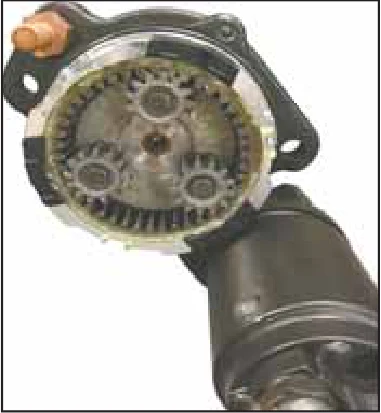
Abilene Machine has a fast start option for traditionally hard-to-start 30 series Deere diesels and many other models. Abilene’s planetary gear reduction starter has more torque and turns the engine over at a higher rate, so it starts faster. That means less wear on the starter, extending its life, and also less draw on the battery.

“Standard gear reduction starters have the gears stacked on top of each other with lots of thrust against each other,” says Jay Russell, Abilene Machine.

“With our planetary design, they’re encased in the center, so they don’t fight each other.” Russell notes that Abilene once sold standard Nippon and Delco replacement starters. However, as core cost kept climbing, the company started stocking aluminum housing starters. While the price was low, failure rate was high.

“We found a planetary gear reduction starter, but the price was $475, similar to Nippon and Delco starters, versus $200 for the low-cost ones,” says Russell.

“We managed to get the price down to $275, which is competitive with the low-cost starters.” Russell points to 2 other popular features of the starter. Customers don’t have to send back the replaced core. Also, unlike the Delco or Nippon starters, no special wrench is required to remove them.

“Guys wanting to replace their starters had to buy or borrow a wrench,” says Russell.

“Some guys would make their own. Our starter can be replaced with standard wrenches.” The heavy-duty Abilene starter can be installed on the full range of Deere tractors, from the 3010 through the 7810’s. Russell asserts that the starter sells itself once its fast start has been experienced.

“We had a company that rents out hay equipment, including tractors, order one from our online store,” recalls Russell.

“A few days later they ordered another one and another, and that continued about every week for a month.” Intrigued, he called the company to ask about the orders.

“They had tried the starter on one of their tractors and were so impressed they ordered one for a second tractor,” recalls Russell.

“When their customers experienced the quick start on the rental tractors, they wanted it for their own tractors.” Contact: FARM SHOW Followup, Abilene Machine, P.O. Box 129, Abilene, Kan. 67410 (ph 785 655-9455; toll free 800 255-0337; www.abilenemachine.com).

From the archive · Full text
Feature story

Handy Work Station Keeps Tools Together

Featured source: Mike Bengtson

Mike Bengtson of Brandon, Minn., was inspired by ideas in FARM SHOW to use an I-beam frame to hold toolboxes.

“I had tools spread out all over,” he explains.

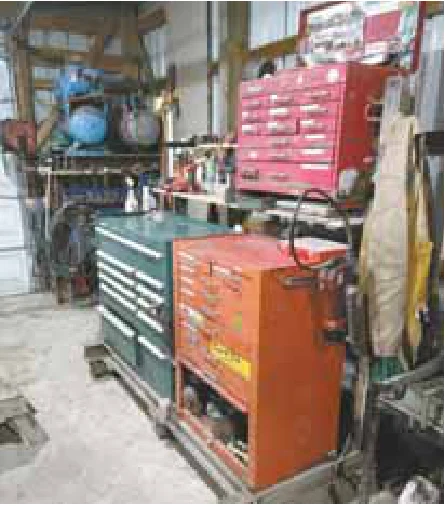
“I needed a work station where I could keep things a lot more organized.” His 3 toolboxes were different sizes, so he drew up a rough sketch on how to place everything and measured carefully to create a frame to tie them altogether.

“I had some 4-in. by 3/16-in. I-beam for the frame and put 6 wheels underneath. The middle ones are stationary and have 1/8-in. shims to make them a little longer. So you get a little wobble, but it allows you to pull on either end and turn it pretty freely,” Bengtson says. He used heavy-duty, rubber-coated 4-in. caster wheels to support the weight of the frame and tool boxes. He welded the I-beam frame together and included 2 uprights to support shelves behind the two large toolboxes to hold a smaller toolbox and an organized charging station for his cordless drills that hang on grooves cut into a wooden shelf. He bolted the toolboxes to ears he welded on the frame to hold them securely.

“Also, I wanted it wide enough so it’s not top-heavy,” he adds about the work station that is about 8 by 3 ft. and 5 1/2 ft. tall. He welded a steel plate on the side for a small vise, added a power strip for the battery chargers, and labeled all the drawers. Besides rolling it where he wants it, there is plenty of room under the work station to slip in skidsteer forks to lift it on a trailer. Contact: FARM SHOW Followup, Mike Bengtson, Brandon, Minn. (ph 320 493-4572; [email protected]).

From the archive · Full text
Feature story

Improvements Made A Good Tractor Better

Featured source: Mark Rinke

“My 855 Deere is a really nice mower tractor and easy to drive, but I made it safer and more ergonomically correct with a few simple improvements,” says Minnesota handyman Mark Rinke. He replaced the original seat, extended the steering wheel, and added step brackets and grab bars to make it easier to get on and safer to drive.

“I’ve got a 6-ft. mower on the tractor, which made getting up and onto the platform a long stretch, even for someone with long legs like me,” Rinke says.

“I made it easier to get on and off by adding an extra step and grab rail on each side.” The steps are 8-in. square corrugated metal welded onto 1 1/2-in. tubular steel that’s bolted to the tractor frame. Extending up and across the steering column are grab rails made of 3/4-in. water pipe.

“Now when I mow on the side hills the grab rails are easy to hold onto for extra support,” Rinke says.

“I also extended the hand rails an extra 4 in. above the fenders alongside the seat.” Rinke says the OEM seat and steering on the tractor were adequate for level land use, but not on the hillsides and ditches where he mows. He replaced the original seat with an aftermarket model that has very good back and side support, adjustable weight and shock resistance, along with 2 to 3 in. of up-and-down travel.

“It’s a big improvement over the standard seat,” he says.

“As with most of my projects, one thing leads to another, and that was definitely the case with the tractor,” Rinke says. After changing out the seat he found the steering wheel was too short to comfortably drive the tractor. To remedy that issue he added a 2-in. spacer that he cut from a junkyard steering wheel shaft. A solid center core and sleeve provide plenty of support for the added length, which Rinke says now allows him to sit level while driving and not have to arch over uncomfortably. Rinke also improved the capacity of his mower by extending the height of the box to give it a larger cutting cavity. He welded a continuous piece of 5/8-in. dia. silo hoop rod to the base of the deck and added larger blades with more curvature. Those improvements increased air flow and lifted the grass better.

“Adding the rod was real simple because I tack welded it every few inches as I bent the rod around the base of the deck,” Rinke says.

“Now my wife and I are both safer and more comfortable driving the tractor, and the mower definitely has more capacity.” Contact: FARM SHOW Followup, Mark Rinke, 11175 225th St. E., Lakeville, Minn. 55044 ([email protected]).

From the archive · Full text
Feature story

He Specializes In “Heritage” Diesel Fuel Injection Repair

Featured source: Ed Guenther

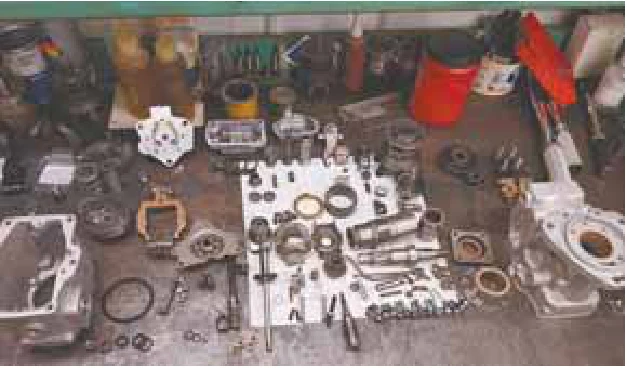
“I was born and raised on a farm, and spent a lot of time fixing old tractors and working on cars as a teenager. I gravitated toward fuel injection repair about 20 years ago, opened this shop in 2013, and it has been going gangbusters ever since,” says Ed Guenther of Heritage Diesel, Walnut, Ill. Guenther’s speciality is overhauling heritage diesel injector systems built from the early 1960’s to the 1990’s.

“Right now I’ve got injectors in here from a Ford 900, an 1850 Oliver, a 1010 crawler, a 220 Allis, an IH 1466, an IH 1256 and a CIH 7150,” Guenther says.

“Products that I don’t work on in-house are handled through my various suppliers. I can also build fuel systems for tractor pullers.” Guenther says he has puller customers across the U.S. and Canada and also works on his own pulling tractors, though he doesn’t have a lot of time for that.

“Customers send me injector pumps from their heritage tractors and I completely take them apart. I clean and inspect all the parts, replace what’s necessary, then put them back together and calibrate them. I have 7 different kinds of test stands, so I’m able to handle almost any pump out there.” Guenther says many injector system problems are caused by fuel that sets for a year.

“The fuel goes sour, just like milk that sits in a refrigerator way past its expiration date. A person wouldn’t drink that old milk, and a diesel injector shouldn’t be subjected to old fuel.

“There’s a lot of bio diesel on the market today, which is good for the farm economy, but the higher the bio content the worse the problems are because the bio attracts moisture when it sits,” says Guenther.

“Then the lines, orifices and internal parts start to gum up, especially if that old tractor is only used occasionally.” Guenther advises heritage diesel owners to use fresh fuel and a quality fuel additive to keep the fuel from going sour and drawing moisture. Also, start and run the engine often and use up fuel in the tank before refueling.

“That won’t completely prevent problems, but it sure helps,” Guenther adds. Contact: FARM SHOW Followup, Guenther Heritage Diesel, 313 Red Oak Rd., Walnut, Ill. 61376 (ph 815 303-3492; [email protected]).

From the archive · Full text
Feature story

Clean Up Coolant With Filter

Featured source: Andrew Sokol

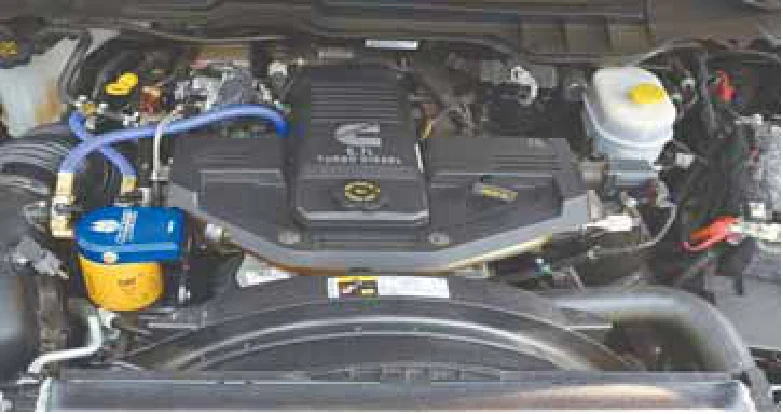
You can keep your diesel engine coolant clean with a new filtration system from Sinister Diesel. It filters out casting sand, metal shavings, rust and mineral deposits that are even found in new engines. On high mileage and older trucks, filtration removes scale deposits and sludge. Old or new, contaminants can cause seals, gaskets, hoses or even the radiator to fail early.

“We have kits for Ford, GM and Dodge diesels, about 10 models in all, and are adding kits for new models every couple months,” says Andrew Sokol, Sinister Diesel.

“We also have a universal kit for diesel cars and diesel engines on trucks like the Kodiak, anything with a coolant system. You can pick different hardware options and hose lengths depending on mounting location.” The easy-to-install kit requires a handful of common tools and a couple of hours in the driveway, according to Sokol. An enclosed bracket mounts to factory holes, eliminating the need for drilling. The CNC-machined aluminum filter attaches to the bracket. It includes 2 threaded inlet ports and 1 outlet port. A CAT coolant filter screws into the boss and is easily unscrewed for replacement. Silicone hoses and fittings are preassembled for easy connection. When installed, the Sinister coolant filtration system is designed to bypass and filter small amounts of coolant while the engine is running. The contaminants filtered out can clog the EGR cooler or cause premature wear of water pumps and coolant seals. Sokol recommends a series of filter replacements following the first install, beginning with 500 miles after the initial filter is put in place. A second and third replacement is advised after 3,000-mile segments, and then replacements should be made annually.

“The first filter picks up the bulk of the contaminants,” says Sokol.

“Each filter after that traps less.” There’s a lifetime warranty on all components other than the replaceable filter.

“We manufacture in-house,” he says.

“We have guys machining the blocks and laser cutting. We even hand package. You can find imitations on eBay, and you may save a couple bucks, but they are likely cast design with generic hoses that will have to be replaced.” The coolant filtration kits vary by make and model. A kit for a Ford Powerstroke 1999 to 2003 7.3L on sale on the company website is priced at $164 with a CAT filter. A kit with a CAT filter for a 2003 to 2007 Ford Powerstroke 6.0L engine, also on sale, is priced at $183. Meanwhile, the sale price of the universal application kit is $158.

Replacement CAT coolant filters are priced at $37 on sale. Contact: FARM SHOW Followup, Sinister Diesel, 2025 Opportunity Dr., Roseville, Calif. 95678 (toll free 888 966-6543; [email protected]; www.sinisterdiesel.com).

From the archive · Full text
Feature story

Truck Power Steering Pump Keeps Deere Mower Going

Featured source: Michael Heron

When the hydraulic pump on his 1980’s Deere F425 hydrostatic drive riding mower failed and a new pump from Deere couldn’t be found, Michael Heron, Rivercourse, Alberta, decided to replace it with the power steering pump off a big truck equipped with a Cat diesel engine.

“The hydraulic drive system on this mower shares the same oil used by the engine,” says Heron.

“The oil goes to a hydraulic motor, and all the return oil from the motor goes back to the engine sump.

“The pump sits in the bottom of the engine and is driven by the engine camshaft. Once the pump fails, you don’t have any drive at all because there isn’t any power going to the hydraulic motor that powers the mower’s drive wheels.” Heron found a used pump for $800 but thought that was too much money. So instead of trashing the mower, he mounted the power steering pump toward the back of the mower and attached a pulley on top of it. He also made an adapter and then attached a belt and pulley to the flywheel above the mower’s engine. He removed the hydraulic steel lines from the original pump and ran used lines, which someone gave him, to the mower’s hydraulic motor. The pump’s original foot control pedal was hooked up to a flow control valve, which allows him to vary the motor’s speed.

“I installed an in-line electric pump that automatically comes on when the oil level in the engine sump gets too high, due to oil seeping out of the motor. It returns the excess oil to the mower’s hydraulic oil reservoir,” says Heron.

“All in all, this job was quite a challenging exercise but I like how it turned out.” Contact: FARM SHOW Followup, Michael Heron, 452078 Range Rd. 13, RR 2, Rivercourse, Alberta Canada T0B 3X0 (ph 306 821-6367; [email protected]).

From the archive · Full text
Feature story

“Accidental” Parts Business Catches On

Featured source: Gene Wedde

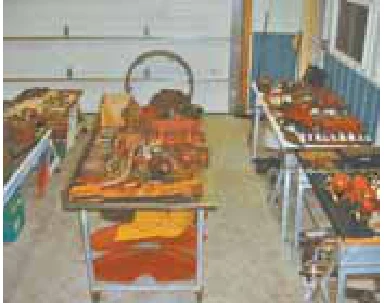
Gene Wedde’s salvage yard is relatively small but he gives his customers big-time service. At a time when many salvage yards put most of their resources into big and late model equipment, Wedde and Sons Vintage Iron focuses on antique equipment. However, like the big guys, he uses technology to help sell parts.

“If I part out a Farmall 560, I create a category for it on my website and add all the parts, descriptions, photos and prices,” says Wedde.

“When a part sells, it’s deleted. If a customer inquires about a part on the site, 99 percent of the time, it is available.” Wedde warns that the website can mislead buyers who stop by and expect many acres of salvage. The business is mostly run out of a single 40 by 64-ft. pole shed. Parts are stored out of the elements in the shed. With the help of the website, however, he has sold parts to customers in more than 35 states.

“Our specialty is supplying good quality, hard-to-find Farmall and International Harvester parts,” says Wedde.

“Occasionally we may disassemble another color, but we stay true to our red roots.” Wedde started the business accidentally with the purchase of a Farmall C that had broken in half. He planned to put it back together and resell it. While searching for parts online, he realized that parting it out might pay better.

“I advertised the fenders on Yesterday’s Tractors website, and the next morning I had a buyer from Nebraska,” says Wedde. Free classified ads in a statewide newspaper brought in more business. More sales, more ads and then booths at tractor and gas engine shows followed the C purchase. Eventually he added the Red Power Roundup show.

“I’ve done as many as 7 shows in one summer,” says Wedde. Eventually Wedde set up his own website. It allows him a national showcase while maintaining his vintage style.

“I take phone calls on a land line, no texts, and do emails from a computer,” he says.

“I will respond to everyone, usually within 24 hours if I’m not out of town, whether I have the part or not.” Contact: FARM SHOW Followup, Wedde and Sons Vintage Iron, Wautoma, Wis. (ph 920 787-7635; www.weddeandsons.com).

From the archive · Full text
Feature story

He Sells Mower Parts By The Thousands

Featured source: LeRoy Oleson, Jr.

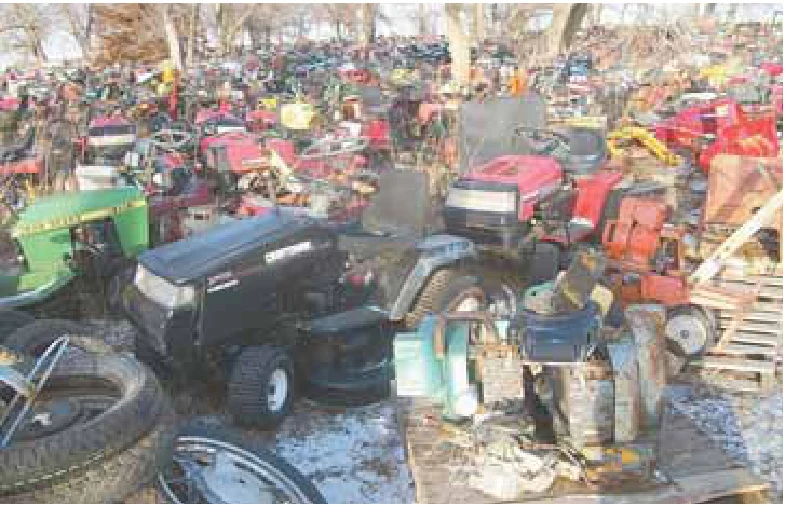
If you need a part for a riding mower, LeRoy Oleson, Jr., likely has it. He has mowers by the hundreds waiting to be parted out and mower parts on shelves numbered in the thousands. His South Dakota farmyard is covered with mowers, and his buildings are packed with parts for mowers and more.

“I’ve got more than 1,900 riding mowers waiting to be parted out,” says Oleson.

“The farm buildings contain more than 12,000 parts for riding mowers, skid steers, ATV’s, motorcycles and small engines. We also sell complete units, such as riding mowers, skid steers, 4-wheelers, 3-wheelers and motorcycles.” Oleson estimates he has purchased more than 6,000 mowers over the years. He once bought 48 in one day. It all started with a good deal at an auction in the early 1990’s.

“I bought a riding lawn mower for not much money, got it running and put an ad in the paper,” recalls Oleson.

“I had 25 to 30 calls. I did it again with similar results. For the first 5 or 6 years, I just sold repaired mowers, no parts.” Oleson had such good luck reselling auction mowers that he started advertising to buy them as well as sell them. At one point he was spending $30,000 a year on ads. When the regional newspaper wanted to raise their rates, he switched to eBay and internet sales. He also made the switch to selling parts. He quickly found that he could break down a Deere 318 he had paid a few hundred dollars for and sell the parts for $4,000. His parts have gone all over the world, from Russia and France to New Zealand.

“I sold 115 items on eBay in one day,” he says.

“In one 2-day period I sold $18,000 in parts.” Oleson no longer counts on eBay as it provides only a tenth the results it once did. Due to a discontinued relationship, he has started a new eBay account and is establishing a new website. His eBay user name is grassmonkey1.

“I have had as many as 10,000 parts listed, but have only 1,100 at this point,” says Oleson. Health problems in the past year also took a toll. With reduced sales, he has returned to being a 1-man shop. However, the business continues via his new website. Oleson still buys mowers and other items at auctions and estate sales and by the truckload from other auction goers.

“I’ve been doing this for 25 years. I can look at something, and I’ll know what the parts are worth,” he says.

“I’m still buying mowers. Generally people bring them to me from as far away as Oklahoma. If it’s something special, I’ll drive to the other end of the state.” If you are having mower problems and need a part, Oleson suggests sending him a picture.

“You can look under the hood and see what the model is and whether it is a twin cylinder or not, but a picture is worth a thousand words,” he says.

“I can look at the shape of the part, and I’ll know if I have it or not.” Contact: FARM SHOW Followup, Dakota Outdoor Power Equipment, 44910 281st St., Parker, S. Dak. 57053 (ph 605 254-2599; [email protected]; www.facebook.com/mowerfreedom/).

From the archive · Full text
Feature story

Tip Helps Fix Tractor Tires

Featured source: Dale McLaen

“I’ve been fixing ag tires since 1977 and some of the tougher leaks to repair are those caused by corn and soybean stubble punctures,” says Dale McLaen, Rutland, N. Dak.

“While the location of a puncture is obvious on the outside of the tire, locating the exact location of the pinhole leak on the inside of the tire can be almost impossible. Stubble doesn’t travel in a straight line like a nail but often curves off to the side so the hole in the tire liner can be as much as an inch away from where you expect it to be.

“Probing the puncture with an awl to find the leak doesn’t always work and you might accidentally make another hole.

“Here’s what you do: Spray some soapy water on the inside of the tire about where you think the puncture should be and then take a blow gun nozzle and press the tip tightly against the puncture hole on the outside of the tire, forcing air into the puncture. The soapy water mix on the inside of the tire will instantly foam up at the exact location of the puncture and you’ll be able to make a proper repair without any guesswork. It’s a simple trick that makes fixing these kinds of punctures a breeze.” Contact: FARM SHOW Followup, Dale McLaen, McLaen’s Service Inc., 13756 Highway 11, Rutland, N. Dak. 58067.