Practical ideas from FARM SHOW MagazineSubscribe · Free issue · Send us your shop tip
Subscribe to FARM SHOW
Issues / Vol. 47, No. 6 (2023)

Vol. 47, No. 6 (2023)

Money-Saving Repairs & Maintenance Shortcuts · Printed section pp. 32–35

40 selected entries · Complete text of selected entries

This issue’s section includes reader tips and feature-length shop stories. Held items and editorial notices are not reproduced.

Archive text: prices, coupons, availability and contact details reflect the original publication, not current offers. Reader methods are not universal instructions; follow manufacturer guidance and proper safety practices.

Reader shop tips

From the archive · Full text
Reader shop tip

Greg Johnson

Greg Johnson, Wood, Iowa

“I have an old 2010 gas Deere row crop tractor, and I have a lot of problems with the darn carburetor leaking on and off. So, I bought a brand-new carburetor and thought that would fix the problem. It didn’t! After a while, the new one started leaking, too. Not sure what to do now.”

From the archive · Full text
Reader shop tip

Robert Bauer

Robert Bauer, Hastings, Minn.

“I’ve made a lot of time and labor-saving devices for my shop, including power hose reels and using an old forklift to raise heavy parts to my second-level storage, but the one that really saves my back is my adjustable height shop table. It’s made from an old scissor lift that used to ride on wheels.

“When I built my shop, I made a pit in the concrete floor the size of the lift frame, without the wheels. The pit is deep enough that when the lift is all the way down, the flat tabletop is level with the floor. I can easily slide or roll heavy parts on the table, then raise it to whatever level I need to work at a comfortable height. I raise and lower the table with power from a 12-volt battery.

“This setup only cost me a few hundred dollars, and it was easy to make. It’s way less money than buying a scissor lift table on wheels for several thousand dollars.”

From the archive · Full text
Reader shop tip 1 of 2

Robert Fuhs

Individual tip 1 of 2 from this reader’s published contribution.
Robert Fuhs, Fort Branch, Ind.

“I use an air chisel with dull bits to remove shaft bearings, especially ones in hard-to-reach areas. Make sure to wear gloves and glasses for when they fly apart.

From the archive · Full text
Reader shop tip 2 of 2

Robert Fuhs

Individual tip 2 of 2 from this reader’s published contribution.
Robert Fuhs, Fort Branch, Ind.

“In my shop, I use old refrigerators to store parts, oil cans, and other stuff. Everything stays clean and rodent-free.”

From the archive · Full text
Reader shop tip

Jack Essary

Jack Essary, Taneyville, Mo.

“We solved our problem with tubeless tires leaking around the bead by pulling the cap off an empty hydraulic fluid bucket and removing the rubber seal from the lid. It fits the rim of 15 and 16-in. wheels. We slip it around the outside bead of the wheel and then air up the tires. No more leaky beads and it didn’t cost a thing.”

From the archive · Full text
Reader shop tip

Robert Scharlau

Robert Scharlau, Arcadia, Wis.

“Case 970 and 1070 farm tractors with powershift transmissions have a hydraulic clutch that’s nearly impossible to engage in higher gears without a drastic jerk. I’m wondering if any readers have figured out how to improve clutch engagement. Would reshaping the hydraulic valve improve it? Later model Case tractors engage smoother, so they must have changed something.”

From the archive · Full text
Reader shop tip

Gary Swensen

Gary Swensen, Yankton, S.Dak.

“I bought hydraulic cylinder stops for my tractor loader years ago, and they often come in handy. We got them when we had to roof a building, and we lifted the shingles up to the roof with a loader bucket. The loader kept sinking, so I got these stops, and problem solved. It also works great for other things like hanging a deer for dressing. You can find different style stops at Amazon and other ag parts retailers.”

From the archive · Full text
Reader shop tip

Bob Keldsen

Bob Keldsen, Grant, Minn.

“I love my 3-year-old DR brush cutter. But several times the oil fill cap has caught on low-hanging branches and twisted off, squirting oil out under pressure. I solved the problem by using a safety wire to hold the cap in the closed position. All I did was drill a hole in the cap and run a safety wire over to the cage around the muffler.”

From the archive · Full text
Reader shop tip

Allen Franks

Allen Franks, Guthrie, Ky.

“When I finish using a spray paint can, I dab a small bit of grease over the orifice. The next time I need to use that color, I just wipe off the grease and start spraying. This idea has worked for me for more than 40 years.”

From the archive · Full text
Reader shop tip

Steve Rike

Steve Rike, Titonka, Iowa

“I place a large underwater metal recovery magnet on my yard rake to pick up roofing nails after any re-shingle job. Works great.”

From the archive · Full text
Reader shop tip

Bob Horrigan

Bob Horrigan, Ogilvie, Minn.

“I guess everyone knew this except me, but I couldn’t believe how much easier it is to remove wheel lug nuts since I bought a battery-operated Milwaukee impact wrench. It takes nuts off like nothing!”

From the archive · Full text
Reader shop tip

Michael Wood

Michael Wood, Bitely, Mich.

“Since we air-conditioned our shop, it’s a lot more comfortable to work out there during hot summer weather. I think it’s worth it.”

From the archive · Full text
Reader shop tip

Robert A. Seefeld

Robert A. Seefeld, Hamburg, Wis.

“To repair or replace iron 3-pt. sway blocks on our 3000 and 4000 Deere tractors, I’ve found that it’s a lot cheaper and simpler to use blocks of oak or Brazilian cherry for these. Works great.”

From the archive · Full text
Reader shop tip

Russ Clearwater

Russ Clearwater, Waynesboro, Penn.

“I bought a heavy-duty Ford sedan scissor jack and cut off the flip handle. The remaining hex shaft can be driven with a cordless drill. It’s very handy for numerous jobs because it’ll lift up to 1,200 lbs. quickly, and I can carry both the jack and drill in the trunk on trips.”

From the archive · Full text
Reader shop tip 1 of 2

John Krueger

Individual tip 1 of 2 from this reader’s published contribution.
John Krueger, Blanchard, Okla.

“I keep an eye out at garage sales and auctions for golf caddy carts because they’re handy to carry many things around the farm - sprayers, plasma cutters, propane bottles, battery chargers, trash cans, and more.

From the archive · Full text
Reader shop tip 2 of 2

John Krueger

Individual tip 2 of 2 from this reader’s published contribution.
John Krueger, Blanchard, Okla.

“The features in my shop that make it an efficient place to work are having an overhead garage door on each end so I can drive through, the overhead electric hoist, and my rolling welding table with a vise.”

From the archive · Full text
Reader shop tip 1 of 2

Elton Wylie

Individual tip 1 of 2 from this reader’s published contribution.
Elton Wylie, Hamilton, Texas

“I use Dawn dish detergent to clean all non-electric tools and then dry them out with WD-40 and air. Hardly ever need diesel or other chemicals to clean tools anymore.

From the archive · Full text
Reader shop tip 2 of 2

Elton Wylie

Individual tip 2 of 2 from this reader’s published contribution.
Elton Wylie, Hamilton, Texas

Also, Dawn mixed with water in a hand pump sprayer will kill flies.”

From the archive · Full text
Reader shop tip 1 of 2

William “Bubba” Sanford

Individual tip 1 of 2 from this reader’s published contribution.
William “Bubba” Sanford, Roxboro, S.C.

“My tip for better machine maintenance is to constantly walk around equipment looking for minor problems to fix before they become major. I try to keep equipment as clean as possible to make problems easier to spot. Maintenance, maintenance, and more maintenance pays off with fewer repairs.

From the archive · Full text
Reader shop tip 2 of 2

William “Bubba” Sanford

Individual tip 2 of 2 from this reader’s published contribution.
William “Bubba” Sanford, Roxboro, S.C.

“In my shop, the worktables, vises, and toolboxes are all mounted on wheels so they can be wheeled over to the work. Also, a good hand truck is worth its weight in gold in a 1-person shop.”

From the archive · Full text
Reader shop tip

Randy Bunger

Randy Bunger, Humboldt, Iowa

“The wiring on older trailers is almost always broken or in poor shape. I improve the wiring by installing new 12-ga. stranded wiring inside lengths of rubber garden hose. The cheapest hose at Walmart works well and a 50-ft. hose goes a long way. I’ve also changed all trailer lights to LED strips, which last longer and are more durable.”

From the archive · Full text
Reader shop tip

David Bergey

David Bergey, Meridian, Idaho

“I used a Therm-A-Gasket repair kit to fix a leaking head gasket on a Kubota tractor (www.rxauto.com). If you follow the directions, it works great.”

From the archive · Full text
Reader shop tip

Myron Wollock

Myron Wollock, Wis.

“I use 91 octane ethanol-free gas with 1 oz. of Seafoam for each gallon of gas in all my engines. Works great all year long and keeps them running clean and more efficiently. Don’t worry about the price. It’s worth it.”

From the archive · Full text
Reader shop tip

Robert Anfinson

Robert Anfinson, Peterson, Minn.

“We had two tractors, a John Deere 70 and a John Deere A, that were not used for several years, so the engines were frozen. I bought a gallon of PB Blaster along with a spray can of it. First, I sprayed the spark plugs on both tractors. Three days later, they were loose. Then, I poured a quart of PB Blaster into each cylinder. Ten days later, I checked to see if the pistons were loose, and they were. Turns out a Farmall F-20 starter crank works great on the end of the Deere engine crankshafts.”

From the archive · Full text
Reader shop tip

Scott Geyer

Scott Geyer, Lakeville, Minn.

“I am good at starting to paint a room and not finishing. I’ve found drilling a hole in the top of an empty, clean pringles potato chip can and sliding it over the paint roller handle with the closed end facing up makes it easy to store a paint roller overnight in the can with the lid sealed and the roller cover still attached to the handle and a bit ‘wet’ with paint.”

Shop feature stories

From the archive · Full text
Feature story

Nifty Tank Top Welder Caddy

Featured source: Dana Melius, Crooks, S.D.

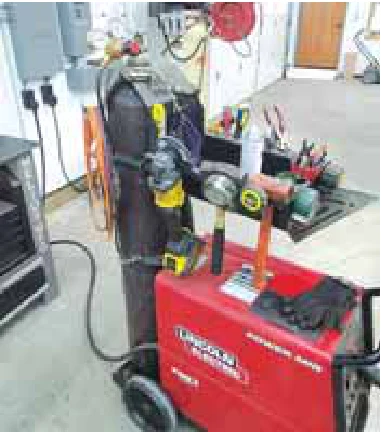
The Welder Kaddy from Melius Manufacturing holds welder tools and supplies but swings out of the way as needed. The Kaddy is designed to slip over the top of the tank, including tall tanks found on most welders.

“An employee came up with the idea of a tray on a welding tank years ago,” says Dana Melius, Melius Manufacturing.

“We offered to help him produce them if he wanted to sell them. He said he just needed one for work, and we could sell them if we wanted.”

The current model is 10 in. wide by 18 in. long and about 3 1/2 in. deep. It’s made from 12-gauge steel and powder-coated. It and two earlier versions, including the prototype, find daily use in the Melius shop.

“We’ve made improvements based on customer feedback,” says Melius.

“We’ve got it now to where people just love it.”

Melius admits the Kaddy is built heavier than needed.

“It’s impossible to overload,” he says.

“I know guys who load it down with 20 clamps. It’s only when they lift it off that they realize they shouldn’t have so much on it.”

The Welder Kaddy is priced at $165 plus tax and shipping.

Contact: FARM SHOW Followup, Melius Manufacturing, 303 E Main St., Crooks, S.D. 57020 (ph 605-216-4410; [email protected]; www.meliusmfgllc.com; Facebook: Melius Manufacturing, LLC).

From the archive · Full text
Feature story

Locker Keeps Chainsaw Chains Clean & Handy

Featured source: Scott and Kellee Miller, Independence, Ky.

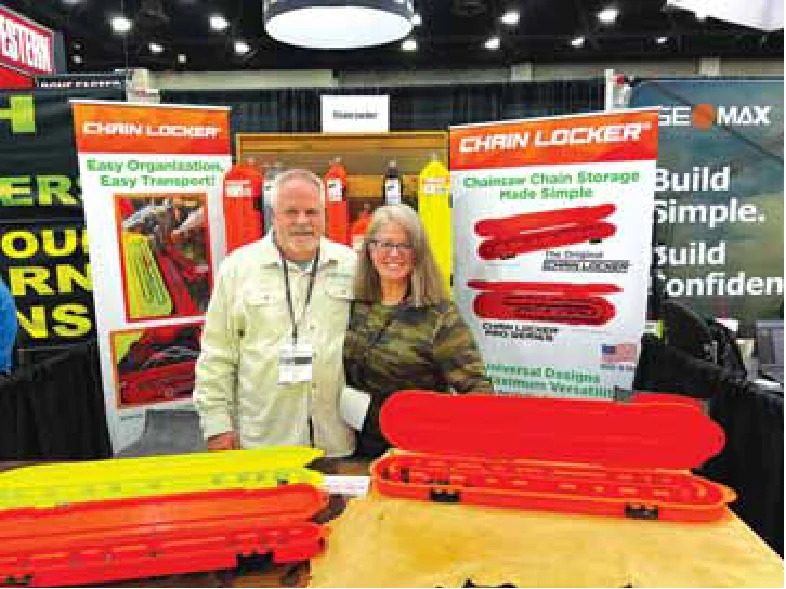
The Chain Locker is a USA-made storage case for chainsaw chains. Made from polypropylene, it keeps chains tangle-free and protected from fuel, oil, and water spills. It ensures your chains are clean and sharp when you need them.

Scott and Kellee Miller of Kentucky designed the Chain Locker to solve their personal chainsaw organization problems. The pair struggled to keep different lengths and sharpnesses stored apart.

You can purchase the Chain Locker cases online at the company website or Amazon, ACME Tools, and SawHaul. Cheaply-made knock-offs are rampant, so look for the “Made in the USA” symbol on the packaging. It’s currently available in two sizes. The original ($38) accommodates chains from 6 in. to 20 in., while the Pro Series ($65) works for chains up to a .404 pitch size. Purchase together for $95.

Between the two styles, Chain Lockers can fit chains fitting bar sizes of 6, 8, 10, 12, 14, 16, 18, and 20 in. The hinges and latches are manufactured with 1/8-in. dia. stainless steel rods and the hinges are frame-reinforced. It’s also built with a peg hole for easy storage in your workshop or on the job. The case’s vibrant orange coloring is an intentional choice, as it lowers the risk of leaving it behind on job sites. Black and grey are also available for those who prefer more subdued coloring or want to differentiate between sizes. The capacity of each case varies but typically can hold eight or more chains each.

Contact: FARM SHOW Followup, Chain Locker USA, Independence, Ky. ([email protected]; www.chainlockerusa.com).

From the archive · Full text
Feature story

Magnetic Hub Plug Prevents Damage

Featured source: Nick Perich

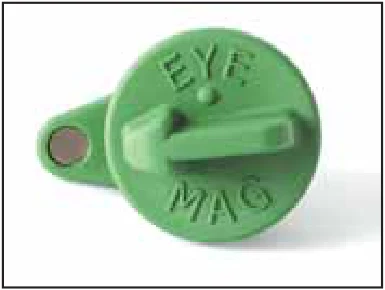
The Magnetic Hub Plug (also called Eyemag) is a patent-approved device designed to collect metal shavings from the oil hub on semi-trucks and trailers. It’s the first known preventative maintenance safety detector device for oil hub assemblies. Founder Nick Perich has more than 40 years of experience in the trucking business. He’s seen firsthand what can happen when wheels come off semis, causing extensive damage and putting drivers at risk. The Magnetic Hub Plug will alert drivers about potential issues before they become a problem.

“It’s all about the safety of the public,” says Perich. The Plug is a product 6 years in the making, from Perich’s original sketches to approval of a patent and manufacturing in Canada. As the name implies, a magnet in the bottom of the Magnetic Hub Plug collects metal shavings floating within the hub. In contrast, a pure rubber hub plug only holds oil in. Adding this magnet that dips into the oil prevents the shavings from wearing against the seal. Drivers can take it out at any point and assess the hub for signs of metal shavings. Perich believes this can easily save $3,000 to $4,000 in potential repairs if an issue goes unnoticed and wheels wear down.

“If the axle goes, that’s a $10,000 minimum repair,” says Perich.

“It’s all about the magnet.”

Perich has heard firsthand from truckers who were saved by the Magnetic Hub Plug.

“Lots of people will call us and say, ‘You know, something sounded funny, so I looked at the Plug at a rest stop. And it was full of metal shavings! I got it serviced at the next opportunity. You really saved me.’” The plugs are currently sold online in packs of two for $19.99 plus shipping. Perich and his team also sell them at regional fairs and shows and hope to connect with national distributors. Contact: FARM SHOW Followup, Magnetic Hub Plug ([email protected]; www.magnetichubplug.com; www.eyemag.ca).

From the archive · Full text
Feature story

Illumiladder Lights Up Any Space

Featured source: Tim Hulet, Perry, Okla.

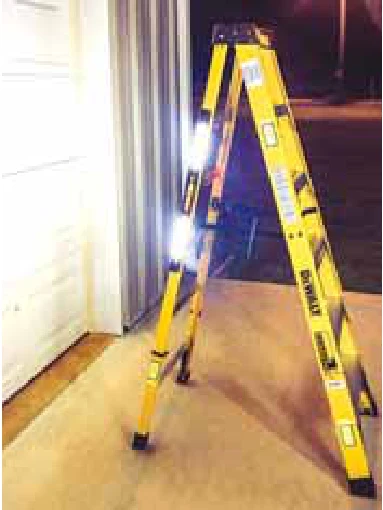
As a plumber, Tim Hulet was often frustrated by low-light conditions, and it seemed logical to him to add lights to a ladder. He teamed up with Donnie Williamson, a machine technician who works in aerospace, to develop the Illumiladder.

The Illumiladder has 18-in. LED strips with a battery adapter for 18 and 20-volt DeWalt and Milwaukee batteries to provide bright light for up to 5 hrs., with dimmer light for another 3 or 4 hrs.

The strips attach to the ladder’s leg with Velcro®, using a strong 3M™ fastener to secure the battery adapter.

“The U.S.-made lights slide in a waterproof housing with an end cap and cord to the battery. It’s built heavy-duty and all enclosed,” Hulet says. The lights typically use white bright LEDs with 1,872 lumens, though some customers, such as painters request natural light LEDs.

Featured at the 2023 National Hardware Show in Las Vegas, the Illumiladder attracted the attention of people in many professions.

“It’s helpful to contractors and farmers working on equipment or in a barn with poor lighting,” Hulet says.

FARM SHOW subscribers can get the Illumiladder for $149.95 with the promo code “Farm,” battery not included. Buyers need to specify the battery adapter needed (DeWalt or Milwaukee).

Contact: FARM SHOW Followup, Tim Hulet, P.O. Box 375, Perry, Okla. 73077 (ph 580-307-5911; [email protected]; www.illumiladder.com).

From the archive · Full text
Feature story

Quick Portable Backup Power

Featured source: Toro

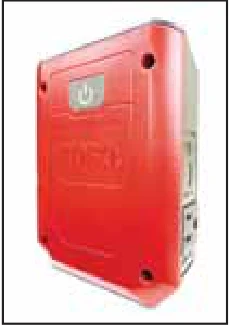
Toro says its Impulse Endeavor power inverter works with any Toro 60V Max Flex-Force battery (not included). The inverter converts DC battery power to AC. It has three outlet power options (USB-A port, USB-C port, and 120V outlet) to power portable lights, fans, and televisions. It will also charge cell phones, laptops, and more. One online reviewer says, “Our phones are our lifelines these days, so when the power goes out or we’re out in the field, it’s nice to have this inverter around. Powers a lamp and charges my phone.” The inverter sells for $119.99, and batteries range from $134.99 to $359.99. It’s available at the Toro website and many other retailers including Tractor Supply and Amazon. Contact: FARM SHOW Followup, Toro (www.toro.com).

From the archive · Full text
Feature story

Service Repairs Or Replaces Any Gauge

Featured source: Bob’s Speedometer, Howell, Mich.

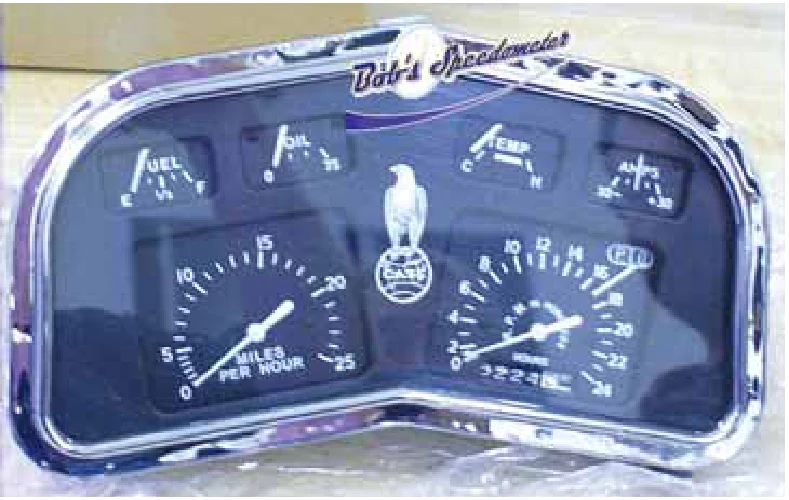
Bob’s Speedometer Service, founded by Bob Woosley, has been repairing and restoring gauges and instruments in its Howell, Mich., shop since 1929. It’s remained a family business, as Bob passed the company down to his son Bruce, and today it’s run by grandson Eric and great-grandson James.

Bob’s Speedometers will restore and repair instruments from essentially any vehicle make and model. This includes speedometers, tachometers, clocks, oil, fuel, amp, volt, pressure, and more. While it handles many Fords, Chryslers, and General Motors vehicles, boats, buses, RVs, firetrucks, tractors, motorcycles, and military vehicles can also be worked on. Customers are located all over the world.

A critical factor in creating an authentic restoration is ensuring that any original graphics are faithfully reproduced. Bob’s Speedometer has an extensive library of thousands of silkscreens. This makes it possible to match the original look for almost any restoration, no matter the vintage. They’re used to redo the image on the front of the speedometer and can be used on original dials or custom projects.

Pricing will vary significantly by model, so the company offers free estimates. They encourage you to ship your gauges to them. Upon arrival, they will inspect the gauge before calling back with a quote. If you aren’t able to come to an agreement, Bob’s will ship the gauge back to you at their expense (only offered in the contiguous U.S.).

Bob’s offers a 100 percent satisfaction guarantee on all custom work.

Contact: FARM SHOW Followup, Bob’s Speedometer, 10123 Bergin Rd., Howell, Mich. 48843 (ph 810-632-0400; www.bobsspeedometer.com).

From the archive · Full text
Feature story

Battery-Powered Welder For Remote Repairs

Featured source: ESAB Corporation, North Bethesda, Md.

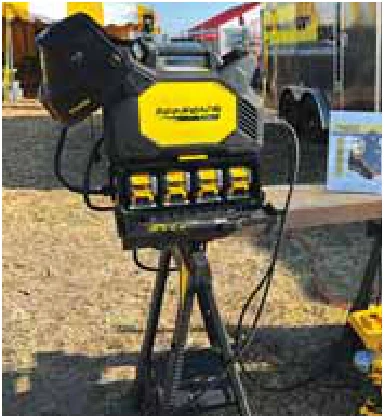
A new cordless battery-powered welder from ESAB may be the ultimate tool for remote repair jobs. Powered by DeWalt FlexVolt batteries, the Renegade Volt ES 200i is a stick and live TIG welder. It’s equipped with a Tweco electrode holder and a Tweco ground clamp.

It can operate in battery, 120V or 230V AC power, or AMP+ hybrid mode. In the latter mode, the battery supplements the AC mains power to avoid nuisance trips on smaller breaker sizes, such as 10 and 16 amp, or to provide more output when welding on 120V power. When operating on AC mains (230V), the ES 200i has a 200A output versus 140A output on straight battery power. In AMP+ hybrid mode, it has 180A output. On battery mode, the cordless welder operates on 6, 9, and 12 Ah DeWalt FlexVolt batteries.

The 200i comes with a 230V plug and a 115V adapter plug for use with household outlets. Four 12 Ah DeWalt batteries are enough, according to ESAB, to burn up to 33 (E6013) electrodes on a single charge. The 4-port fast charger included with the ES 200i brings the batteries’ charge from zero to full in 2 hours.

Special features when TIG welding include hot start, arc force, memory storage, and cellulosic mode (6010) to optimize performance.

FARM SHOW made multiple attempts to reach ESAB for comments and pricing. Receiving no response, FARM SHOW reached out to a random dealer listed on the company website.

The dealer reported a price of $3,219.23 for the ES 200i, which is slated to be available in December. When the difficulty of reaching the company was mentioned, the dealer reported similar problems.

“They’ve gone through multiple mergers, and customer service has suffered,” he said.

“It’s hard to get the company to respond, and parts are equally difficult to get. As a result, we’ve stopped actively carrying their products.”

Buyer beware! Contact: FARM SHOW Followup, ESAB Corporation, 909 Rose Ave., North Bethesda, Md. 20852 (ph 301-323-9099; [email protected]; www.esab.com).

From the archive · Full text
Feature story

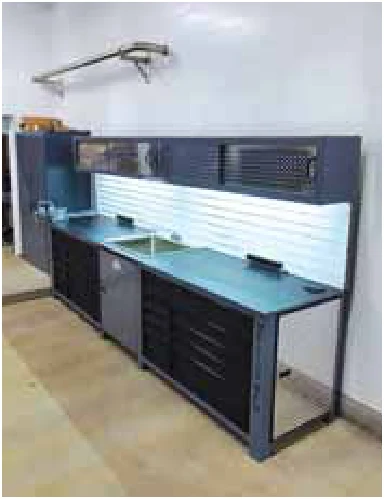
Custom Workbenches Have Everything, Including Kitchen Sink

Featured source: Dana Melius, Crooks, S.D.

Melius Manufacturing takes customized workbenches to a new level. In addition to telescoping table extensions and built-in storage under, behind and above, the company has built workbenches with sinks and refrigerators.

While variations abound, a simple roll-around workbench without drawers will start at around $800. At the other end of the spectrum, a 16-ft. workbench with overhead cabinets, secondary shelves, and LED lights will start at $12,000.

Standard features include 1/2-in. steel tabletops set at a 38 in. height with 4 by 4-in. 11-gauge steel legs. Table joints have 1 1/2-in. sq. 11-gauge steel reinforcements. A 4-in. backsplash runs full length.

“We start with a basic welding table and then add options,” says Dana Melius, Melius Manufacturing.

“We’ve done at least 70 variations over time.”

Options include the company’s unique table extension. Mounted to one or both ends, it slides out to provide a table-level rest for longer materials. A chop saw holder clamps on level with tabletops. Bending pegs for light bending slip into holes in the tabletop and through a second plate mounted beneath it.

More standard options include LED lighting, drawers and shelving, cabinets, and power strips. Vises can be mounted in multiple orientations, while doors can swing or slide. Space can be set aside for seating, as well as for a sink or refrigerator.

Melius workbenches are in use from New Jersey to Utah and Alabama to Ontario. However, the company is not limited to workbenches. They do custom griddles and outdoor stove tops on run-around cabinets, also with a wide variety of customizations. A recent Facebook post described a work truck project.

“We just wrapped this (work truck) project up for a local company that sets headstones,” said the post.

The project included a custom toolbox with a 70-gal. water tank on top, four 500-lb. rated drawers, and E-track tie-downs on the back. A short ladder on the side provides easy access to the flatbed, while a rack on the back carries two wheelbarrows, and a rack on the front carries a heavy-duty, 2-wheel cart. A second toolbox mounted underneath the flatbed holds bags of cement, and a sandbox was also mounted underneath for mixing concrete.

“We build to order,” says Melius.

“If we haven’t done it before, we’ll try. We don’t just make cookie-cutter workbenches.”

Contact: FARM SHOW Followup, Melius Manufacturing, 303 E Main St., Crooks, S.D. 57020 (ph 605-216-4410; [email protected]; www.meliusmfgllc.com; Facebook: Melius Manufacturing, LLC).

From the archive · Full text
Feature story

He Built A Truck Hoist For Replacing Engines

Featured source: Shang Stanley, Bedford, Va.

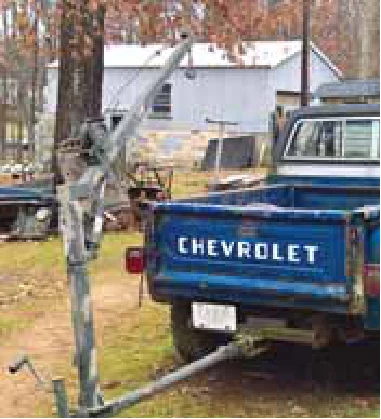
Shang Stanley of Bedford, Va., built a truck-mounted hoist to remove a blown truck engine and install a rebuilt one. With 18 years at a farm equipment dealership, he has seen many similar homemade tools.

“The goal of the design was to be able to use it from any angle to lift any load into or out of a truck bed,” says Stanley.

“It was also to ensure the truck wouldn’t require any modifications.

The design can be used on any vehicle with a 2-in. Reese hitch receiver. An extension bar allows it to be offset to the left or right of the truck bed.

“I designed it that way so that the hoist is now capable of working as a tow bar to connect two vehicles, assuming they each have a 2-in. Reese hitch receiver,” he explains. The crane and trailer jack with dolly wheel are rated at 1/2 ton or 1,000 lbs. While building the hoist itself only took 10 hrs., Stanley took about 2 weeks to tweak the design to his preferences.

“It was a project that took thinking as it was being built,” he says.

Stanley used the hoist to remove a blown engine from one truck and replace it with a running one. As he explains, “With the rebuilt engine, I was able to lift it and back up to the broken-down vehicle and line up with the mobility of the other truck. I also tested the extension bar as a tow bar to move the broken-down truck.”

After using the hoist, Stanley sold it to another user and recouped his expenses.

“Had I installed a manufactured crane, it would have required me to damage the truck permanently. This method allowed it to be used on any vehicle.” And despite selling the original, Stanley is confident he can replicate the design if necessary.

“Now that I have built this and took the time for the design, I would stick to it.”

From the archive · Full text
Feature story

Handy Tips To Solve Carburetor Problems

Featured source: Dale McLaen, Rutland, N.D.

If plugged or overflowing carburetors are a problem in your seldom-used older tractors, Dale McLaen has some suggestions. Over his 27 years of repairing all types of farm engines in his on-farm shop, he has cleaned and used carb kit parts to refurbish dozens of updraft carburetors. He blames most of the problems he has seen on poor-quality fuel and modern carb kits.

“I’ve learned to make modifications that can reduce carb problems,” says McLaen.

“I said reduce, not eliminate them, as it’s nearly impossible to fix these problems forever.” McLaen grew up driving gasoline-powered tractors in the 60’s and 70’s without ever installing a carb kit. The only time he shut off the fuel line was to clean the sediment bowl. That’s no longer the case.

“Modern reformulated fuel quickly turns to stinky, sticky varnish if it sits too long,” says McLaen.

“Tractors that once burned hundreds of gallons of fuel each season may only burn a tank or so a year. The result is gummed up and overflowing carburetors.” Another problem with fuel, he notes, is the addition of ethanol. While he uses E10 in everything he drives, he does not use it in equipment that may sit idle for months.

“Alcohol absorbs moisture, making the reformulated fuel problem worse,” says McLaen.

“It also contributes to rusting the inside of fuel tanks.” Carb kits are another problem, even new ones.

“I recently put kits in carbs on A, C, H, and 300 IH tractors,” says McLaen.

“Three of the four carbs overflowed and leaked fuel on the floor within a day, and the fourth did so within a week.” While he could make the problem better, he couldn’t fix it. He blames the Viton tipped needles found in today’s carb kits.

“The Viton tips should be better, but they just don’t seal as reliably in a carburetor with constant fuel pressure present in a gravity-type fuel supply,” says McLaen.

“To prove my theory, I found a brass needle in my spare carb parts and installed it in the H carb. Problem solved.” McLaen says OEM-type brass needles tended to seal better when new and could be easily cleaned and reused. If one seeped, a tiny amount of polishing compound on the tip and twirling the tip against the seat sealed the surface. One solution to the overflow problem is to manually shut off the fuel line every time the engine is turned off. A one-time fix is to install an electric fuel shut-off solenoid ($15 online) in the fuel line. This automatically shuts off the fuel line when the ignition is turned off. Recently McLaen ran into another carburetor problem. The inlet portion of the carb on his 300 IH had a drain with a felt filter plug intended to allow any overflow to drip out. It plugged up after 60 years, causing overflow fuel to puddle in the inlet hose.

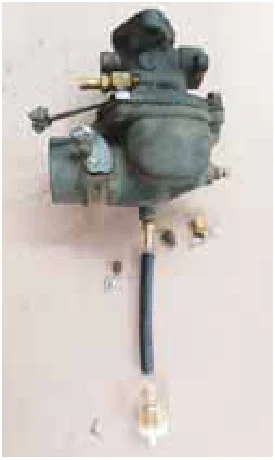
“I removed the plug and installed a 1/4-in. hose barb fitting and attached a short section of hose and a small filter on its end,” says McLaen.

“The filter is simply to prevent any dirty air from being sucked back into the air inlet when the engine is running. I also replaced the fuel bowl drain plug with a brass petcock drain valve, so I can easily empty the carb if needed or check to see if fuel is reaching the carb properly.

“You might not be able to do this on some carbs,” says McLaen.

“However, the general idea is to manage a leaky carb rather than have it drip uncontrollably and be a fire hazard.” Contact: FARM SHOW Followup, Dale McLaen, 13756 Hwy 11, Rutland, N.D. 58067 (ph 701-678-5232).

From the archive · Full text
Feature story

TreadSure App Helps Analyze Tire Wear

Featured source: Dawson Tire and Wheel, Gothenburg, Neb.

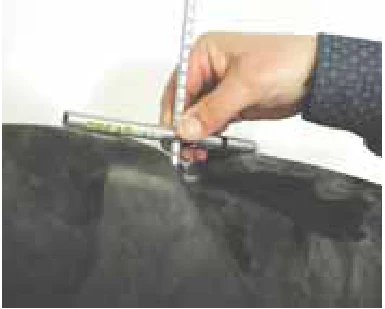
Dawson Tire and Wheel is taking the guesswork out of estimating tread life on ag equipment tires and tracks with their TreadSure app. Measure the tread, and the app will tell you what percent is left by comparing it with the original tread depth.

“Anyone can do that by going to the data book for the tire, but that is increasingly difficult with international suppliers who may not have data books in English,” says Eric MacPherson, Dawson Tire and Wheel.

“More than 90 percent of ag tires sold in North America are in our database. You enter your tread depth, and our app will give you the remaining tread life.”

Knowing tread life remaining can be money in the bank when trading off old equipment or buying used. He points out that estimating tread life on an R Series Deere tractor at 95 percent when it’s 65 percent can overvalue it by $35,000. That kind of error is why Dawson Tire and Wheel developed TreadSure.

“Farm Equipment dealers are 60 to 70 percent of our business,” says MacPherson.

“When we asked how we could help them, they often said, ‘Help our salespeople evaluate tires on trade-ins.’” Dawson Tire and Wheel introduced TreadSure in 2021 to give salespeople just that kind of tool. Then they took it a step further.

“We spent all of 2022 building out our Pro version,” says MacPherson.

“It puts the tire information in a TreadSure report that can be uploaded with photos online. It also provides an option for adding information to the form, as well as adding up to two recipients for email reports. The app also provides users the option of requesting trade-in values from Dawson Tire and Wheel.

TreadSure is more than just an aide to salespeople. It also gives farmers buying and selling the equipment accurate estimates. Dealers are posting the evaluations with online listings. MacPherson reports that auction companies are now sharing tread life reports with prospective buyers.

“We haven’t marketed the app to producers, but we are starting to get producer feedback anyway,” says MacPherson.

While a standard metal tread gauge is helping users who don’t have one. At the user’s request, the company will send out a cardboard tread gauge. Just punch out the ruler and slide it through the holder for a functional gauge.

It’s one more way that Dawson Tire and Wheel is attempting to fulfill its stated mission: “To improve equipment valuations through accessible and transparent information.”

Another way they do that is through videos on the app, as well as how to measure tread depth and how to read an ag tire sidewall. The latter is vital for understanding the proper carrying load, speed, and pressure for a specific tire.

These items and more are also available as blog posts on the TreadSure website’s resources page.

For a better understanding of tire pairings, front and back, ply rating symbols, speed rating symbols, bias to metric conversions, carrying capacity, and more, go to the website and download the Dawson Tire and Wheel tire chart.

Like the TreadSure app and the tire tread depth gauge, the tire chart is free. The Pro version of the app is priced according to the user, whether auction or dealer, and the size of the dealership.

Contact: FARM SHOW Followup, Dawson Tire and Wheel, P.O. Box 128 Gothenburg, Neb. 69138 (ph 888-302-5926; [email protected]; www.treadsure.app).

From the archive · Full text
Feature story

Recycled Tires Make Great Cutting Edges and More

Featured source: Schuyler Rubber Company, Woodinville, Wash.

Cutting edges for skid steer buckets are only one of a wide variety of products Schuyler Rubber Company makes out of old bus and truck tires. The company has been recycling tires and other rubber products for more than 70 years. They make cutting edges, snowplow blades, roll-off wheels, bumpers and backhoe pads. All are made from 100 percent recycled, laminated rubber and recycled steel.

“The more we can recycle, the less goes to landfill, and people get better products that last longer,” says Brittany Wright, Schuyler Rubber Company.

“Originally, we were known for marine fendering of tugs and barges. Over the past 20 years, we moved into other applications in construction, farming, waste energy, and seed plants.”

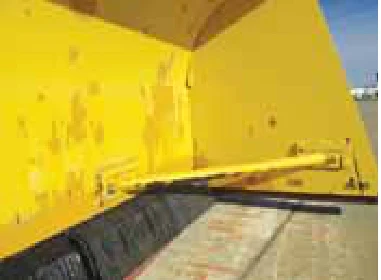
Cutting edges for skid steers, wheel loaders, and backhoes outlast molded cutting edges 2:1. All use a universal T-track system. Grade 8 plow bolts slide into the channel to match the bucket’s existing bolt pattern. Just measure the bucket from edge to edge and select the desired wear service of 3 to 10 in. Eight general bucket widths are kept in stock, but other cutting edges are custom-cut.

Schuyler makes its laminated cutting edges by compressing rubber sections onto 1 1/4-in. steel rods and securing them every 12 in. with fault bar retaining plates.

The cutting edges provide a squeegee effect for pushing liquids, as well as solids. They prolong the wear life of concrete floors while providing an effective bucket edge.

“Most of our sales are direct to the customer,” says Wright.

“Prices start at $112 per linear ft. for the 3-in. 911S and go to $232 per ft. for the 10-in. 911X.”

Heavy-duty stabilizer pads designed for CAT backhoes are also made from truck and bus tires and mounted in steel housing.

“We introduced these pads at the request of one of our dealers,” says Wright.

“They were having a hard time getting them from CAT and faced a 6 to 10-week waiting period. We give them a green alternative with a short lead time at half the price that will outlast the OEM design.”

The 10 3/8 by 18-in. pads are available in bias and radial ply rubber and priced at $262.76. A trial set has been in regular use with a municipality for more than a year and has shown only 1/4 in. wear, according to Wright.

“Our pads are 4 in. thick compared to CAT’s 2 1/4 in.,” she says.

“Ours are much more cost-effective and available. They’re stocked on-site, and we provide next-day service.”

Other products include the rubber roll-off wheels in 6, 8, and 10-in. diameters with widths of up to 12 in. The laminated wheels are quieter and last longer than steel wheels. They also eliminate wear to floors, driveways, and other solid surfaces. An 8 by 8-in. wheel is rated for 40,000 lbs. compression. Axles and assemblies are available for additional fees.

Snowplow blades are 8 9/16 in. tall with a 3-in. wear surface and a depth of 6 in. Each blade is custom-cut to accommodate a specific snowplow size. They’re available in straight and curved plow options.

Contact: FARM SHOW Followup, Schuyler Rubber Company, 16901 Woodinville-Redmond Rd NE, Woodinville, Wash. 98072 (ph 800-426-3917; [email protected]; www.goschuyler.com).