Practical ideas from FARM SHOW MagazineSubscribe · Free issue · Send us your shop tip
Subscribe to FARM SHOW
Issues / Vol. 26, No. 1 (2002)

Vol. 26, No. 1 (2002)

Money-Saving Repairs & Maintenance Shortcuts · Printed section pp. 38–41

27 selected entries · Complete text of selected entries

This issue’s section includes reader tips and feature-length shop stories. Held items and editorial notices are not reproduced.

Archive text: prices, coupons, availability and contact details reflect the original publication, not current offers. Reader methods are not universal instructions; follow manufacturer guidance and proper safety practices.

Reader shop tips

From the archive · Full text
Reader shop tip

Scott Seaver

Scott Seaver, Montague, Mich.

“After owning my 1988 Chevrolet 4-WD pickup for several years, I grew frustrated with the fact that I couldn’t put the truck into 2-WD low range because low range automatically locks the front hubs. I like to use low range to back up heavy wagons and gooseneck trailers but on hard surfaces, I didn’t need to be in 4-WD and felt I might even damage some of the 4-WD components.

“To solve the problem, I located the switch wires on the trasfer case that operate the front locking hubs and cut one of them. I mounted a toggle switch on the transfer case shift lever and ran wires from the switch to each end of the cut wire.

“Now, whenever I want to switch to 2-wheel low range, I put the transfer case shift lever in 4-low and make sure the switch I installed is in the OFF position, which prevents the front axle from locking. When I want to use 4-WD again, I just flip the switch to the ON position. There’s no risk of forgetting to turn the switch OFF since the transfer case switch shuts the axle off automatically, preventing the front hubs from staying locked in 2-wheel high range.

“I’m sure this solution would work on any truck with electrically locking hubs.”

From the archive · Full text
Reader shop tip

Bob Howard

Bob Howard, Patterson, Ill.

Bob used salvaged parts to build this beam crane that reaches just about anywhere in his 32 by 50-ft. machine shed. He calls it an “underslung beam crane”. It runs on tracks made up of 4-in. I-beam that reaches all the way across the front and back of the 50-ft. width of the building. Suspended from the rails is a 32-ft. beam that came off a crane he bought at a sale.

Bob built a couple of carriers to support the beam and move it across the building. He made the carriers out of pieces of channel iron into which he welded some self-contained, sealed bearings.

Once the beam was in place, he attached a half-ton winch which rolls on it’s own casters.

Among other things, Bob uses the crane to help butcher hogs.

From the archive · Full text
Reader shop tip

Peter Ceres

Peter Ceres, Neilburg, Sask.

“Here’s how I pull stuck bearings and hubs. I weld a piece of pipe to the bearing and then weld a nut to the end of the pipe. Then I screw a bolt into the nut to use to pull the stuck bearing off. The heat generated by welding helps, too, by expanding the bearing.”

From the archive · Full text
Reader shop tip 1 of 2

Robert T. Valentine

Individual tip 1 of 2 from this reader’s published contribution.
Robert T. Valentine, Wolsey, S.Dak.

“After reading about Dale Krueger’s battery box conversion for his 4020 Deere tractor (Vol. 25, No. 6), I wanted to tell you how I solved the same problem.

“I was very dissatisfied with the 2-battery box system on my Deere. I eliminated the right side battery box and rebuilt the left side battery box as follows: “I cut the outside panel out of the box and then welded additions to the bottom and end panels to make the box wide enough to accept two 900-amp batteries. I welded in a divider between the two battery compartments to reinforce the box because of the extra weight. I welded a 5/16-in. bolt on the inside of each end to hold the side cover on.

“I used a metal brake to bend the ends and bottom of the side cover to overlap the existing box. The side cover attaches with a pair of wing nuts.

“This modification has worked great. Now the batteries are easy to remove when necessary, and the box can be tilted out on the regular battery box pivots to connect cables, check the water, etc.

From the archive · Full text
Reader shop tip 2 of 2

Robert T. Valentine

Individual tip 2 of 2 from this reader’s published contribution.
Robert T. Valentine, Wolsey, S.Dak.

“Also, eliminating the right side box left me a place to mount a triple hydraulic valve and break-away couplers below floor level for my loader. I welded a stand to the valve bracket that reaches up beside the seat, fastening the three valve levers to it. A T-fitting was put in the main hydraulic line and routed to the loader valve. A return hose was routed to the cap on the transmission filter. This left the tractor’s rear breakaway couplers free for other use.”

From the archive · Full text
Reader shop tip

Buck Samuelson

Buck Samuelson, Glasgow, Mont.

“I salvage a lot of scrap metal along roads and get a lot of flat tires. I’ve eliminated flats by putting a cup full of water and antifreeze mix, plus one full crumpled-up sheet of newspaper, into each tire. After you put it in, drive about 100 miles and it’ll turn into a mush mix that plugs leaks. I’ve changed tires later and found four or five nails in them but no leaks. The idea works on cars, pickups, RV’s, and any piece of farm equipment. If you do get a big hole in a tire, you can easily clean away the mixture to patch the hole.”

From the archive · Full text
Reader shop tip 1 of 3

Brian Haubrich

Individual tip 1 of 3 from this reader’s published contribution.
Brian Haubrich, Glenbain, Sask.

“I used 1-in. sq. steel tubing to make cheap steel storage racks that I bolt onto the wall of my seed cleaning plant. I welded a 4-in. length of tubing every 6 in. onto other tubing that I lag bolted vertically to the wall. The racks work great for holding various lengths of steel. They get the steel pieces up off the floor and also keep it organized so I can quickly find what I need.

From the archive · Full text
Reader shop tip 2 of 3

Brian Haubrich

Individual tip 2 of 3 from this reader’s published contribution.
Brian Haubrich, Glenbain, Sask.

“I made another rack for storing shorter lengths of steel vertically. The bottom part of the rack is welded to my work bench.

From the archive · Full text
Reader shop tip 3 of 3

Brian Haubrich

Individual tip 3 of 3 from this reader’s published contribution.
Brian Haubrich, Glenbain, Sask.

“I used the hydraulic hoist out of an old truck to make an 8-ft. high hydraulic press. The tube part of the cylinder where the snap rings hold the piston plug in had ‘mushroomed’ so that it was no longer usable. My brother-in-law made two 1-in. plates which hold the cylinder together with six 1-in. threaded rods so the piston plug can’t come out. The rest I built with new iron, a new electric 1 hp motor, anda hydraulic power pack.”

From the archive · Full text
Reader shop tip

Ron Stadler

Ron Stadler, Monroe, Mich.

“It’s often difficult to get a die onto a bolt in order to clean the threads, especially when doing engine work. It’s hard to use a normal tee-handled wrench.

“To solve the problem I came up with a new socket die wrench. It consists of a standard 1 1/4-in. deep well socket with the sides notched out, which allows access to oiling of the cutter and visibility of the work being performed. The socket is welded onto either an existing tap wrench or a bearing collar tightener with a set screw on the side.

“I use a 1 9/16-in. bearing collar. A thin shim can create a tight fit along with the tightened set screw for 1 1/2-in. round dies. I welded a small washer between the socket and top side of the collar to allow for various sizes of dies. The die set I use is a Pittsburgh 45 piece. The dies I use are 1 1/2-in. round adjustable. Whether SAE or metric, the tool can be used for most rounded die sets. You could easily use a socket wrench or a sliding tee bar-handled 1/2-in. drive wrench set to fit onto the tool. You could also use extension bars to get into tight areas. Most of the time I use a tee slider wrench as it works similar to the die holder wrench, with positive back and forth action. A 3/8 or 3/4-in. version could also be used, depending on the job size.

“I also have another version for use on 1-in. hexagon dies. It consists of a 1-in. deep well socket with a washer welded just above the die and a set screw to hold the die in place. It can be used the same way as the other tool.”

From the archive · Full text
Reader shop tip

Charles Stradtman

Charles Stradtman, St. James, Minn.

“I used to have outside hog waterers that would freeze up in extremely cold weather. The problem was that the vertical pipe under the waterer froze up due to frost in the ground. I was able to solve the problem inexpensively using hot water and a pump-up, hand held weed sprayer.

“I removed the cover from the waterer to expose a valve that’s mounted above a 1/8-in. dia. pipe, which is housed inside an underground tube. I took the valve apart to expose the top of the pipe. Then I attached a 3-ft. length of flexible, automotive-type copper tubing to the end of the sprayer line and inserted it into the pipe. I put hot water in the pressurized spray container and then squeezed the trigger to send the water down into the pipe and melt the ice. It took only a few seconds to melt all the ice.”

From the archive · Full text
Reader shop tip

James R. Wambeke

James R. Wambeke, 503 East 5 th St., Box 314, Minneota, Minn. 56264 ph 507 872- 5108

“I’ve been in the plumbing business for more than 40 years and recently came up with a patented machine designed to clean and polish copper tubing and fittings before soldering. It’s a lot faster than doing the job by hand. One side of the machine is equipped with four different size brushes and is used to clean the inside of elbows and fittings, etc. The other side has four different size holes with brushes inside. You insert the tubing into the holes and polish the outsides.

“I hope to manufacture this electric-powered machine within a few months. I expect it to sell for about $250.”

From the archive · Full text
Reader shop tip

Wayne Moore

Wayne Moore, South Haven, Kansas

“I converted a device for handling big tractor wheels into a handy shop hoist. The device was originally equipped with two horizontal pipes and a vertical pipe on back. I added a 6-ft. long steel arm to the top of the pipe, as well as a hydraulic pump off a Massey combine and a 1 1/2-in. dia. hydraulic cylinder. I also mounted a 1/3 hp electric motor (off an old washing machine) on back of the unit. The motor belt-drives the pump via a 12-in. dia. pulley.

“The pump was originally equipped with a 6-in. dia. pulley. I replaced it with a 12-in. pulley so I could get by with a small electric motor. This hoist has a lot of lifting power. We’ve used it to lift a Chevrolet 350 engine out of a car and let it down into another vehicle. We recently had the 903 engine lifted out of our Versatile tractor. We weren’t able to use the hoist to lift the engine out, but once it was on the floor, we were able to use the hoist to move it around to different places and turn it over, etc.”

From the archive · Full text
Reader shop tip

Jim Hefner

Jim Hefner, Lima, Ohio

“After years of wrestling with T-rail mounted duals on my 4240 and 4440 Deere tractors, I came up with a device I call the Dual Buster.

“It works in reverse of the snap couplers that hold the duals on the T-rail. Rather than pulling the handle into a locked position to hold the duals together, my Dual Buster pushes them apart.

“Before I made this, we used crowbars, wrecking bars, and even log chains to break them apart. Now, we just drive the inside wheel up on a block, remove the snap couplers and then use the Dual Buster at the bottom to snap them apart. It works great and it’s a lot easier. When the outside wheel comes loose, it just drops to the ground.”

From the archive · Full text
Reader shop tip

Walter Mott

Walter Mott, Staples, Texas

“My 15-year-old son Brent recently built this heavy duty 4 by 10-ft. welding table. He looked at different tables at various tool shows and incorporated the best ideas into his design..

“The rolling table’s frame is made from 2-in. sq. tubing and mounts on four castor wheels. The table’s top is made from 1/2-in. thick steel plate and has a grate at one end with a hopper underneath. Pieces of slag that result from welding can be pushed into the hopper. One side of the table consists of an open grid of 2-in. angle irons for various cutting and welding jobs. The other side of the table is designed to support a chop saw and has a series of load-bearing metal rollers next to it. The rollers allow the operator to roll lengths of steel or tubing back and forth when cutting or welding.

The table is equipped with four electrical outlets to plug in drills and other power tools. The receptacles are protected by a circuit protector (ground fault interruptor).

From the archive · Full text
Reader shop tip

Editor’s Note

Editor’s Note, FARM SHOW

If you’ve got a tractor or combine with a high first step that’s always a bit difficult to reach, you might like this idea which we recently spotted on a Cat log handler. Instead of a fixed bottom step, a piece of heavy-duty rubber belting is bolted to either side of the bottom metal step, so it hangs down below. That way you’ve got a step that’s easier to reach but won’t change the ground clearance of the tractor. It you hit something with the flexible step, it’ll just deflect out of the way.

Shop feature stories

From the archive · Full text
Feature story

Bearing Replacement For Worn Twine Finger Bushings

Featured source:

Worn twine finger bushings probably cause more dropped knots in big square balers than anything else.

As the bushing wears, the twine fingers become sloppy and eventually, they drop the top string on the second knot, leaving the string loose.

Maize Corporation, Maize, Kansas, has come up with a solution to that problem. The company is selling a finger-bearing assembly to replace the fingers and steel bushings found on large square balers sold by New Holland, Hesston, Massey, New Idea and several other companies.

The knotter-bearing assembly, built around a sealed bearing that doesn’t require lubrication, lasts considerably longer than the bushings currently used, according to the company. Installation takes no longer than installing a complete twine finger and bushing, but if the baler has lubrication lines to the bushings, those will have to be redirected. Price for one assembly is about $55, which is comparable to the normal cost of replacing one worn twine finger and bushing.

Contact: FARM SHOW Followup, Maize Corporation, Box 476, 5820 N 119th W, Maize, Kan. 67101 (ph 316 722-8710; E-mail: [email protected]).

From the archive · Full text
Feature story

Convert Old Engines To Electronic Ignition

Featured source:

Got an old gas engine that’s hard to start? Why not convert it to electronic ignition?

Any engine with a distributor and points can be converted to a Pertronix ignition system, says the company, based in San Dimas, California. Pertronix makes electronic ignition kits for just about all automotive, industrial, agricultural and marine engines and for either 6- or 12-volt systems.

FARM SHOW reader John Ruff, Logan, Kansas, put a Pertronix system on his John Deere 40 2-cyl. tractor.

“I can only describe the improvement in performance as unbelievable,” he writes.

“It was like putting a 6-cyl. engine on the tractor.”

He adds that while his Deere 40 starts easier, he does have a bit of a problem with the 6-volt Group I battery on the tractor.

“The electronic ignition needs at least 4.5 volts, so if the battery is a little low, or on cold days in the winter when the starter takes more power, there’s not always enough power in it to run both the starter and the ignition,” he says.

“What I really need is a battery with technology advanced enough to provide sufficient power under most normal operating conditions.” He’s looked all over for a Group I battery that can consistently deliver enough power, but so far has had to resort to using his battery charger a lot during the winter.

Changeover from points to the Pertronix electronic ignition was easy, he says, since the kit fits into the old distributor in place of the points. A new electronic coil may be needed for best performance. The company sells Flame-Thrower™ coils designed specifically for use with their electronic ignition system.

Contact: FARM SHOW Followup, Pertronix, Inc., 440 East Arrow Highway, San Dimas, Cal. 91773 (ph 800 827-3758; fax 909 599-6424; Website: www.pertronix.com); or John Ruff, 963 W. Big Bear Lane, Logan, Kan. 67646 (ph 785 689-4323).

From the archive · Full text
Feature story

Portable Heater, Air Conditioner

Featured source:

“One keeps me warm in winter and the other keeps me cool in summer,” says Wayne Moore, South Haven, Kansas, who built “roll-around” portable heating and cooling units.

The portable heater consists of a 40-gal. liquid propane tank that mounts on four wheels with a tongue on front. A radiant heater on top of the tank is supported by a 3-ft. length of 1/2-in. dia. pipe. There are two valves on the tank.

To operate the heater, Moore opens the gas valve and then uses a match to ignite the pilot light. A thermocouple ensures that if the pilot light accidentally goes out, the supply of propane automatically shuts off. The tank is also equipped with a safety pilot and pop-off valve.

“It warms up only the area where I’m working and therefore eliminates the need to heat the entire shop,” says Moore.

“The radiant heater is up in the air so the heat comes down toward me as I work. It also warms up the shop tools I’m using.” The portable cooler consists of an old window air conditioner mounted on a metal table with wheels.

“I move it around to my shop whereever I’m working,” says Moore.

“It puts out a lot of cold air and keeps the air moving around. I removed the cover on front of the air conditioner to get maximum cooling.”

Contact: FARM SHOW Followup, Wayne Moore, Box 37, 109 S. Kickapoo, South Haven, Kansas 67140 (ph 620 892-5548).

From the archive · Full text
Feature story

More Tractor Restorers

Featured source:

After our report in the last issue on “whole tractor restorations”, we heard from several tractor restorers who were not included on the list. Here’s how to contact them: Doyle McFerrin McFerrin Tractor Company Lubbock, Texas Ph 806 762-4343 or 888 551-0076; Fax 806 740-0554 Website: www.mcferrintractor.com E-mail: [email protected] Specializes in 1939 to 1965 Fords, Massey Fergusons but works on other models, too.

Don Frier 45876 – 300 St. Wakonda, S.Dak. 57073 Ph 605 267-6861 or 605 552-2604 Restores tractors during winter months. Has worked on everything from a Waterloo Boy tractor to a 1915 Case car.

Doug Hitt Doug Hitt Repair W8792 County Road W Antigo, Wis. 54409 Ph 800 992-1513 Website: www.rainbowtractorparts.com New and used tractor parts and also rebuilds older tractor engines.

Matthew Throener Matt’s Ag Service Rt. 2, Box 55 Carnegie, Okla. 73015 Ph 580 654-1212 Specializes in Farmall H’s & M’s and Deere 60 & 70 tractors. Used parts, repairs, and complete restorations.

From the archive · Full text
Feature story

Portable Work Bench Designed To Hold Six Bench Top Tools

Featured source:

One person can easily move this new portable work bench to any location, even when it’s fully loaded with tools.

The Port-A-Shop is a triangular-shaped, three-legged metal stand that measures 60 in. long, 52 in. wide, and 34 in. high. It can support up to six heavy benchtop tools at a time via drop-in mounting points. The tools plug into a six-outlet electric power strip at the base of the unit.

It comes with three 5-in. swivel casters so it can be moved in any direction or rotated in place. All three casters can be extended or retracted at the same time with a hand-crank. Because of the three-legged design, the work bench can be used on irregular surfaces with no leveling required. Also, more than one operator can use the Port-A-Shop without any interference between tools, even when working on long stock.

Unit weighs 110 lbs. and has a weight capacity of 500 lbs. A triangular design allows it to be stored in a corner when not in use.

It comes with a rust-proof, black powder coat finish.

Sells for $299 plus $55 S&H. Contact: FARM SHOW Followup, AGM Container Controls, Inc., 3526 E. Fort Lowell Rd., Box 40020, Tucson, Arizona 85717 (ph 800 995-5590 or 520 881-2130; fax 520 881-4983; E-mail: [email protected]; Website: www.port-a-shop.com).

From the archive · Full text
Feature story

Attachment Turns Propane Torch Into Plastic “Welder”

Featured source:

“I needed to repair a crack in a plastic tank but didn’t want to spend the money for one of the new plastic ‘welders’. So I made an attachment that clamps onto the nozzle of a handheld propane torch,” says John Lyons, Cornell, Ill. The 8-in. long attachment consists of a piece of metal brake line attached to a length of 3/8-in. dia. pipe. The sides of the pipe are cut away - to let heat escape - and a wing nut is used to clamp it to the torch nozzle.

“The pipe directs heat through a hole that’s about the size of a pencil, rather than heating a bigger area. That’s what makes it work,” says Lyons.

“I used it to fix a crack in my 1,200-gal. plastic water tank, which I use to haul water to my well. I had to either fix the tank or buy a new one at a cost of about $350. One plastic welder I looked at was electric-powered so it wasn’t portable, and I didn’t think it would get hot enough to do the job. My pipe coupler attachment produces heat in only a few seconds, with no need to wait for an electric element to heat up. In fact, the flame gets so hot I have to wear gloves. I may install a heat shield on it to deflect the heat away from my hands.” Lyons says he’s looking for a manufacturer. Contact: FARM SHOW Followup, John Lyons, 23847 N. 1050 E. Rd., Cornell, Ill. 61319 (ph 815 358-2737; E-mail: [email protected]).

From the archive · Full text
Feature story

Engine, Manifold Paints Stand Up To High Heat

Featured source:

“Our new line of engine and manifold paints are rated to withstand up to 1,800 degrees F., which far exceeds the heat range of anything else on the market,” says Bill Hirsch Automotive, Newark, N.J.

The company’s “space age” coatings are designed to withstand high heat without losing their original color or burning off. All are chip, crack and peel resistant. The coatings are available in pints or 16-oz. aerosols.

“When brushed or sprayed onto manifold and exhaust areas, they will restore the look to new,” says the company.

Here’s a summary of what they offer: says this is the only black paint that will withstand temperatures up to 1,800 degrees and retain its jet black color. One pint sells for $25 plus $6 S&H; the aerosol sells for $15 plus $6 S&H.

This is not a silver paint, but a very high tech, aluminum coating that you can even paint engines with. Withstands up to 1,800 degrees and keeps its bright finish. One pint sells for $25 plus $6 S&H; the aerosol sells for $15 plus $6 S&H.

look of freshly sandblasted cast iron. Extremely durable and long lasting. One pint sells for $25 plus $6 S&H; the aerosol sells for $15 plus $6 S&H.

stainless steel powder, this finish will impart a pewter gray coating to your manifold. It’s rated to 1,600 degrees F. Extremely weather and temperature resistant. Available in pints only, it sells for $21 plus $6 S&H.

coating that bonds to rusted and corroded metals. It dries rock hard and won’t chip, crack or peel. It’s impervious to gasoline, lacquer thinner, salt and most acids. Can be painted directly over rusted surfaces and is strengthened by moisture. Will seal concrete, grout, wood, metal and porous tile. Can be sprayed, rolled, or brushed. One pint sells for $20 plus $6 S&H.

Contact: FARM SHOW Followup, Bill Hirsch Automotive, 396 Littleton Ave., Newark, N.J. 07103 (ph 800 828-2061; International or New Jersey 973 642-2404; fax 973 642-6161; E-mail: info@hirsch auto.com).

From the archive · Full text
Feature story

Bully Dog Propane Injector Boosts Diesel Performance

Featured source:

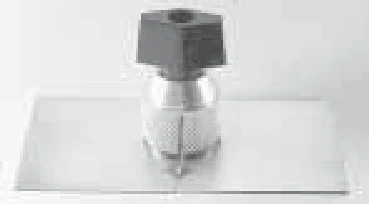
After a turbocharger on his pickup’s diesel engine exploded and took out a couple of pistons, Brian Wray, Kalispell, Montana, figured there had to be a better way to improve diesel power and fuel efficiency.

The solution he found is called “Bully Dog”.

“It’s a propane injection system that works on diesel engines,” he explains. Since he installed the system on the 6.9L engine in his Ford F250, he claims he’s getting 4 mpg better fuel efficiency, and considerably more power.

Wray uses his pickup to pull a 4-horse trailer and for basic transportation.

“I bought it used and like all diesels, it smoked a little. After I installed the Bully Dog injector, it cleared up the diesel smoke and the exhaust smells like LP burning rather than diesel.”

Priced at under $800, it’s expensive but still $1,000 to $1,500 less than a turbocharger, notes Wray.

He says the inector is easy to install.

“You need a little working knowledge of electrical schematics and a fair sense of plumbing,” he notes.

“It requires installing a sending unit in the oil line. That’s a safety measure that shuts off the propane flow if oil pressure drops. That way, the propane is shut off when you shut off the engine.”

He says it also requires installing propane tanks somewhere in the vehicle. Materials and tanks for that cost him about $100.

Besides cutting his diesel fuel use, Wray notes that the Bully Dog injection system uses less than 2 gal. of propane for every 20 gal. of diesel fuel he burns, even when he’s using it hard.

Philip Klassen, who with his brother Michael, developed the Bully Dog propane injector, says it will work on any diesel engine.

“Injecting a small amount of propane results in a more even amd more complete burn of the diesel, so smoke and emissions are both reduced,” he says.

They sell versions for all diesel-powered pickups. Klassen says the system actually works better on a turbocharged engine than on a naturally aspirated one.

“We’ve sold them for tractors and combines, too,” he says.

“And this past fall, we sold one for a cotton picker.”

Klassen says people are often a little leary of a system that uses propane at first.

“But it’s actually quite safe,” he insists.

“With the oil pressure safety shut-off switch, the flow of propane is automatically cut when the engine is stopped or if there’s some kind of engine malfunction.”

Contact: FARM SHOW Followup, Bully Dog Technologies, 2854 West 2200 South, Aberdeen, Idaho 83210 (ph 208 397-3200; E-mail: [email protected]; Website: www.bullydog.com); or Brian Wray, 1150 McMannamy Draw, Kalispell, Montana 59901 (ph 406 257-2411).

From the archive · Full text
Feature story

Cheap Way To Refill Small Propane Cylinders

Featured source:

You can safely refill small propane cylinders - which most people just throw away when they’re empty - with this new refill device for propane tanks.

The “MacCoupler” allows you to refill 14.1 and 16.4-oz. propane cylinders typically used to fuel lanterns, torches, heaters, stoves, etc., from 20, 30, and 40-lb. tanks.

You use a wrench to screw one end of the coupler onto the valve on the tank. Then you hand tighten the other end of the coupler onto the cylinder you’re refilling. The cylinder has to be put in a freezer for about one hour before it’s refilled. Then turn the entire unit upside down and set it on the neck guard of the tank. Once you open the tank’s valve you’ll hear propane come out. After about 30 seconds, you’ll hear it stop. You can’t overfill the cylinder since the pressure simply equalizes. After the sound stops, turn off the valve and remove the cylinder, which will now be 85 to 90 percent full.

“It works with either long, thin cylinders used for torches or short, fat Coleman-type ones used for lanterns, stoves, and heaters,” says the company.

Sells for $14.95 plus S&H. Contact: FARM SHOW Followup, Preparation Enterprises, 1336 Moorpark Road, Suite 241, Thousand Oaks, Calif. 91360 (ph 888 493-4517; fax 888 457-4177; E-mail: [email protected]; Website: www.prepenterprises.com).

From the archive · Full text
Feature story

“Panel Clamps” Help Make Better Butt Welds

Featured source:

You can do a better job welding sheet metal with these “panel clamps”, according to the manufacturer who says they make butt welds easier by holding loose edges tightly together.

Panel Clamps are designed to be used on mild steel or aluminum with thicknesses between 18 and 24 ga. Made of non-corroding aluminum and stainless steel, the unit holds the edges together while you tack weld them together. Once the clamp is off you can finish the welding.

“It works great for patching in replacement panels and for repairing cracks, and allows you to make a butt weld that water can’t penetrate,” says Scott Brittin, BHP Products, Inc., Katy, Texas.

A set of five Panel Clamps sells for $39.95 plus $4 S&H.

Contact: FARM SHOW Followup, BHP Products, Inc., 23 Lakefield Tris, Katy, Texas 77493 (ph 800 480-3951; fax 281 391-1249).

From the archive · Full text
Feature story

Another Way To Fight Rust

Featured source:

After our story in the last issue on Por-15, a popular paint-on rust eliminator that reacts chemically with rust to turn it into a rock-hard, epoxy-like finish (call 800 576-5822 for info), we heard from a FARM SHOW reader who said we should take a look at another new rust-fighting product.

Evapo-Rust is different than other rust “neutralizers” on the market because it actually dissolves rust away rather than turning it into a new substance. Here’s how it works: Evapo-Rust is a water soluble, non-flammable product that’s also biodegradable. It contains no acids or other corrosive materials and will not affect non-rusted steel. It’s also harmless to rubber, plastic, pvc and most paints, according to the company.

It dissolves rust on contact. The active ingredient forms a chemical bond with the iron in the iron oxide (rust). It can remove the iron from the iron oxide but is too weak to remove iron from steel, where the iron is held much more strongly.

One gallon will de-rust up to 300 lbs. of heavily rusted steel. Mildly rusted parts can be soaked for about 10 min. to clean up. Badly rusted parts should be soaked overnight. To use on parts too big to soak, soak a sponge and place it over the area to be de-rusted. Cover the sponge with plastic wrap and tape the wrap in place to prevent moisture from evaporating.

Once the Evapo-Rust solution is spent, you can simply pour it down the drain since it’s non-toxic and only contains iron from the rust.

Comes in quarts, single gallons, 5-gallon pails, 55 gal. drums, and 275 gal. totes.

Since it was introduced a year or so ago, Evapo-Rust has caught on with distributors all over the world. More dealers and distributors are still needed.

Contact: FARM SHOW Followup, Harris International laboratories, Inc., 2200 Old Missouri Rd., Suite M, Box 6487, Springdale, Ark. 72766 (ph 888 329-9877; fax 501 927-3202).