Practical ideas from FARM SHOW MagazineSubscribe · Free issue · Send us your shop tip
Subscribe to FARM SHOW
Issues / Vol. 32, No. 1 (2008)

Vol. 32, No. 1 (2008)

Money-Saving Repairs & Maintenance Shortcuts · Printed section pp. 36–39

41 selected entries · Complete text of selected entries

This issue’s section includes reader tips and feature-length shop stories. Held items and editorial notices are not reproduced.

Archive text: prices, coupons, availability and contact details reflect the original publication, not current offers. Reader methods are not universal instructions; follow manufacturer guidance and proper safety practices.

Reader shop tips

From the archive · Full text
Reader shop tip

Bill Mansell

Bill Mansell, Inglis, Manitoba

He modified his 1999 model 8465 Case IH round baler so he can see the twine better. Although his baler monitor indicated movement of the twine arm, he couldn’t actually tell if both twines were feeding onto a bale, or perhaps one was missing.

The baler has two twines running in a single enclosed twine arm. The twine comes out of the twine box through eyelets on the side of the baler. On Mansell’s model, it would normally feed behind a 4-in. pipe that wraps around the front of the baler before entering the twine arm and catching on the bale to start tying.

If the twine ran out or snagged and broke, Mansell was unable to see it.

To solve the problem, he rerouted the twine through two 1/2-in. washers welded to a re-movable bracket, which is bolted to the twine cutter arm. The twine now runs in front of the pipe for about 10 in. before entering the twine arm.

During tying, the twine vibrates just enough that Mansell can see that everything is working properly. He says this visual, along with the monitor, makes twine wrapping much more reliable.

“The only cost was a little imagination, a small bracket, and a couple of washers,” he says.

“I didn’t want to weld anything permanent to my baler - that’s why the guide washers are welded to a removable bracket.”

Mansell’s Case-IH model and the Hesston 865 of similar years, are both built by Hesston, and the modification would work the same on either machine, he says.

From the archive · Full text
Reader shop tip

Donn Hogg

Donn Hogg, Columbus, Ohio

“In your Vol. 31, No. 5 issue, a reader mentioned that Grizzly Industrial and Enco are both good sources for machine tools and accessories. I agree with him. Another good source of machine tools is KBC (www.kbctools.com; 800 521-1740). They have the largest selection of drill bits that I have seen anywhere. KBC also has an excellent catalog that’s about 900 pages long, and free.”

From the archive · Full text
Reader shop tip

Darrell E. Vion

Darrell E. Vion, Kingman, Alberta

“We bought a 1976 Ford 880 Louisville tandem grain truck with no ‘air’. The driver’s side had a Bostrom mechanical seat that was broken. There are only a few parts available, and they’re very expensive. We had an old Yamaha motorcycle that still had its spring- assisted rear shocks. I removed the old spring assembly and mounted the shocks on the seat frame. I had to widen the base but it worked well. The seat’s height adjustment still works.”

From the archive · Full text
Reader shop tip 1 of 3

Bill Reeks

Individual tip 1 of 3 from this reader’s published contribution.
Bill Reeks, Cromwell, Ky.

“I modified this long-handled shovel by removing 1 1/2 in. of metal from each side and welding material on back to make a push plate for my foot. Makes the shovel easier to use as it’s narrower and lighter.

Tools

From the archive · Full text
Reader shop tip 2 of 3

Bill Reeks

Individual tip 2 of 3 from this reader’s published contribution.
Bill Reeks, Cromwell, Ky.

“A V-belt and a large metal washer work good for handling small logs. The loop provides a handle to lift the log.

From the archive · Full text
Reader shop tip 3 of 3

Bill Reeks

Individual tip 3 of 3 from this reader’s published contribution.
Bill Reeks, Cromwell, Ky.

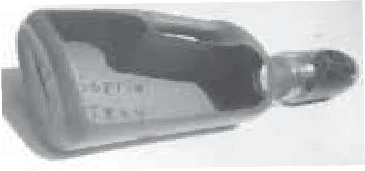
“To make a sorting tray for small bolts, nuts and screws, I cut out one side of a plastic laundry detergent bottle. The bottle’s neck fits perfectly inside a clear plastic, 18-oz. peanut butter jar. The contents in the bottle can be sorted and then poured back into the jar.”

From the archive · Full text
Reader shop tip

Frank Miller

Frank Miller, Beecher City, Ill.

Frank came up with a simple cart equipped with a high rise handlebar, which makes it much easier to maneuver his salamander shop heater. He welded a square box steel frame to the base of the heater. Then he added two utility wheels on back and a small caster wheel on front. The handlebar is made of lightweight pipe.

From the archive · Full text
Reader shop tip

Edward Welters

Edward Welters, 14307 LCR 2190, Verona, Mo. 65769 ph 417 498-6496

“We’re a White dealer and also restore Minneapolis Moline diesel tractors. Replacing worn intake valves on these tractors can be a problem because new cylinder heads for them are getting hard to find. We solved the problem by having the valves custom made by a company in England. That way we’re able to use the old heads without having to change guides or the seat and risk cracking the head. The new valve intake has a thicker head and results in better compression in the valve seat area. The custom fabrication shop requires a minimum of 250 valves. Anyone who’s interested can contact us.”

From the archive · Full text
Reader shop tip

Gene Sandmeier

Gene Sandmeier, Akaska, S. Dak.

“I use a boat winch to lift deer and antelope for processing. I bolted the winch to a wall and installed an I-bolt in the rafter, then ran a rope through the I-bolt to a spreader. Works great.”

From the archive · Full text
Reader shop tip

Dan Moore

Dan Moore, Billings, Montana

“I did a lot of body work on my Deere H tractor, then had a friend spot weld new grill screens to the sides of the tractor. He did a good job. However, once the work was done I had to do more body work over the welded spots next to the grill panels. I thought there had to be a better way, so I tried something new on my next tractor. I measured and marked where the screen should go, then put body filler into the base, and before the body filler was able to harden I pressed the screen down into the filler. Then I covered the edge of the screen with another thin coat of body filler. In effect, the screen is molded into the body filler. The body filler is so strong that once it sets up, you can’t pull the screen out.”

From the archive · Full text
Reader shop tip

Corneil Hiebert

Corneil Hiebert, Altona, Manitoba

“I converted an old barbeque grill into this por- table power sanding machine. First I removed the grill from the stand and replaced it with some wooden boards. Then I mounted a belt-disc sander onto it (any other light shop tools could also be used). I also closed the ends and the back side of the frame with plywood to give the frame more strength, then built a shelf into it to store extra discs or belts. Now I can easily move my sanding machine wherever I need it. It works great.”

From the archive · Full text
Reader shop tip

J & D Lawn Tractor

J & D Lawn Tractor, 1254 N. 2150th Ave., Mendon, Ill. 62351 ph 217 440-8365; [email protected]; www.jdlawntractor.com

This company specializes in Deere lawn and garden tractors and parts including engines and engine parts, transaxles and Deere manuals. All parts are used unless otherwise stated. Tractor attachments are also available.

From the archive · Full text
Reader shop tip

ATVparts.com

ATVparts.com, 3868 Pine Hill Road, Newport, Vt. 05855 ph 802 487-1000; fax 802 487-1015

It’s one of the largest selec-tions of new and used parts for most years, makes, and models of ATV’s. Some of the items offered include carburetor kits, oil filters, pistons, gaskets, brakes, sprockets, chains, wheel bearings, and tires. The company specializes in cylinder boring, replating, and crankshaft rebuilding. Clothing, helmets, and other accessories are also available.

From the archive · Full text
Reader shop tip

Mo-Jack

Mo-Jack, 151 South Whittier St., Wichita, Kansas 67207 ph 800 466- @themojack.com; www.themojack.com

The new MoJack is designed to lift and se- cure any size lawn tractor or riding mower, including zero turn mowers, to allow for undercarriage cleaning and maintenance. It provides up to 24 in. of clear working space and can safely lift up to 400 lbs., making blade sharpening, belt replacement and debris re-moval safer and easier.

Safety jacks and pins, a non-slip, self-brak-ing winch, and sturdy jack stands prevent the mower or lawn tractor from slipping or becoming unstable. Available in three versions, depending on the size of your mower or tractor. Prices range from $229 to $259.

From the archive · Full text
Reader shop tip

Lloyd Conrad

Lloyd Conrad, Greenfield, Wis.

“I had trouble starting a 37 hp Wisconsin engine on a self-propelled sprayer. I was told I needed two new carburetors at a cost of $600. Instead, I installed a plumbing ‘T’ in the air line from the air cleaner to the carburetor. The T fitting is used to inject a shot of ether, which starts the engine right up on the first try. The carburetor is in a bad location as the engine sits on top of the gas tank, which results in a 2-ft. lift for the fuel pump from the tank to the carburetor.”

From the archive · Full text
Reader shop tip

Elmer Goheen

Elmer Goheen, Hillman, Mich.

“I’ve been able to remove stuck pistons from hydraulic cylinders on brakes and clutches, etc., by installing a grease fitting in the bleed screw hole. If I plug the hydraulic line hole and pump the cylinder full of grease, the piston will come out.”

From the archive · Full text
Reader shop tip

Neal S. McCleary

Neal S. McCleary, Elkton, Md.

“Our Deere 926 mower conditioner had a lever that was used to control the shape of the wind-row. Unfortunately, the lever stuck out beyond the right side of the machine where it constantly caught on fence posts or anything else that was near it, and got bent. To solve the problem we just turned the handle around and cut it shorter so that it can’t contact the frame. Now the lever always stays where it’s set.”

From the archive · Full text
Reader shop tip

Eddie L. Gingerich

Eddie L. Gingerich, Cazenoria, Wis.

“When a gasket blew in my air compressor, I applied a little Fast Weld that I bought at a NAPA Auto Parts store. I made the repair while waiting for the gaskets to be shipped to me. It worked so well that I haven’t had to use the gaskets yet.”

From the archive · Full text
Reader shop tip 2 of 2

Brent Norton

Individual tip 2 of 2 from this reader’s published contribution.
Brent Norton, Lodi, Ohio

“I use a coat hanger to store my Mantis rototiller on the wall. I put the handles through the hanger. The weight of the tiller takes all the slack out. It takes up very little space.”

From the archive · Full text
Reader shop tip 1 of 2

Daniel Ball

Individual tip 1 of 2 from this reader’s published contribution.
Daniel Ball, Pomerene, Arizona

“I make handles out of steel pipe or conduit for most of my yard tools, including shovels and rakes. They last longer and no breakage, and I don’t get splinters in my hands.

From the archive · Full text
Reader shop tip 2 of 2

Daniel Ball

Individual tip 2 of 2 from this reader’s published contribution.
Daniel Ball, Pomerene, Arizona

“The wheels on roller blades and skate-boards are built out of high quality poly material. They have double ball bearings and a 1/4 or 5/16-in. thick axle. They have excellent weight carrying capacity. I’ve used them on a number of shop projects.”

From the archive · Full text
Reader shop tip 1 of 3

Paul Krejci

Individual tip 1 of 3 from this reader’s published contribution.
Paul Krejci, Deerton, Mich.

“The generator on my Cat 955 Traxcavator was no longer usable, so I converted the machine from 24-volt positive ground to 12-volt negative ground, using a semi alternator and starter.

From the archive · Full text
Reader shop tip 2 of 3

Paul Krejci

Individual tip 2 of 3 from this reader’s published contribution.
Paul Krejci, Deerton, Mich.

“When a tire on my road grader got a cut in its sidewall, I made a patch using rubber belting and carriage bolts. I installed a tube and liner in the repaired tire. It saved the expense of a new tire and has held up fine for eight years.

From the archive · Full text
Reader shop tip

Don Barlow

Don Barlow, Nashville, Mich. ph 517 852-9139

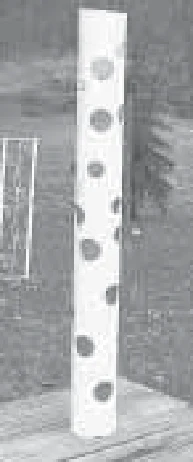
“I use a 30-in. length of 6-in. dia., heavy wall pvc pipe with holes in it to keep bungie straps from getting tangled up. I drilled a series of 1 1/2-in. dia. holes in a spiral pattern all around the pipe. I just hook the bungie cords into the holes. Up to 30 or more bungie straps can be kept in perfect order, even when I throw it in the back of a pickup.”

From the archive · Full text
Reader shop tip

Burton Graves

Burton Graves, Sandusky, Mich.

“I converted my White 4-row corn planter to a no-till planter by adding 17-in. dia. spring- loaded, fluted coulters off an International Harvester moldboard plow directly in front of the planter’s double openers. The coulters penetrate the ground and do a good job of cutting through trash. They cost very little. To each row, I welded a 6-in. piece of steel the same size as the plow beam and clamped the plow coulter to a bracket that holds one side of the planter unit, by turning offset on shank sideways. I made the change 18 years ago. I’ve worn out two or three sets of blades since then. The spring-loaded coulters can run over rocks without breaking anything.”

From the archive · Full text
Reader shop tip

Ray Bjorgaard

Ray Bjorgaard, De Soto, Kansas

“Whenever my Kubota dealer installs a front-end loader on a new tractor, he first has to remove a heavy reinforcement plate from under the middle of the tractor so that he can install a subframe for the loader. I was able to get several of these plates from a dealer at no cost. I mounted a pair of them on front of my Kubota B2910 tractor to add more weight on front. I needed the extra weight. Both plates are welded to a homemade, 4-in. angle iron frame and bolt to the tractor frame.”

Shop feature stories

From the archive · Full text
Feature story

One-Handed Grease Gun Applicator

Featured source: Posi Lock Puller, Inc.

Battery-operated grease guns have become quite popular in recent years. This new add-on attachment gives you fingertip control right at the nozzle.

Posi Lock’s new hand-trigger system can be used with most electric DC voltage grease guns.

The kit consists of a 5-ft. long hose with a thumb-activated microswitch at the end. Clips make it easy to wire to the grease gun. It comes with a holster to carry the grease gun on your belt.

The kit leaves you with one hand free, which can be important in dangerous, hard-to-reach or confined spaces, says the company. At the same time, you can still use the grease gun’s original trigger assembly if you want.

Sells for $56 plus S&H. Instructions and hose adapters included for Lincoln and Alemite brand grease guns.

Contact: FARM SHOW Followup, Posi Lock Puller, Inc., P. O. Box 246, 805 Sun-flower Ave., Cooperstown, N. Dak. 58425 (ph 701 797-2600; fax 701 797-2706; [email protected]; www.posilock.com).

From the archive · Full text
Feature story

Powerful Winch Powered By Rototiller Motor

Featured source: Kelly Wilson

“It works great for winching old tractors and other implements up onto a trailer. I never have to worry about the battery discharging like I would with a conventional electric winch. The entire assembly mounts on a standard 2-in. receiver hitch so I can use it just about anywhere I want,” says Bill Wilson, Thompson Falls, Montana, about his home-built, gas engine-driven winch.

The winch was originally designed to be powered by a truck’s pto. Now it’s powered by a 5 hp Briggs & Stratton engine off an old walk-behind rototiller which has a “reverse” gear. The engine belt-drives a pair of large 12-in. pulleys through a jackshaft, which in turn chain-drives the winch. The engine came equipped with two small pulleys on one side which run in the opposite direction from each other. Pulling one way on a lever makes the winch go forward to let out cable, and pulling the other way makes it go backward to pull the cable in.

The jackshaft drives a 16-tooth sprocket that chain-drives a 64-tooth sprocket to provide power to the winch which has internal worm gear reduction. The entire setup is mounted on a metal plate that’ll fit any standard 2-in. receiver hitch.

“It always has full power because there’s no battery to discharge,” says Wilson.

“I came up with the idea because I restore old tractors and needed a more reliable way to get them on my truck or trailer. I used to have an electric winch, but I found it was unreliable. About the time everything was set up and we got the tractor ready to load, the battery would start to drag down.

“By pulling one pin I can remove the winch and mount it on any truck or trailer equipped with a 2-in. receiver hitch. I mounted a re-ceiver hitch on front of the truck’s flatbed, just behind the cab, which is where I usually keep the winch. I also mounted a receiver hitch on the front of my trailer.”

Wilson says he believes in operating a winch slowly so no gets hurt. The reduction on his winch causes it to operate very slowly, and also gives it a lot of power.

“My dad always said that you could pull a freight train with a lawn mower engine if you had enough reduction. It works great for pulling out tractors that are stuck in the field. One time I pulled out a tractor that had been setting in a field in Kansas for 30 years. Another time I used a snatch block and a doubled-up line to pull a big loader backhoe out of the mud and load it onto a trailer. I could hardly even tell the motor was pulling. The wheels were a foot deep into the mud, but it pulled it right out. And if someone wants to borrow the winch, they can use it with any 2-in. receiver hitch.”

He bought the winch at an auction sale and paid $50 for it. Both pulleys came off an old grain bin unloading auger.

From the archive · Full text
Feature story

Easy Way To Beef Up Suspension

Featured source: Murray Biel

Used for more than 30 years on all types of heavy-duty commercial and industrial vehicles, AEON hollow rubber springs are simple devices that are easy and quick to attach to your pickup or van.

“Just remove your original bump stops from the springs,” says Murray Biel, Timbren Suspension Enhancement Systems.

“Bolt our AEON hollow rubber springs into the same holes. All you need is a socket wrench with an extension.”

Biel says 80 percent of their sales are to pickup owners. The rubber springs are available for front and rear axles as well as trailer suspensions. They work with air spring suspensions, multi-leaf and parabolic leaf springs, composite springs and walking beam suspensions.

“The springs are especially handy for snow plows on the front end or for hauling heavy loads in the back,” says Biel.

Advantages over air suspension systems include fast installation, no maintenance, no air lines to leak or be damaged, and half the cost. Prices start at $210 each for rear and front systems on 1/2 and 3/4-ton trucks and vans.

“Our AEON springs come with a lifetime warranty and will literally outlast the life of the vehicle,” says Biel.

When not needed, the rubber springs are described as virtually transparent as a gap is left between them and the suspension system at installation. Only when loads are applied do they go to work, compressing as they come in contact with the suspension components.

Size and design are matched to specific makes and models and expected load rate. Units for raised and lowered vehicles are available as special orders.

To find a local dealer, check the Timbren website or call their toll free number.

Contact: FARM SHOW Followup, Timbren Industries, 381 Westney Rd. S., Ajax, Ontario, Canada L1S 6M6 (ph 905 683-5991; toll free 800 263-3113; www.timbren.com).

From the archive · Full text
Feature story

Side-Mounted Muffler Gives Tractor 5 More Hp

Featured source: Ray Bjorgaard

“I’ve been using small Kubota tractors since 1975. In 1980 a dealer told me that if I would exchange the 1 1/8-in. dia. exhaust pipe on my Kubota 2910 30 hp tractor to a larger size, the tractor’s engine would run cooler and gain power. So I switched to a 2-in. dia. glass pack and gained 5 hp on the tractor,” says Ray Bjorgaard, De Soto, Kansas.

The tractor came with a muffler located directly under the hood, with exhaust coming out under the tractor, which caused the hood to get hot and the engine to lose power.

Bjorgaard unbolted the muffler and re-routed the exhaust to come out the side of the hood. A restrictor ring was molded into the exhaust manifold. He used a stone to grind the ring smooth, then sawed the muffler mounting plate smooth and welded the pipe to the plate. He converted a 1 3/4-in. dia. pipe into an L-shape that comes off the manifold. Then he welded a 2-in. dia. pipe, which supports the new muffler, on top of it. To accommodate the tractor’s side panel, he cut a U-shaped notch out of the panel, then pop riveted an aluminum horseshoe over the notch.

“I paid $18 for the muffler and $1 for a new gasket that I bolted to the exhaust manifold. I already had the pipe,” says Bjorgaard.

Contact: FARM SHOW Followup, Ray Bjorgaard, 10060 Waverly Rd., De Soto, Kansas 66018 (ph 913 583-1744).

From the archive · Full text
Feature story

Drive-On Service Ramp For Cars, Trucks

Featured source: Kenneth C. Rush

“I built this car ramp to do oil changes and minor repairs. It’s great. I wouldn’t change a thing,” says Kenneth Rush, Grayling, Mich.

Rush wanted to work under cars and trucks, and he wanted to be able to do the messy work in an out-of-the-way spot so he built them into the side of a hill.

The wood ramps are 14 ft. long, 18 in. wide, and positioned about 3 ft. above ground. A 3-ft. deep pit is dug under the ramp so there’s 6 ft. of working room.

An air compressor in a nearby garage supplies air pressure to a hose reel mounted underneath the ramp, for operating air tools. There are also electric outlets for operating lights or drills, etc.

“I spent only about $200. Comparable commercial hoists sell for thousands of dollars,” says Rush.

“There are 2 by 8’s along the side of each track that serve as guides, so a wheel can’t accidentally slip off if the driver is inattentive of the mirror. Looking forward about 20 ft. in front of the left-side track is a mirror mounted on two posts. When I drive up the approach, I can see the driver’s side wheel enter the ramp and watch it all the way up the ramp.

“There’s a landing on the driver’s side so I can get out of the vehicle without difficulty, with steps at the rear of the landing that lead down to ground level.”

The pit floor is lined with patio blocks which makes a good floor to walk on and yet allows rain to seep away into the sandy ground below, says Rush.

Contact: FARM SHOW Followup, Ken-neth C. Rush, 2404 W. Four Mile Rd., Gray-ling, Mich. 49738 (ph 989 348-2962; [email protected]).

From the archive · Full text
Feature story

Spill-Proof Oil Spout

Featured source: Masterlink Marketing, Inc.

Pouring oil from quart cans can be a messy job. The new Oil Buddy spill-proof spout keeps engines clean and dry.

The spout has a spring-loaded on/off valve that only opens when it’s pressed into the fill hole. When bottle is pulled back the valve automatically closes, keeping oil from dripping. Makes it easy to stop pouring to check on the oil level. And no funnel is needed.

The spout is available in two colors. One can be used for oil, and the other for anti-freeze coolant or windshield washer fluid.

Fits standard 4 to 6-quart containers and standard 4-liter/1-gal. anti-freeze coolant and windshield wash bottles. It sells for $2.99 and is available at most Wal-Mart stores.

Contact: FARM SHOW Followup, Masterlink Marketing, Inc., 26 Robertson Davies Drive, Brampton, Ontario, Canada L7A 1J9 (ph 800 667-4954; master [email protected]; www.seat belt adjuster.com).

From the archive · Full text
Feature story

Where To Buy Antique Tractor Lights

Featured source: American Tractor Lights

American Tractor Lights has been helping tractor restorers and other owners of older tractors get it “right” when fixing broken lights.

“We’re kind of the Lone Ranger for American-made lights,” says Dale Smith, owner of the Ellsworth, Ill., company. American Tractor Lights manufactures lights for all tractor makes built between 1939 and 1972 - Allis-Chalmers, Case, Cockshutt, International/Farmall, John Deere, Massey, Minneapolis-Moline, Oliver and more.

“We’re known for high quality and that our parts will fit right in place of the original,” Smith says.

He notes that cheaper imports are available but they often don’t fit as well and sometimes don’t even work.

Smith takes pride in surviving the challenges of making a U.S. product. His company’s website has helped grow the business beyond the U.S. to Canada, Australia and Europe, where the popularity of restoring tractors is exploding.

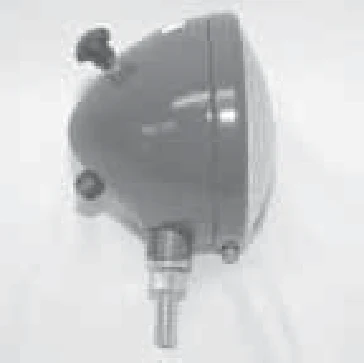
Besides selling complete headlights for $63/each, American Tractor Lights sells components, reflectors and rear lights. They also do custom production work, with a minimum of 2,000 lights. They recently filled a large order for lights for Oliver tractor models, for example.

Contact: FARM SHOW Followup, American Tractor Lights, P.O. Box 112, Ellsworth, Ill. 61737 (ph 309 212-7585; www.americantractorlights.com).

From the archive · Full text
Feature story

Easy-To-Swing Titanium Hammer

Featured source: Joel Allen

The idea of buying a $100 hammer seems crazy but amateur builders are discovering what professional framers and carpenters have known for several years. Titanium hammers are easier to use, with less arm pain and fatigue.

The titanium hammer was invented and designed by Mark Martinez, a third generation builder who liked using titanium golf clubs and wondered why the same technology wouldn’t work for driving nails. A decade later, Stiletto Tools of Winton, Calif., offers several models of titanium hammers and nail pullers.

“Titanium has a more efficient transfer of swing energy,” explains Joel Allen, director of operations for Stiletto Tool. With a steel hammerhead, 70 percent of the force goes to the nail, with 30 percent recoil going back to the person swinging the hammer. Titanium puts 97 percent force to the nail.

Allen says a 12-oz. titanium hammer delivers the same force as a 21-oz. steel hammer.

Doctors also prescribe the hammers for carpenters who suffer from carpal tunnel and other repetitive motion, stress-related injuries.

A framing model starts at about $100 with hickory handle. A model with a fiberglass handle sells for $120. Options like magnetic nail starters, and smooth or milled faces, are available.

Contact: FARM SHOW Followup, Stiletto Tools, 6061 N. Winton Way, Winton, Calif. 95388 (ph 800 987-1849; www.stiletto.com).

From the archive · Full text
Feature story

“Rocket Coating” Adds Extreme Wear To Metal Parts

Featured source: Jon Osborne

A new “RocketCoat” process for hard-sur-facing metal parts actually uses the exhaust of a tiny rocket engine to lay down tungsten carbide which is “impact fused” to the metal.

“With RocketCoat, the exhaust gasses hit the object at 10 times the speed of sound,” says Jon Osborne.

“We get bonding strengths that exceed 12,000 psi and have coated surfaces as thin as 14-gauge.”

Osborne’s company, Extreme Industrial Coatings, has built its reputation around hard-surfacing valves, pumps, impellers, and other high-wear parts. He also repairs cast iron components, shaft bearings, and seals using several proprietary coating techniques he has developed.

In one case, a bronze impeller on a pump that recirculates wastewater at a dairy farm used to wear out every two weeks or so. After Osborne installed a RocketCoated impeller, there’s no wear after 18 months.

“We’ve coated vacuum valves on potato seeders that normally get replaced each season, but ours aren’t scratched after three seasons,” he says.

“Replacing them costs big bucks, along with the time to tear the machine down to its guts.”

Other common uses for his expertise include pulleys and fan blades. While the pulleys are not that costly, as they wear, they tear up belts that can run as high as $1,500 on some machines. Fan blades in a variety of ag and non-ag situations quickly become pit-ted as blades hit dust particles. This affects the balance of the fan and its efficiency. Osborne says coatings can eliminate, or at least minimize, the wear.

Osborne, the wear control engineer and company owner, also uses plasma and flame techniques to lay down thin coatings of material on tillage wear points. He claims a quarter inch of PlasmaPlate (a 36,000 ̊ process that applies tungsten carbide over points subject to extreme wear) is as resistant to abrasion as 1-ft. thick steel plate.

“The plasma process melts both the tungsten carbide binder and the base metal,” explains Osborne.

“We’ve used the process on fans that were swapped out every three months and have since gone two years without replacement.”

Another method, FlameSpray, uses a torch to lay down metallic and ceramic coatings, while BoroPlate welds boron carbide onto parts.

“Our niche is wear control, and we’re always on the lookout for new materials as well as technologies to apply it,” says Osborne.

“Our electric arc spray is one that is really exciting. It gives us the technology to go in and lay down a thin skin of hard facing over large surface areas and do it economically.”

He has used the process to coat the beds of large feed trucks and even corn chopper chutes.

“The chutes were a real pain in the neck, but we compared them to chrome chutes on side-by-side machines,” says Osborne.

“At the end of the season, ours showed hardly any wear compared to the chrome.”

The material used also varies from job to job with tungsten carbide a common coating. On the chutes, Osborne used a boron carbide steel alloy called Borospray.

“It’s like metallic glass with no grain structure in it and yet it approaches tungsten carbide in abrasion resistance while being lower in cost,” explains Osborne.

He emphasizes that surface preparation is as important as the actual coating. He has developed several proprietary preparatory processes, including unusual media that are extremely hard and dense.

Prices vary depending on the process, material and size of the job. Osborne suggests contacting him before shipping a part, as it may be less expensive to buy a part in his area, have it coated and then ship it one way.

Contact: FARM SHOW Followup, Jon Osborne, Extreme Industrial Coatings, Air-ways Industrial Park, 11319 W Willow Lane, Airway Heights, Wash. 99001 (ph 509 991-1773; fax 509 299-7706; jono @extreme coatings.com; www.extremecoatings.com).

From the archive · Full text
Feature story

Magnetic Oil Pans Catch Metal Shavings

Featured source: Rick Rothlisberger

It’s common sense that transmissions and differentials last longer if they run cooler and if the fluid is cleaner. One way to do both for trucks is with components offered by Mag-Hytec. The company makes differential covers with magnetic drain plugs and dip sticks to trap shavings and other metal parts. They also make replacement transmission pans with magnetic drain plugs.

“Our differential cover and transmission pan double the fluid capacity of each, and the finned design cools the fluids faster,” explains Jerry Rothlisberger.

“Magnetic drain plugs and dipsticks keep the fluid clean.”

He and his wife Korena run the company his dad Roy started nearly 30 years ago.

“My dad wanted a differential cover with a dipstick for his truck and decided to make his own. That got him started,” recalls Rothlisberger. All components use high quality.

Most plugs, cap screws and washers are stainless steel. The covers and pans are cast in aircraft aluminum with cooling fins machined out.

Drain plugs and dipstick are magnetic.

“The magnets collect fine metal shavings and if big chunks break off they prevent further damage,” says Rothlisberger, who suggests regular inspection of plugs and dipstick.

“You’ll always find a clump of chrome shavings or fine particles on the magnetic dipstick or plug, but if you see a larger part, it alerts you to pull the cover and do an inspection.”

The heavy-duty differential covers sell for $235 and up, while transmission fluid pans sell for $250 and up, depending on the vehicle. Covers and pans are available for Chevy, Ford and Dodge trucks and covers for rear Dana 44 differentials.

Contact: FARM SHOW Followup, Mag-Hytec, 14718 Arminta St., Van Nuys, Calif. 91402 (ph 818 786-8325; fax 818 786.0560; [email protected]; www.mag-hytec.com).

From the archive · Full text
Feature story

Electronic Ignition Kits For Older Tractors, Cars

Featured source: Pete Bodde

“I installed a 12-volt electronic ignition on my 1952 Ford 8N tractor. It works great and eliminates the points and condenser,” says Peter Bodde, Arthur, Ontario.

The tractor still has its original 6-volt starter motor, but Bodde had it rebuilt. He also installed a new distributor, a 12-volt battery, a 12-volt coil, and a GM AC alternator.

“Converting from six volts to 12 volts paid off, says Bodde, who made the conversion about seven years ago.

“I made the conversion because in cold, damp weather conden-sation would build up on the points so I had trouble starting the tractor. I often had to use a heat gun to dry them off. Now the tractor always starts right up.

“I bought a used alternator and had a friend rebuild it, which was cheaper than buying a new one. I paid $80 for the electronic ignition kit which I bought from a local farm implement dealer. My total cost was less than $200.”

Bodde also installed a 6-volt electronic ignition kit on his 1931 Ford Phaeton Model A touring car, which was originally equipped with a distributor, coil, points and plugs.

“Since I converted to electronic, the car starts and runs better,” he says.

The electronic ignition kit bolts on inside the distributor on an adaptor plate.

He kept the car’s original 6-volt battery.

“The car’s entire system is still 6-volt. I didn’t want to change to 12-volt because the car is road worthy, and installing a new 12-volt battery and ignition would reduce the car’s value as an antique,” notes Bodde.

Contact: FARM SHOW Followup, Peter Bodde, 7866 Peel Side Road 21, RR 1, Arthur, Ontario, Canada N0G 1A0.