Practical ideas from FARM SHOW MagazineSubscribe · Free issue · Send us your shop tip
Subscribe to FARM SHOW
Issues / Vol. 39, No. 5 (2015)

Vol. 39, No. 5 (2015)

Money-Saving Repairs & Maintenance Shortcuts · Printed section pp. 36–39

32 selected entries · Complete text of selected entries

This issue’s section includes reader tips and feature-length shop stories. Held items and editorial notices are not reproduced.

Archive text: prices, coupons, availability and contact details reflect the original publication, not current offers. Reader methods are not universal instructions; follow manufacturer guidance and proper safety practices.

Reader shop tips

From the archive · Full text
Reader shop tip

Charles Myers

Charles Myers, Zanesville, Ohio

“My son Terry had to get a big sprocket off a Harvestore silo unloader that was more than 40 years old. There was no way to get above it with a pry bar so he drilled two 3/8-in. holes in the hub and a few times a day he squirted Conklin Rust Bomb penetrating oil into those two holes. After 10 days, he was able to remove the sprocket.”

From the archive · Full text
Reader shop tip

William Melcher

William Melcher, Bowdoin, Maine

“Rainwater runs down into the exhaust manifold through the stack on my old Farmall Super C. I solved the problem by simply putting an empty dog food can over the top of it when we park it. The can pops off when the engine starts. Simple and effective.”

From the archive · Full text
Reader shop tip

Chuck Regg

Chuck Regg, Flagstaff, Ariz.

“I avoid buying expensive hydraulic oil for my Bobcat when changing upper filters by pouring the oil into clean plastic buckets before removing filters, and then replacing the same fluid after.”

From the archive · Full text
Reader shop tip

Al Cole

Al Cole, Porterfield, Wis.

“I made a counterweight to mount on the back of my tractor by filling a plastic barrel with concrete and equipping it with brackets to fit to the 3-pt. hitch.”

From the archive · Full text
Reader shop tip

Benjamin Baughman

Benjamin Baughman, Ashfork, Ariz.

“I use bicycle wheels to make carousels to hang parts. For example, I have one that holds battery cables and others that hold tools and horse tack. Just mount them horizontally on a spindle and they spin easily.”

From the archive · Full text
Reader shop tip

Rick W. Christensen

Rick W. Christensen, Cokedale, Colo.

“Do the wood beds on your trailers split and warp? Just brush on 2 or 3 coats of used motor oil with a 6-in. brush or roller. It’ll soak in and preserve the wood.”

From the archive · Full text
Reader shop tip

David Owings

David Owings, Eldora, Iowa

“I paint my log chain hooks with fluorescent marking paint to make them more visible in dim light or tall grass. Most people have had the experience of a chain falling off the platform of a tractor and having to look for it. This makes it a lot easier to find.”

From the archive · Full text
Reader shop tip

Jim Ruen

Jim Ruen, Lanesboro, Minn.

“It isn’t often that I doubt something I read in FARM SHOW but that was the case with an article in an older issue about removing rust with water (Vol. 33, No. 4). It said to place a rusted part in water, then take it out after a few days and rinse the rust away.

“I had an old barn door carrier that had laid in the dirt for at least 20 years. It was rusted tighter than a good weld. I dropped it into a bucket of water for a few days and then checked it. To my amazement, the track wheels moved freely and everything that had been rusted shut was free. The rust just rinsed away.”

From the archive · Full text
Reader shop tip

Roaul Boyd

Roaul Boyd, Fairbanks, Alaska

“I read an idea in FARM SHOW about using tire stems as vents on new-fangled gas cans without vents. Great idea! So I installed them in several of my ‘worthless’ new gas cans. Unfortunately, after about 6 months the rubber stems rotted off. To solve the problem, I switched to metal stems and was back in business.”

From the archive · Full text
Reader shop tip

Arthur Selent

Arthur Selent, Hixon, British Columbia

“You can recycle old barbed wire by using it as a replacement for rebar when pouring concrete for medium-duty jobs. You can use a lot of it and it’s easy to bend into curves and shapes around obstacles without the use of bending equipment. I hacksaw the wire into 2-ft. sections to make it easy to use.”

From the archive · Full text
Reader shop tip

Bayard E. Young

Bayard E. Young, Elkwood, Va.

“I would like to share my experience with other readers that own an 8N Ford tractor with a 6-volt system. I recently installed electronic ignition that eliminates the points and condenser. It’s now a much better-running tractor. I got the kit from John Brillman at The Brillman Company (www.brillman.com; ph 540 477-4112). He will provide all the advice you need to install.”

From the archive · Full text
Reader shop tip 1 of 2

Whip Lashley

Individual tip 1 of 2 from this reader’s published contribution.
Whip Lashley, Shreveport, La.

“Here’s a tip to make vice grips easier to use. Replace the adjusting screw with an eye bolt. Makes it a lot easier to turn for adjusting and you can put a rope or tool through the eye to pull, if necessary. It’s also easier to tell at a glance if the bolt backs off during use. Much easier on the fingers and lets you hang the tool on a hook when done.

From the archive · Full text
Reader shop tip 2 of 2

Whip Lashley

Individual tip 2 of 2 from this reader’s published contribution.
Whip Lashley, Shreveport, La.

“Here’s an idea I use to shorten a chain or take the slack out of a chain when pulling. Just attach two clevis grab hooks together. Hook one of the grab hooks to the chain and pull up whatever amount of chain is extra to the other grab hook. Often very handy.”

From the archive · Full text
Reader shop tip

Wayne Tjeerdsma

Wayne Tjeerdsma, Slectro Co., Avon, S. Dak. (www.slectro.com; ph 605 286-3221)

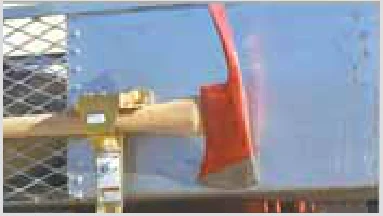
“The Handle Clamp ($37.50) bolts to any flat surface and is designed to hold tools such as a broom, shovel, grease gun, rake, ax, etc.

“To use the Handle Clamp you pull back to open the jaw, then place the tool inside the jaw and release the handle. Torsion springs hold it closed. To adjust the size of the jaw opening you loosen a wing nut located on the handle, then move a slide stop up or down and retighten the wing nut.

“Jaw pressure varies from 53 to 88 lbs. depending on the size of the tool being held. The more you open the slide stop, the higher the pressure. At a 3/4 in. setting, the jaw pressure is 88 lbs.; at a 2 1/4-in. setting it’s only 53 lbs. It’s built rugged and holds the tool securely wherever you need it. A lot of people use it to carry brooms in the back of livestock trailers. It also works great to carry shovels and grease guns. The jaw can be adjusted to hold objects anywhere from 3/4 to 2 1/4 in. in diameter, which is wide enough for a grease gun.”

From the archive · Full text
Reader shop tip

Richard Sands

Richard Sands, McConnelsville, Ohio

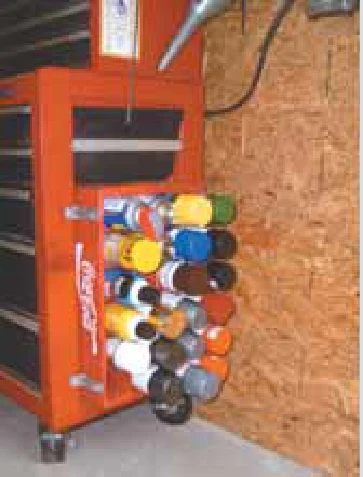
“I got tired of aerosol paint cans, WD-40, and other cans rolling around on my shop floor, work bench, drill press, etc. So I found an old plastic Coke bottle carrier and mounted it on one side of my roll-away toolbox. Now I can keep up to 24 cans at a time right at my fingertips. It really helps keep my shop free of clutter.”

From the archive · Full text
Reader shop tip

John Kennedy

John Kennedy, Seligman, Ariz.

“I bought an old Ford pickup equipped with a 360 cu. in. engine that wouldn’t turn over. The hood was off so the engine had been exposed to the elements for several years.

“I drained the water and oil out of the crankcase, but the starter motor wouldn’t budge it. I tried using a socket and bar on the crankshaft but that didn’t help, either. I even removed the spark plugs and filled each cylinder with diesel, and then waited a few days. No luck.

“I observed that only the no. 4 cylinder still had diesel in it, so I sucked the fuel out and filled that cylinder with Mystery Oil. Then I waited a few days and put a ratchet strap on the socket and bar. It moved just a bit so I was able to take up the slack in the ratchet strap. I kept that up, off and on, over the next 2 days until finally the engine broke free.

“Now the crankshaft spins like new.”

From the archive · Full text
Reader shop tip

Dennis Strahle

Dennis Strahle, Eagle, Mich

“I didn’t like the 4-ft. fluorescent light fixtures in my shop. They burn out too often and make a humming noise. I finally decided to replace all the fluorescent lights with modified compact fluorescent lights (CFL’s).

“My solution was simple: a 2 by 4 with light fixture boxes screwed to its underside, and then wired to plug into existing outlets on the shop ceiling. The CFL’s are perfectly quiet, use far less electricity, and light up my shop nicely. The shop ceiling is 13 ft. high so I’m not in danger of swinging a board high enough to accidentally hit the lights, but for lower ceilings you might need to cover the lights to keep from breaking the bulbs.”

From the archive · Full text
Reader shop tip

Richard Rogers

Richard Rogers, Bentley, La.

“The charger went bad on my Alemite 14.4-volt battery-powered grease gun due to a bad transformer. A replacement charger from the company would have cost about $150. Instead, I replaced the bad transformer with a 16-volt doorbell transformer that I bought at Home Depot for $11.

“A friend who is an electrician placed the doorbell transformer inside the charger in place of the original transformer and then stuffed material in around it to hold it in place. The 16-volt doorbell transformer has a little less wattage than the original transformer so the charger now works slower than before, but that’s not a problem.”

From the archive · Full text
Reader shop tip

Howard Wright

Howard Wright, Sabina, Ohio

“Old, dead batteries can sometimes be revived by putting a couple drops of Motorkote engine lubricant in each cell and then slow charging the battery overnight. The lubricant washes the acid off the lead plates in the battery to remove corrosion. Over the years I’ve used Motorkote successfully on several old tractor batteries that were sitting around.”

From the archive · Full text
Reader shop tip

Worthington Ag Parts

Worthington Ag Parts, ph 888 845-8456; www.worthingtonagparts.com

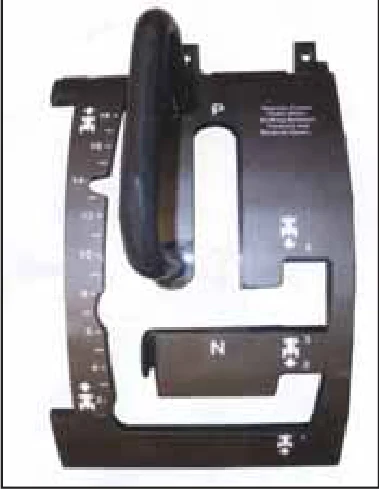
Their new gearshift plate kit is designed to fit all Case IH Magnum tractors. For 2-reverse gear tractors, the kit expands your reverse gears by making the third and fourth gears operational – thus making your 2-reverse tractor a 4-reverse model. The kit uses a lock lever to block off the lower 6 gears, allowing you to shift from forward to reverse without entering the lower gears. The kit includes a shift plate cover, park lock lever, decal and instructions. It installs in less than 2 hours.

From the archive · Full text
Reader shop tip

Don Hipp

Don Hipp, Auburn, W. Va.

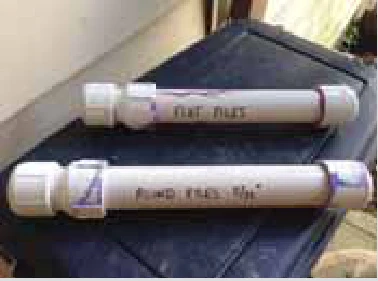
“I own 3 different size chainsaws and need 2 different kinds of files to keep the chains sharp. To save money I buy a dozen Oregon round files at a time. The files come packaged in a cardboard box and are individually wrapped in paper. However, moisture gets inside the box which causes the paper to get wet and stick to the files. Eventually rust starts to form so that by the time I get to the last 4 or 5 files in the box, they’re not even useable.

“To solve the problem I decided to store the files inside big diameter soda straws that I then place inside pvc tubes. The straws keep the files from bouncing around and rubbing against each other and becoming dull. I can store up to a dozen 5/32-in. round files inside a 1 1/2-in. dia. tube. I place a silicon bead pouch (the kind you often find in shipping boxes) at the bottom of the tube in order to draw away any moisture.

“I glue a cap onto one end of each tube and screw a cap onto the other end, using a male thread and a female cap.

“I keep the tubes with me on my ATV or in my toolbox. The tubes are airtight and watertight and will keep the files in great shape for a long time. I haven’t thrown away a new file for years. In fact, files that I placed in a tube 5 years ago are still rust-free. The tubes can be painted any color to make them easier to see.”

Shop feature stories

From the archive · Full text
Feature story

Nerf Football Used To Plug Exhaust Stack

Featured source: Gary Nix

“A simple Nerf foam football works great to keep debris out of the exhaust stack on tractors and other self-propelled machines while transporting them. It also keeps turbochargers from turning and burning up bearings,” says Gary Nix, Mountain View, Wyo. He uses a knife to cut a football in half and then squeezes it down into the exhaust pipe.

“As an excavating contractor, I’m often hauling machines such as scrapers, excavators and loaders down the road on lowboy trailers, going from job to job,” says Nix.

“We have about 40 different machines to haul around, and many are turbocharged. We have to plug the exhaust on each machine in order to keep the wind from rotating the turbocharger. The machine’s engine isn’t running and it isn’t pumping any oil so if we didn’t plug the exhaust, the turbocharger bearings could burn up.

“It works slick. Once I start the engine to drive the machine off the trailer, the football pops out and I put it in a sack and store it in the truck for the next time.” Nix says the same idea can be used with machines that aren’t turbocharged, to keep rain and debris out.

“Nerf footballs come in two different sizes and of course they’re tapered, so you can adapt them to just about any size of exhaust,” he says.

“For exhausts larger than 5 in. in dia. you may need a Nerf basketball to plug the hole.” Contact: FARM SHOW Followup, Gary Nix, P.O. Box 607, Mountain View, Wyo. 82939 (ph 307 780-8080; [email protected]).

From the archive · Full text
Feature story

Rotating Boom Holds Air Hose, Electric Cords Above Shop Floor

Featured source: Steve Brubaker

Steve Brubaker got tired of stumbling over air hoses and electric cords in his 50 by 80-ft. shop, so he used car parts to make a ceiling-mounted, 12-ft. long boom to hold them. It swings in an almost 360 degree arc.

“It’s really handy and lets me use both my air and electric-operated shop tools anywhere without getting them tangled up. As far as I know there’s nothing like it on the market,” says Brubaker.

“I use my shop to construct small sheds that I sell commercially, so I spend a lot of time operating these tools and moving them around. The electric cord is attached to a screen door spring and the air hose to a coil, which causes them to retract. A stop keeps the cords from getting tangled up. Since both cords are 50 ft. long and the boom is only 12 ft. long, there’s always some excess cord that I have to tie up. If I did it again I’d use cords that were only 25 ft. long so I wouldn’t have that problem.” He mounted two 8-ft. long by 1-in. sq. tubes parallel to each other on the shop ceiling and drilled holes in them, then anchored them to the building’s trusses. A car wheel axle bearing is bolted to a pair of 3-in. wide, 1/4-in. thick steel brackets that hang down from the tubes. A brake rotor mounts on the same threaded stud where the car wheel would normally bolt onto the axle. The air hose and electric cord run down from the ceiling through a short vertical length of pvc tube that runs through the bearing and the axle shaft’s splines.

“The pvc tube keeps the cords from rubbing against the splines and wearing through,” says Brubaker. He welded a 2 1/2-ft. long steel tube to the bottom side of the rotor. One end of the boom fits inside the tube and is held in place by a pair of set screws. A silo unloader weight is welded onto the back end of the boom to keep it balanced, and a series of U-bolts spaced about 3 ft. apart are welded to the bottom of the boom to support the air hose.

“If I want I can easily shorten the boom by loosening the 2 set screws on the tube that the boom fits into,” notes Brubaker. Contact: FARM SHOW Followup, Steve Brubaker, 3427 State Hwy. 22, Oconto, Wis. 54153 (ph 920 604-0208; [email protected]).

From the archive · Full text
Feature story

Receiver Hitch Vise

Featured source: Connor Bishop

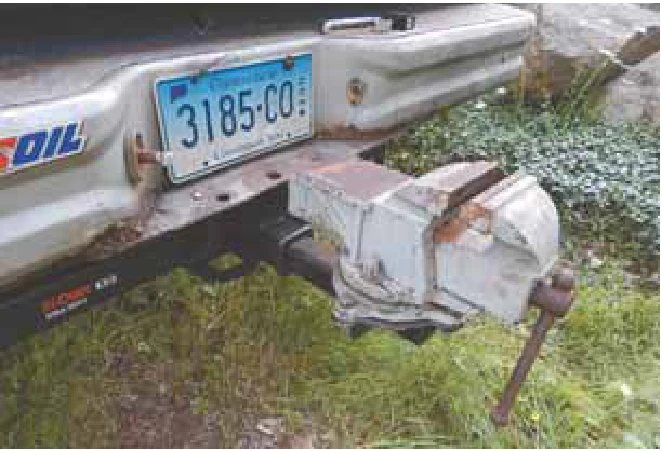
“Many times when I’m away from my shop I’ve wished I had a vise to use on some job. So, I came up with this vise-mounting bracket that works with any standard 2-in. receiver hitch,” says Connor Bishop, Guilford, Ct.

“I bolted a steel plate onto the vise and then welded the plate to a length of 2-in. sq. tubing. I also drilled a 5/8-in. dia. hole in the tubing to accommodate the hitch pin. Now whenever I’m away from the shop I slide the vise into the hitch, insert the hitch pin, and have a vise wherever my pickup is.” Contact: FARM SHOW Followup, Connor Bishop, 400 Moose Hill Rd., Guilford, Ct. 06437 (ph 203 313-5362; [email protected]).

From the archive · Full text
Feature story

Corn Crib Reborn As Farm Shop

Featured source: Howard Reischauer

Howard Reischauer was going to tear down an old corn crib to make room for a new farm shop.

“I planned to build a pole shed for storage and shop. However, after sizing what I would need, I decided to make something useful of the crib and save some money.” The “something useful” was a 30 by 32-ft. storage shed. One crib was originally slatted for ear corn, while the other had been converted for dried grain storage. Reischauer tore away the crib slats and side and overhead bins, completely gutting the inside of the building. He left the framing studs for the side cribs. The roof was still good, so it was left as is. He covered the exterior with steel siding and installed overhead garage doors at either end of the concrete alleyways. The two crib floors were concrete. Both were raised about a foot above the alley floor. The ear corn side had a dragway built in, while the shelled corn side was flat.

“I poured concrete in the ends of the dragway, filled it with crushed rock and poured concrete on the top for a flat surface,” says Reischauer.

“I left most of the uprights in place on the cribs, but cut out two, 6-ft. wide openings in each for easy access and air movement.” Some studs had to be replaced, but Reischauer had salvaged useable wood when gutting the interior.

“I spent a lot of time pulling nails and ripping 2 by 4’s to replace rotted studs,” he recalls. Reischauer says the entire project cost him about $3,000, primarily for steel siding and doors. Some salvaged 2 by 12’s were put to use as headers for the entry doors, while 2 by 4’s were doubled up on the exterior for mounting siding.

“There was a lot of rotted wood that had to be removed and burned,” says Reischauer.

“However, most of what I did to the building was with salvaged wood. I have a workbench and storage shelves on one side and storage on the other.” Reischauer also intended to take down a couple of old grain bins on the site. He decided to also repurpose one of them. He removed the drying floors and cut openings in the side for an 8 by 10-ft. garage door.

“To close the gap above the door frame, I took a 2 by 12 and used a jigsaw to cut an arc along one side to fit the curve of the bin,” says Reischauer.

“To make the upright jams for the door, I ripped 2 by 6’s at an angle. With the beveled angles set against the sides of the bin, the remainder of the jambs were square with the door.” Reischauer placed 1-in. weatherstripping between the jams and the bin walls. As the jambs were bolted to the corrugated metal, the insulation filled the gaps for a tight seal. Garage door tracks are supported with 1/2-in. metal conduit. Reischauer flattened the ends on them and mounted one from the end of each track to the ceiling of the bin for vertical support. A second set of conduits attaches the track ends to the sidewalls for horizontal support.

“The bin works great for storage of lawn mowers and other equipment and materials,” says Reischauer. Contact: FARM SHOW Followup, Howard Reischauer, 67768 120th St., Zearing, Iowa 50278 (ph 641 487-7673; [email protected]).

From the archive · Full text
Feature story

Fuel Test Keeps Engines Clean

Featured source: John Nightingale

If your diesel fuel sits very long in the tank, test it before you use it, suggests John Nightingale, Dieselcraft Fluid Engineering. Over time, diesel fuel without stabilizers can oxidize.

“The first thing you notice is the engine smoking as the oxidized fuel has lost its cetane rating and starts to come apart,” says Nightingale.

“Looking at the fuel, you’ll see it is darkening. The older and darker the fuel, the less efficient it is in the engine.” Eventually the oxidation breaks down the fuel. If held in storage, some of the components will drop to the bottom of the fuel tank and form diesel sludge, which smells bad and can cause engines to smoke and eventually plug filters.

“Diesel fuel begins to deteriorate as soon as it is produced,” says Nightingale.

“Within 30 days of refining, all diesel fuel, regardless of brand, goes through a natural process called repolymerization and oxidation. Once it starts to oxidize, it is like milk going sour. It oxidizes throughout.” Knowing how much fuel has oxidized is key. Dieselcraft offers an oxidation evaluation test kit for use before using stored fuel, whether in the storage tank or the engine. The test, which works with all commercial diesel fuel types, consists of filling a vial half full of fuel and adding 15 drops of an oxidation catalyst. In the presence of a high level of oxidation, the catalyst turns black.

“The more oxidized the fuel, the faster the results show,” says Nightingale.

“Severely oxidized fuel can produce a black band in 5 min. or less. Less oxidized fuel will produce a brown band. To be sure, we suggest letting the sample rest for up to 20 min.” Depending on the level of oxidation, Nightingale may suggest different additives. If bad enough, filtering may be recommended. If water has accumulated in the tank, bacteria and fungi may add to the sludge. This can lead to serious problems.

“When you refill the tank, you stir up all the sludge on the bottom, and when it hits the fuel filters, they plug,” explains Nightingale.

“Of particular concern are standby generators that are mission critical. Even if tested for 20 min. every week, the engine may run for 2 hrs. when needed and then quit if the fuel has gone bad.” Nightingale emphasizes the same thing can happen with any stationary engine, like an irrigation engine, or even a tractor or truck engine that sits over winter.

“I get calls from people saying they have algae in the tank,” says Nightingale.

“It is microbes, not algae. If someone sold you a biocide, it has done nothing to fix the problem.” Nightingale recommends testing older fuel for microbes and mold. He offers a test that identifies the presence of both on a single test. If a problem is present, he recommends a tank cleaner to treat the remaining fuel. The diesel fuel test for oxidation is priced at $9.95 for a single test or $49.95 for 20 tests. The bacteria and mold test is priced at $15.95 for a single test or $290.00 for 20 kits plus a free 8-oz. sample bottle of tank cleaner for treating up to 275 gal. of diesel fuel. Contact: FARM SHOW Followup, Magnum Group, Dieselcraft Fluid Engineering, P.O. Box 7670, Auburn, Calif. 95604 (ph 530 613-2150; [email protected]; www.dieselcraft.com).

From the archive · Full text
Feature story

He Specializes In Boosting Ford Truck Performance

Featured source: Doug Lewis

“We can fine-tune a gas or diesel engine to produce more power, drive better, shift better and use less fuel doing it,” says Ford performance specialist Doug Lewis.

“I’ve learned over the years that even though Ford builds great cars and trucks, there are many ways to make them perform better and last longer.” Lewis is a certified Ford Master Tech who worked in Ford dealerships for 18 years before starting Ford Performance Specialists in 1998. Lewis’s Georgia operation, which isn’t affiliated with Ford Motor Company, offers many conventional Ford technical services as well as custom services for all Ford vehicles, including diesel trucks. His reputation has spread across the country through internet sales, forum postings, and technical support provided over the phone. Lewis says he has 300 different vendors who supply parts for different makes and models.

“I started out as a gas engine guy and focused on the systems and how they work, including engine mechanicals, fuel system controls, spark timing, emissions, brake and transmission systems,” Lewis says.

“The diesel technicians back in the day were old guys with long fingernails and long white beards. These guys had been putting injector pumps on diesel engines for decades. Then along came electronic fuel systems and it was natural for me to learn about Powerstroke engines and what makes them tick. They’re a lot different than gas engines, but many of the same principles apply. Our customers today want to make a great truck better with more power and better fuel economy,” Lewis adds. Lewis’s performance modifications involve getting more air into the engine, using it efficiently, and then getting it out.

“Ford and most others calibrate their vehicles to run clean, not necessarily good. By installing the right air intake system, the right exhaust and performance tuning the vehicle, we can make the engine run better, have more power and get better mileage,” Lewis says. Tuning an engine is one aspect of performance, but getting that power to the ground is quite a different challenge. His company modifies suspension, braking and cooling systems to perform better, and they never use a cookie-cutter approach.

“If a customer wants fuel economy from their diesel, I don’t use bigger injectors and a 5-in. exhaust system. I’ve actually had that request and had to explain why those two things are at odds with each other,” says Lewis. Because of his extensive experience, Lewis is proficient in educating others on performance matters. He authored the Tech Tips section at the Power Stroke Registry for 10 years and is now an active contributor to The DieselStop Forum. He and his wife Liz have lent their expertise to the TV reality show Auction Kings. Lewis also puts his innovative ideas into practice on his own vehicles, having modified and custom-tuned a 2007 GT 500 to 685 hp while still achieving 24 mpg.

“I’ve been driving and working on Fords for more than 35 years and still find the work challenging and exciting,” Lewis says. His headquarters is in Mableton, Ga., near Atlanta, but he’ll consult with customers over the phone or the internet and sell products that customers can install themselves. The cost for performance improvements can run a few hundred dollars up to several thousand dollars and depends entirely on what a customer wants.

“I can add 2 to 3 mpg, 4 to 5 mpg, or even possibly double their economy if a customer wants to pay for it,” Lewis says. Contact: FARM SHOW Followup, Doug Lewis, Ford Performance Specialists, 351 6 Flags Pkwy. S.E., Mableton, Ga. 30126 (ph 770 648-1367; www.fordspecialists.com).

From the archive · Full text
Feature story

He Made A Metal Brake To Fit 20-Ton Press

Featured source: Kevin Ranette

“When I started a steel fabrication business, I needed a metal brake to bend metal. I already had a 20-ton shop press, so I decided to build a metal brake for it, too,” says Kevin Ranette, Moyie Springs, Idaho.

“I took a 22-in. length of 1/2-in. thick by 3-in. wide cold rolled flat metal, put a 50 degree bevel on it, and hard-faced it to make the bending plate. I then welded a length of 1/4-in. thick by 1-in. wide flat bar at the top and bottom on each side and drilled a 1/2-in. dia. hole in each bar. For the bottom, I took a 1/2-in. thick by 6-in. wide by 22-in. long plate and welded a length of heavy 1 1/2-in. angle iron to it. I hard-faced the edges and welded some 1/2-in. dia. cold rolled stock vertically so the 1/2 by 3-in. bending plate will stay centered. The plate moves up or down by means of a spring that fits over the 1/2-in. dia. round stock.

“I’ve used this brake to make hundreds of bends, and it’s still in excellent shape. It’ll easily bend a 20-in. length of 3/16-in. thick sheet metal. I’ve also used it to bend 1/2 by 2-in. flat bar, 1/4 by 6-in. flat bar, and up to 3/4-in. dia. cold rolled round stock. It should also be able to bend flat stock up to 1/2 in. thick by 2 1/2 in. wide.

“It’s easy to install. I just slide it on top of the press’s bed plates. If I want to use the press for something else, the brake slides right off.” Ranette says he’s willing to custom build brakes for anyone who’s interested.

“My brake should fit all standard 20-ton floor shop presses, and I can also build brakes for larger presses. Contact me for further information, prices and shipping costs. The price will vary according to the size and thickness of the steel, and also the hardness. The price for a small brake used with a 20-ton press is about $300, depending on steel.” He says he can custom build just about anything out of steel.

“If there’s something that you’d like built, give us a call,” says Ranette. Contact: FARM SHOW Followup, Kevin Ranette, 286 Enchanted Lane, Moyie Springs, Idaho 83845 (ph 208 267-6378; [email protected]).

From the archive · Full text
Feature story

Got A Bad Radiator? Here’s Where To Go

Featured source: Will Garrett

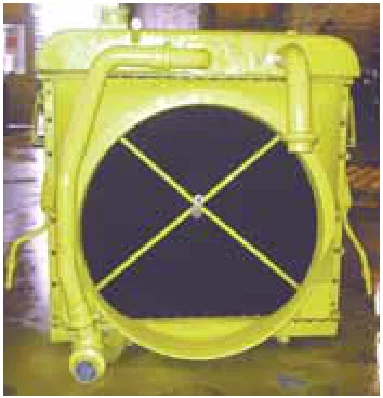
If you need a radiator, the Radiator Supply House either has it on hand or can get it. They have more than 10,000 radiators, oil coolers, charge air coolers, A/C condensers and shrouds for cars, trucks and more. If they can’t get what you need, they’ll make it. They restore, recore, replace or build new.

“A vehicle description and an original manufacturer part number will get us what we need if a replacement has already been developed,” says Will Garrett, Radiator Supply House.

“If not yet developed, send us the unit, and we will do a full set of drawings and build it. From then on, we’ll be able to build them for others off the part number.” Garrett says the firm stocks radiators for everything from Peterbilt trucks to Honda Accords.

“We build radiators for Honda Goldwings for a company and always keep one on a shelf,” says Garrett.

“We even build radiators for a company that developed a berry picking machine.” Garrett and his brother Ryan learned the business in their dad’s radiator shop. They opened Radiator Supply House in 2003. They’ve developed special wide fin spaced cores to help farmers deal with airflow and debris in cooling units. They are considered a leader in manufacturing steel tanks to replace plastic tank radiators. They also were one of the first to develop steel tank/copper-brass radiators to replace all-aluminum radiators for the RV industry.

“We manufacture a lot for agricultural equipment, but have done a little of everything,” says Garrett.

“We’ve done radiators for P51 fighters, locomotives, cars from different countries, and even equipment for logging operations in Russia. We’ve made and stock components for everything from cars and trucks to ag, refuse and construction equipment, as well as RV and performance engines.” Contact: FARM SHOW Followup, Radiator Supply House, 4432 Hwy. 20, Sweet Home, Ore. 97386 (ph 541 367-2991; toll free 877 615-3002; [email protected]; www.radiatorsupplyhouse.com).

From the archive · Full text
Feature story

Company Specializes In “Everything Carburetor”

Featured source: Daytona Parts Company

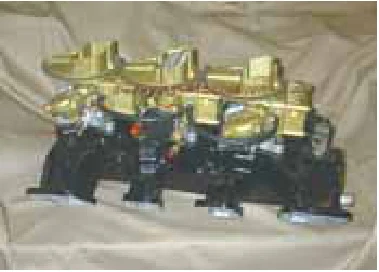
Daytona Parts Company prides itself on having everything you need when it comes to carburetors from present day to as far back as 1925. The company website offers more than 100,000 records of carburetors, kits, and parts, both domestic and foreign. Daytona Parts also provides repair services. Call or write for parts or use the “Find Your Carburetor Kit” tool on the company website. High-resolution images let you compare yours with ones in stock to ensure you find the exact carburetor you need. The company specializes in restoring carburetors to OEM specifications, but with ethanol resistant parts. Simply ship the faulty carburetor to Daytona Parts. Carburetors are totally disassembled, including bases and passage plugs. Components are cleaned in hot tank solutions. Zinc castings and aluminum castings are dichromated for protection against oxidation. Steel linkages are cleaned and replated. Base assemblies are cleaned, painted or black oxided. Parts are then reassembled with new gaskets, pumps, needles, seats, clips etc. Factory bench adjustments are performed, and after adjusting, the carburetor is packed with a new base gasket and air cleaner gasket, if needed, for shipment. Kits for do-it-yourself restoration also come with ethanol-resistant parts to match today’s fuel mixes. Kits include an Accel pump, needle and seat, gaskets, check valves, clips, springs and other small parts. Daytona also offers its own float valve design that it claims will prevent flooding due to dirt, rust or excess fuel pressure. Standard tapered steel or Viton needle floats can develop a wear groove that prevents proper seating due to engine vibration, age and road shocks. The Daytona float uses a fluorocarbon disc that seats on the inverted flair end of the orifice. It has no wear points. It also eliminates the need for a large float drop, as fuel level is maintained in the bowl from idle through top speed. Daytona also markets its own brand of universal carburetor for replacing old single barrel carburetors. Available in 2 models, it features a fully adjustable, external high-speed main jet, along with adjustable throttle levers for quickly changing high-speed jetting and throttle arm setups. It is designed for fine-tuning any application for fuel/air mixtures on the high speed circuit and is especially suited for dual or triple carburetor installations. All models are manual choke only. However they fit nearly any automotive or industrial application from the early 1930’s to present day and feature ethanol resistant parts. Contact: FARM SHOW Followup, Daytona Parts Company, 1191 Turnbull Bay Road, New Smyrna Beach, Fla. 32168 (ph 386 427-7108; [email protected]; www.daytonaparts.com).

From the archive · Full text
Feature story

Barbeque Grill Tool Cart

Featured source: Tom Kalista

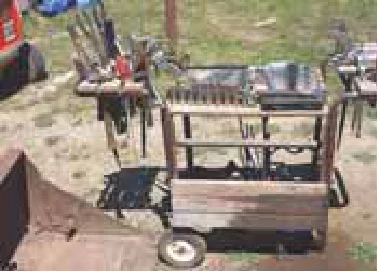
Tom Kalista, Longview, Wash., converted a burned-out barbeque grill into a handy, wheeled tool cart.

“It’s really handy because I can just pull alongside whatever machine I’m working on,” says Kalista.

“My only cost was a little time.” He threw the top part of the grill away and installed a piece of plywood where the tray used to be, and he drilled holes into the grill’s wooden sideboards to make room for long-handled tools. He also replaced the grill’s original 2 small plastic wheels with wheels off an old push mower.

“With the big lawn mower wheels it rolls around quite easily,” says Kalista.

“I use the top tray to store tools such as pipe wrenches, screwdrivers, extension sockets, etc., and the bottom tray to store bigger items such as large wrenches and hammers, hydraulic jacks, and coffee cans filled with miscellaneous items. I cut a large notch into one end of the top tray to make room for my hands when pushing the cart around.” Contact: FARM SHOW Followup, Tom Kalista, 2107 48th Ave., Longview, Wash. 98632 (ph 360 425-3953).