From the archive · Full text
Reader shop tip
Dale Osborn
“I use bamboo skewers (the kind used for kabobs) to apply a drop of oil in tight places or a speck of touch-up paint. You can also use it for mixing liquids and other things.”
Money-Saving Repairs & Maintenance Shortcuts · Printed section pp. 32–35
41 selected entries · Complete text of selected entries
This issue’s section includes reader tips and feature-length shop stories. Held items and editorial notices are not reproduced.
“I use bamboo skewers (the kind used for kabobs) to apply a drop of oil in tight places or a speck of touch-up paint. You can also use it for mixing liquids and other things.”
“I had to feed a bolt into a place where I couldn’t fit tools and fingers. A length of dental floss solved the problem. The nut will screw on right over the floss.”
“During cold winter months hydraulic hammer paste can’t be pumped. So I slide the grease gun into my truck tailpipe with the truck running to heat it up. Works great.
“The tube for windshield washer fluid cracked on my truck. Rather than replacing the whole thing, I cut out the bad section and used electrical heat shrink tubing infused with glue to install a new section. Worked great and saved lots of time.”
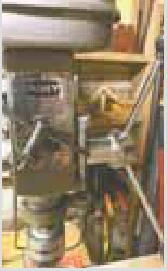
“I attach a few magnets to the front of my drill press to hold onto the chuck key when you’re not using it. It works great and you won’t lose it on your workbench.”
“One of my sons is the parts manager at a local Ford dealership. He let me come in one day to take pictures of the mechanics working on a truck engine. It’s a lot different working on a truck engine today than it was back in the old days when we put a hoist up in a tree to pull the engine. Now they lift the entire body off the chassis. All the wiring has quick disconnects. About a dozen bolts connect the cab to the frame.
“I bought a small tire machine from Harbor Freight. I don’t use it that often because it only works on small tires so I didn’t want to mount it in my shop. Instead, I mounted it on an old truck rim and tire. I offset it on the rim so it takes very little effort to tilt it over and roll it to wherever I need it.”
“I enjoyed the story you had about the guy who strapped a fuel tank to the back wheel of a blocked up tractor, then ran the wheel to clean rust out of the tank. Instead of using a tractor, I strapped a tank to the end of a cement mixer with crushed limestone and vinegar inside. Then I ran it for a while on each side. Worked good.”
“Use a welder to build up a sheared-off bolt to where you can twist it out with a vise grips. Be careful or you’ll weld the bolt in place. A TIG welder works best. The heat from the welding also helps loosen the bolt.
“Airhose reels and electric cord reels save time and keep the shop neat. Klutch Brand airhose reels from Northern Tool are the best (www.northerntool.com).”
“In your last issue a reader talked about issues with his two Deere Buck 4-wheelers. He said, “One of them dies whenever the engine heats up, then 30 min. later it’ll start up and run a little longer before the engine quits again.” I’m not a mechanic but I’d like to suggest that this issue is very common on smaller John Deere equipment.
“I think the fact that it stops when heated up misleads the mechanics because it has nothing to do with the problem, which is likely to be that the pencil screen on the end of the fuel intake line is so covered with crud that it actually shuts off the fuel and kills the engine. Whether the engine cools down or not, it will start again after several minutes because the vacuum in the fuel line drops enough to let the crud drop off at least the top of the pencil valve and fuel is then able to get back into the line – until the pencil valve gets plugged again, stopping the engine.
“You can solve the problem by unscrewing the fuel line from the dirty Deere fuel tank and the pencil screen should come out with the line. Just clean the crud off the screen with a blow gun and drain out the tank. This should solve the problem for a few years until crud builds up again in the tank.”
“We bought a used New Idea 245 manure spreader and had trouble with the apron chain working its way out on one side or the other underneath the spreader. To solve the problem, I attached a 2 by 4 to each side of the underside of the spreader to take up the extra space. Problem solved.”
“I had a 25 hp. Kawasaki engine that sat outside uncovered. Water got into the float bowl and it turned to ice during the winter, cracking the bowl. I used JB Weld to seal the bowl. Amazing stuff. No leaks at all afterward.”
“Teeth for a Pequa hay tedder are about $9 apiece at my dealer. With a few minor adjustments, the $1.99 rake teeth sold at Tractor Supply stores make a good replacement. The savings add up if you have a lot to replace.”
“When I have a rusty or stuck bolt, I use an impact wrench on it to break it loose. Works great.”
“When welding, I use duct tape to hold steel pieces together until I can tack weld them. Works better than clamps and other methods people try to use.”
“One unique repair I made recently was on my Deere riding mower. The brass sleeve around the driveshaft to the mower deck blades locked up. Deere wanted $200 for a new sleeve. I took it to my machinist friend Scott Smith and he machined a new driveshaft, then fitted it with two bearings, built a housing around it, and installed grease zerks. This repair instantly quieted down the mower tremendously – it’s super quiet now and has been running great for 2 years.”
“I had a hard time using a box end-open end wrench in order to break the stud bolts loose on my tractor’s front wheels. To gain more leverage, I hooked the box end of a second, slightly larger wrench into the open end of the first wrench. As soon as I applied pressure, the bolts immediately popped loose.”
“In a recent issue of FARM SHOW a reader said he was having trouble keeping the headlights on in his Dodge pickup, even after he changed out the switch. I think he has a bad ground on the headlights. I had the same problem back in 1971 with the dash lights on my new Plymouth Duster 340. The lights would go on and off whenever they felt like it. The problem turned out to be a bad ground on the dash panel. Once I figured that out, no more problems.”
“Highway median cable barriers can be used as a substitute for rebar in concrete. Several years ago I owned a construction company and used some highway median cable when pouring the 42-ft. dia. footing for a large grain bin. It worked great.
“Then a heavy rain washed out some of the fill from underneath the footing, with the bin full of corn on top of it. It was a 6-ft.washout, yet not a single crack developed in the concrete. I then pumped new concrete under the bin, and the footing looked like new again.” Highway median cables are often available from RepurposedMATERIALS, a company that puts customers together with industrial waste (ph 303 321-1471; www.repurposedmaterialsinc.com).
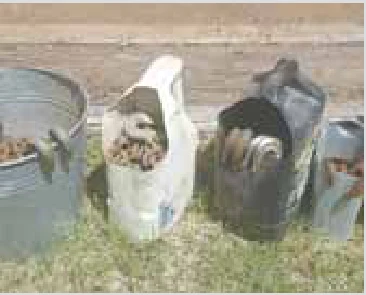
“Cutting the pour spout off used plastic jugs makes it easy to store chains tangle-free. I leave the handle on and use different size jugs for different size chains. Metal pails and containers can be used to store heavier chains.”
“A couple of years ago I got a good deal on a heavy steel shop table, but I wasn’t sure where to place it in my shop. Putting the table against a wall would limit its use for big projects, and putting it in the middle of the shop would take up too much space. Instead I welded angle irons between the legs on both sides of the table, about 6 in. above a shelf, and then bolted boat trailer jacks onto them.
“To move the table I just crank the jack handles a few times to raise the table off the floor. Once the table is in place, I lower the table legs back onto the floor to keep flat spots from forming on the jack wheels.”
“I put split hoses over fuel and brake lines to reduce wear from vibration and metal-against-metal wear.
“One time-saver in my shop is using overhead retractable airline and electrical outlets. Convenience saves time.”
“When replacing bearings on any equipment it often is hard to press them into place. I place the new bearing into my freezer for 1 or 2 hrs. before installing. It shrinks enough to allow for easy installation.”
“I recently refurbished the 3 Gas Boy pumps I use on my fuel tanks. My pumps are old but still going strong after pumping close to 100,000 gal. of diesel fuel and gasoline on my farm. All parts are available online for these pumps, including the brass vanes and the little number wheels that register the gallons dispensed. The impellers and vanes are easy to get at with only 2 bolts holding the cover. I replaced the clear plastic over the dial with a piece I cut out of a clear liter bottle of soda.
“Recently, I found an old Gas Boy pump at the junk yard. It was locked up. I took off the cover on the impeller and found that one of the brass vanes on the impeller had broken off and got wedged in the housing. I turned the impeller backward with a screwdriver and the broken piece fell out. After that, the pump worked perfectly.”
“I have numbered all my parts drawers and alphabetized my shelves in order. I make up a 3 by 5 index card for each part and where it’s stored. All the cards are in a box so no more searching the shop for parts. I just look at the cards and go right to the drawer or shelf.”
“A lot of people don’t know about Corn Head Grease, otherwise called thixotropic grease.
That means it acts like grease at rest so it won’t leak out but becomes fluid when agitated. It won’t repair a leaky seal but it can’t be beat as a backup solution until you make a repair. Deere has a great video online (just search ‘Deere’ and ‘corn head grease’ on YouTube). They use it in many of their heavy ag equipment gearboxes and it’s often found in heavy-duty rotary mower gearboxes and garden tractors. I know people who use it in winch gearboxes, steering gearboxes, differentials and more. It works best in warm weather because in cold weather it takes more motion to fluidize it.
“On older vehicles, I often replace the plug in the bottom of fuel tanks with a 2 to 3-in. nipple and petcock. This serves as a ‘dirt leg’, allows me to easily drain off old gas, check for water in the gas, and provides an emergency supply of gas that I can easily access with a short hose. I put a cap over the petcock just to be safe.”
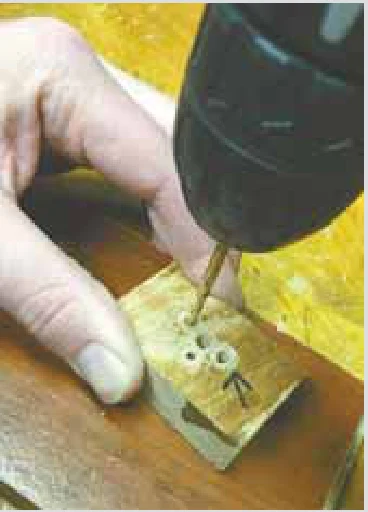
“One idea is that when you need to drill a straight hole and you don’t trust your eye with a hand drill, take a small block of oak or maple and drill a hole through it with a drill press. Then use that block as a guide when using a hand drill.”
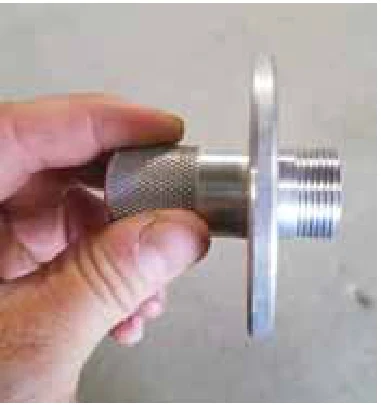
“The oil filter in 2013-2018 Dodge Ram Cummins heavy-duty diesel pickups is difficult and messy to remove. My oil filter removal tool makes the job much easier and cleaner,” says Cody Torgerson, Douglas, Wyo. Torgerson owns a small automotive lube shop and says he came up with the tool out of necessity. It’s made of 6160 aircraft aluminum and comes with a 3-in. dia. disc on top that seals against the O-ring on top of the filter. FARM SHOW previously reported on how Brandon Parks of Cumming, Ga., came up with a somewhat similar tool (Vol. 42, No. 2).
“The problem is that on Ram pickups you have to reach through a small access hole on the passenger side of the vehicle, unscrew the filter, and turn it at an angle before you can pull the filter out,” says Torgerson.
“Oil spills all over the frame and suspension and makes a mess. This tool threads onto the filter, sealing it so you can get the filter out without spilling a drop.” The filter is designed for Dodge, 2500, 3500, 4500, and 5500 series trucks. It sells for $40 plus S&H. Contact: FARM SHOW Followup, Cody Torgerson, P.O. Box 114, Douglas, Wyo. 82633 (ph 307 351-5444; [email protected]).
Glenn Fisher, Homer, Ga., came up with an easy way to sharpen the blades on his 3-pt. mounted bush hog mower equipped with a 5-ft. deck.
“I just remove a bolt and flip up an 8 by 12-in. hinged access door that I cut into the deck. Then I use a 4-in., 110-volt angle grinder to sharpen the blades.
“I’ve used this idea for about 20 years and it works great. It only takes about 5 min. to sharpen each blade,” says Fisher.
“It’s a lot easier and safer than using a tractor’s 3-pt. hitch to raise the mower and then crawl underneath, or raise the mower with a loader tractor. I think all rotary mowers like mine should have access doors built into the deck.” Fisher cut an 8-in. wide opening into the deck and welded on a pair of metal hinges. He then cut out the rest of the door and welded matching angle iron brackets onto the door and deck that bolt together.
“The bracket that’s welded onto the door extends about 1/2 in. beyond the opening. That way if the lock bolt is ever missing, the door won’t accidentally fall into the blades,” says Fisher. Contact: FARM SHOW Followup, Glenn Fisher, 751 Boling Road, Homer, Ga. 30547 (ph 423 364-0158).
After having to replace the front axle rubber boots a second time on his Gator 825i due to tearing by sticks and other debris, Bob Myracle, Baxter, Tenn., came up with a simple way to stop the damage. He used pieces of vinyl floor molding, tying them in place over the boots with heavy-duty zip ties. The vinyl flexes so it doesn’t interfere with steering and hopefully prevents further punctures to the boots, which allows dirt and water into the flex joints. The factory shields just don’t provide enough protection. Contact: FARM SHOW Followup, Bob Myracle, Baxter, Tenn. (ph 931 858-3094; [email protected]).
“When the blunted end of a cable came loose on one of our tractors so the control handle didn’t work, I couldn’t find a replacement part, so I decided to fix it myself,” says handyman Reid Allaway of Tourne-Sol Co-operative Farm in Quebec. Allaway located a hex cap screw in his parts bin that was almost the same size as the stranded wire cable. He cut the end of the cable straight across, then inserted it into the 1/4-in. recess of the cap head.
“I spent a few minutes heating the end and brazing it in place and it was as good as new. In fact, I think the new cable end knob is stronger than the original lug,” Allaway says. After allowing the brazed knob to cool, Allaway cut off the threaded section of the screw and discarded it because he didn’t need it. Contact: FARM SHOW Followup, Tourne-Sol Co-operative Farm, 1025 Chemin St-Dominique, les Cedres, Quebec, Canada J7T 1P5 (ph 450 452-4271; info@fermetournesol. qc.ca).
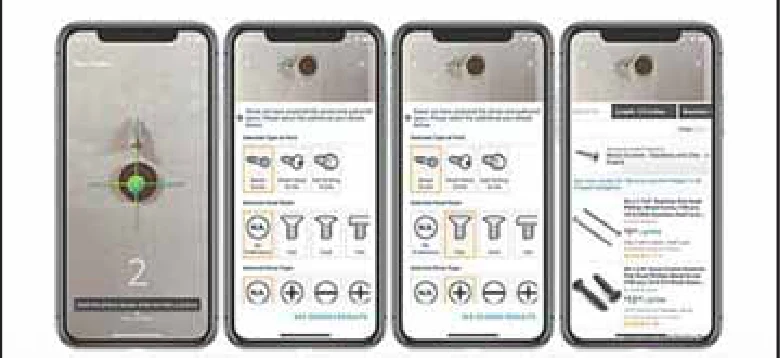
Locating unusual bolts, screws, nuts and fasteners just got a little bit easier thanks to marketing giant Amazon and its new Part Finder phone app. Just open the Amazon Part Finder app on your phone, snap a picture of the fastener you’re looking for next to a penny, then hit send and wait for an answer. In seconds you will have an answer, complete with availability, cost per unit, and shipping information. Part Finder uses visual-based identity software that’s sophisticated enough to tell the difference between items such as a wood screw and a connector screw or a hex head and a wing nut. Carefully tilting and angling the phone camera as you take the part picture allows the recognition software to analyze the part and produce a cross-hair bullseye once the part is identified. After you snap the picture and send it, Amazon’s data search system does the rest and provides a product answer right on your phone. If this all sounds a little too good to be true, you’re partially right, because there’s currently no universal data base for every fastener known to man. However, every idea has to start someplace, and Amazon says the new app knows the whereabouts of several hundred different types of fasteners now, and hundreds more are being added as you read this. The fore-runner of this clever idea was a business called PartPic, launched in 2013 as a San Francisco-based startup. The idea grew from the mind of Jewel Burks out of frustration and necessity. Burks managed a sales staff for an industrial parts distributor that often had problems locating parts. Burks says that if customers didn’t have a part number, supplier name, or couldn’t accurately describe what they needed, finding an item was like searching for a needle in a haystack. Looking for a solution, Burks hired two PhDs to build an image-recognition system to scan her company’s parts bins for item numbers and styles based on pictures. Amazon saw its potentital and acquired the business in 2016 and has since been adding hundreds of technical recognition features that continuously expand the parts database. To use, just search for Amazon Part Finder at www.amazon.com.
Rickie Stich, Portersville, Penn., converted a shop engine hoist to mount on the back of his Kubota 23 hp. tractor, by fitting it with 3-pt. mounting brackets. He can quickly convert the hoist back to a stand-alone unit by removing 3 pins.
“It makes the hoist much more versatile. I can take it with me down the highway or use it in my barnyard or shop,” says Stich.
“I’ve used it to pick up car and pickup engines as well as big shop tools such as a heavy milling machine.” He welded a couple short lengths of rectangular tubing onto the base, drilling holes in them to mount pins for the tractor’s lower lift arm. He also welded a pair of strap irons onto the hoist upright to mount the 3-pt. top link.
“Mounting the hoist behind the tractor has made my life much easier whenever I want to move something heavy, because with the 3-pt. I can use the hoist anywhere,” says Stich.
“As a stand-alone unit, the hoist’s front legs were sometimes in the way of what I wanted to lift, such as an engine. Now if I want to lift the engine out of a car I can get a lot closer, and I can use the hoist’s hydraulic jack to control the lifting motion.” Contact: FARM SHOW Followup, Rickie Stich, 864 Heinz Camp Rd., Portersville, Penn. 16051 (ph 724 368-3641; [email protected]).
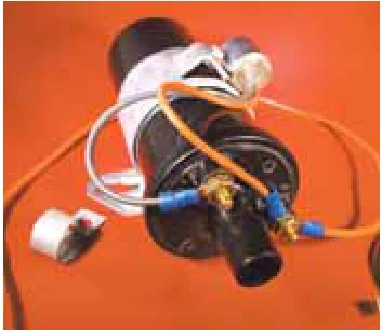
I got a call the other day from Dale Colvert, an electronics wizard who was featured in our last issue with an after-market ignition module for older Tecumseh engines. He wanted to tell me about another product he makes that anyone running older engines with points and condensers should know about. The Transdenser II works on conventional ignition systems, basically reducing current to the points so that both points and condenser will last indefinitely instead of wearing out every 10,000 miles or so.
“Newer engines with electronic ignition only have to be tuned up every 100,000 miles or so but if you’re running older equipment, you need to keep them tuned because the points degrade. The problem is that parts are expensive and often hard to find. Once you install the Transdenser II, points will not wear down anymore and engines will start and run better because it virtually doubles the voltage to the spark plugs,” Colvert says.
“There are typically 3 amps or more of current across breaker points, resulting in arcing, which causes degradation of points. The Transdenser reduces current across points to about 160 mA so contacts show little wear and never need adjustment. It essentially works like a relay and has a built-in static timing light LED which allows the installer to get a precise indication of when the points open. On small engines with a timing mark on the flywheel, the light helps set the timing for optimal performance. In other engines, it can tell you if the points are actually switching.”
The Transdenser looks like a conventional condenser and mounts on the coil, where many condensers are already mounted. If your condenser is in the distributor, it is moved to the coil. The Transdenser has two wires that connect to the coil negative and coil positive. The 3/16-in. quick-connect tab connects to the breaker points. An 18-in. breaker point lead is supplied.
“I have one installed on my 1961 Ford Power Master tractor and it starts flawlessly. The Transdenser can be ordered for 12 or 6-volt systems. It is, however, only suitable for negative ground engines.” They sell for $42.25, shipping included. Contact: FARM SHOW Followup, Dale Colvert, Overnight Solutions LLC, P.O. Box 3004, Merton, Wis. 53056 (ph 262 391-6670; www.overnight-solutions.com).
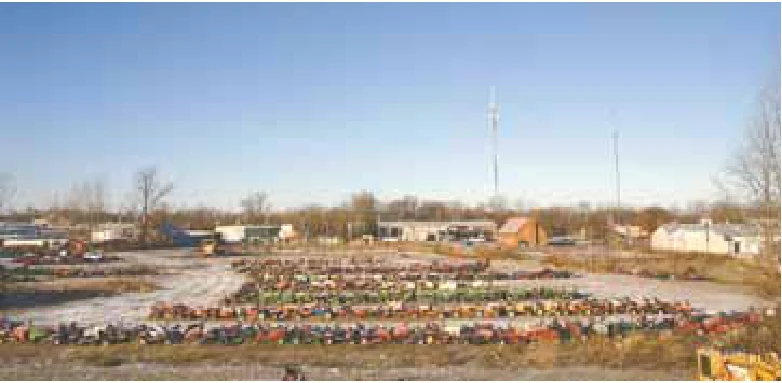
If you’re looking for a used lawn mower or parts, Almost Heaven Lawn Mower Grave Yard in Bluffton, Ind., is a great place to start. It’s a “pick-apart yard,” says Tom McNamara, who helps his son, Scott, run the business. People come and pull their own parts, though the owners will remove parts for customers who need help. The nearly 4-acre lot that Tom Jr. inherited from his father Tom Sr. in the 1970’s was an auto salvage yard from 1923 to 2004, when Tom Jr. turned the yard over to his son. Scott has an inventory of about 1,700 riding garden tractors plus attachments, push mowers and some small tractors. There’s room for about 3,000 mowers, and the McNamaras plan to fill the yard by steadily adding purchases from auctions and dealers. Most customers live within a 200-mile radius of the yard, which is located 20 miles from Fort Wayne. Inventory includes equipment from the 1940’s to the present, with about 200 one-of-a-kind tractors.
“Some years we sell lots of old stuff that retirees want to restore. Other years we sell more parts for people who want to keep their lawn mower going,” McNamara says.
“We sell parts and whole units.” Part of his job is posting photos on social media, and McNamara says he is amazed by the response.
“When we list a photo, we get up to 5,000 people that look at it in the first hour. We never had that with car parts.” Currently, his son Scott works at a nearby machine shop full time and takes care of the mower business after 5 p.m. Customers must call to make an appointment, McNamara emphasizes. The yard is organized according to models - John Deere, Cub Cadet, etc. - to make it easier for customers to find the part or mower they are looking for. Contact: FARM SHOW Followup, Almost Heaven Lawn Mower Grave Yard, Bluffton, Ind. (ph 260 824-5087; Facebook: Almost Heaven Lawn Mower Grave Yard).
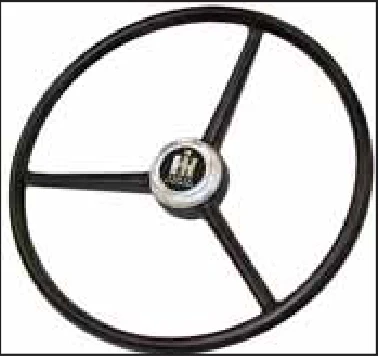
A new steering wheel may be the final touch for that treasured tractor you restored. Steiner Tractor in Lennon, Mich., appears to be the place to find whatever model you need - and most any other old tractor part you can think of.
“We introduced steering wheels in the late 1990’s and started with four. Now we offer them for 62 different models,” says Dan Steiner, president of the company. Instead of re-covering original wheels, restorers buy new ones for a couple of reasons. Metal fatigue and corrosion in old steering wheels makes them thin and unreliable. For each model, Steiner Tractor’s engineers start from original steering wheels when possible, create drawings and work with manufacturers to make sure the final composite wheel fits the shaft and maintains the original design. Besides a 12,000-sq. ft. pole barn with tractors that are used to make sure parts fit, Steiner Tractor uses 3D-CAM, 3D printing and handheld X-ray gun technology. The company also sells many steering wheel caps, which tend to wear out faster than steering wheels.
“Early steering wheels just had naked spokes, but after World War II manufacturers started covering the spokes and also put a cap at the center to keep water from running down the shaft,” Steiner explains. Steiner Tractor has its own line of steering wheel caps for Allis Chalmers, International, Oliver and other tractors. They also distribute licensed caps for John Deere tractors. Steering wheels are just one part of the business that currently has a 656-page catalog with more than 6,000 parts for tractors going back as far as the 1930’s. Contact: FARM SHOW Followup, Steiner Tractor, 1660 S. M-13, Lennon, Mich. 48449 (ph 800 234-3280; www.steinertractor.com; [email protected]).
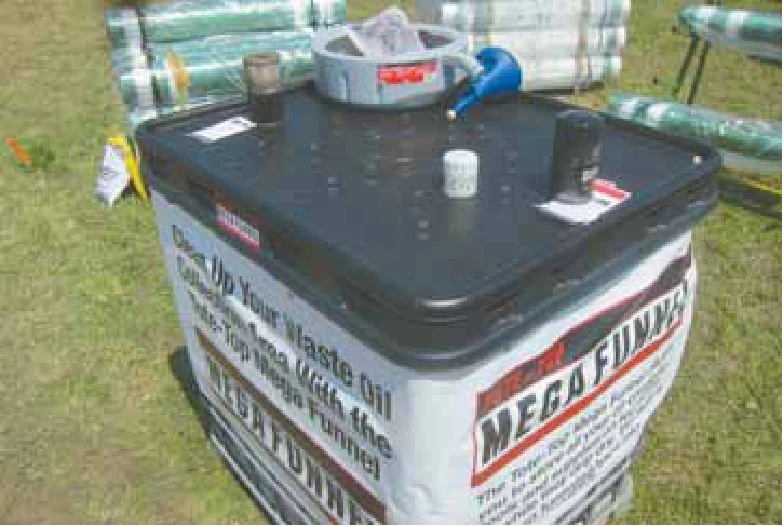
You can turn any seed box tote into a neat, clean waste oil collection system with this new oil collector. The patented Tote-Top Mega Funnel allows you to store all your oil changing tools and supplies such as oil pans, funnels, and filters on top of the tote while they drip dry. As the fluid drains out, it’s funneled down into the tote for later disposal. The unit comes with a punched metal screen on top with a solid plastic floor berneath it that slopes down toward a 2-in. dia. hole in the center. To install, you unscrew the existing 6-in. square center cover from the top of the tote, then snap the screen on over the tote.
“It keeps your shop floor nice and clean.
All the mess involved with dirty oil filters stays on top of the screen,” says distributor Delvin Drinkall.
“Pallet forks can be used to move the tote, and to get rid of the oil you can just attach a hose to a ball valve at the bottom of the tote which is much easier than trying to dump the oil out of a 30 or 50-gal. drum. A lot of customers dump the oil straight into their waste oil furnace.” The Tote-Top Mega Funnel retails for $199 plus S&H. Contact: FARM SHOW Followup, Delvin Drinkall, 18355 790th Ave., Ostrander, Minn. 55961 (ph 866 266-4014; [email protected]; drinkallfamforageent.wix.com/dffe).
“I bought a wall-mount, non-vent propane residential heater cheap at a flea market and strapped it onto my 2-wheeler. It’s nice and quiet and can be easily moved anywhere in the shop I need heat,” says Bob Payne, Coldwater, Miss. He paid $10 for the heater, which came with a 30-lb. propane bottle. He welded a metal rack on back of the 2-wheeler to hold the bottle and mounted the heater on front of the 2-wheeler, using metal straps to secure it to the frame. The 80-lb. counterweight off a Deere riding mower was bolted onto the 2-wheeler’s front ledge to help offset the weight of the bottle. Payne also screwed a barbeque grill regulator onto the bottle to regulate tank pressure.
“I use it in my shop, which isn’t heated. It produces a nice warm area where I’m working, much like an old pot-bellied stove does,” says Payne.
“The heater is rated for indoor use so I use it only in my shop, which is well ventilated. I own a diesel jet flame heater but didn’t use it very often because it was smelly and made a lot of noise.
“This is a 5-burner heater, but if I was buying new I’d get a 3-burner unit. The 30-lb. bottle can’t evaporate propane fast enough to keep up with all 5 burners, especially if it’s cold outside.” Contact: FARM SHOW Followup, Bob Payne, 65 Wallace Rd., Coldwater, Miss. 38618.