Practical ideas from FARM SHOW MagazineSubscribe · Free issue · Send us your shop tip
Subscribe to FARM SHOW
Issues / Vol. 43, No. 2 (2019)

Vol. 43, No. 2 (2019)

Money-Saving Repairs & Maintenance Shortcuts · Printed section pp. 32–35

35 selected entries · Complete text of selected entries

This issue’s section includes reader tips and feature-length shop stories. Held items and editorial notices are not reproduced.

Archive text: prices, coupons, availability and contact details reflect the original publication, not current offers. Reader methods are not universal instructions; follow manufacturer guidance and proper safety practices.

Reader shop tips

From the archive · Full text
Reader shop tip

John Grady

John Grady, Northern Ohio Truck Center, Inc., Norwalk, Ohio ph 419 668-4826 or cell ph 419 577-1408

He offers 12-volt gear reduction starters for Deere 70, 720, and 730 diesel 2-cyl. tractors as well as Deere 80, 820, and 830 models. Prices start at $995 to replace a pony start motor. A 12-volt starter for an electric start engine starts at $795. The customer supplies the starter; the flange and gear sell for $399 freight included. The starters are a 12-volt planetary gear reduction starter. It will bolt up to the original starter bracket with no modifications needed. Reliable and powerful, the starter has no problem turning over in cold weather.

From the archive · Full text
Reader shop tip

Doug Clark

Doug Clark, Ilderton, Ontario

“A reader in your last issue said his Kubota L3130 diesel would not start on a real cold day if it had already been warmed up and then shut off – unless he leaves it long enough for the entire tractor to get cold again.

“I had a similar problem with a Deere tractor and here’s what I finally figured out. I’m not too familiar with Kubotas but I assume it has glow plugs and a thermostat in a housing above the head of the motor and just below are two wires coming out of the housing. One wire will go to a temperature gauge on the dash, and the other to the front glow plug on the engine.

“So try this: First, start up the tractor on a real cold day and run it long enough to heat up to operating temperature. Then shut it off and wait a couple minutes before trying to start it. If it doesn’t start, reach in under the hood and pull the wire off the sensor plug that leads to the glow plugs. Then try to start the engine and it likely will start right up.

“Here’s why this solves the problem. The water below the thermostat stays warm so when you turn the key back on, the sensor below the thermostat senses the heat and assumes the tractor will start easily, therefore it cuts the power to the glow plugs. When you start to crank the engine, it draws in the very cold air so the engine can’t start without help from the glow plugs. By disconnecting the wire to the sensor, the glow plugs will heat up normally. Once the engine starts, you can

plug the wire back in.

“It’s likely you can fix the problem permanently by replacing the sensor but if this only happens occasionally, you can just disconnect that wire manually when necessary and live with it.”

From the archive · Full text
Reader shop tip 1 of 2

Milton T. Webster

Individual tip 1 of 2 from this reader’s published contribution.
Milton T. Webster, Taylor, Texas

“I could write a book about problems with starting air-cooled engines after storing them with old fuel. I was a small engine specialist for 30 years after retiring from the Air Force and I tell everyone whose equipment I work on, ‘Don’t ever leave old fuel in the carburetor when storing. Run it dry and drain the carb bowl. This will solve many of the problems on air-cooled engines.

From the archive · Full text
Reader shop tip

Frank Schafer

Frank Schafer, River Falls, Wis.

“Romex electrical wire works great to tie up anything that needs to be tied down. I use it to tie livestock gates and panels together when moving them, among many other things. It holds its shape and is easy to use. Can be used over and over again. I have pieces of romex hanging all around my place so it’s available when needed. I use 14-2 wire most of the time because it’s the easiest to work with, but 12-2 wire is stronger.”

From the archive · Full text
Reader shop tip

David Furnas

David Furnas, Louisville, Kty.

“I recommend using the new T25 star screws that work great with an impact tool when working with wood. Lowes and other big hardware stores sell them.”

From the archive · Full text
Reader shop tip

Stephen Zonies

Stephen Zonies, DMD, Fayston, Vt.

“There’s been a lot of hullabaloo in recent years about poorly designed fuel cans with only one outlet. Even as a kid I knew you need two holes in a container to empty it properly.

“Since I’m a dentist and know how to drill holes, I installed electrical finials as vents in my fuel cans by drilling holes, tapering the finials, and cutting ‘anti-rotational’ slots in them so they won’t come loose. Then I used JB Weld to hold the parts in place. You can cover the vents with wire nuts but, being a dentist, I used a toothpaste tube cap.”

From the archive · Full text
Reader shop tip 1 of 2

Bud N. Vogelzang

Individual tip 1 of 2 from this reader’s published contribution.
Bud N. Vogelzang, Sioux Center, Iowa

“I took the hay carrier railing out of the hay mow in our old dairy barn and mounted it on the ceiling of my new shop and use it to move things. Very handy.

From the archive · Full text
Reader shop tip 2 of 2

Bud N. Vogelzang

Individual tip 2 of 2 from this reader’s published contribution.
Bud N. Vogelzang, Sioux Center, Iowa

“I made a guard to go over the cutting edge on my skid loader so I don’t dig up the crushed rock in our yard and driveway when clearing snow. I took a 1 1/2-in. dia. pipe and cut a 1/2-in. dia. opening in the side with my chop saw and welded some strips of strap iron onto it that bolt to the bucket. The pipe simply slips over the edge. It’s easy to put on and take off each year.”

From the archive · Full text
Reader shop tip 1 of 2

Stephen Zonies

Individual tip 1 of 2 from this reader’s published contribution.
Stephen Zonies, Fayston, Vt.

“The gear-box on my bushhog mower started leaking gear oil. It would have been an expensive repair if I had tried to fix it. Instead, I just filled the gearbox with high-quality grease. That solved the problem.

From the archive · Full text
Reader shop tip 2 of 2

Stephen Zonies

Individual tip 2 of 2 from this reader’s published contribution.
Stephen Zonies, Fayston, Vt.

“I had a rusty bumper that wouldn’t pass Vermont’s vehicle inspection. Instead of buying an expensive replacement bumper, I filled it in with body putty and hardware cloth. The repair has lasted for years.”

From the archive · Full text
Reader shop tip

Dennis Howell

Dennis Howell, Vernon Center, Minn.

“I had a problem that many people with grain bins experience. There’s a hole in the ground where the unload auger comes out at the base of the bin to hold the load-out auger’s hopper. The problem is that during the winter, due to freezing and thawing, that hole often fills up with ice. When you want to load out grain from the bin, you end up chopping ice out of the hole with an ax. I recently solved the problem more easily by simply laying an old fashioned stock tank heater on top of the ice for a day or two. It melts the ice away with no effort on my part.”

From the archive · Full text
Reader shop tip

Robin Burkey

Robin Burkey, Kingsland, Texas

“When the back door latch won’t work on your 1991-2010 Ford E-Series van, it’s likely because the plastic end on the activating cable has broken off. Rather than buy a whole new assembly from Ford for $100 or more, just buy a split-bolt cable adjuster available at bike shops for adjusting brakes. It fits right over the end and won’t break off.”

From the archive · Full text
Reader shop tip

Mark Newhall

Mark Newhall, FARM SHOW Editor

“I saw a video on this Zoha grinder disc on-line and can’t wait to get my hands on one. It’s a 4-in. disc for a hand-held grinder that’s fitted with 22 chainsaw teeth so you can cut in any direction. The video showed how it takes the muscle work out of cutting, carving, and sculpting wood, plastics, ice and even hard rubber. It’s amazing what you can do with it. For instance, if you want to make a bowl out of a chunk of wood, you can use it to ‘scoop’ out the wood by passing the disc back and forth. Or make notches in big beams or logs. It can also just be used as a cut-off saw for lumber.

“Blades sell for about $15 on Amazon.com and for up to $29 at other retailers. Learn more at www.zohastore.com.”

From the archive · Full text
Reader shop tip

Robert McMahon

Robert McMahon, Knoxville, Tenn.

“The anvil in my shop is on loan to me from a friend. I haven’t been able to find one like it since blacksmithing is making a resurgence in our area and collectors have bid up the prices for good ones to $500 or more. The story behind this one is that the family who originally owned it buried it in the garden during the Civil War to keep the other side from confiscating it to melt down for munitions. After the war, no one remembered what happened to it. Decades later, someone found it when they hit it with a plow. I’m honored to have it in my shop.”

From the archive · Full text
Reader shop tip

Jon Arms

Jon Arms, Brewster, Mass.

“I use a surplus fire extinguisher to add gear oil to gearboxes. I fitted it with a pressure hose and a 1/4-in. nip valve. It holds about 2 gal. of oil, added through the top nut that holds the handle and dip tube. Air is added through the snifter valve at the top beside the pressure gauge.

“It sure makes life easier when filling transmissions or differentials. I use a round key ring on a chain to hold the handle in the flow position. I have two of them, one used for gear oil and the other for hydraulic oil. When I was 15 and worked at a gas station, they had a large floor-mounted gear oil machine. I just downsized the idea to extinguisher size. Very convenient for a small shop.”

From the archive · Full text
Reader shop tip

Hugo Bach

Hugo Bach, Osoyoos, B.C.

He replaced the metal skid shoes on his walk-behind snowblower with wheeled “runners” that won’t wear out like skid shoes do. He removed the skid shoes and their slotted mounting brackets from the snowblower housing. He used the existing holes to bolt a 3-in. high by 9-in. long by 1/4-in. thick steel plate onto each side of the housing, then bolted a 3-in. high by 3/4-in. wide hard rubber wheel on back of the plates. Bach says the wheeled runners lift the snowblower when it encounters any high spots on the surface, yet leave about the same amount of snow on the surface as a conventional plow with properly adjusted skid shoes.

From the archive · Full text
Reader shop tip

Jack Middleton

Jack Middleton, Marquette, Mich.

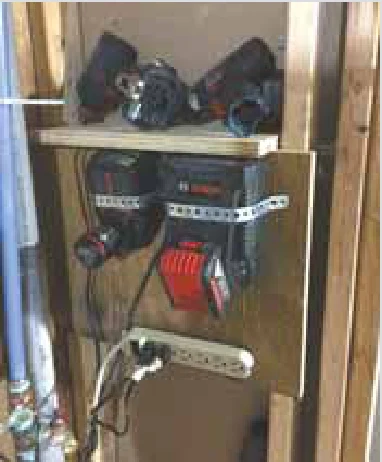
“I didn’t like having the bench space in my shop cluttered with battery chargers for my cordless tools, so I used plumber’s strapping to attach the chargers to the shop wall. I place the cordless tool on a shelf while its battery is being charged and plug the charger into a power strip that I installed below the shelf. I can easily shut the power off to the charger whenever it’s not in use.”

From the archive · Full text
Reader shop tip

Lloyd Conover

Lloyd Conover, Bedford, Ind.

“I use an old golf ball to make a comfortable handle for my hand file. I drill a 1/4-in. hole part way into the ball and fill it with JB Weld then stick the file handle in. When the file eventually wears out I just throw it away.”

From the archive · Full text
Reader shop tip

Ronnell Ott

Ronnell Ott, Manhattan, Kan.

“By mounting the stator from a discarded permanent magnet motor onto a wooden plate, I can use it to store small magnetic parts such as drill bits or even sewing pins and needles. I remove the stators from permanent magnet motors found in old computer printers, VCR’s, electric toothbrushes and other appliances.

“I think this idea would also work with bigger stators removed from permanent magnet blower motors in old cars.”

From the archive · Full text
Reader shop tip

David Nolt

David Nolt, McVeytown, Penn.

“Salvaged hydraulic cylinder shafts make good pivot pins for skid steer buckets. They can be drilled after the chrome is ground off in the spot you need to drill.”

From the archive · Full text
Reader shop tip

ES Franki Screw Extractors

ES Franki Screw Extractors, www.esfranki.com (as printed)

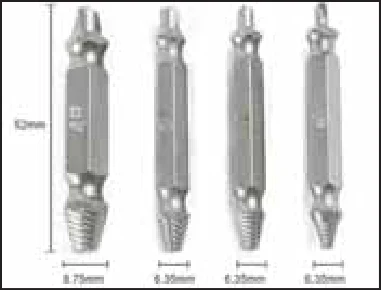
They sell a 4-piece screw extractor set that makes it easy to remove stripped or broken bolts and other threaded fasteners (www.esfranki.com) . The extractors work with any power drill and any size screw or bolt. Each tool is reversible and has a drill bit on one end and an extractor on the other. To remove the screw or bolt head you simply apply pressure to it.

Shop feature stories

From the archive · Full text
Feature story

Hole Saw Fitted With Spring-Loaded Drill Bit

Featured source: Larry Symynuk

“I like to build purple martin birdhouses and recently came up with a time-saving idea – a spring-loaded drill bit - to use on my hole saw,” says Larry Symynuk, Denholm, Sask. He uses the hole saw to cut out 10 to 12 2-in. dia. holes in each house, but says removing all the wooden “donuts” from the hole saw after each cut became a tiresome job.

“Every time I drilled a hole I had to use a screwdriver to pry the wood out. So I used JB Weld to attach a spring on the arbor inside the hole saw. Now every time I release the pressure on the drill press, the spring automatically pushes the wooden spool out,” says Symynuk. Contact: FARM SHOW Followup, Larry Symynuk, Box 5, Denholm, Sask. Canada S0M 0R0 (ph 306 445- 4817; [email protected]).

From the archive · Full text
Feature story

Engine Stand Welder’s Helper

Featured source: Roman Bontrager

Roman Bontrager gets extra value out of his engine stand by turning it into a welder’s helper. Using lengths of angle iron, Kindorf struts, and simple C-clamps, he can twist and turn pieces for easy access.

“You can buy rotisseries to rotate welding projects, but if you have an engine stand sitting around, just use that,” suggests Bontrager.

“I bought mine at an auction, and it was sitting unused until I tried it. Since then I’ve used it for all kinds of projects, sometimes with a chain hoist for heavier, larger pieces.” Castered engine stands with their 4 adjustable mounts easily adapt to a wide variety of uses. One of the simplest and most effective is to bolt a piece of channel iron to the offset arms on the stand and then use C-Clamps to hold pieces to be welded. A former electrician, Bontrager has also used Kindorf Channel Systems with his welder’s helper. The channels with their slotted holes can be bolted to the engine stand arms. A wide variety of straps and clamping options are available for use with the channel.

“Regardless of what you use, the engine stand allows the project to be tilted or rotated 180 degrees or angled to make it convenient for the welder,” says Bontrager.

“I can lock the project into position, and with my three-legged stool, welding is easy on my back.” Contact: FARM SHOW Followup, Roman Bontrager, 20 Deck Dr., Myerstown, Penn. 17067 (ph 717 933-8438).

From the archive · Full text
Feature story

Where To Buy Early GM Truck Parts

Featured source: Jim Carter

If you have an old GM truck from 1934 to 1972 you’ll want to check out Jim Carter Truck Parts. The Independence, Mo., businessman has been restoring and dealing with antique vehicle restoration parts for more than 30 years. With a website that boasts more than 10,000 parts, he has customers all over the world.

“Europeans love American vehicles because they are so big,” Carter says, noting restoration is also very popular in Canada. Jim Carter Truck Parts sells hard to find parts such as those for the Cameo truck, built in 1955-58 as a fancy truck for city driving and not for work. It’s one of Carter’s favorite models, and he makes a couple dozen parts for it. They also, supply new parts made by other manufacturers and have used parts, acquired by decades of trades and purchases that began after Carter traded for a 1950 Chevrolet 1/2-ton truck. While restoring it, he purchased extra parts and discovered a market for other hobbyists interested in restoration.

“We sell a lot of common things customers always need like hubcaps, floor mats and wood for the beds,” Carter says.

“Parts for 1947 to 1953 trucks are the most requested.” Besides parts, his business website has videos, articles, an “Ask Jim” page and featured truck articles and photos. Carter is licensed by GM, and parts are approved for quality, authenticity and carry the GM seal. Contact: FARM SHOW Followup, Jim Carter Truck Parts, 1508 East 23, Independence, Mo. 64055 (ph 800 842-1913; www.oldchevytrucks.com; [email protected]).

From the archive · Full text
Feature story

Dress Up Your Pickup’s Exhaust

Featured source: Andrew Sokol

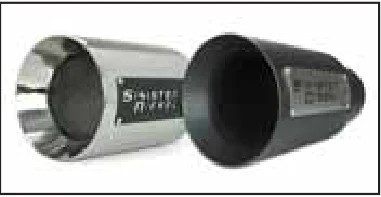
“You can give your diesel pickup exhaust a more finished look with our new Sinister Dual Wall Exhaust Tip. It’s relatively inexpensive and easy to install,” says Andrew Sokol, vice president of sales and marketing at Sinister Diesel in Roseville, Calif. The Exhaust Tip is designed to clamp onto any pickup’s 4 or 5-in. exhaust pipe. It’s made from corrosion resistant stainless steel and is available with either a polished or black ceramic finish. It measures 15 in. long. The rounded edges give the tip an upgraded, custom look and each tip has the Sinister Diesel logo riveted onto one side.

“It doesn’t change the sound but it does change the look. The high-quality black ceramic coating hides unsightly soot and gives your pickup a clean and powerful appearance,” says Sokol.

The tips are priced from $65 and include free shipping. Contact: FARM SHOW Followup, Sinister Diesel, 2025 Opportunity Drive, Roseville, Calif. 95678 (ph 888 966-6543; [email protected]; https://sinisterdiesel.com).

From the archive · Full text
Feature story

Expert Rebuilds NiCad Batteries

Featured source: Steve Fredricks

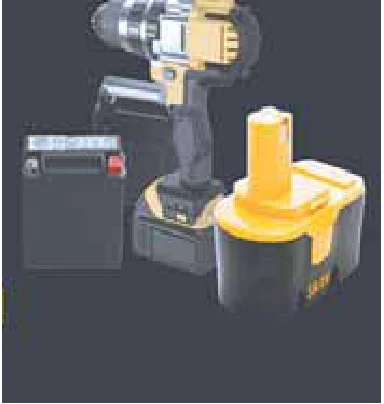
“Like most guys with battery-powered tools, I had a bunch of NiCad batteries go bad, and I got tired of sales people telling me I should throw the old ones away and buy new ones,” says retired Michigan insurance man Steve Fredricks.

“I decided to see if I could rebuild them myself, so I took a few of my batteries apart, figured out by trial and error which cells were bad, repaired them, and they worked fine. I worked on a few others for friends and before I knew it, I had a business going.” Now Fredricks, his son Luke, and 2 employees rebuild about 200 to 300 NiCad batteries a month for customers all over the country. Their rebuilding fee is about half what new batteries cost and better yet, their rebuilt products typically last about 40 percent longer than the originals.

“The reason our rebuilt ones last longer is that we put in all new cells, not just replace a bad one or two. We also put in new contacts and a new thermister - that tiny radial bead thermostat protection device that lets a battery sit in a charger without melting down,” says Fredricks When he started rebuilding batteries he was doing the work himself with one impulse welding machine. Now he has two welders and buys high quality supplies from a battery rebuilding company.

“I was retired from insurance and figured if I could do 20 units a month I could cover my costs and make some money. Today the business has grown beyond my expectations.” Fredricks says a lot of their customers are farmers and handymen who know there’s value in rebuilding something, especially if it makes the product as good or better than new, and they’re very happy to pay for that service. Great Lakes works on any brand of batteries from 3 to 24 volts, and everything in between. They sell aftermarket lithium batteries, but don’t rebuild them because they’re still patent protected. Fredricks says NiCad users should expect to get 300 to 500 charges from a battery if they care for it properly.

“Never put a hot battery in a cold charger, and pull the battery from the charger as soon as it’s done charging,” he says.

“Don’t throw the battery on a hard surface or drop it.” The company charges $35 to rebuild a 1 to 12-volt battery, $45 for a 13 to 18-volt and $50 for a 19.2-volt. Fredricks says they typically send back rebuilt batteries within a week and include an invoice with the returned products.

“You might say we’re old fashioned,” says Fredricks, “but that’s the way I started the business, because people trusted me to do the work and I trusted them to pay. We’ll take credit cards, but then we charge a fee to cover our transaction costs.” Contact: FARM SHOW Followup, Great Lakes Batteries, 2901 W. Sass Road, Manistee, Mich. 49660 (ph 231 723-4948; www.greatlakesbatteriesllc.com).

From the archive · Full text
Feature story

Metal Cleaning Rings Made For Deere Drill

Featured source: Gene Sickler

North Dakota grain farmer Gene Sickler says that when he needed to replace the worn down rubber cleaning rings on the closing wheels of his 1850 Deere seeder, he thought that $25 each for the OEM parts was too steep, so he came up with “a better idea”. Sickler had his local machine shop cut identical half-moon steel pieces about 1 in. wide in the same radius as the outside of the closing wheels.

“Their CNC equipment cut those pieces out of 3/8-in. steel with a nice straight edge,” Sickler says.

“I mated two of them together to form a perfect circle on the outside edge of each closing wheel.” To attach the metal edges to the wheels, he took the rims apart, flipped the rubber the opposite direction, then spot welded the two half-moon pieces onto the metal wheel to create a new and perfectly circular cleaning edge. After each piece was welded in place, Sickler smoothed the outside edge of each metal ring so it wouldn’t create excess wear on the disk opener.

“Now I’ve got durable metal cleaning rings for $9 apiece that should last a lot longer than the rubber ones,” Sickler says. Sickler’s metal cleaning edges allow the wheels on his 42-ft. wide drill to run the same depth as the rubber edges, and they do a better job of cleaning.

“I left a few of the rubber ones on that weren’t completely worn and the metal seems to do a nicer job and doesn’t collect any soil in tacky conditions,” Sickler says. Contact: FARM SHOW Followup, Eugene Sickler, 10309 23rd St. S.W., Manning, N. Dak. 58642.

From the archive · Full text
Feature story

Induction Heating Device Loosens Stubborn Nuts And Bolts

Featured source: Tom Gough

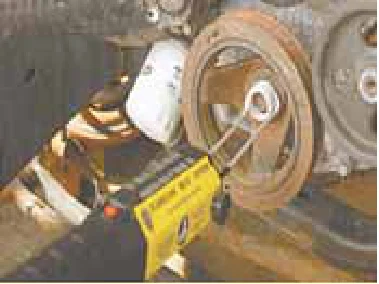
Auto repair specialist Tom Gough says the induction heat device he invented releases stubborn bearings and pulleys, or corroded parts, without the dangers of an open flame. His Mini-Ductor uses “invisible heat” from high frequency magnetic fields to heat metal objects so they can be safely removed. Gough says his device is much safer than the open flame from an oxy acetylene torch, which can easily ignite flammable grease or melt parts near the immovable fastener. An auto repair specialist for many years, he invented the device because of many frustrating hours removing stubborn fasteners with torches, big wrenches and power tools. Gough’s Mini-Ductor is a small hand-held tool with a non-slip grenade grip and trigger switch. Pulling the trigger heats a coil that can turn a rusted nut red hot in 15 seconds. Gough says it’s fast, safe and easy on workers who deal with removing stubborn parts. The Mini-Ductor comes with 8 interchangeable coils from 4 to 10 in. long and a 23-in. long U-form coil that can be molded around a socket to fit large or small fasteners. The device also has mini pads that heat metal to melt adhesives. The Mini-Ductor is priced at $447 online and is also available through authorized warehouses and jobbers. Used models may also be available online. Contact: FARM SHOW Followup, Induction Innovations, 1175 Jansen Farm Court, Elgin, Ill. 60123 (ph 877 688-9633; www.theinductor.com).

From the archive · Full text
Feature story

Roll-Around Shop Crane Converted To 3-Pt. Model

Featured source: Ethan Rice

Ethan Rice, Spring Hill, Kansas, converted a Harbor Freight floor shop crane to a 3-pt. mounted crane.

“That makes it easy to use outside the shop, when needed. I left the crane’s wheels in place so when the unit is detached, I can still roll it around on a cement floor,” says Rice.

“The crane came with tiny cast iron caster wheels, and if I needed to use it on dirt or gravel it wasn’t very handy. I paid only about $100 for the crane. It comes in handy to pick up tote boxes, logs, big rocks, and other heavy objects.” He welded a length of 4-in. channel iron vertically to the base of the crane that runs all the way to the top, then welded on short lengths of channel iron to form a 3-pt. hitch.

“I borrowed the idea from a neighbor and like how it turned out,” says Rice.

“I originally built it to lift a Jeep Cherokee by the front cross member and set it off to the side so I could replace the front axle. The tractor’s 3-pt. cylinders have a lot more lifting power than the cylinder on the crane’s original hand-operated jack, so any time I use the crane to lift something heavy I first pump the jack a couple of times with the load on to make sure I don’t overload the crane and accidentally bend it.” Contact: FARM SHOW Followup, Ethan Rice, 21685 Oakcrest Rd., Spring Hill, Kansas 66083 (ph 913 731-5084; [email protected]).

From the archive · Full text
Feature story

Cart Makes Lawn Tool Storage Easy

Featured source: Cal Miner

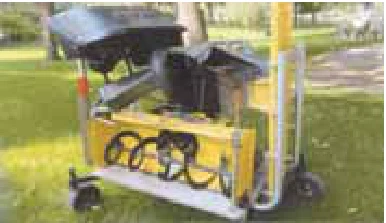
“It works great for storing the mower deck, snowblower, and landscaping blade on my riding mower, as well as my leaf blower and other accessories,” says Cal Miner about the hospital medication cart he converted into a multi-purpose storage cart. Miner bought the cart at an auction for $10. Made from tubular steel, it measures 6 ft. long by 3 ft. wide and came with curved tubular uprights at each end and a cabinet on top. It originally rode on 4 small wheels, but he replaced them with welded-on, 8-in. caster wheels. Miner uses the cart to store a 4-ft. wide snowblower that mounts on front of his Deere garden tractor, as well as the tractor’s 5-ft. wide mower deck and a front-mounted landscaping blade. There’s also room to store the mower’s bag and fan housing, as well as his vacuum leaf blower and other small accessories.

“It takes up less space in my garage than storing the items individually, and moving anything on wheels is always easier than lifting and carrying. I keep all the light stuff up high and the heavy stuff down below,” notes Miner.” He drilled holes into the unit’s lower shelf to attach the deck.

“I just roll the deck under the cart and then use J-bolts to attach it to the floor,” says Miner. Other tools are held in place by bungie cords. Contact: FARM SHOW Followup, Cal Miner, 3971 8th St. N.E., Willmar, Minn. 56201 (ph 320 295-8481).

From the archive · Full text
Feature story

Expert Parts, Service For Older Deere Balers

Featured source: Bruce Reeves

Green Baler Parts has the parts and information you need to troubleshoot and repair your older Deere balers. With 20 years of experience repairing, rebuilding and remanufacturing Deere small square balers, company staff know the weak spots and how to fix them.

“We have the expertise to rebuild knotters or if time is critical, we can offer rebuilt replacements,” says Bruce Reeves, Green Baler Parts.

“If hay is ready to be put up, we always have some on hand, ready to go.” Reeves points out that while baler knotter technology is relatively unchanged over the past 50 to 60 years, the OEM sales and service business has changed considerably. With the growth in demand for large square and round balers, there are fewer local service technicians at dealerships with small baler experience. Parts can also be in limited supply or not even available for older Deere balers.

“We built our reputation and experience reconditioning balers for local farmers,” says Reeves.

“That’s what our business has always been. As our reputation spread, our business grew. Today we sell all over the U.S., as well as in Canada. Since we kicked off our website, we have shipped parts to Romania, Spain, Mexico and Barbados. About half our sales are direct from the website.” Every used part offered for sale has been inspected, tested and tech Certified Field Ready. If components are worn, they’re replaced or rebuilt. The company has also improved on several OEM parts, such as the Updated Tucker Finger Assembly Kit and the Updated Slip Clutch Center. The former eliminates sloppy bales due to loose Tucker Finger components. The latter eliminates wobble that can turn into an expensive and time-consuming repair.

“They are two of our biggest sellers,” says Reeves.

“The Slip Clutch Center in particular is a significant improvement over the OEM design.” Reeves explains that the Deere clutch center is about an inch thick, and it rides on a splined shaft that is about 3 in. long. Deere added a spacer that made the splines even more susceptible to wear over time. If the wear is bad enough, the shaft has to be replaced, which requires splitting the gearbox. The Green Baler Parts solution is a thicker clutch center with double the working area between the clutch center teeth and shaft splines. Slip clutch centers for Deere 6, 7 and 8 Series balers are priced at $140.

“Our slip clutch center has an extra inch of metal and contact, eliminating wobble and vibration,” says Reeves.

“We’ve gotten tremendous feedback from customers on it.” Baler owners who wish to repair their balers themselves, but need a little expertise, are invited to sign up for consultations with expert technicians.

“Our troubleshooting and consultation is set up for customer convenience,” says Reeves.

“At $39 for half an hour or $75 an hour, they can make an appointment to discuss their baler problems with a technician. They don’t have to call hoping a technician is free.” If requesting a part be rebuilt, Reeves suggests calling or contacting the company by email for the correct shipping address. Contact: FARM SHOW Followup, Green Baler Parts, P.O. Box 683, Camillus, N.Y. 13031 (ph 315 907-9540; [email protected]; www.greenbalerparts.com).

From the archive · Full text
Feature story

Lift Pump Boosts Dodge Diesel Power

Featured source: Matt Chambers

Drivers looking for higher performance from a 2005 to 2018 Dodge Cummins Diesel should check out the drop-in PowerFlo Lift Pump from Fleece Engineering, a product the company calls “an OEM design on steroids”. PowerFlo’s 2 gerotor pumps provide more fuel exactly when the engine needs it. Matt Chambers of Alligator Performance says the Fleece active fuel bucket prevents quarter tank issues by having a fuel port on top, passive fuel diaphrams on the bottom, and an active fill port that draws fuel into the top of the bucket. He adds that because it’s a contained unit there’s no need for an air separation device. Fleece includes the wiring that connects directly to the factory harness and the unit uses factory fuel lines with quick disconnects. Chambers says installing Fleece’s drop-in unit is easy and doesn’t require any modifications to the fuel tank. The design uses active fill bucket technology that eliminates the need for a tank sump or draw straw. A regulated return flow eliminates over pressurizing. The Fleece PowerFlo is capable of supporting 800+ hp. engines. Chambers adds that if demands exceed 800 hp. Fleece will offer a higher flowing filter block along with a larger supply and hose kit. Cost is about $700 or slightly higher depending on where purchased.

Contact: FARM SHOW Followup, Fleece Performance Engineering, 468 Southpoint Circle, Suite 100, Brownsburg, Ind. 46112 (www.fleeceperformance.com).

From the archive · Full text
Feature story

He Makes Tools Out Of Rebar

Featured source: Alexandre Bigunas

Alexandre Bigunas makes tools out of rebar, demonstrating his metal-working skills in videos on YouTube. He makes knives, hatchets, double-edged axes and more. In early 2019 he made a C-clamp by heating and bending two pieces of 1/2-in. rebar into the shape of a 5-in. tall C, then welded 3 gussets between them to create a reinforced spine for the clamp frame. On the bottom end of the C he welded a 1/2-in. nut and a threaded sleeve to securely hold the clamp bolt. One piece of metal about the size and thickness of two 25-cent pieces was welded to the top end of the C, and a similar piece was welded to the tip of the threaded bolt. Bigunas also used rebar to make a hatchet with a sharp blade on one side and a pointed awl on the other. Tightly wrapped leather provides a comfortable grip around the handle. Bigunas says the blade is razor-sharp. You can see a video of his work at www.FARMSHOW.com. Contact: FARM SHOW Followup, Alexandre Bigunas([email protected]. br).

From the archive · Full text
Feature story

Wire-Pulling Idea Pays Off

Featured source: Kent MacDougal

South Carolina subscriber Kent MacDougal wrote us recently to say that his power company was able to pull about 350 ft. of electrical wire through a buried conduit using a method he read about in FARM SHOW.

“After the conduit was in the ground they tied a plastic bag to the fish tape and pulled it through the tubing with a shop vacuum, just like I’d read about in FARM SHOW,” MacDougal says.

“I was happy to see that it pulled through so easily.” MacDougal says pulling the wire back was even easier because the power crew had another great idea.

“First they parked their mini-excavator next to the conduit and used the bucket to raise one of the tracks about a foot off the ground. Then one of the crewmen wrapped the fish tape around the rubber track. The operator set the mini-excavator in slow reverse and the moving track pulled that tape and wire right through without stopping. Another worker at the other end fed in the cable and applied some lubricant to make it slide easier.” MacDougal says the whole operation worked so well that he told a friend about it, and it worked well for him, too. MacDougal’s area has been hard-hit by 3 hurricanes in the past few years that always knocked out power when tree limbs took down lines. The new underground lines should prevent outtages in the future, he says. Contact: FARM SHOW Followup, Kent MacDougal, 8014 Little Britton Road, Yonges Island, S. Car. 29449 ([email protected]).