Practical ideas from FARM SHOW MagazineSubscribe · Free issue · Send us your shop tip
Subscribe to FARM SHOW
Issues / Vol. 43, No. 5 (2019)

Vol. 43, No. 5 (2019)

Money-Saving Repairs & Maintenance Shortcuts · Printed section pp. 32–35

43 selected entries · Complete text of selected entries

This issue’s section includes reader tips and feature-length shop stories. Held items and editorial notices are not reproduced.

Archive text: prices, coupons, availability and contact details reflect the original publication, not current offers. Reader methods are not universal instructions; follow manufacturer guidance and proper safety practices.

Reader shop tips

From the archive · Full text
Reader shop tip

David Jackson

David Jackson, Peoria, Ill.

“I needed a new floor mat for the cab on my Deere 4230 tractor. My dealer wanted over $300 for one so I went looking for a different solution. I realized that floor mats in car trunks are larger than what I needed in the cab. So I bought a trunk mat at Walmart for about $30. I laid the old mat on top of it and traced around the edge with a marker to cut it to fit. The new mat looks great and is heavier than the original.”

From the archive · Full text
Reader shop tip 1 of 2

Paul Krejci

Individual tip 1 of 2 from this reader’s published contribution.
Paul Krejci, Deerton, Mich.

“When I had to remove damaged bolts from a cramped spot where no extractors would fit, I just welded a wrench to the bolt heads and then removed the bolts. Worked great.

From the archive · Full text
Reader shop tip 2 of 2

Paul Krejci

Individual tip 2 of 2 from this reader’s published contribution.
Paul Krejci, Deerton, Mich.

“Another idea I had was mounting a car alternator to a lawn tractor so I can jump start equipment in remote areas of the farm when necessary.”

From the archive · Full text
Reader shop tip

Joe Bellor

Joe Bellor, Lapeer, Mich.

“To minimize problems with tires on wagons and trailers, we use silicone grease to seal the bead against leaks. We only use tubeless tires because they’re easier to put on and off.”

From the archive · Full text
Reader shop tip

Gene Johnson

Gene Johnson, McDermott, Ohio

“My 2009 Chevy Impala got stuck in park while at a McDonald’s drive-thru when the button on the shifter stopped working. We hit down on top of the shifter to release it, but later figured out that we could drill a 1 1/2-in. hole through the console so you can take a screwdriver and depress the button while you have your foot on the brake. It’s a cheap fix vs. $600 at a GM dealer to replace the shifter.”

From the archive · Full text
Reader shop tip

Michael L. Morrison

Michael L. Morrison, Winterset, Iowa

“Sometimes when I have to hook up my 3-pt. mower, it’s tough to get close enough. To avoid hopping up and down off the tractor, I use a come-along to pull the mower up inch by inch. Very handy.”

From the archive · Full text
Reader shop tip 1 of 2

Olen J. Bontrager

Individual tip 1 of 2 from this reader’s published contribution.
Olen J. Bontrager, Bloomfield, Iowa

“If you have squeaky windshield wipers and it’s not the blades, the problem is likely with the linkage down below. Just a few drops of oil will solve the problem.

From the archive · Full text
Reader shop tip 2 of 2

Olen J. Bontrager

Individual tip 2 of 2 from this reader’s published contribution.
Olen J. Bontrager, Bloomfield, Iowa

“A small tire on my garden tiller went flat. I squirted some expensive stuff into the tire but it didn’t last so I coated the bead on the rim with silicone caulk. It has held ever since.”

From the archive · Full text
Reader shop tip

Simon Lapp

Simon Lapp, Ashville, Ohio

“I had a problem with snow blowing into my 23-year-old pole barn under the ventilating ridge cap. I was going to replace the weatherstripping but got to looking at it and decided it would be easier to push the old stripping back into place from the inside and nail a piece of 1/2-in. OSB on the edge of the top 2 by 4 purlin. It worked just fine.”

From the archive · Full text
Reader shop tip

Lon Rice

Lon Rice, Richmond, Ind.

“In your last issue a reader told how he uses a dab of Gorilla glue to seal a caulking tube after using part of it. Here’s another way to seal up a tube. I save the small end after I cut it off and when I’m finished, I insert the small end into the tube opening and push it in tightly by pressing against a solid surface. It works well for me.”

From the archive · Full text
Reader shop tip

Carl Deaubler

Carl Deaubler, Minford, Ohio

“To reclaim refrigerant from an air conditioning system, I put a 30-lb. tank inside a 5-gal. bucket and pack it in ice. Connect the center hose from a gauge set to the tank. Before opening the valve to the tank, purge the lines with pressure. When you open the tank valve, refrigerant will flow into the ice cold tank from the A/C system. Then use a heat gun to warm up the A/C components (condenser, dryer, accumulator, lines, etc.) which pushes refridgerant into the iced tank, where the gas will condense into a liquid. Observe both gauges connected to the high and low sides of the A/C system. When the refrigerant is heated, a pressure rise will be noted on both gauges. Once all liquid has been boiled into a gas, the gauges will not show an increase when heat is applied so you’ll know the system is empty. The liquid refrigerant in the tank can be reused. If any air was introduced into the tank, keep the tank upright and ‘burp’ it slightly before reuse. Tank will remain at 30 to 35 psi.

“Use this method when you know that the refrigerant was not contaminated before reclaiming.”

From the archive · Full text
Reader shop tip

Jacob Schrock

Jacob Schrock, Trenton, Mo.

“To test pto-powered equipment, I made a bracket to hold a hydraulic motor on the forks of my skid steer. Then I put a 6-tooth spline on the motor’s shaft and hooked it up to auxilliary ports on the skid steer. It gives me forward, reverse and variable speed power for testing and maintaining equipment.”

From the archive · Full text
Reader shop tip

Albert Holt

Albert Holt, Butternut, Wis.

“I made a caddy to store and transport planer blades. It’s a long rectangular wood box with 3 slots that keep the blades separate. A hanger goes through holes in brackets at the top of the holder so it’s easy to hang on the wall.”

From the archive · Full text
Reader shop tip

Dave Mertell

Dave Mertell, Independence, Mo.

“The intake heater on my Case 350D crawler broke, making it hard to start cold. The price of a new heater was too high to justify so my son purchased a length of coilwire and I brazed it onto the old heater. Works like new again.”

From the archive · Full text
Reader shop tip

Dave Doherty

Dave Doherty, Lebanon, Ore.

“I made a simple overhead lift by mounting a 4-in. I-beam in my shop fitted with a trolley and an electric hoist from Harber Freight. Very handy for picking up heavy stuff like mowers, ATV’s, and car engines.”

From the archive · Full text
Reader shop tip

Jim Holt

Jim Holt, Cincinnati, Ohio

“The dipstick handle broke on a 2-cyl. Kohler engine and the remainder fell down into the tube. To get it out, I took some clear plastic tubing and connected it to a hand-operated vacuum pump from a brake bleed kit. I added a dab of thick motor oil to the dipstick tube and then sucked the broken dipstick up into the clear tube. Bought a new dipstick online for $14.”

From the archive · Full text
Reader shop tip 1 of 2

Gary Swensen

Individual tip 1 of 2 from this reader’s published contribution.
Gary Swensen, Yankton, S. Dak.

“I carry a generator in the back of my 2004 V-10 Ford pickup and needed a heat shield to protect the paint on the side of the box from muffler heat. I bought a metal basement window protector for $10 at Menards and wrapped it around the side of the generator. Does the trick.

From the archive · Full text
Reader shop tip 2 of 2

Gary Swensen

Individual tip 2 of 2 from this reader’s published contribution.
Gary Swensen, Yankton, S. Dak.

“I’ve been carrying the generator around for years because it seems like there’s always a low tire or dead battery that needs fixing when you’re too far away from an electrical outlet. I recently had to replace the little dry cell battery for the starter on the generator and they wanted $80 for it. I got to thinking that my V-10 only has one battery and tends to be hard to start in the winter. So I decided just to put a larger car battery ($100) in the back of the pickup to start the generator. I also ran a cable (taken from an old welder) through the pickup frame up to the engine compartment so I always know the truck will start and the battery remains charged for running the generator. In addition, when I stop on the road while pulling a trailer, I use the extra battery to keep my lights on so some sleepy motorist doesn’t run into me. I can also use it to power a small electric heater during winter without idling the big V-10 while I take a nap.”

From the archive · Full text
Reader shop tip

Jim Hafner

Jim Hafner, Chatfield, Minn.

“I had a belt that had been slipping on my riding mower for quite a while. I tried various belt dressings over the years without much luck. I went searching on the internet for a solution and came across the idea of using rubberized undercoating for cars. I picked up a can from Walmart for $4.77 and tried it. I ran the belt at idle and sprayed it where it meets the pulley for about 20 sec. It has worked great now for several weeks of use. Maybe other users can give it a try and let us all know how it worked. So far, I’m impressed.”

From the archive · Full text
Reader shop tip

Mark Linda

Mark Linda, Waterloo, Iowa

“When the metal body of my trusty old ShopVac rusted out, I got the idea of trying to fit the still-functioning vacuum onto the top of a plastic 5-gal. bucket. It was a perfect fit! The handle makes it easy to carry around.”

From the archive · Full text
Reader shop tip

Gary Swensen

Gary Swensen, Yankton, S. Dak.

“I learned the hard way that you should never buy the cheap 134a refrigerant that you see on sale all over the place. This stuff is mostly propane, which is why it’s so cheap at $4 to $5. It does not cool as well as the new synthetic A/C fluids. I use the STP A/C Pro kit available for about $32 on Amazon.com. Easy to use with its gauge filler kit that even a kid could handle. Just be careful because this stuff can do a lot of damage if it gets in your eyes.”

From the archive · Full text
Reader shop tip 1 of 3

Elden Reese

Individual tip 1 of 3 from this reader’s published contribution.
Elden Reese, Jonesburg, Mo.

“I use a mixture of used motor oil and transmission fluid on rusted parts or bolts. After applying some, I soak an old sock and put it over the parts to keep them soaked.

From the archive · Full text
Reader shop tip 2 of 3

Elden Reese

Individual tip 2 of 3 from this reader’s published contribution.
Elden Reese, Jonesburg, Mo.

In fact, old socks often come in handy in my shop. They’re a good way to keep loose parts together.

From the archive · Full text
Reader shop tip 3 of 3

Elden Reese

Individual tip 3 of 3 from this reader’s published contribution.
Elden Reese, Jonesburg, Mo.

“I bought a tilting car ramp from a car dealer going out of business for $175. I couldn’t build one for that. I set it up outside on a sloping concrete pad so it’s self-cleaning.”

From the archive · Full text
Reader shop tip

Scott W. Townsend

Scott W. Townsend, Spring Church, Penn.

“Having a small shop, I don’t have a lot of room to attach tools to the floor – such as my metal bender, tire changer, vise, etc. So I put a pocket in the floor to accept posts made from 3-in. sq. heavy wall tubing that attach to each tool. When done, just pull the tool out and store it out of the way.”

From the archive · Full text
Reader shop tip

Terry Morgel

Terry Morgel, Avon, Minn.

“When I buy products in aerosol cans, I write the date on the cans with a permanent marker so I can always tell which cans are older and use those up first.”

From the archive · Full text
Reader shop tip

Donald Bunch

Donald Bunch, Aberdeen, Miss.

“There are times I just need a little ‘swoosh’ of air to blow something off. Not enough to mess with an air compressor. Instead, I keep a little 1-quart pump-up sprayer nearby to use. It works surprisingly well.”

From the archive · Full text
Reader shop tip

Bill Knutson

Bill Knutson, Centerville, S. Dak.

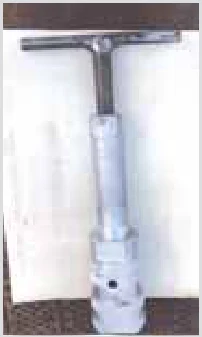
“ I m a d e t h i s simple tool that makes releasing p r e s s u r i z e d hydraulic couplers as easy as turning a T- h a n d l e . I removed the ball and spring from a coupler and screwed on a 4-in. long nipple, then welded a 1/2-in. nut to the other end of the nipple. I also drilled a 3/16-in. dia. hole in the coupler and welded a 1/2-in. threaded rod to a T-handle. Screwing the rod all the way into the nut pushes on the ball at the end of the hose and releases the pressure. Works great.”

From the archive · Full text
Reader shop tip 1 of 2

David Simpler

Individual tip 1 of 2 from this reader’s published contribution.
David Simpler, Elkton, Md.

“I needed a low-cost way to protect the hydraulic couplers on my skid loader, so I cut up an old heater hose that I already had into 3 to 4-in. lengths that friction fit onto the coupler. I used 1-in. hose for the male coupler and 1 3/8 in. hose for the female coupler. The hoses keep water out of the couplers. Works great.

From the archive · Full text
Reader shop tip 2 of 2

David Simpler

Individual tip 2 of 2 from this reader’s published contribution.
David Simpler, Elkton, Md.

“I wanted a spreader bar that I could use with my skid loader to pick up equipment, so I ordered some chain hooks and used a standard 3-ft. long, Cat. I drawbar to serve as the bar. It’s lifted by an I-bolt through a hole in the center of the drawbar, with chain hooks attached to both ends with small hitch pins and clips. The photo shows the spreader bar being used to lift a disk off the ground. It does a nice job of balancing the load.”

From the archive · Full text
Reader shop tip

Steiner Tractor Parts

Steiner Tractor Parts, www.steinertractor.com; ph8002343280 (as printed)

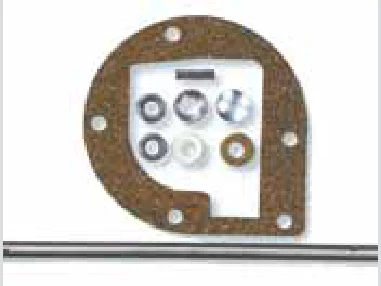
You can update your Farmall tractor’s worn governor rockshaft bearings, seals, and bushings with Steiner’s new governor rockshaft repair kit. It’s designed to fit IH/Farmall A, B, C, Supers, 100, 130, 200, and 230 models. The 11-piece kit includes a key and pin, bushing, 2 needle bearings, a plug, bumper spring, felt seal and retainer, and gasket. Sells for $89.94 plus S&H.

Shop feature stories

From the archive · Full text
Feature story

Air Filtration Improved With Particle Separator

Featured source: S&B Filters

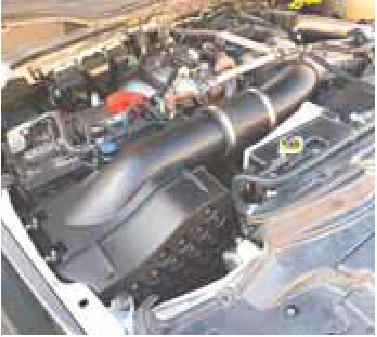
Anyone who drives a pickup truck in extremely dusty conditions will be interested in the Truck Particle Separator filters from S&B. These are military-grade products with 49 small vortex tubes that clean dusty air before it enters the filter element. As dirty air enters the separator tube, centrifugal force throws debris and dust against the outer sides of the vortexes where it’s ejected by a fan. Clean air continues through the main center tube.

A Truck Particle Separator replaces the entire stock intake on a pickup, including the box, tube and filter. Most installs can be completed in less than a couple hours with no drilling required. The system has easy access latches that allow the air filter to be changed without using tools. The filters can be installed on Ford Powerstroke diesels, Dodge/Ram Cummins engines, and Chevy/GMC Duramax diesels.

The company says failure to service a conventional clogged filter can collapse the filter and allow dusty air to bypass the filter and enter the engine, where damage can easily occur. S&B Particle Separator filters don’t have that problem because dust and debris is continually evacuated by the air vortex.

S&B also produces Particle Separator filters for ATV’s and UTV’s.

Sells for $699 for 2017-2019 Ford 6.7L Powerstroke diesels. The ATV separators sell for $399 to $419.

Contact: FARM SHOW Followup, S&B Filters, 15461 Slover Ave., Fontana, Calif. 92337 (ph 800 358-2639; www.sbfilters.com).

From the archive · Full text
Feature story

“3-Handed” Sandblast Cabinet

Featured source: Andrew Sewell

“I made what I think might be the world’s first 3-handed sandblast cabinet,” says Andy Sewell, North Yorkshire, England.

“I cut up a second cabinet and added half of it to my existing cabinet so now there are 3 hands. I can easily reach the blast gun through either of the two right hand holes. The extra hand lets me hold parts very close to the blast gun for detail work or further away.

“If I had enough room in my shop I would have added a fourth hand to the left side as well, using the remainder of the cabinet.

“I added a fine screen inside the cabinet so even very small parts don’t drop down into the hopper. The screen is recycled from a bent front grille off a tractor. The hopper also has a sight gauge.

“This sandblast cabinet is more useful than ever with these improvements.”

Contact: FARM SHOW Followup, Andrew Sewell, North Yorkshire, England ([email protected]).

From the archive · Full text
Feature story

Flange Bushing Rebuild Kit Saves On Planter Repair Costs

Featured source: Dave Burgei

“Our new flange bushing kit for planters makes old and worn parallel linkage arms and bushings work better than new. All the wear takes place on replaceable parts instead of on your planter’s parallel linkage arms,” says Dave Burgei, S.I. Distributing, Spencerville, Ohio.

He credits the idea for the flange bushing kit to Ron Jackson and his son Cody, who farm near New Boston, Mo.

According to Burgei, worn parallel linkage arms and bushings are a common problem with today’s planters and, with the newer high-speed planters, the likelihood is that the problem will only get worse.

“In the past, worn parallel linkage arms and bushings have always had to be replaced with new and expensive ones,” says Burgei.

“With our flange bushing kit, there is no longer any wear on the parallel linkage arms. All the wear is on the kit’s replaceable parts.”

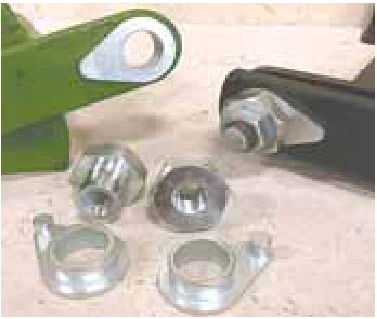
Those parts include a hardened flange bushing with a small built-in “dowel” that fits into a hole drilled into one side of the arm, and a threaded hex bushing that fits into the flange bushing. The operator drills a small hole into the arm for the dowel, and reams out the existing worn hole in the arm a little larger for a more precise fit for the bushings. A special shoulder bolt holds the 2 bushings together.

“The dowel locks itself into the arm to keep the flange bushing from turning. The design keeps the bushings and arms tight so that the wear now takes place on the bushings instead of the parallel linkage arms,” says Burgei.

The flange bushing kit is designed for John Deere, Case IH, Kinze, and New Holland planters. Price varies from $65 to $119 per row depending on the make and model of the planter.

Contact: FARM SHOW Followup, S.I. Distributing, l3540 Spencerville Road, Spencerville, Ohio 45887 (ph 800 368-7773; www.sidist.com).

From the archive · Full text
Feature story

Oil Filter Relocation Kit For Dodge Ram Pickups

Featured source: PacPro Performance Parts

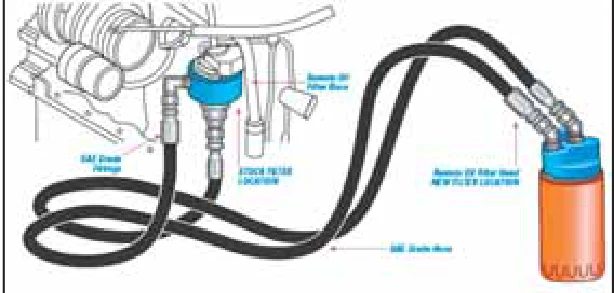
If you’re tired of dismantling half your Dodge pickup just to change the oil, you’ll like the new PacPro oil filtration relocation kit that moves the oil filter out into an open area for quick, hassle-free oil changes.

According to the company, a “grand design change” made to the front suspension on 2013 and newer Dodge Ram pickups makes changing the oil difficult and cumbersome. The installation of a second turbocharger blocks access to the stock filter.

Several different kits are available, including for Dodge Ram pickups equipped with 5.9-liter and 6.7-liter Cummins engines. Universal mounting kits for Cummins engines are also available. The kits come with all necessary hardware and components, which include an anodized aluminum filter head and base and SAE grade hose and fittings.

All kits sell for $260.14 (U.S.) plus S&H. Contact: FARM SHOW Followup, PacPro Performance Parts, 19594-96 Ave., Surrey, B.C. Canada V4N 4C3 (ph 800 663-0096; [email protected]; www.pacbrake.com).

From the archive · Full text
Feature story

Modifications Improved His Batwing Mower

Featured source: Mark Rinke

Minnesota handyman Mark Rinke bought a used Land Pride 4211 batwing mower that had issues with the gauge wheels, the wings, and the pto shaft and hitch. After he made improvements to all those components, the mower is “better than new”.

“The gauge wheels were extremely loose because the shaft taper bearings were poorly set up and not loaded correctly in the race,” Rinke says. To solve the problem he put in bushing washers to set them correctly, then added an improved lip seal that keeps dirt and grass from getting into the shaft.

“The OEM design was a lip seal, but as the axles rolled in the swivel assembly, the grass wrapped in that space because there wasn’t a guard. Eventually grass worked onto the axle and into the grease seal. I used a piece of strap iron to make a shoe horn that shields that open area on the sides and top.” He says his design protects the seal, with the bottom left open so any dirt and water can get out.

Next he enclosed the batwing swivels and bearing spacers that change the height of the mower so they wouldn’t collect dust. He cut pieces of shock absorber rubbers, slipped them on the top and bottom, then added buttons so the shafts are totally enclosed.

“The boots cover anything that swivels, so the grease stays clean and doesn’t go anywhere,” says Rinke.

After using the mower a few times he found that the mechanical gearbox and its alignment with the belt sheaves wasn’t correct, showing wear on one side but not the other. Rinke added spacers to align them better, then reinforced the gearbox mounting to make it more secure. Now he says the belts are better aligned and it takes less power to run the machine.

Because he uses the mower on hillsides, through ditches, and across uneven terrain, Rinke altered the hitch and pto shaft. He extended the mower hitch to better align with the tractor, undercut a new angle on the hitch ball so it would swivel easier, then honed and polished the inside of the ball mount. A stub shaft added to the pto lengthened it to match the hitch. Says Rinke, “These simple fixes reduce stress to the drive system, the alignment is better, and nothing fights anything when I’m mowing through these uneven conditions. All the components work together to extend the life of the mower.”

Rinke also installed grease zerks on the pins that hold the floating decks and reinforced the hydraulic mounts that raise and lower the deck and wings. New set rods hold both wings in place for travel and storage, using quick-connect jack mounts that he welded to the frame. He also fashioned a simple swivel hanger to hold the pto shaft when it’s disconnected from the tractor so it’s held securely to the frame and easier to re-connect.

“The improvements took me a whole wintertime of tinkering,” Rinke says with a chuckle, “but now I’ve got a much-improved mower that’s going to last a long time.”

Contact: FARM SHOW Followup, Mark Rinke, 11175 225th St. E., Lakeville, Minn. 55044 ([email protected]).

From the archive · Full text
Feature story

“Tailgate Sawhorse” Turns Your Pickup Into A Portable Workbench

Featured source: Tyler Daly

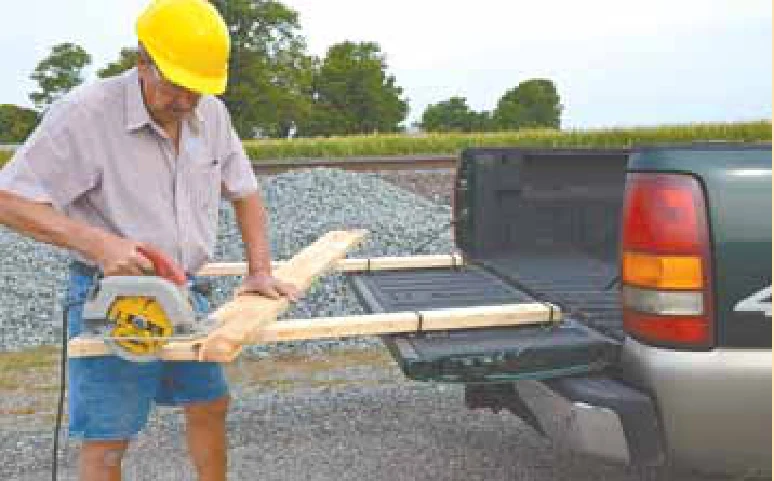
“Our new Tailgate Sawhorse extends your pickup or utility vehicle bed by 3 ft. using only a pair of ordinary 2 by 4 boards. Your vehicle then becomes a portable workbench,” says Tyler Daly, Erickson Mfg. Ltd., Thamesville, Ontario. The kit is designed to fit the tailgate on any pickup and requires some drilling. It includes 4 metal brackets and mounting hardware. The brackets come with rectangular metal holders which the boards slide into. There’s no need to tighten them down. The tailgate extension can also be used to haul long objects such as a canoe, or by adding a platform onto the boards it can serve as a picnic table.

“The Tailgate Sawhorse works on all pickups and utility vehicles, as long as it’s mounted on the highest points of the tailgate. It brings a lot of convenience to everyday life,” says Daly. The Tailgate Sawhorse is sold at Home Depot in the U.S. and at Home Hardware and Princess Auto stores in Canada. Sells for $29.99 at Home Depot. Contact: FARM SHOW Followup, Erickson Mfg. Ltd., 11297 Merritt Line, Thamesville, Ontario Canada N0P 1C0 (ph 888 546-4668; [email protected]; www.ericksonmfg.com).

From the archive · Full text
Feature story

Trim Puller Doesn’t Damage Walls

Featured source: Zenith Trim Puller

If you’ve ever had to remove baseboards, you know that damaging the wall can be a problem. Inserting a prybar behind the baseboard can easily punch a hole in the wall.

The new Zenith Trim Puller is designed to make trim removal faster and easier without causing any damage to the wall. You can use it on baseboards as well as wall trim, door casings, cabinets, floor tiles, mortar, and glued or nailed-on counter tops.

The tool has a wider and flatter contact area than a conventional prybar. It comes with a 15-degree center-mounted wedge and ramp to help push out the trim without the need for a shim or spacer. Also, the tool’s impact-absorbing rubber handle reduces vibration on your hands when using a hammer.

Sells for $27.95 on Amazon.com and is also available at many big box stores, including Home Depot, Menards and Lowes.

From the archive · Full text
Feature story

Tractor Converted From Gas Engine To Electric

Featured source: Reid Allaway

“I converted our 1978 Hefty-G cultivating tractor from a gas engine to electric motor drive,” says Reid Allaway of Tourne-sol Farm in Quebec.

“These tractors were built by Haxco in Wisconsin as an un-updated copy of the Allis Chalmer model G and while they are great machines in many ways, their weakness is the Renault engine. I removed it and replaced it with an 8-in. dia. DC motor and controller acquired from old forklifts.”

The 40-volt lithium battery pack is a home-built assembly of secondhand units that Allaway bought at an auction. Charging requires from 2 to 6 hrs. with the onboard 1.6kW charger and only about 42 cents per charge. Fully charged batteries are good for several hours of work.

Allaway says the electric motor can deliver up to 15kW (20 hp.) under maximum load, but typically only draws 3 to 5kW for most weeding tasks.

“The original engine was a Renault 4-cyl. that never put out more than 20 horsepower, and I think nearly 10 of that was noise,” Allaway says in jest.

“Now we’ve got a quiet, nimble, and exhaust-free tractor that’s always ready to work and is better at everything it does.”

Allaway says the conversion project proved demanding, time-wise, because he removed many components, including the transmission and differential, dismantled and inspected them, replaced parts as needed and reassembled them into the tractor. The electric motor mounted easily in place of the engine and the battery pack sits on top of the motor in a custom frame and air-cooled steel case purpose-built for the application. The space between the battery pack and operator seat holds a large air-cooled enclosure housing the motor controller, charger, contractors and other logic and power control hardware. The space under one fender that previously held the gas tank now holds a 12-volt accessory battery and an industrial cord reel for plugging in the charger.

The tractor is equipped with multiple weeding tools, including a 4-torch flame weeder from Flame Engineering on the front, a Buddingh basket weeder on the belly mount, and Schmotzer MPP parallelogram units on the rear to cultivate the tire tracks. A second toolbar for the belly mount, carries more Schmotzer MPP row units equipped with goose feet and Tilmor finger weeders. Both belly mount tools are easy to swap as they roll out sideways from under the tractor on removeable wheels.

Contact: FARM SHOW Followup, Tourne-Sol Co-operative Farm, 1025 Chemin St-Dominique, les Cedres, Quebec, Canada J7T 1P5 (ph 450 452-4271; info@fermetournesol. qc.ca).

From the archive · Full text
Feature story

Jig Speeds Rotary Hoe Repair

Featured source: Paul Bickford

Paul Bickford likes the weed control his rotary hoe provides. His homemade jig for replacing worn out spoke or tooth tips with Ho-Bit spoons (Vol. 41, No. 2) makes it even better.

“I have an older, 30-ft. rotary hoe, but if I had one new from the factory, I still would add the Ho-Bits,” says Bickford.

“They are wider and provide more of a cup effect than the original tips. They really rip up the dirt.”

New hoe or not, accurately placing replacement spoons at the end of the spokes is key. Rotary hoes are often used to remove weeds by stirring the soil surface without disturbing the germinating seed below. Too long or too short and they won’t do the job.

“We tried a vise grip to hold individual spoons in place, but we didn’t get consistent placement,” says Bickford.

“The Ho-Bits came with a jig, but we found it cumbersome.”

When an employee suggested an alternative, Bickford went for it. What they came up with was a framework of salvaged steel that allows the rotary hoe wheel to spin in place with a spoon holder that can pivot into position for welding the Ho-Bit in place.

A vertical leg of 2 by 2-in. steel tube is topped by a headless 5/8-in. bolt at a comfortable working height.

“The wheel slides onto the bolt and is held in place with a nut,” explains Bickford.

“If there is play in the wheel, it usually means we need to replace the bearing as well as the tips.”

A horizontal tube extends forward from the wheel holder and provides a base for a length of broken-off axle. The axle pivots inside a bushing welded in a vertical position to the steel tube.

The actual spoon holder is a short length of steel welded to the upper end of the axle. A cradle for holding a Ho-Bit is at the other end. A stop on the horizontal tube restricts rotation.

When rotated into place with a new Ho-Bit resting on the cradle, the spoon holder aligns with an arm on the rotary hoe. As the arm also rotates into place against the new spoon, it is welded in place.

“Old tips can wear unevenly, but the jig ensures the new spoons are all at the same distance from the center of the wheel,” says Bickford.

A spring attached to a nut at the lower end of the axle holds the spoon holder against the stop tab. To speed the process, washers sized to hold extra Ho-Bits were welded to the steel table alongside the jig. Like everything else in the jig, they came from the scrap pile.

“We just used scrap we had laying around, but it works,” says Bickford.

“With extra spoons in the washers, we can just go down the line, bang, bang, bang. Building the jig for just the one machine was worth it.”

Contact: FARM SHOW Followup, Paul Bickford, Bickford Farms, 3036 Ridgevue Rd., Ridgeway, Wis. (ph 608 574-2307; [email protected]; www.bickfordorganics.com).

From the archive · Full text
Feature story

Tractor Restoration Led To Start Of Farmall Cub Business

Featured source: Richard Batstone

When Richard Batstone bought a 1953 Farmall Cub in the early 1980’s, he didn’t realize it marked the beginning of a new career for him. He spent 3 years restoring the well-used tractor.

“I really enjoyed the process of taking something apart and making it almost new again. The only thing I goofed up on was putting Circle Cub decals on rather than the correct ones. I didn’t know there was a difference at the time.”

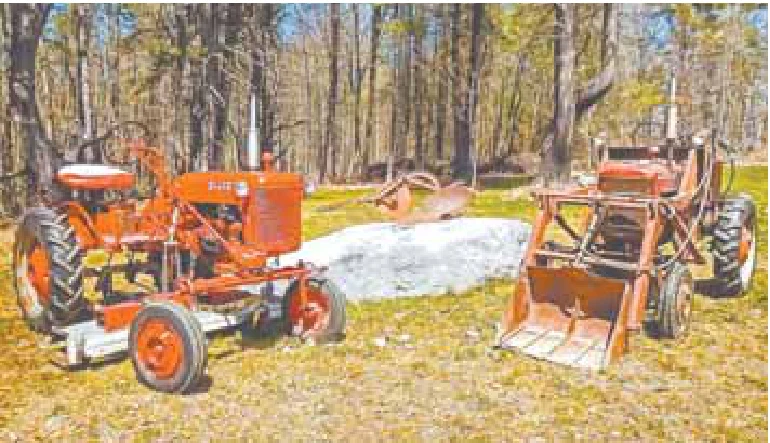
Restoring the Cub gave him the desire to learn more about Cub tractors and eventually start a website selling parts. Running the website has put him in touch with hundreds of Cub owners across the U.S. and Canada. For example, he purchased a 1948 Cub from an owner north of Franconia Notch, New Hampshire. The tractor was in original condition, and he kept it that way because it ran like a top. In 2014 he added a bucket loader to the rig to help move the tremendous amounts of snow that area often receives.

Batstone says Cubs are great tractors to own for someone who wants a nice-running tractor for around-the-yard work, or wants to try their hand at uncomplicated restoration. His website has parts available for all models. He’s so busy he doesn’t have time to work on additional Cub restorations. Batstone says the farmallcub.com collector website has information on club events regionally and nationally.

Contact: FARM SHOW Followup, Richard Batstone, P.O. Box 296, Berlin, Mass. 01503 (www.farmallcubforever.com).