From the archive · Full text
Reader shop tip 1 of 2
Dennis Schenk
“To install hard-to-reach spark plugs, I use a short length of rubber hose that fits tightly over the end of the spark plug. Lets me put the plug in the hole and get it started.
Money-Saving Repairs & Maintenance Shortcuts · Printed section pp. 32–35
55 selected entries · Complete text of selected entries
This issue’s section includes reader tips and feature-length shop stories. Held items and editorial notices are not reproduced.
“To install hard-to-reach spark plugs, I use a short length of rubber hose that fits tightly over the end of the spark plug. Lets me put the plug in the hole and get it started.
“If you’ve got a pin clip that’s hard to remove, just attach a short length of small chain to it that you can easily grab onto. You can leave it on the pin all the time.”
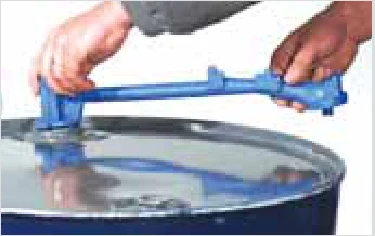
If you buy a lot of product in 55-gal. drums, you need a bung wrench like this one from Morse Mfg. Sells for $24.45.
“I put a 1 7/8-in. ball hitch on one side of my tractor loader bucket and a 2-in. ball on the other side. Makes it easy to move trailers around the yard.”
“To make a counterweight for my Deere 5085E tractor, I took the rear counterweight from a non-running forklift that I bought at an auction. I welded up brackets to fit and then drilled and tapped holes as needed. I made the mounting fit my quick hitch so I can quickly pick it up or drop it off. It weighs about 2,000 lbs. and is just about right on this tractor. I also plan to adapt the mast from the forklift to my tractor quick hitch.”
“While shopping at a tool outlet store, I found a Dewalt adapter that lets you fit the new 20-volt lithium ion batteries into the old 18-volt tools. It gave my old tools new life. You can pick up the older style tools dirt cheap at farm sales or flea markets so you can have extra tools around.
“On another topic, with Sears closed I’ve discovered that we can’t return our old Craftsman tools under the lifelong warranty at Lowes or other stories that sell Craftsman tools. They won’t honor the warranty.”
“To help hold a nut or screw on a tool, keep a toilet was ring around and just put a touch of the wax on the tool. It sticks well but is not as messy as axle grease or other substances.”
Harold is impressed with “Water Weld” from JB Weld.
“It will plug leaks or patch holes in almost anything, from metal gas tanks to pvc pipe, copper pipe, iron, feed tanks, water tanks, and so on. It sets up in 15 to 25 min. and has tensile strength up to 1.300 psi. It will also withstand heat up to 320 degrees. Amazing product. You can buy a tube of it at Dollar General for $6.”
“I needed a metric allen wrench for a job but didn’t have one. Instead, I used a metric bolt head, with 2 nuts on the bolt locked together down at the head. I put a wrench on the nut closest to the head. Worked like a charm.”
“On one of my Allis Chalmers WD tractors the coil in the magneto would shut down when it got warm and I couldn’t start the tractor again until it cooled off. It would have been expensive to repair the magneto, so I fixed the problem by disconnecting all the wires to the coil, drilling a small hole in the magneto cap, and running a wire from a regular outside-mounted coil to the points. The only thing the magneto does now is open and close the points. You also have to run the wire from the outside coil to a resister to keep the points from burning or pitting, and the timing will be different with the outside coil. But once you get that adjusted, the engine never stops when it gets warm anymore. I hid the coil and resister up under the hood so the tractor still looks original. This fix has lasted for 15 years.”
“I store paperwork like warranties and owner’s manuals under the liners in my tool chest drawers. They stay clean but are always handy.”
“Some time back FARM SHOW showed a way to install a rubber tubeless tire valve stem in a plastic gas can, leaving the ‘core’ out so it provides a vent when pouring out fuel. It’s a great idea but I recommend people use a steel tire valve. The rubber ones break off too easily.”
“I always had trouble with the drive belt on the tiller behind my 149 Cub Cadet garden tractor. To solve the problem, I rotated the gearbox and ran a driveshaft from the gearbox to the tiller drive. That was 10 years ago and it still runs great.”
“To make it easy to change tires around the farm, I mounted a small Harbor Freight tire changer to the receiver hitch on my pickup.
“To make rubber cutting edges on snowplows or other equipment, and to line pickup beds, go to Tractor Supply Co. and spend $40 on a 4 by 6-ft. horse stall mat. You’ll save hundreds of dollars.
“One of the handiest things in my farm shop is an electric winch that hangs from the trusses in my shop. Great for changing mower blades and other lifting chores.”
“The fuel lines on my 1991 Chevy Scottsdale were rusting through and would have been very expensive to replace. So I ran rubber fuel lines instead of steel and slipped a piece of flexible steel conduit over the rubber lines wherever they ran close to the exhaust manifolds and engine. I cut the factory crimps off the old fuel lines and used high pressure hose clamps to attach the rubber lines.
“After a friend of mine lit a trash barrel on fire in his shop while cutting metal, I realized that could easily happen to me, too. So I made a lid for my barrel out of flat sheet metal.”
“I was getting ready to paint my propane tank and had to find a way to use a wire brush on the bottom of the tank where there was only about 3 in. of clearance. I took a flat wire brush and made one saw cut down the middle to make it smaller and glued a blade off my reciprocating saw to the brush. Worked really well to get into that tight space.”
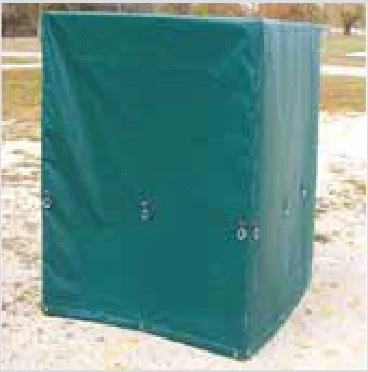
Tarp manufacturer Syntex makes these 18-oz. vinyl-coated pallet covers that have an anti-mildew treatment and UV pigments. D-rings and grommets help tie them down during transport. The company sells a lot of them for covering seed bags on pallets but they can be used to protect anything.
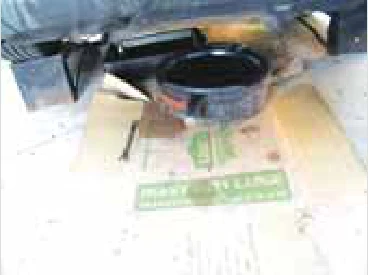
“I’ve been changing my oil in my vehicles for decades. For most of the time I’ve used front wheel ramps and a creeper, but the creeper gets caught in the cracks of the concrete, extension cords get under the wheels, and sometimes your hood or coat gets tangled up in the wheels. So a few years ago I started using large pieces of heavy cardboard. They’re easy to slide on and keep oil drips off the concrete. When I’m finished, I just pull on the heavy cardboard and everything slides out from under the car. It works great on gravel, too, and the cardboard folds up easily when I’m done.
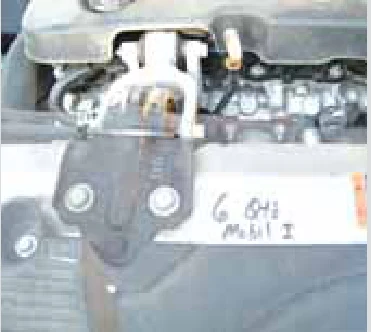
“With 4 boys and their vehicles along with my pickups and my wife’s vehicle, sometimes it gets difficult to remember how many quarts of oil go into each vehicle. I use a black magic marker to write the amount, brand and weight of oil for each vehicle under the hood.”
“On a recent trip to Montana in our diesel-powered RV, the engine suddenly seemed to lose power and run sluggishly. While going up a hill our speed would drop from 70 mph to 30 or so with little power.
“We spent a couple days trying to get it fixed. One mechanic cleaned the fuel injectors and other components (for $850) but when I headed back out of the shop, the same thing soon started happening again. I noticed that if I turned the engine off when the problem was happening and allowed it to reset, it would run okay for a while before the engine would start slowing down again.
“Finally, as a last resort, I decided to read the manual! That’s when I learned about a feature of modern diesel engines called Limp Mode, which is a security function for your engine and transmission that happens when your vehicle senses something is wrong. Limp Mode reduces the power and limits engine rpm’s so you can drive your car to a workshop without damaging the engine. When a vehicle goes into Limp Mode, the Check Engine light will be on but manufacturers have figured out that many people ignore that light.
“Once I knew about this feature, I stopped at another diesel shop and told the fellow what was going on. Since we had already practically taken the engine apart and there was no obvious cause for the problem, he suggested I try adding 1/2 quart of Premium 245 Diesel Fuel System Cleaner to fill up the tank. This sells for about $40/qt. on Amazon. He thought that since we had already cleaned the injectors and changing all the filters that the problem was that the turbo blades were sticking. So the additive was to clean the turbo. I figured it made sense because the RV had not been driven for a year and a half due to the pandemic.
“So I put the additive in the tank and started driving back to Minn. I had to stop and restart the vehicle about 30 times going across Mont. and N. Dak. But by the time I got home the engine was starting to run fine and now it’s as good as ever. The lessons I learned? Don’t let your diesel engines sit around too long without running them. And buy diesel at truck stops or high-volume diesel stations. Also, don’t buy gas or diesel fuel at a station while they are filling their storage tanks because filling them stirs up anything in the tanks. And finally, read the manual.”
“I bolted a piece of 2 by 2-in. aluminum angle iron to the back of my tractor and drilled a series of 3/4 and 1-in. dia. holes in it to hold all of my hitch pins. I also put 2 U-bolts in it to hold my lynch and safety pins. No more digging in my toolbox to find them.”
“When loosening the large nut that holds the pulley on top of a lawnmower deck spindle, hold onto the blade rather than the pulley and use a large impact wrench to loosen the nut.
“I’ve found that having a self-retracting air hose reel makes using air-powered tools a breeze, even if you don’t use them regularly.”
“I added a 12-volt inverter to my McCormick X4.40 tractor to be able to run small power tools in an emergency.
“I had to remove the pto shield on this tractor in order to have room to work. Wish they would make a hinged pto shield that would lift out of the way.”
“A real time-saving tool for me is to use a roller chain breaker. Gets repairs done faster.
“When it comes to repairs, I say don’t fix whatever it is too many times. Sometimes a piece of equipment is just worn out.”
“In winter our frostless hydrant would freeze up even with heat tape and insulation wrapped around it. My wife started draping a couple feed sacks over it, with one sack inside the other. One is the newer kind of bag that’s lined with paper. Since we started doing this, the hydrant has not frozen.”
“Old fertilizer barrels have a tendency to rupture when you put tons of liquid nitrogen in them. So I made 5 straps out of 3-in. nylon webbing with 6,000-lb. capacity. They wrap around the barrels starting at the bottom and spaced 9 in. apart.”
“I have found that when using my shop press to remove or install bushings and bearings, that impact sockets make great punches for pushing them in or out.”
“To seal caulking tubes, I melt candle wax and dip the end of the tube in it 3 to 4 times. The wax seals silicone caulk almost as good as the factory seal.”
“Need small clamps for light work? Try using spring-type clothes pins. They really work great.”
“For years I’ve used a syrup bottle to put bar oil in my chainsaw. I just flip the cap and fill the tank. No funnel needed. The cap keeps the dirt out.”
“I mow 6 acres every week with 2 rough riding tractors. It was killing me until I bought 2 gel foam seat cushions from Walmart. Ahhh, they feel good.
“I find that all sorts of defects in lumber can almost disappear if you put a little glue into the void and then sand over it. Allow some time for the sawdust to bond with the glue.”
“My 275 Deere 10-ft. disk mower had a problem with always tripping. I finally cured the problem by welding brackets on it and used two big bed springs to get it to stay in place instead of kicking back. This mower has had many problems.”
“When I have to replace bearings on equipment, I put the new bearings in the freezer for a couple hours. The cold shrinks them so they slide easily into place with no force needed.”
“My Grandpa has made hundreds of tools in his lifetime. He asked me to submit this one that he whipped up recently to FARM SHOW. It’s a pto shaft quick-connect tool. He made it with an old pair of C-clamp vice grips and a piece of rebar that he bent into a U shape to fit over the shaft on the tractor. He welded the rebar U to one of the clamps so he can slip it over the shaft on the tractor and use the other side of the clamp to pull the implement’s shaft into place.”
“I hate ‘pushed in’ grease zerks. More often than not they will eventually pull out with the grease gun end when done greasing. To solve the issue permanently, I thread the zerk mounting hole and install threaded grease zerks. Doesn’t take long and eliminates the irritation.
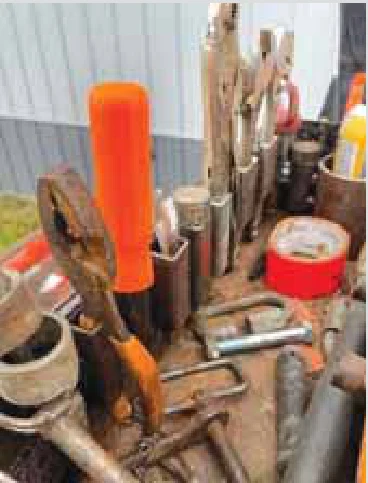
“I was tired of always having to dig around in my tractor toolbox to find what I was looking for. It seems like every time I needed something it was at the bottom of the toolbox. So I welded various sized tubing to the inside edge of the toolbox to hold different tools, pins, etc. It works great.”
“I built a stand off one corner of my workbench to hold a truck tool box so I can have tools handy without cluttering up my workbench.”
“One of my most useful best buys around the farm are these small dish pans. They hold about 2 gal. and are good for holding just about everything from water for chickens to tools and all kinds of parts. They’re made right here in Dyersburg by Omni Tech but you can find them everywhere.”
Pusher Intakes can improve fuel mileage, reduce exhaust gas temperatures (EGT), speed turbo spool, improve throttle response, and extend engine life.
“The number one reason people come to us is to get their exhaust gas temperature down,” says Elizabeth Allenbaugh at Pusher Intakes.
“This is especially true when towing raises engine temperatures. The hotter the engine runs, the faster it wears out. Our product cools down the engine and extends longevity.” Allenbaugh and her engineer husband, Jacob, run Pusher Intakes. Founded in 2008, they now carry around 100 products from single items to complete systems.
“We have intake systems for most makes and models,” says Allenbaugh.
“We sell components, such as charge tubes, heater grids and manifolds, but more often than not, people buy a kit.” A simple charge tube replacement connecting the outlet of the turbo to the intercooler can have a significant impact on the engine. Installing the Pusher 3-in., driver-side, charge tube on a 2004 to 2010 Duramax LLY, LBZ or LMM truck supplies 86.4 percent more air. The difference comes from both the larger diameter and improved flow design of the Pusher unit. It’s priced at $199.99. Replacing the heater grid on a 6.7L Dodge Cummins (2007 to 2018) with the Pusher Heater Grid Delete supplies more air to all cylinders. It also drops EGT by 50 to 100 degrees, increases mpg., gains throttle response and speeds turbo spool, and sells for $179.
Allenbaugh notes that compound turbos are available for most models and are very popular. They combine the benefits of a small turbo with its great throttle response with a large turbo’s top-end power. They typically run in the low $3,000 range for a Cummins specific system, the low $4,000 range for a Duramax system, and $5,000 for the new Powerstroke system. The majority of components, like intake manifolds and charge tubes, come in mild steel. Select parts are also available in aluminum for the polished aluminum look. The downside, warns the Allenbaughs, is that aluminum is much weaker than steel. Some aluminum parts, they add, simply can’t handle the abuse a diesel truck dishes out. All parts and kits are designed to bolt-on. They can be installed with basic hand tools using the detailed instructions that accompany them. Installation videos for select parts are also available. Parts are available in a variety of powder-coated colors, as well as unfinished. The company distributes online in the U.S. and Canada. While they have no store front of their own, they do have a dealer network that stocks their parts.
“You may see our parts in local stores,” says Allenbaugh.
“Give us a call to discuss your engine and your needs, or go on our website and search by year, make and engine.” Contact: FARM SHOW Followup, Pusher Intakes, 9100 16th Place, Vero Beach, Fla. 32966 (ph 772 212-9290; www.pusherintakes.com).
The Milwalt battery adapter is compatible with both Milwaukee 18-volt and DeWalt 20-volt batteries, making it easier for members of Plain Communities and people who live off grid to use the same adapter for appliances, lights and other things that need DC power.
The adapter has a slim footprint, but the real beauty of it is that only one adapter is needed for both batteries instead of one for each brand.
“There are people with businesses using these adapters for converting small household appliances powered by cordless batteries. With the Milwalt they can just stock one adapter,” says Melvin King, majority owner of Lancaster Lanterns, which makes the adapters. They retail for $3.95.
The company also punches out the contacts needed to complete these quality Slimpak adapters, enabling them to build whatever configuration customers need. At 99 cents each, these contacts are a little more expensive than some contacts. The contacts are copper tabs that are nickel-plated for resistance to rust, acids and salt water. They will last for years and thousands of battery changes.
Lancaster Lanterns produces the adapters with on-site injection molding. They also have adapters compatible with Milwaukee and Makita batteries.
Customers have used them for a variety of purposes including adapting batteries to power everything from fishing boat trolling motors to buggy lights.
Contact: FARM SHOW Followup, Lancaster Lanterns, 5264 White Oak Rd., Paradise, Penn. 17562 (ph 717 340-4678; [email protected]).
For Utah-based truck driver Doug Andersen, watching TV’s Shark Tank combined with his wife’s good-natured prodding was the inspiration he needed to come up with his “wheel in a wheel”, a new twist on steering wheel spinners.
Spinner design hadn’t changed since their inception in the 1920’s but recently OSHA and different DOT regulations were forcibly discouraging the use of any raised aftermarket steering wheel attachments. Many verified instances showed them falling off, catching on clothes, bruising fingers or wrists, and causing serious accidents.
“I did away with those problems and made my ‘wheel in a wheel’ spinner a central part of the steering wheel itself,” says Andersen He explains that he prefers to drive with his hand on an inside spoke of the wheel, and often noticed other truck drivers doing the same.
“I thought if I could wrap my hand around a handle that pops up to become a type of spinner, that would be perfect. With my version, I can make a full left or right 360 degrees turn without taking my hand off.”
Andersen says his “wheel in a wheel” meets or exceeds all OSHA and DOT requirements as it’s part of a manufactured steering wheel, isn’t an add-on, and doesn’t stick up to catch on clothes or fingers.
“It pops up maybe a 1/4 in. to unlock. Otherwise, it locks down in any of 6 positions depending on where the driver’s hand position is comfortable. It’s like grabbing a shovel handle - you have much better control with it.”
He envisions his spinner invention working with heavy equipment, forklifts, loaders, yard donkeys, farm equipment and boats. Normally these operators run their machinery with only one hand on the wheel while the other works hydraulic levers or shifts gears, so it will be extremely handy.
Design engineers are in the process of calculating production and manufacturing costs, and Andersen hopes the spinner will hit the market within 8 to 12 mos.
Equipped steering wheels will come in different diameters with a simple hub change for mounting on variable steering columns.
He expects the “wheel in a wheel” spinner to be manufactured in the U.S. and sell in the $250 to $350 range.
Contact: FARM SHOW Followup, Doug Andersen, Utah ([email protected]; www.wheelinawheelspinner.com).
It’s only logical that Art Martinez would build a high-performing engine for his own enjoyment since he’s part owner/operator of PSP Diesel, a performance diesel business in Houston. His business partner Richard Alvarado says Art’s 6.0L Powerstroke has 3 turbochargers, a shortened chassis, and enough power to burn plenty of rubber. The original truck was stripped down, the frame re-built by a custom shop, and the bed and cab sent off for a pearl white paint job.
The Powerstroke 6.0L has a balanced factory crank, forged Carrillo rods, and special pistons with heavy-duty wrist pins.
Ported and polished heads from Kill Devil Diesel and injectors from Warren Diesel are fed by a Thumper II injection pump. They also used an Odawg intake and installed an adaptor to inject nitrous. Two 65mm atmospheric turbos combine with a 69mm SXE for high pressure. The valve train was upgraded to Manton valve springs with a FASS 220 lift pump. There’s an ATI damper, billet flexplate and a fully rebuilt transmission by Sam Wise.
Martinez and Alvarado say the truck is well disguised as a daily driver with the 3 turbos providing 650 hp., which, believe it or not, they’re disappointed with. They intend to change out the Stage 3 Colt cam to a different model that should bump the engine up to 1,000 hp. at lower rpms. Alvarez and Martinez say their work on trucks is more like play for them and the triple turbo 6.0L is the best toy yet.
Contact: FARM SHOW Followup, PSP Diesel (www.pspdiesel.com).
PermaFlex fromSANI-TRED is a liquid rubber-like adhesive coating that can seal up just about any surface. Randy Emerick at SANI-TRED says its most important qualities are its penetration and its flexible elongation memory. That means it penetrates deep and can stretch and return to its original shape if bent or twisted. The product is ideal for use where a heavy-duty waterproof surface is needed. Emerick says “We get calls all the time from people who ask about sealing the base of grain bins, grain bin roofs, coating things like chicken coop floors, livestock floors and many different surfaces that are prone to corrosion or wear. PermaFlex can be brushed, rolled or sprayed on and will work for all of those applications and many more.” Hans Sulzer is a recent customer.
“Last spring, I purchased SANI-TRED PermaFlex to seal a cattle water tank. We let it dry for several days before filling the tank with water. Three weeks later the water was only down 1/2 in. due to surface evaporation. Before we sealed it the water would seep down 6 in. per week. We’re very pleased with the results because the tank didn’t leak or seep all summer.” It’s available in 4 different colors in quart, gallon and 5-gallon containers. PermaFlex can be purchased direct from the company (www.sanitred.com or call 1-866-784-3308). The company has a mini sample pack ($27.95) that contains enough PermaFlex to double coat 7 1/2 sq. ft. and enough Liquid Rubber Base and Thickening Activator mixture to apply a 1-in. bead 2-ft. long. Application instructions with photos and video are on the SANI-TRED website. Emerick says the sample pack has a double your money back satisfaction guarantee, and if the customer places an order in the future, the cost of the sample pack is deducted from the new order.
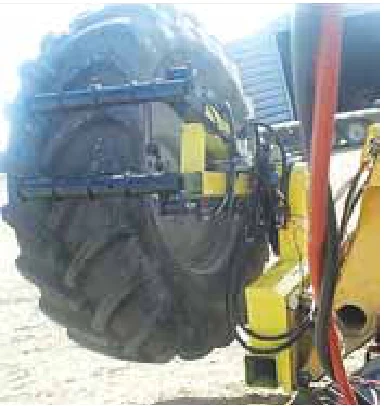
Handling big farm wheels and tires up to 90-in. dia. is safe and easy with the Tire Wrangler built by a North Dakota company. Owner Bruce Pigeon says the Tire Wrangler works in conjunction with his patented Agri-Jack to provide an extremely safe method for changing wheels and tires.
The Tire Wrangler comes ready to be mounted on a skid steer and can also be adapted to loaders and forklifts. He recommends using a skid steer rated between 2,500 and 3,000 lbs. at the head plate. His original model has a 12-volt powered rotator and a second model can be rotated manually.
Pigeon says the Tire Wrangler handles sprayer, tractor or combine tires, and even larger floater tires that weigh 2,000 lbs or more.
“The rotator head has 4 hydraulically-operated clamping arms attached to a strong vertical column on the main frame. When those arms are closed securely they’ll hold large tires in any position,” says Pigeon.
The rotating head moves the arms left or right to clear fenders and other obstacles. Hydraulic cylinders open and close the clamps to securely grab and hold large tires and wheels, which can be lifted, inverted, laid down, picked up or stacked from the safety of the operator seat. The hydraulic controls are sensitive and deliberate, so wheels can be easily be aligned on the studs and bolts.
Pigeon says he came up with the Tire Wrangler design after seeing a large clamping machine move stacked cardboard.
“The light came on instantly, so I went back to the shop and drew up plans. I built a prototype, modified it somewhat after testing, and now we have two models.” Prices start around $4,400. Contact the company for current pricing. The Tire Wrangler is an ideal complement to the Agra Jack™, another product that Pigeon designed, patented and builds for lifting heavy equipment.
“I built that product as an answer to a near tragedy after helping the owner of a new high boy sprayer re-install a partially removed tire. The cribbing he used had partially collapsed, and the wheel was holding on just 3 bolts. As we managed to get the sprayer lifted and the wheel back on, he asked me to build a better jack so he wouldn’t kill himself. That product is now the Agra Jack™.”
The Tire Wrangler is the second part of the system. Says Pigeon, “I engineered both products for safety, and we don’t take any shortcuts in manufacturing. Every device is built, assembled and tested in our facility.”
Contact: FARM SHOW Followup, Agra-Jack, 341 Railroad Street, Garrison, N. Dak. 58540 (ph 701 463-2959; [email protected]; www.agrajack.com).
“After moving to town and not having a loader tractor anymore to lift the front of my riding mower, I tried several ways to get the job done - including using hi-lift jacks and several types of ramps,” says Greg Waldie, Miles, City.
“I finally came up with a lift frame that works great and doesn’t have any obstacles underneath so it’s easy to reach the mower deck.
“A local welding shop built the frame for me using 2-in. sq. tubing. An ATV winch bolts to the side of the frame about 3 ft. up on the side. I ran the winch cable up through a pulley at the top. Once the mower is up, I attach a safety chain to it to hold the mower securely in place.
“The frame is 7-ft. high, 53-in. wide, and mounts on 6-ft. skids at the bottom. It’s very portable and easy to move.”
Contact: FARM SHOW Followup, Greg Waldie, 514 Michels Ave, Miles City, Mont. 59301 (ph 406 234-4789).
Chlor*Rid soluble salt remover from Chlor Rid International makes repainting metal surfaces easier and more effective. Jim Deardorff, paint contractor, author and industry consultant, recommends an application of Chlor*Rid after the first sand blasting.
“Normally, if you sandblast and wait overnight before priming, you get more rust,” says Deardorff.
“I apply a coat of Chlor*Rid, and it reacts with remaining iron oxide (rust) and dissolves it, separating it from the metal. The entire surface turns dark. I can wait and sandblast again in the morning for a virtually paint-free surface.”
Better yet, Deardorff says the second sandblast doesn’t remove sound metal, and the Chlor*Rid works on stains other than rust. He uses the Chlor*Rid as one step in his Classic Blast restoration process. The process also uses a fine, dense mix of aluminum oxide, trace minerals and graded walnut shells for a blast medium.
“I believe I am the only person who can remove rust from 10-gauge metal without affecting the metal,” says Deardorff.
“And I can remove a stain off any surface.”
Deardorff has coined the term Lifetime Coating to describe his resurfacing that equals the 5 to 7-step coating process used by the automotive industry.
“Chlor*Rid not only dissolves the rust, but also cuts salt content on the metal to less than 5 ppm,” explains Deardorff.
“Any chloride over 10 ppm will produce rust.”
Deardorff recommends mixing Chlor*Rid at 1 part to 200 parts water. He then applies 10 gal. of the solution through his sandblaster.
“The industry doesn’t want paint to last,” says Deardorff.
“With my system and Chlor*Rid, you stabilize the substrate, so the resurfacing will last longer.”
Contact: FARM SHOW Followup, Superior Coatings Co., 205 McCormick St., Chillicothe, Mo. 64601 (ph 660 646-6355; [email protected]; www.classicblast.com).
Turbo covers from Thermo-Tec wrap around the exhaust port of your turbocharger, providing a snug fit to ensure that temperatures are contained within the cover.
Randy Pugh, Marketing Coordinator for Thermo-Tec says, “The benefits of using a Turbo Cover include faster spooling, higher rpm’s, more horsepower and more torque. You receive these benefits by holding the heat inside the turbo instead of allowing it to escape under the hood.”
Covers come in T3, T4, T5 and T6 sizes in silver and T3 or T4 in Carbon Fiber or Ricochet Black. Covers have heavy-duty grommets and include wiring for a safe and secure fit and easy installation.
Prices start at $178 and include domestic shipping. FARM SHOW readers can save 20 percent on orders with the code FARMSHOW20.
“Thermo-Tec products are not only made in the USA, but they are also backed by our lifetime warranty against manufacturer defects. Our customers are the heart and soul of our business, so we strive to have loyal customers for life,” says Pugh Contact: FARM SHOW Followup, Thermo-Tec Automotive, P.O. Box 96, Greenwich, Ohio. 44837 (ph 800 274-8437; outside the U.S. 419 962-4556; www.thermotec.com).