Practical ideas from FARM SHOW MagazineSubscribe · Free issue · Send us your shop tip
Subscribe to FARM SHOW
Issues / Vol. 47, No. 2 (2023)

Vol. 47, No. 2 (2023)

Money-Saving Repairs & Maintenance Shortcuts · Printed section pp. 32–35

39 selected entries · Complete text of selected entries

This issue’s section includes reader tips and feature-length shop stories. Held items and editorial notices are not reproduced.

Archive text: prices, coupons, availability and contact details reflect the original publication, not current offers. Reader methods are not universal instructions; follow manufacturer guidance and proper safety practices.

Reader shop tips

From the archive · Full text
Reader shop tip 1 of 3

Milton T. Webster

Individual tip 1 of 3 from this reader’s published contribution.
Milton T. Webster, Taylor, Texas

“To fill up a portable air tank off my air compressor, I put a female air coupler on the tank and made up a length of hose with a male fitting on either end, so it plugs into the tank and the air hose. It’s easier than holding the chuck on the air tank fitting while it fills. Just be careful not to overfill.

From the archive · Full text
Reader shop tip 2 of 3

Milton T. Webster

Individual tip 2 of 3 from this reader’s published contribution.
Milton T. Webster, Taylor, Texas

“I put a can of Sea Foam in the gas tank whenever I go on a long trip and have never had any problems with fuel injectors. It works on any engine and is cheaper than Stabil.

From the archive · Full text
Reader shop tip 3 of 3

Milton T. Webster

Individual tip 3 of 3 from this reader’s published contribution.
Milton T. Webster, Taylor, Texas

“I use an AM107421 relay kit on different solenoid starters to solve starting problems. The kit will not work on remote solenoid starters.”

From the archive · Full text
Reader shop tip

Paul Tierney

Paul Tierney, Bloomington, Minn.

“I mounted a heavy-duty vise on a 4-wheel heavy base so I can move it around wherever I need it in the shop or out in the yard. Very handy.”

From the archive · Full text
Reader shop tip 1 of 2

Jim Morey

Individual tip 1 of 2 from this reader’s published contribution.
Jim Morey

“Many thanks to Husqvarna expert Ready Davis for his tip on hard-to-start saws (Vol. 46, No. 6). I have a 5-year-old 450 Rancher that now starts easily every time. His tip to put the control lever in the ‘run’ position but don’t touch the trigger yet, which keeps the throttle open, does the trick.

From the archive · Full text
Reader shop tip 2 of 2

Jim Morey

Individual tip 2 of 2 from this reader’s published contribution.
Jim Morey

“On another note, I was having trouble with the chain seizing at the tip of the bar. The bar has a sealed bearing at the top but over time crud works into and binds the sprocket. To solve the issue, I drilled a 1/8-in. hole on each side of the bar in order to grease the sprocket. Be careful not to drill all the way through so as not to damage the sprocket. Then occasionally apply grease to the sprocket. It saves having to buy a new bar prematurely.”

From the archive · Full text
Reader shop tip

Tom Forst

Tom Forst, Hewitt, Wis.

“I remove broken bolts by putting a nut on top of the bolt and stick welding it on. You might have to do it a couple of times, but I’ve found it even works on bolts broken off below the surface. A guy at a machine shop showed me that trick.”

From the archive · Full text
Reader shop tip

Gary Lee Meeks

Gary Lee Meeks, Verona, Va.

“Many years ago I had the same problem filling air tanks as Ryan Newman in your last issue. His valve shut-off is a nice idea, but you can get by without it if your compressor hose has a self-closing quick coupler and your tank has a shut-off valve. I made a second with a T, so I can walk away while two air tanks fill.”

From the archive · Full text
Reader shop tip

Abe Snake

Abe Snake, Peebles, Ohio

“I keep about a dozen hi-lift jacks on hand and have moved several buildings intact using them. Once I even moved a 13 by 15-ft., 35,000-lb. concrete slab using them.”

From the archive · Full text
Reader shop tip 1 of 2

Carrol Jones

Individual tip 1 of 2 from this reader’s published contribution.
Carrol Jones, Louisa, Va.

“After each use of a spray paint can, remove the nozzle and clean it from the inside with carb cleaner and a straw.

From the archive · Full text
Reader shop tip 2 of 2

Carrol Jones

Individual tip 2 of 2 from this reader’s published contribution.
Carrol Jones, Louisa, Va.

“If you have a dead refrigerator, strip the magnets out of the door edges. You can also get magnets out of speakers that no longer work.”

From the archive · Full text
Reader shop tip

Gary Swensen

Gary Swensen, Yankton, S.Dak.

“I recently had a flat tire on my walking tandem trailer about 35 miles from home with no spare. Fortunately, I had a jack and an extra safety chain. So, I jacked up the flat wheel, tied it in place, and drove slowly home. Next time I’ll have a spare with me.”

From the archive · Full text
Reader shop tip

Gerard Waters

Gerard Waters, Summerville, S.C.

“I save the caps off fine point Sharpie markers that have dried up to use over the end of caulking or construction adhesive tubes to keep them from hardening. They fit tight and work well.”

From the archive · Full text
Reader shop tip 1 of 2

Rod Walters

Individual tip 1 of 2 from this reader’s published contribution.
Rod Walters, Canton, N.C.

“I’m retired and don’t have a crew around, so I have to find ways to get things done myself. I’ve found that my backhoe bucket beats all the other tire tools out there for breaking a tractor tire bead and changing the tire.

From the archive · Full text
Reader shop tip 2 of 2

Rod Walters

Individual tip 2 of 2 from this reader’s published contribution.
Rod Walters, Canton, N.C.

“One of the best things I’ve done in my shop is to put all hoses and cords on reels, so they stay neat and ready to use. Makes storage easy.”

From the archive · Full text
Reader shop tip

Jim Deardorff

Jim Deardorff, Chillicothe, Mo.

“I have been sandblasting and painting farm equipment for years and use this simple idea to keep trailers from moving around while I’m working on them. I just place wheel rims under the tires and the trailer won’t move. Works on 4-wheel trailers too.”

From the archive · Full text
Reader shop tip 1 of 6

John Rochester

Individual tip 1 of 6 from this reader’s published contribution.
John Rochester, Charlotte, N.C.

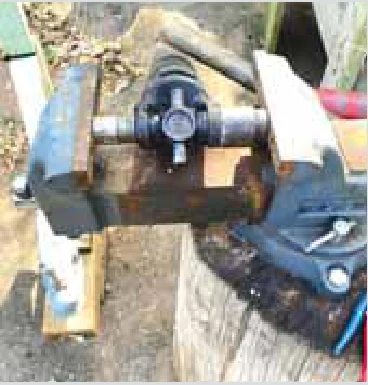
“I’ve found that I can use sockets and a vice to remove a U-joint from the end of a driveshaft. I put one socket on the bearing cap and make the other one big enough for the cap to push through.

From the archive · Full text
Reader shop tip 2 of 6

John Rochester

Individual tip 2 of 6 from this reader’s published contribution.
John Rochester, Charlotte, N.C.

“One handy idea when working with gaskets and other small parts that you’re trying to hold in place is to use zip ties to hold them. Works great, and once the parts are loosely secured, you can just cut the zip ties and pull them out.

From the archive · Full text
Reader shop tip 3 of 6

John Rochester

Individual tip 3 of 6 from this reader’s published contribution.
John Rochester, Charlotte, N.C.

“I now consider a rag to be one of my essential tools when working on an engine. I tuck the rag down under whatever I’m working on, and it will catch any small parts that I drop. It has saved me a lot of hassle many times.

From the archive · Full text
Reader shop tip 4 of 6

John Rochester

Individual tip 4 of 6 from this reader’s published contribution.
John Rochester, Charlotte, N.C.

“I’ve found that lowering the front end of trucks by letting air out of the tires makes engine work a lot easier. I used to do this on my 5-ton Chevy truck with 10/20 tires and it really helped. Much less climbing in and out. I put blocks under the front end to keep the full weight of the truck from pressing down on the flat tire.

From the archive · Full text
Reader shop tip 5 of 6

John Rochester

Individual tip 5 of 6 from this reader’s published contribution.
John Rochester, Charlotte, N.C.

“I’ve found I can make a simple portable worktable by clamping a piece of plywood to my tractor’s loader bucket. Gives me a useful place to make repairs anywhere, and I just put it away when I’m done.

From the archive · Full text
Reader shop tip 6 of 6

John Rochester

Individual tip 6 of 6 from this reader’s published contribution.
John Rochester, Charlotte, N.C.

“Sometimes, I find that bending a wrench is the only way to reach a bolt. In this photo, I bent a box end wrench to reach an awkward bolt in the vehicle I was working on.”

From the archive · Full text
Reader shop tip 1 of 2

Dale McLaen

Individual tip 1 of 2 from this reader’s published contribution.
Dale McLaen, Rutland, N.Dak.

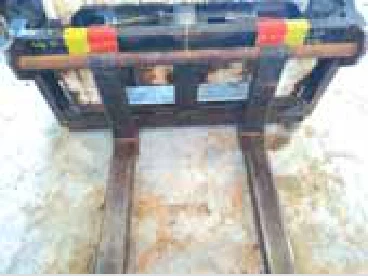
“I use pallet forks a lot for moving different types of pallets and totes, but it seems like the forks are always in the wrong position for the two most common pallet sizes. I fixed this by measuring those pallets and then painting the back support of the pallet fork frame to match. Now anyone using the pallet forks can easily adjust them to match most pallets in seconds without guessing.

“If you’ve got odd objects, you routinely pick up, you can also add markings specifically for those items.

From the archive · Full text
Reader shop tip 2 of 2

Dale McLaen

Individual tip 2 of 2 from this reader’s published contribution.
Dale McLaen, Rutland, N.Dak.

“The same trick works on adjustable loading ramps on car trailers or semi-flatbeds. Just set the ramps once for whatever you load most often and then mark the positions with various colors of paint. You can also paint a matching path on the deck to guide yourself when backing equipment on the trailer.”

From the archive · Full text
Reader shop tip

John Humeniuk

John Humeniuk, Baudette, Minn.

“I was cleaning up the fuel filter on a Farmall Super H that I’m restoring. I decided to add a bullet casing prefilter, which I’ve done before.

“I dug around in my junk box to find the right brass bullet casing to go inside the gas line. I drilled a few holes in it before dropping it primer end up into the fuel filter inlet port.

“They’re really easy to add, and they seem to work well, catching larger solid particles before they hit the filter. It’s a cheap, stand-up, coarse filter that keeps the debris out of the filter and keeps the line flowing.”

Shop feature stories

From the archive · Full text
Feature story

3-Pt. Crane Helps With Tractor Tire Changes

Featured source: Stanly Thomas, Ashville, Ohio

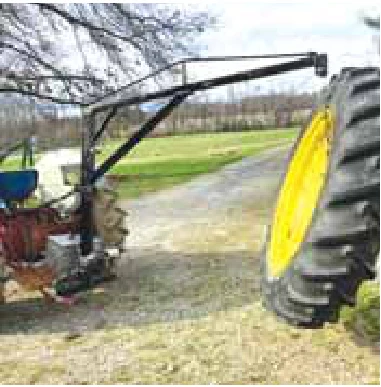
Stanly Thomas of Ashville, Ohio struggled to change the large tires on his tractors without help, so he built a 3-point crane with a 12-volt winch to do it himself.

He made the crane from 2-in. square tubing and part of a rear hitch with a 2-in. insert. This was then mounted to an old drawbar and attached with a 12-volt winch. A small pulley was attached to the end of the crane, which he mounted on his Ford 8N 3-pt. The final product is perfect for lifting tractor tires and works completely without hydraulics.

“This crane lifts with ease, but I had to add 200 lbs. to the front end to balance the load lift so the front end doesn’t come up,” says Thomas.

Thomas already had the material and winch available.

“I fabricated an aluminum battery box since I’ve done industrial maintenance for 50 years and had material around from jobs I’ve done.”

Using this crane, Thomas has changed multiple heavy tires and even lifted large tree branches. It’s also proven critical for placing strut supports during fabrication.

Contact: FARM SHOW Followup, Stanly Thomas, Ashville, Ohio (ph 614-361-8896).

From the archive · Full text
Feature story

Multi-Position Creeper Makes Awkward Work Easier

Featured source: Daniel Rodriguez, Santa Paula, Calif.

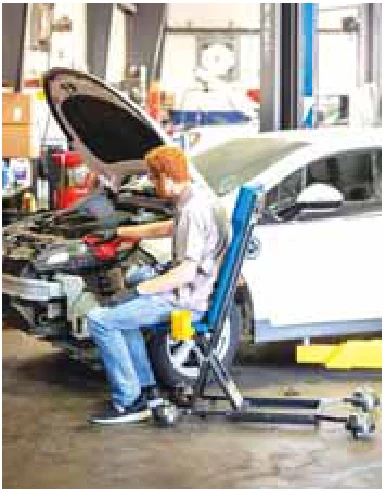
Mechanics love the adjustable, rolling Ergo-RS creeper chair that goes all the way from an upright sitting position to a flat lay-back for sliding under vehicles.

The 56 in. long, 350 lb. capacity Ergo-RS easily rolls on four 3-in. swivel, ball-bearing supported castor wheels.

“It lies flat like a regular creeper or can be locked in position anywhere that feels comfortable,” says Daniel Rodriguez, BendPak sales specialist.

“The seat height can be raised up to 10 in. with the back support locking at multiple angles through 75 degrees of motion. You can even sit completely upright under a car hoist.”

The padded creeper features a cup holder and trays on either side to hold tools and hardware. Its connected backrest moves up, down, forward and back, ergonomically keeping the body as comfortable as possible during any task.

The Ergo-RS sells throughout North America for $545 with free S&H, either by ordering on the BendPak website or directly from Daniel’s contact information.

Contact: FARM SHOW Followup, Daniel Rodriguez, BendPak, 1645 Lemonwood Drive, Santa Paula, Calif. 93060 (ph 805-933-9970; www.bendpak.com).

From the archive · Full text
Feature story

Go-Anywhere Tankless Water Heaters

Featured source: PrecisionTemp, Cincinnati, Ohio

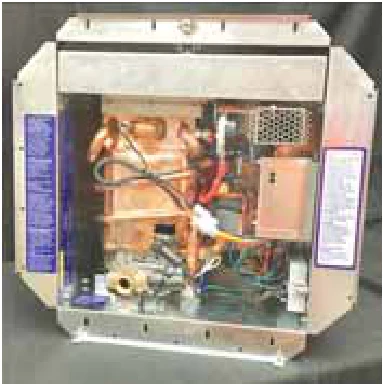
PrecisionTemp developed the first electronically-controlled tankless heater and the first for RVs in 1996.

“Their size and technology lend them to numerous uses, including horse trailers, tiny houses, RVs, outbuildings, and in barns,” says Kay Anderson of PrecisionTemp.

PrecisionTemp offers water heaters that vent from the bottom, the side, or even one that top vents if they want to use it on a gooseneck trailer.

“PrecisionTemp water heaters also have applications in dairy barns,” she says. They can run on propane or natural gas.

Weighing in at about 25 pounds, they’re easy to install. They’re about 1 cu. ft. in size, using 12-volt battery power for ignition and temperature control. Turn on the water, and the burner ignites. Turn off the water, and the burner turns off, wasting no energy.

PrecisionTemp heaters are the only tankless heaters built in America.

The company also offers TwinTemp heaters that provide on-demand hot water and hydronic space heat in one compact unit. Tankless heaters are available on the company website.

Pricing varies by unit. The RV-550 EC Tankless Water Heaters retail for $1,290. The TwinTemp heaters that provide both endless hot water and hydronic heat start at $4,275.

Contact: FARM SHOW Followup, Kay Anderson, PrecisionTemp, 3428 Hauck Road, Cincinnati, Ohio 45241 (ph 800-934-9690, ext. 102; [email protected]; www.precisiontemp.com).

From the archive · Full text
Feature story

Trailer Tips That Really Work

Featured source: Dale McLaen, Rutland, N.D.

Dale McLaen’s trailer tips can add years to tire life, improve suspension systems and keep brake light and turn signal cables clean, dry and intact. Until he retired, McLaen ran an equipment repair business on his farm.

“One of my biggest complaints about my car trailer was how quickly the tires would develop a choppy diagonal wear pattern,” says McLaen.

“Once this pattern starts, it gets progressively worse and is impossible to stop.”

It’s a pattern he has seen many times over his years in the repair business. He’s also seen it on the rear tires of front-wheel-drive cars.

“With cars, it’s almost always due to worn shocks,” says McLaen.

“Since my trailer and 100 percent of every trailer I’ve worked on have no shocks on any axle, I decided to add them to my trailer and see what happened.”

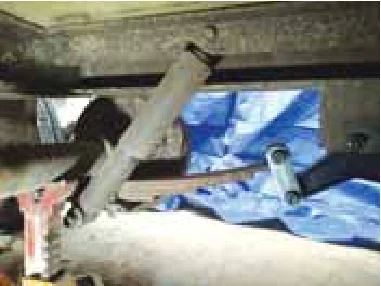
McLaen welded the lower shock mounting bolts onto the bottom of the spring plates. He then measured the total amount of vertical axle travel and worked with his local NAPA dealer to pick out shocks that matched those dimensions.

McLaen describes the results as one of the best things he could have done. With the shocks in place, the tires began to wear evenly.

“My tire life pretty much doubled,” says McLaen.

“I can’t say if the load rides any better, but the reduced tire wear and longer life are a big improvement.”

McLaen understands that adding shocks to a new trailer when it’s being built would increase the price. However, he thinks the change would be well worth it.

“I wouldn’t buy a car or pickup that didn’t have balanced tires and a good set of shocks,” says McLaen.

“I’d never buy a trailer again without tires balanced and shocks on every axle for the same reason.”

Another trailer sore spot with McLaen is car trailer suspension, in particular, the nylon bushings and hard-to-lubricate bolts at spring ends, shackles, and equalizers.

“They’re not very robust, and they just don’t hold up to the heavy loads they have to support,” says McLaen.

“Worse is that if the bushings wear through and the shackle bolts near the spring ends wear the spring end holes oblong, the springs will need to be replaced and the suspension rebuilt.”

McLaen replaces the nylon bushings with bronze and the shackle bolts with bolts that have grease zerks.

“The zerks allow you to periodically lubricate all the bushings at the pivot points, extending the suspension life,” says McLaen.

“It helps to jack up the trailer until the suspension hangs free before greasing it. That ensures grease gets into the portion of the bushings usually under the most load.”

McLaen orders his suspension kits online. He notes that if they come with nylon bushings already installed, it may be necessary to order extra bushings.

“You can press out the plastic bushings and push the bronze ones in their place,” says McLaen.

McLaen has an easy way to prevent trailer connections from getting drug and damaged. He stores them up and out of the way.

“I butt welded a piece of 2 1/2-in. exhaust tubing to the tongue with a notch at the top for the connector cord to fit through and an open spot at the bottom for moisture to escape,” says McLaen.

“I added a cover to the top, which keeps the cords from dancing out and also keeps out most of the elements.”

As a bonus, connector pins also stay clean for years because they’re out of the weather, notes McLaen.

“I put these on every trailer and haven’t had anyone, including me, accidentally drag a connector since.”

McLaen takes his trailer wiring maintenance one step further with an enclosed 7-pin junction box. He mounts a black weatherproof rectangular box at the base of the connector cord retainer tube. It’s sized to hold a junction box connected to the trailer wiring. A pigtail cable plugs into it and connects to the tow vehicle.

Contact: FARM SHOW Followup, Dale McLaen, 13756 Hwy 11, Rutland, N.D. 58067 (ph 701-678-5232).

From the archive · Full text
Feature story

New-Style Clamps Grip Better

Featured source: Bow Products, Corfu, N.Y.

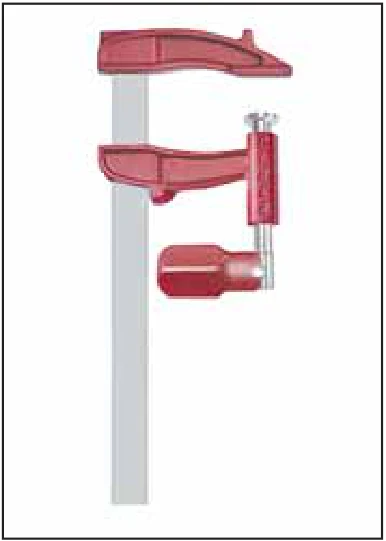
Piher’s Maxipress Clamps offer more clamping force with less effort. Two threads act like a gear to give greater gripping pressure and a faster advance.

Bill Fudale of Bow Products in Superior, Colo., is a U.S.-based seller of Piher products.

He regularly attends farm shows like Husker Harvest Days in Nebraska and sees firsthand how much farmers appreciate their Maxipress Clamps.

“Guys keep coming back to buy more of these clamps to make sure they have enough on hand,” says Fudale.

He says if you consider some of the competition, they basically sell the same forged-style clamps with the Acme threads.

“The only differences between them are the name and prices,” he says.

“Piher has come out with a piston system,” Fudale says.

“They also have protected threads and a non-spin advance using two fine-threaded screws that work together.

“Not only do they apply greater torque faster, but they have a bottom jaw that advances without spinning,” he says.

Fudale says farmers have an interesting reaction when he demonstrates how efficient the clamps are. He takes a couple of 4-in. pipes, opens the bottom jaw of the clamp, and puts the first one in the jaws and the second one perpendicular.

He then closes the jaw and starts to tighten it.

“The farmers just look at me and ask, ‘How much?’” Fudale says.

Working with a regular clamp with a “spindle” on the bottom jaw with the thread exposed is challenging. He says you almost need three hands to work with it comfortably.

“Imagine you’re a farmer trying to mend a fence gate with a pipe and trying to hold the bar in place and clamp it at the same time,” Fudale says.

“The Maxipress clamps save a lot of time and come with a lifetime guarantee.”

The clamp has a non-spin advance. The bottom jaw advances like a vise as the clamp is turned. It’s a significant advantage over those forged clamps, as the material has no chance to “walk” or move as you turn the clamp to apply pressure.

The Maxipress has a grooved fixed jaw for the best possible grip on tubes, profiles, and other items that are hard to grip.

The jaws have curved heads, allowing them to work around edges and protrusions. The clamps come with a positioning system to prevent any free fall of the bottom jaw. There’s also a tempered steel, non-slip brake on the moving jaw.

The clamps glide smoothly up and down an extra-resistant hot rolled steel bar.

The clamps are available through the company website. Prices vary depending on the size of the clamp but range from $45 to $217.

Contact: FARM SHOW Followup, Bow Products, 8778 Boyce Road, Corfu, N.Y. 14036 (ph 844-895-4488; www.bow-products.com).

From the archive · Full text
Feature story

Tool Makes Changing Valve Springs Easier

Featured source: Riffraff Diesel, Inc., Eagle Point, Ore.

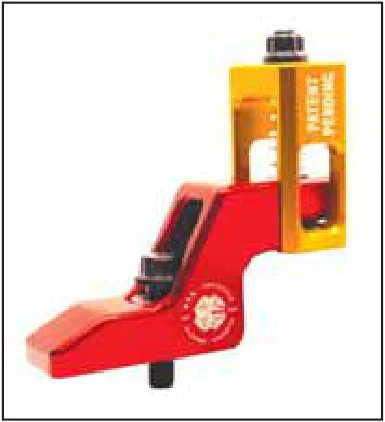
A new tool on the market is making diesel engine maintenance simpler. The Riffraff Diesel Valve Spring Compressor Tool, developed by Riffraff Diesel Performance, allows for easy and accurate compression of valve springs in Ford 7.3L 94-03 Powerstroke engines.

Valve spring compression is a crucial step in maintaining diesel engines, and it can be a time-consuming and labor-intensive process. However, with the Riffraff Diesel Valve Spring Compressor Tool, this task can be completed in a fraction of the time it would take with traditional methods. The tool features a unique design that allows for easy access to the valve springs, making compression a breeze.

It’s made with one of the strongest commercially available alloys, 7075 billet aluminum, and 8740 hardened chromoly hardware. Riffraff Diesel Performance has a patent pending on the tool.

“With its innovative design and time-saving capabilities, it’s a great solution to save time and money on diesel engine maintenance,” says Riffraff lead engineer Andrew.

One online review stated, “What a nice change from the standard Napa hand crank version I had before.”

The Valve Spring Compressor Tool is available for purchase online and through select retailers for $195 plus shipping.

Established in 2008, Riffraff specializes in manufacturing “Made in the USA” parts for the Powerstroke platform.

Contact: FARM SHOW Followup: Riffraff Diesel, Inc., P.O. Box 416, Eagle Point, Ore. 97524 (ph 541-879-1052; www.riffraffdiesel.com).

From the archive · Full text
Feature story

Handles Help Haul Welding Tanks

Featured source: Bill Fuldale, Superior, Colo.

Bow Products has a patented way to make it easier to tote welding tanks around the farm or shop.

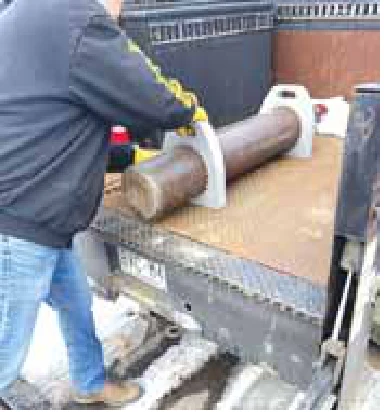
“The Tank Caddy is made of a lightweight material that allows you to transport and handle those tanks safely and securely without them rolling around,” says Bill Fuldale of Bow Products in Superior, Colo. The Tank Caddy consists of two flat pieces of strong foam material with a flexible hole in the middle to accommodate variations in tank diameters. There’s another hole cut into the edge to form a handle. To lift a welding tank, you slide the caddies to the middle of the tank and turn one handle to each side. Lifting with the handles makes it much easier and safer to load or unload a tank.

“Since the caddies sit flat opposite the handle side, it will stabilize your tank for transport,” he says. This also prevents the tank from scratching or dinging up a truck bed or tailgate.

“For further stability, the handles allow for easy tie down during transport,” Fuldale says.

“It’s made of high-density material, which is strong, durable, and holds up in all weather conditions.

“You don’t have to remove the caddy from the tank either,” he says.

“It’ll lessen the impact if the tank falls over and helps protect the pressure regulator in case of a fall.”

The Tank Caddy retails for $59 a set.

“Folks may also have seen our MaxiPress Clamps also in FARM SHOW,” Fuldale says.

“If someone wants a tank caddy and purchases clamps as well, they can earn a 20 percent discount for purchases over $100 by typing the discount code ‘FARM’ when they place the order.” Contact: FARM SHOW Followup, Bill Fuldale, 600 Charles Street, Superior, Colo. 80027 (ph 720-665-0807; [email protected]; www.Bow-Products.com).

From the archive · Full text
Feature story

Made-It-Myself Can Storage Rack

Featured source: Anthony Spiering, Powell, Wyo.

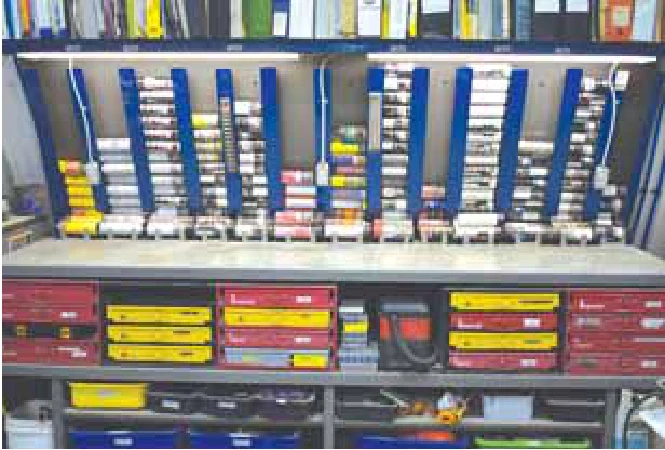
Anthony Spiering of Powell, Wyo., has a clever storage solution for aerosol cans in his farm shop. He tends to buy glass cleaner, carburetor cleaner, spray lubricants, and similarly-sized products in bulk for cheaper shipping costs. Not only did this create lots of clutter within the shop, but the lack of organization led him to forget what he’d already bought.

Spiering found inspiration for a better system from the soup can displays at grocery stores. His goal was to create vertical storage where the entire stack would roll down one can after selecting the bottom one.

His rack organizer uses 5-ft. by 10-ft. 1/4-in. thick steel plate to make the surface and back of the workbench. He had a steel company break the sheets to make the tabletop, sloping back, and upper shelf. Once that was done and welded solidly to the frame, he began on the can racks.

“I took some 1/8-in. by 3-in. strap steel and cut pieces about 54 in. long, welding them in a T-shape, similar to what an I-Beam looks like,” he says.

“After this, I welded the T’s to the angled back of the workbench. I spaced them about 8 1/2 in. apart.”

Next, he attempted to design the popup ramp by first placing some flat steel to angle the cans away from the wall and then using 1-in. square tubing to hold them to the tabletop. Within the 13 separate slots, Spiering can store and display well over a hundred cans.

Working with a friend, the entire project took Spiering about 3 days.

“There was a lot of trial and error involved,” he says.

“While the soup rack organizers looked really simple at the store, replicating the right dimensions was a struggle”. The cans themselves were heavy and needed a precise amount of support to ensure they moved through the steel rack smoothly. Make it too tight, and the weight of the stacked cans keeps the bottom one in place so he can’t pull it out. But have things too loose, and cans pop out of the rack and roll on the floor.

He solved this problem in part with two 1-in. by 2-in. square “ears” on the bottom of each rack. These provide enough space to work your fingers in through the bottom to pop out a can while the ears catch the next one and keep it in place.

Interested readers can contact Spiering directly for more details on the exact dimensions of his can rack.

Contact: FARM SHOW Followup, Anthony Spiering, 1168 Rd. 19, Powell, Wyo. 82435 (ph 307-254-2645).

From the archive · Full text
Feature story

LED Gloves Provide Work Light

Featured source: LED Flashlight Gloves

At first glance, LED Flashlight Gloves seem like a quirky novelty.

“Gloves” is a loose term as they are fingerless and slip over just the index finger and thumb. The Spandex fabric has adjustable wrist straps to make them one-size-fits-all.

LED flashlights are built into them for hands-free light. That comes in handy for jobs such as changing a tire at night, working on plumbing, and in other low-light situations. It’s also handy when fishing, camping, walking the dog, or reading.

An internet search for LED Flashlight Gloves yields many companies selling the same gloves under different names, starting at around $15. Read the details as some don’t come with lithium batteries, while others offer an extra pair of gloves and four extra batteries. Also, some brands are rechargeable with a charging cable.

Overall, reviews seem positive, including from people who received them as gifts.

From the archive · Full text
Feature story

Case Keeps Batteries Organized

Featured source: Battery Keeper Case

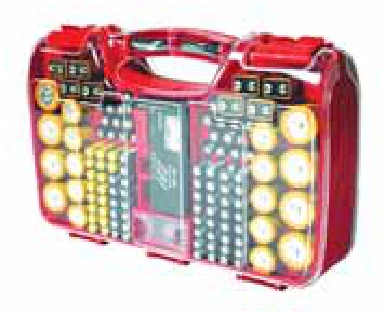
The Battery Keeper Case is a durable, portable container that stores batteries and also has a built-in tester, allowing users to easily check the power levels of their batteries at any time.

The Battery Keeper Case eliminates the need for multiple testers or the frustration of trying to figure out which batteries in a jumbled drawer are still useable. With the push of a button, the tester will indicate the power level of each battery.

The Battery Keeper Case has multiple compartments, each labeled with the type of battery it’s meant to hold.

The Battery Keeper is available for purchase online at Amazon and in select retail stores. We found prices as low as $25.

From the archive · Full text
Feature story

Handy Multi-Outlet Cord Stand

Featured source: Hector Nieves

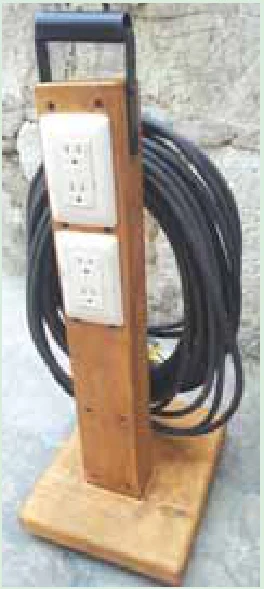
We spotted this idea by Hector Nieves on Instagram. He made a portable wooden cord holder and outlet stand that’s easy to move around his shop. The base is a foot-long piece of 2 by 12-in. plank that holds a 2 by 4-in. upright secured with a metal L-shaped bracket. Two outlet boxes are mortised into the upright toward the top and provide easy access for plugging in power tools. The outlets get their power through a heavy-duty supply cord that hangs from a hook on the back of the stand when it’s not in use. Nieves mounted a metal handle on top of the 2 by 4 so the device is easy to move around. Nieves says one person who’d seen his idea suggested adding hooks on the side of the upright post to hold small tools. Another suggested adding small caster wheels so the stand can be rolled around a shop. A third suggestion was to make the stand with a larger base, and have two upright posts with a cord reel mounted between them.

From the archive · Full text
Feature story

Easy Tractor Counterweight

Featured source: John Rochester, Charlotte, N.C.

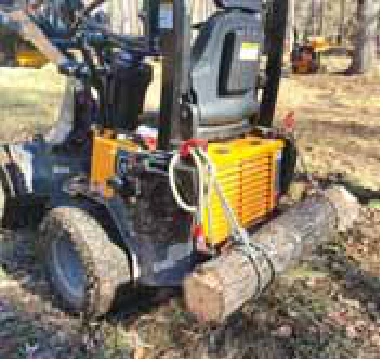
When doing loader work with a skid steer or utility tractor that requires heavy lifting, you can quickly add a counterweight by hanging a log off the back, says John Rochester, Charlotte, N.C. He just wraps a couple loops of rope around a 5 to 6-ft. log and ties it to hooks on the back of his skid steer. When no longer needed, it’s easy to drop it off. Contact: FARM SHOW Followup, John Rochester, 7514 Rolling Hill Road, Charlotte, N.C. 28227 (ph 954-857-6438).

From the archive · Full text
Feature story

Power Reels Are Real Work Savers

Featured source: Robert Bauer, Hastings, Minn.

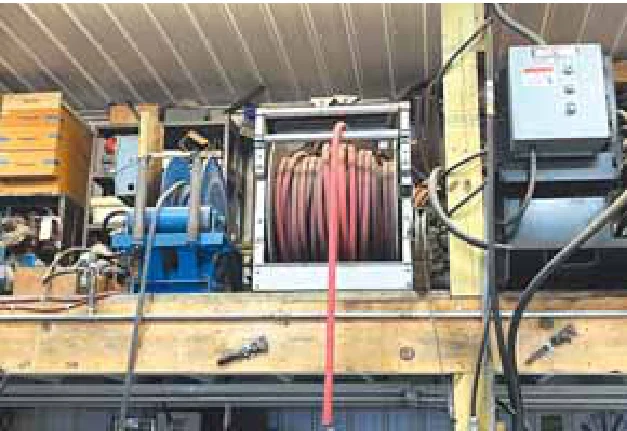
“I made a rather crude cord reel way back in high school shop class, and it worked so well that I expanded on that idea over the years and built several more,” says Minnesota farmer Robert Bauer. His heated farm shop now has at least seven custom-made reels, including that high school original. No two reels are alike.

“For the high school project, I bent two pieces of 1/2-in. rod into a 2-ft. diameter circle, then welded metal pieces about the size of a cell phone to the rods and onto a center core. I put a drive shaft through the core and welded a large sprocket on one end. I found the sprocket on an old check-row corn planter in our junk pile. To power the reel, I ran a belt from an old electric motor to a gearbox from a Cushman scooter. A roller chain connects a small sprocket on the gearbox to the large sprocket on the reel. The roller winds cord onto the reel when the gearbox is engaged and releases it when the gearbox is in neutral. It worked great then and still does.” Most of the basic parts for Bauer’s other reels came from old farm delivery fuel trucks. He bought a few at auctions, found others at scrap yards, and even rescued one from a junk dealer’s trailer who was making a pickup at his farm. He built sturdy metal frames to hold the reels and mounted them in several locations around the second level of his shop. Each one is controlled with a drop cord and switch box hanging down at eye level on the main floor. A large reel by the main shop door holds 100 ft. of 1-in. water hose. Bauer put a centrifugal booster pump on that one to provide 50 lbs. of water pressure at the nozzle, more than doubling the original hydrant pressure. Another reel is powered by an old 1/2-in. electric drill that delivers power to a gearbox. Others are run by electric motors. One made from an old hay winch winds and unwinds 200 ft. of 220 electrical cord. A collector ring from an old silo unloader directs power to the cord. Bauer says ideas to build the reels usually came to him in the middle of the night.

“In the shop, I put them together by trial and error, using gear reducers to get the correct speed so they’d slowly take up air hoses and electric cords,” Bauer says. Most of the reels are activated by a solenoid that engages a lever to the gearbox. A regulator reduces 120 lbs. of air pressure down to 30 lbs. so the reels engage slowly.

“I’m not a person who makes the same thing the same way twice, so the reels are all different,” Bauer says.

“The first one has that Cushman transmission with a right-angle gear reducer. I dialed in the speed by using different size pulleys. Another one uses a gearbox from a Badger forage box, and another has the variable speed drive from a portable Owatonna feed mill. Even though they’re all different, they all work well, and if something goes wrong, I know how to fix them.” Contact: FARM SHOW Followup, Robert Bauer, 10162 160th St. E., Hastings, Minn. 55033.

From the archive · Full text
Feature story

White Vinegar Removes Rust From Tools

Featured source: FARM SHOW

You can soak rusty tools or parts in white vinegar for several days to eliminate rust and return them to prime condition.

White vinegar is the perfect solution for restoring rusted tools. It’s inexpensive when purchased by the gallon and has an acidic rate of around 5 percent, which is strong enough to remove rust from most metal objects.

Vinegar can be damaging to some materials. It will darken wood quickly and can strip the finishes off metal objects. It’s best to test on a small area before committing to it for the whole project to ensure it gives you the results you’re looking for.

The vinegar will eliminate much of the rust, and you can remove the rest with a soft rag. Steel wool can be used on extra stubborn areas.

Metal rusts quickly when it’s been rusted once before, so you’ll want to use a protectant soon after it dries to seal the new surface and prevent repeat damage.

You can reuse vinegar multiple times, so consider storing it in a glass or plastic container until you plan to use it again.