Practical ideas from FARM SHOW MagazineSubscribe · Free issue · Send us your shop tip
Subscribe to FARM SHOW
Issues / Vol. 32, No. 4 (2008)

Vol. 32, No. 4 (2008)

Money-Saving Repairs & Maintenance Shortcuts · Printed section pp. 36–39

37 selected entries · Complete text of selected entries

This issue’s section includes reader tips and feature-length shop stories. Held items and editorial notices are not reproduced.

Archive text: prices, coupons, availability and contact details reflect the original publication, not current offers. Reader methods are not universal instructions; follow manufacturer guidance and proper safety practices.

Reader shop tips

From the archive · Full text
Reader shop tip 1 of 3

Glenn Allen

Individual tip 1 of 3 from this reader’s published contribution.
Glenn Allen, Mr. Vernon, Ohio

“I had a Versatile 555 tractor that needed to have the transmission rebuilt. The dealer said I’d have to take it out through the cab. That looked too hard so I dug a hole in the yard and dropped it out the bottom. After it was re-built, I had it back on and bolted in place in under one hour.

From the archive · Full text
Reader shop tip 2 of 3

Glenn Allen

Individual tip 2 of 3 from this reader’s published contribution.
Glenn Allen, Mr. Vernon, Ohio

“I have a Deere 4475 skid steer loader that was built by New Holland. The seat belt switch went bad. Deere wanted $240 for a replacement. We went on the internet and found one ready to plug in place for $39.95 plus shipping.

From the archive · Full text
Reader shop tip 3 of 3

Glenn Allen

Individual tip 3 of 3 from this reader’s published contribution.
Glenn Allen, Mr. Vernon, Ohio

“I have an engine lift that needed a new lift cylinder. I put an air-operated cylinder on it and now I can be where the action is instead of pumping a manual lift jack. Gives me a lot more versatility.”

From the archive · Full text
Reader shop tip

Wilfred Dittmer

Wilfred Dittmer, Quincy, Ill.

“I made a new feederhouse floor pan out of stainless steel for my 1460 Axial Flow combine. It always stays polished, won’t rust, and material flow is more even. It took a little time to make but was well worth the effort. It’ll never wear out again. Definitely a good idea.”

From the archive · Full text
Reader shop tip

David Haertling

David Haertling, Altenburg, Mo.

“The main drive on our 6-row corn head failed. I bought a set of Sear’s ‘ratchet wrenches’ that swivel so I was able to get at the problem to fix it without taking the whole machine apart.”

From the archive · Full text
Reader shop tip

Tom Williams

Tom Williams, Maryland, N.Y.

“When the chain on our barn cleaner wore down to the point where it changed pitch enough to cause problems, I welded a 3/16-in. wide steel band on the rim on both sides of the teeth. Holds the chain in place and gave me a couple more years use from the old chain.”

From the archive · Full text
Reader shop tip

Gordon Fuller

Gordon Fuller, Barriere, B.C.

“To work on vehicles around the yard, I use an old tow truck sling hanging from my front-end loader.

I don’t need anyone to help and the vehicle only needs to have a couple good wheels. Works very well.”

From the archive · Full text
Reader shop tip

Fred Carnahan

Fred Carnahan, Snowflake, Ariz.

Fred uses an old speedometer cable to clean out clogged tubing with bends in it. Works like a plumbing snake but is much smaller so it can be used for a number of jobs where a snake wouldn’t fit.

From the archive · Full text
Reader shop tip

Brian Roth

Brian Roth, BD Engine Brake Inc., P.O. Box 231, Sumas, Wash. 98295; ph 800 887- 5030; www.dieselperformance.com

“On Ford 6.0-liter and 7.3-liter Power Stroke engines, crankcase oil vapor that passes through the crankcase vent can contaminate the intake system. Oil vapor residue reduces turbocharger and intercooler efficiency and also deteriorates the silicone boots – causing them to balloon and blow off. Our Crank Case Vent Filter Kit prevents the problem, collecting oil vapor in a 1-qt. container with a drain petcock. The kit installs in just two hours and includes all hardware and clamps.”

From the archive · Full text
Reader shop tip

Larry Schoborg

Larry Schoborg, Union, Iowa

Larry found a simple way to make 55-gal. drums more usable around the shop. He cuts hand holds under the top rim on both sides and then smooths out the metal so it’s easy on the hands. It also makes it easier to lift with a front-end loader when hauling heavier loads. He says they make great trash bins or parts bins.

From the archive · Full text
Reader shop tip 1 of 3

Bill Reeks

Individual tip 1 of 3 from this reader’s published contribution.
Bill Reeks, Cromwell, Ky.

“An easy way to take slack out of a steel cable is to make an arch out of wood or metal and insert a J-bolt through the top of the arch with a wing nut on it. Just position the arch on the cable, insert the bolt, and pull the cable up as far as needed into the arch.

From the archive · Full text
Reader shop tip 2 of 3

Bill Reeks

Individual tip 2 of 3 from this reader’s published contribution.
Bill Reeks, Cromwell, Ky.

“To carry plywood, sheet rock, doors, and other large panels, I make a loop of rope and wrap it around the two lower corners and grab it in the middle.

From the archive · Full text
Reader shop tip 3 of 3

Bill Reeks

Individual tip 3 of 3 from this reader’s published contribution.
Bill Reeks, Cromwell, Ky.

“Another idea I had that works is that I put a front-end loader on my 12 hp Cub Cadet tractor. I was surprised at its lifting power.

After breaking the stock 3/4-in. front axle, I cambered the wheels out about 35 percent. I just cut the spindles and then filled and welded them so that the front wheels now angle out about 30 to 35 degrees. I didn’t know if it would work but I haven’t had any breaks since then. It’s kind of like the old narrow front ends on tractors that were cam-bered out. Looks kind of strange but really works.”

From the archive · Full text
Reader shop tip

Dave McVeda

Dave McVeda, 34 Manchester Lane, Great Falls, Montana 59404 ph 406 453- 5080; [email protected]

“I’ve been a mechanic for more than 35 years and have worked on motorcycles, snowmobiles, Honda cars and all forms of farm equipment, primarily in the area of air conditioning service and repair, including over-the-road trucks. I’ve recently started a website that deals with air conditioning diagnosis and repair.

“It’s an informational site where you can ask questions or leave comments and sign up for our newsletter. I plan to post videos that will cover simple diagnosis and repair procedures that relate primarily to air conditioning on trucks and tractors, but will also include procedures that can be used in other areas as well. The web address is www.799COOL.com.”

From the archive · Full text
Reader shop tip

Howron Industries

Howron Industries, P.O. Box 171, Aubrey, Texas 76227 (ph 877 300-0171 or 940 300-0171; [email protected]; www.metalbendingtool.com)

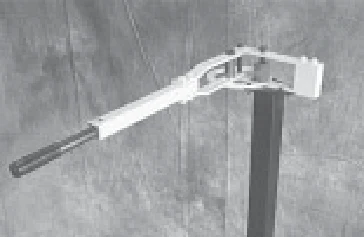
This company has been selling the Mighty Mite Bender for years. Now they’ve added a ring to the bender, allowing the operator to make duplicate bends, more accurately and quickly by clamping a stop on the degree ring. The basic Mighty Mite bender comes with three pins, one square stop block, one round sleeve, and an instructional DVD.

It can bend round or square solid rod, flat bar stock, sq. or round tubing, and angle iron. A new Pro2 model has been re-engineered. It comes with mounting hardware, three pins, a stop block and a round sleeve. All the company’s benders are made of hot-rolled American steel and are guaranteed for life. A wide selection of dies and accessories are available to cover a wide range of applications.

From the archive · Full text
Reader shop tip

Rex Gogerty

Rex Gogerty, 33475 K. Ave., Hubbard, Iowa 50122 ph 641 487-7617

“I bolted a 5-in. wide metal plate to the back side of a broom. Works great for dislodging mud, ice and manure. I started with a metal plate about 5 in. long on one end and 8 in. long at the other. I bent it at a 35 degree angle, then drilled a hole through the plate and also through a plastic holder for the broom handle. A 1/2-in. dia., 2 1/2-in. long bolt runs through the plate and plastic holder and into the board that holds the broom. A nut and lock washer holds it on.

“Works great in my garage and shop because I can scrape stuff off the floor without having to stoop over. I can use the scraper to knock stuff loose, then push it away with the broom. It isn’t designed to do heavy duty digging but on a cement floor it works great.”

From the archive · Full text
Reader shop tip

Burton Graves

Burton Graves, 325 E. Downington Rd., Sandusky, Mich. 48471

“Here’s an idea I used while serving as a motor sargeant in the U.S. Army in occupied Germany in 1946-47, and ever since on the farm. Carburated gas engines require a richer gas-to-air mixture for starting because gas remains in each cylinder after being stopped with the ignition switch. This is usually enough to restart the engine in warm weather without choking, but it isn’t enough to start an engine in cold weather when engines are harder to crank, batteries are weaker, and less gas vaporizes.

“By choking after turning off the switch at idle speed, during the last revolution, extra gas is left in the cylinder - not enough to flood the engine but enough for instant starting, even months later.”

From the archive · Full text
Reader shop tip 1 of 2

Donald White

Individual tip 1 of 2 from this reader’s published contribution.
Donald White, 7250 E. Stevens Lane, Smithfield, Ill. 61477

“I have an IH 1206 tractor that kept getting harder to start, but I didn’t want to spend the money for a new starter. A friend told me that a used starter off an IH 815 or 915 combine would work, and that it would be more powerful than the original starter because the combines have bigger engines. So I bought a used starter at a local salvage yard and installed it. Installing it was a tight squeeze because it was longer and bigger around than the original starter, but I got it in. It really cranks the engine fast, which makes it very easy to start. I think the same idea would work on other old IH tractors such as the 806, 856, 1256, and 1456.

From the archive · Full text
Reader shop tip 2 of 2

Donald White

Individual tip 2 of 2 from this reader’s published contribution.
Donald White, 7250 E. Stevens Lane, Smithfield, Ill. 61477

“A tip for starting older diesel engines - use Deere starting fluid. It’s 80 percent ether instead of the standard 60 percent that’s found in most starting fluids.”

From the archive · Full text
Reader shop tip

Don Catron

Don Catron, Box 357, Bridgeport, Neb. ph 308 262-0600

“I built this portable, foot-operated ‘safety power cord’ and use it to operate my drill press. It’s made from a limit switch off a Valley center pivot irrigation system, an electrical outlet box, and an extension cord. I bolted the limit switch onto one end of a small flat metal plate and the limit switch to the other end and then wired them together. The extension cord plugs into any wall outlet.

“I plug the drill press into the plate-mounted outlet and step on the limit switch to turn the drill press on or off. That way my hands are free at all times to operate the drill press. If something goes wrong, all I have to do is lift my foot off the switch to shut off the power. Eliminates the need to reach up and turn the switch off on the drill, which is really handy if I’m holding something and the drill bit catches.

“I can use this idea to operate any kind of power tool. Just don’t use a 3-prong outlet as it could be dangerous. Unfortunately it’s getting hard to find two-prong electrical plug-in boxes.”

From the archive · Full text
Reader shop tip

Serge Harrison

Serge Harrison, B.R.T. Tech Corp., Port Kent, N.Y. www.enginerelease.com

“Engine Release frees up engines that seize up during storage. It eliminates corrosion and frees up engines of all types, without the need for special tools or major engine work. The liquid solution fills the gap between the piston and cylinder wall and migrates behind and around each piston ring, then makes its way from the top piston ring and groove to the lowest, through each ring gap.

“Engine Release is available through the internet and retails for $19.95 plus S&H. Each kit contains 250 ml of liquid and comes with a flexible injector bottle and easy-to-follow instructions.”

From the archive · Full text
Reader shop tip

Mike Toppen

Mike Toppen, P.O. Box 138, Burnips, Mich. 49314 (ph 269 673-5597; [email protected])

“I recharge dead batteries with distilled water. I just replace the acid with water, which dissolves the sul-furic acid crystals that build up on the battery plates. It’s the crystal buildup that keeps the battery from recharging, and they don’t dissolve as readily in acid. After hooking the charger up a couple of times, the water has turned acidic, and I replace it with fresh sul-furic acid.

“The recharge works about 50 percent of the time, as long as the dead battery hasn’t been treated with other products. I even use it on so-called no-maintenance batteries. When they seem dead, they’re often just out of liquid. I drill a pinhole and inject water with a syringe, then seal it with silicone, a stainless steel screw or even duct tape. I figure if the battery is already shot, all I’m out is a little water if it doesn’t work.”

From the archive · Full text
Reader shop tip

Shop On Wheels

Shop On Wheels, 319 West Chestnut St., Ogden, Iowa 50212 ph 515 275-4699; [email protected]

Inventor Randy Kester says his new “Shop On Wheels” tool cart does a great job of organizing tools and also saves time and makes shop repair work much easier, with the tools and workbench right with you all the time.

The cart is made from powder coated, 12-ga. diamond plate steel. The flat workbench will hold up to 500 lbs. It’s designed to hold more than 300 different tools and sockets.

“All the wheels rotate on needle bearings so even a loaded cart can be moved around as easily as you can move a shopping cart,” says Kester.

The cart measures 5 ft. long, about 2 ft. wide, and 5 ft. tall and has four different levels of shelves. It has dividing compartments for storing odds and ends. Nine sets of sockets can be stored on the top shelf.

Two 500-watt Halogen lights mount over-head and can be rotated 180 degrees. A shop light can be pulled out from a retractable reel, and there’s a strip of electrical outlets where you can plug in power tools.

“The Halogen lights are about 7 ft. high so they won’t shine in your eyes,” says Kester.

“This tool cart works great when you’re working on tractors, semi’s, combines, etc., because you can roll the cart over to the machine and shine the light right into the machine as you work on it.”

There are separate places to store screwdrivers, punches, hammers, vise grips, pliers, putty knives, punches, chisels, open end wrenches, ratchet wrenches, and much more. You can store S.A.E. tools on one side of the cart and metric tools on the other side. There’s a holster for grease guns, and three other holsters for battery-operated drills or air impact wrenches and three different removable tubes for storing 10, 12, or 14-in. long nylon zip ties.

Price starts at $1,150.

Shop feature stories

From the archive · Full text
Feature story

“Smart” Dipstick Monitors Oil On-The-Go

Featured source: Rhonda Williams

Replace your dipstick with IntelliStick, and keep a constant check on oil quality and condition.

IntelliStick detects intrusions of water, coolant or fuel, warns if oil is low, and if viscosity is too high. It tracks additive deple-tion and helps the customer decide when to change oil and/or filters.

The technology behind the smart dipstick was developed for the U.S. military. The company has modified it for civilian vehicles and is working on non-oil liquid sensing. Information gathered is displayed on smartphones, PDAs, laptop computer screens, or other devices using wireless (Bluetooth) technology. Starting this fall, IntelliStick will be available with an in-dash gauge. However, Rhonda Williams, IntelliStick, Inc., says customers aren’t waiting for the gauge.

“People who understand the importance of quality oil and its contribution to engine longevity see the value of IntelliStick,” she says.

“It pays for itself quickly with truckers, who pay hundreds of dollars per oil change, just by eliminating a couple of oil changes a year.”

Williams points out that driving conditions, engines and drivers are all different. Each factor affects how long oil will remain effective. Simply changing oil at regular intervals may waste money if the change isn’t needed or if the oil deteriorates faster than expected and damages the engine. Using IntelliStick, you can also easily compare different brands of oil and filters.

“We have folks who swore by expensive synthetic oil brands,” says Williams.

“Using IntelliStick, they found out they were actually worse off with it than if they used off-the-shelf brands for the conditions they were driving in.”

IntelliStick can be ordered directly from the company or from the company’s growing line of distributors and dealers. It’s not cheap at a list price of $499. But Williams says the street price depends on the number ordered and retailer pricing.

Contact: FARM SHOW Followup, IntelliStick, Inc., 4340 Von Karman Ave., Suite 200, Newport Beach, Calif. 92660 (ph toll free 888 812-5988; fax 949 812-5910; www.intellistick.com).

From the archive · Full text
Feature story

Portable Welding Cart

Featured source: Chris Kornkven

“I needed a table or bench to do welding work, and I wanted it to be somewhat portable so I could use it for other work. Rather than build a big welding table, I decided to make use of a couple of heavy duty wire shelves that I already had. I can roll my portable welding cart wherever I need it or right up to my welder,” says Chris Kornkven of Helenville, Wis.

The cart rides on four caster wheels and measures 48 in. long by 24 in. wide, with 60-in. long, 1-in. pipes used for the legs. The base of the cart is made from 1 by 1 1/2-in. angle iron and is handy for storing scrap metal. The shelves Kornkven used have round metal sleeves at each corner, which made it easy to mount the shelves on the pipes. He used split ring collars for the shelf supports, which allow him to raise or lower the shelves as needed.

He welded an angle iron crossbar on top of one side of the cart and tach welded peg-board hooks to hang tools.

“I plan on welding another angle iron crossbar with pegboard hooks and might add a work light on top,” says Kornkven.

Contact: FARM SHOW Followup, Chris Kornkven, N6280 County P, Helenville, Wis. 53137 (ph 920 699-2376).

From the archive · Full text
Feature story

PVC Tool Carrier

Featured source: Victor P. Rogalla

“I made this nifty tool carrier to hold a set of socket wrenches. It’s great to take in the tractor cab, or just to hold them together in the toolbox,” says Victor Rogalla, Minto, N.Dak.

The tool carrier consists simply of a piece of 4-in. dia. pvc pipe with a handle riveted to it and end caps attached. The one endcap screws off.

“It’s water and rust proof and easy to carry. If you should ever get water inside it, just take out the tools, put in floor dry, and then dump it out. This carrier is perfect for a socket set because it keeps all the pieces togther.” Contact: FARM SHOW Followup, Victor P. Rogalla, Box 313, Heron St., Minto, N. Dak. 58261 (ph 701 248-3642).

From the archive · Full text
Feature story

Doubled-Up Pickup Springs

Featured source: James Drullinger

James Drullinger figured out a slick way to boost the suspension on his 1/2-ton pickup in a way that lets him adjust the extra lift as needed. He says the idea should work well on any truck with leaf suspension.

“I cut an automotive coil spring in two and mounted half over each set of leaf springs,” says Drullinger.

“The challenge was making brackets so that by rotating each spring, I get more or less suspension on one or both sides.”

The brackets fit over each set of leaf springs. Hooks hold bottom of coils in place. A bolt at the bottom tightens up the hooks.

The top end of the coil fits through a short piece of pipe welded to the truck’s frame.

By loosening the bolt on the bracket, he can rotate the spring so it spirals up or down to increase or decrease suspension.

Contact: FARM SHOW Followup, James Drullinger, 810 Adams, Akron, Colo. 80720 (ph 970 554-9090).

From the archive · Full text
Feature story

Do-It-Yourself “Filter Changer”

Featured source: Tom Conner

“It’s a handy trick for those times when you don’t have the right-sized filter wrench or if you have to work in tight quarters,” says Tom Conner of Gardnerville, Nevada, about the easy-to-use filter changing idea.

“I came up with the idea one day when I was trying to change all the filters on my Bobcat 980. They were sucked up pretty tight and I couldn’t get them to budge. There were enough hoses, brackets, etc., around them that I couldn’t get a good grip on them, nor could I get a good filter wrench on,” says Conner.

To solve the problem he used a 1-in. wide nylon strap which had a loop sewn into one end of it. He slipped the strap around the filter and then tied a knot, like when you start to tie your shoe. (He kept the strap flat against the side of the filter.) He passed the tail end of the strap back around behind the filter and then put the tail end through the loop, leaving about 2 ft. of strap to pull on.

“From there, I just pulled on the tail end, cinching the strap down on itself. It spun the filter loose on the first pull,” says Conner.

“A couple of the filters were on so tight that I had to loosen the strap slightly and then pull again. But they all came off very easily.”

Contact: FARM SHOW Followup, Tom Conner, 2275 Sandoval Road, Gardnerville, Nevada 89410.

From the archive · Full text
Feature story

Heated Filter Housing Warms Up Veggie Oil

Featured source: Noah Yoder

There’s a lot of interest in using waste vegetable oil in vehicles equipped with diesel engines. The used vegetable oil is collected from local restaurants as a way to reduce fuel expense. Conversion kits are available.

You start the engine on diesel fuel and switch over to veggie oil. The problem is that you have to wait up to an hour for the veggie oil to heat up before you can switch over from diesel fuel to veggie oil, in order to prevent problems with fuel waxing or gelling in cold weather.

This new heated filter housing is designed to solve the problem by heating the veggie oil before it enters the engine. Fuel is heated by plumbing in a line from the engine coolant.

“It quickly gets the veggie oil up to the temperature where it has about the same viscosity as diesel fuel, which it should be for proper combustion,” says inventor Noah Yoder.

The filter housing measures 6 in. in dia. and 12 in. high and bolts to the veggie oil tank. It consists of a Baldwin semi truck fuel filter inside a 5-in. dia. metal container that’s inside a 6-in. dia. metal container, forming a water jacket. There are four ports, for fuel in and fuel out and water in and water out. You splice into the vehicle’s fuel tank line and also into the heater hoses. A T-handle with bolt is used to open the lid for changing the filter.

“It works fast because the entire container gets heated. As soon as the temperature gauge reads normal operating temperature you’re ready to switch over to veggie oil, without having to wait for the oil to warm up in order for it to flow. After driving five miles or so you’re ready to change from diesel fuel over to veggie oil. And it’ll handle up to 10 gallons per hour so it has a lot of capacity.”

Yoder says he’s been building the units for more than 1 1/2 years, mostly for friends.

A word of caution - the container does get very hot so you have to be careful around it.

“I highly recommend adding insulation around the housing,” says Yoder.

He ships the units anywhere in the U.S. for $150 postpaid. The best way to reach Yoder is by mail.

Contact: FARM SHOW Followup, Noah Yoder, 3589 S. 16th Road, Humansville, Mo. 65674.

From the archive · Full text
Feature story

Slick Way To Measure Bolts

Featured source: Rick Guinn

If you’ve ever found yourself searching for the right bolt to fit a certain hole, you know it usually takes a lot of trial and error to de-termine the right bolt diameter and length. This new Boltstix measuring device is designed to solve the problem by checking the size and depth of a bolt hole for you.

The “sticks” in the set are made from high density polyethylene and measure about 6 in. long. Each stick is marked in 1/4 to 3/4-in. sizes for length, with a hole at the top end of the stick that corresponds to the correct bolt diameter.

To find the bolt size you need, choose one of the sticks in the set that’s closest to the size of the bolt hole and insert the stick in the hole. If it won’t go in, choose the next smaller size. Push the stick all the way to the bottom of the bolt hole. Then place your thumb nail right at the top of the bolt hole and hold it there, while removing the stick. Read the length of the bolt on the length gauge, and the size of the bolt on back of the stick.

The kit comes with two sets of sticks - blue for standard and red for metric. The metric sticks have markings molded in 10 mm marks. The sticks snap onto a handle that can be hung on a pegboard for storage.

“It eliminates the need to grab a handful of bolts and run to the auto parts store to try and match them up,” says inventor Rick Guinn, Peoria, Arizona.

“Once you know the length and diameter of the bolt you need, you can go to your bolt bin and find a bolt that fits in the hole at the top of the stick. Then you can measure the bolt against the length markings on the stick.”

A set of one standard or one metric Boltstix sells for $11 apiece including S&H. A set of one standard and one metric Boltstix sells for $22 plus S&H.

Guinn says he plans to come out with a product later this summer that will measure for screws. He will also introduce a product that will list and measure the pitch of the thread on both bolts and screws.

Contact: FARM SHOW Followup, Boltstix LLC, 8159 W. Crocus Dr., Peoria, Arizona 85381 (ph 866 779-2658 or 623 215-3836; fax 623 334-1699; [email protected]; www.boltstix.net).

From the archive · Full text
Feature story

Skid Steer Repowered With 16 Hp Briggs & Stratton

Featured source: Chris Kornkven

When the original engine on his old Case 1816 skid steer loader went bad, C h r i s Kornkven, Helenville, Wis., replaced it with a new Briggs & Stratton 16 hp engine.

“It was the first snow of last winter and, with three driveways to clear, I fired up the skid loader. A few hours later I was finishing with the last bit of snow when the engine suddenly lost power.

“I managed to limp the skid loader back to my shop. I contemplated taking the engine out and rebuilding it, but I thought it would be nearly impossible to find parts, even if I could quickly identify the problem. I also didn’t think I’d have the time to rebuild it before the next snow fell.

“The factory engine on my Case 1816 was a Tecumseh OHC160 16 hp model.”

Kornkven had remembered reading in FARM SHOW about other readers who re-powered skid loaders, so he searched the internet for more info. He came across “smallenginewarehouse.com”, an Indiana company that sells repower kits and engines.

“Smallenginewarehouse recommended a 16 hp Briggs & Stratton Vanguard engine for my machine because of the dimensions of that engine. I ordered one, and it arrived about three days later,” says Kornkven.

“I had to fabricate motor mounts for it since the bolt holes wouldn’t line up. Everything else worked out better than I expected. The gas line, wiring, throttle and choke cables and even the original belts matched up. However, the muffler interfered with the cross-connect between the hydraulic tanks so I had to use a different one. After a couple of days I was able to start my skid loader up and drive it. It was quite a relief since it snowed again a couple of days later. It snowed a lot the rest of the winter, and the repowered loader always started and ran great.”

Kornkven says total cost of the project was about $1,200.

“It was money well spent. The new engine has plenty of power, and it’s much easier on gas than the old one.”

Contact: FARM SHOW Followup, Chris Kornkven, N6280 County P, Helenville, Wis. 53137 (ph 920 699-2376).

From the archive · Full text
Feature story

Grooved Engine Heads Catch On

Featured source: John and Robert Shrock

Grooving engine heads as a way to cut fuel use and gain power is catching on. FARM SHOW reader Frank Akins first reported on his experiment with the modification in FARM SHOW’s Vol. 32, No. 1. John Shrock and his uncle Robert have both used groov-ing. John ground a groove into the head on a Kohler gas engine on a riding lawn mower and Robert grooved the pistons on an Imperial Diesel. Both saw impressive improvements in efficiency.

“I think I’m saving between 25 and 30 percent fuel and increasing the horsepower, too,” says John.

“It seems to burn better resulting in better fuel combustion.”

He used his drill press and grinding stones to groove the mower head to a depth of about 3/16 in. Robert normally uses a 12 kW genset to power his shop and charge batteries for his home’s power. Recently he grooved the heads on a small diesel he had rebuilt. It’s a model he has sold for years to use with 8 kW generators.

“I ground a groove 3/32 in. deep and 1/16-in. wide from the combustion cup straight out to the outside wall and two more grooves from the cup, but angled one to either side of the first. Looking down at them, the grooves look a bit like a bird track,” says Robert.

“I figure I gained 50 percent more power,” he says.

Though he hasn’t hooked it to a dynamometer, he went to a load bank and pulled 50 to 52 amps. He then hooked it to his 12 kW generator, and it’s handling the load fine on less fuel.

“With the price of fuel today, we have to be looking for ways to save fuel,” he says.

Contact: FARM SHOW Followup, John Shrock’s Repair, 611 North Summit Road, Jamestown, Penn. 16134 (ph 724 932-5183).

From the archive · Full text
Feature story

Screwdriver Has Built-In Wire Twister

Featured source: Merle Robinson

This new tool makes twisting wire ends together a much easier job.

The patent pending Whiz Twister is a screwdriver with a twisting mechanism inside the handle. It’s designed to twist 10 to 18 gauge wires. It can be used to twist multiple wires and can also be used to untwist them.

To twist the wires you simply insert the wires as far as you can into a hole in the screwdriver handle, then turn the handle to twist the wires tightly together.

“Steps” in the twisting mechanism accommodate different size wires.

“It makes a nice, tight twist and works great for everything from electrical wire for houses to electric fence wire,” says inventor Merle Robinson.

“It works faster than a pliers and also doesn’t scar the wires like a pliers often does. I came up with the idea because I was an electrical contractor for years and thought there had to be a better way.”

The Wire Twister is available in three models - standard, Phillips, and a small “pocket clip” model.

“The pocket clip model works great for twisting low-voltage 18-gauge wire, such as telephone wires, lamp cord wires, and speaker wires,” says Robinson.

The standard and Phillips models each sell for $17 plus S&H; the pocket clip model sells for $11 plus S&H.

Contact: FARM SHOW Followup, Merle Robinson, Box 538, Hesston, Kansas 67062 (ph 620 327-5115 or 620 327-7440; merle @whizreel.com; www.whiztwister.com).

From the archive · Full text
Feature story

“Storage Lift” Frees Up Space In Shop

Featured source: Chris Kornkven

One evening last fall Chris Kornkven was storing things in his shop for the winter and found himself standing high on a step ladder, trying to lift a bicycle up to a hook on a rafter.

“The bottom of the rafters is 10 ft. above the floor, so hanging things from them is a difficult job. Space is at a premium in my shop, and I thought there had to be a better way of storing things by making use of the wasted space between the rafters,” says Kornkven.

After thinking about it for a couple of days, he got the idea for a new-style storage lift. It has worked out so well that he says he’s interested in patenting the idea.

He had been given a used garage door opener which still worked, so he decided to mount it from the purlins between the rafters. The opener is mounted in such a way that the motor is toward the lower part of the roof, with the lift chain pointed toward the peak. The rafters are spaced 10 ft. apart, so Kornkven bought some garage door tracks and 10-ft. long by 1 1/2-in. dia. pipe. The tracks are bolted onto each rafter facing each other like they would with a garage door.

Kornkven welded garage door rollers to the inside of the pipe and attached 1/8-in. cable to the lift chain. The cable runs through pulleys to hooks that he bolted onto the lift pipe. Counterweights are connected to other hooks bolted to the pipe in order to offset the load.

“The button to operate the garage door is located in such a way that the operator doesn’t have to stand under the lift, and pins inserted in the tracks make the operation as safe as possible,” says Kornkven.

Light chains are attached to other hooks that are spaced across the width of the pipe and hang down freely.

“Now when I want to store bicycles, garden tools or other items I just press the button and the lift lowers down toward the floor. I can stand on the floor and attach things to the chains. Then when I press the button again, the lift raises them up between the rafters where I can store them out of the way,” notes Kornkven.

Total cost of the project was about $75, he says.

Contact: FARM SHOW Followup, Chris Kornkven, N6280 County P, Helenville, Wis. 53137 (ph 920 699-2376).

From the archive · Full text
Feature story

Magnetic Finger Holds Small Parts

Featured source: TurnPro

Have you ever been working on a project in a hard-to-reach place and had trouble hanging onto a small screw or nut?

The Magnetic Finger is a single finger glove with a small, powerful magnet sewn inside the tip. The built-in magnet allows you to hold and retrieve small metal objects easily.

Two sizes are available - small/medium and large/extra large - and they each sell for $10.95 plus S&H.

Contact: FARM SHOW Followup, TurnPro, 410 Tuxedo Ave., San Antonio, Texas 78209 (ph 866 774-0055; fax 815 572-8729; [email protected]; www.magneticfinger.com).