Practical ideas from FARM SHOW MagazineSubscribe · Free issue · Send us your shop tip
Subscribe to FARM SHOW
Issues / Vol. 27, No. 2 (2003)

Vol. 27, No. 2 (2003)

Money-Saving Repairs & Maintenance Shortcuts · Printed section pp. 36–39

44 selected entries · Complete text of selected entries

This issue’s section includes reader tips and feature-length shop stories. Held items and editorial notices are not reproduced.

Archive text: prices, coupons, availability and contact details reflect the original publication, not current offers. Reader methods are not universal instructions; follow manufacturer guidance and proper safety practices.

Reader shop tips

From the archive · Full text
Reader shop tip

Kent Cartwright

Kent Cartwright, Genoa, Nev.

“Several issues ago, FARM SHOW featured an idea for draining oil into a welded pan sitting on top of a 55-gal. barrel. Definitely a good idea but most people do not have a way to move a full 500-lb. drum of oil. And unfortunately, most oil recyclers will not come out and pick up just 55 gal.

“So here’s how I handle used oil. I built a stand for a salvaged kitchen sink and clamped a radiator hose to the drain pipe. The oil drains into old rusty ‘jeep’ gas cans. The 5-gal. cans are a conveninent size to dump into the recycling tank at our local landfill. The sink is a good spot for the filter to sit until it is completely drained, too.”

From the archive · Full text
Reader shop tip

Elmer Pinkerton

Elmer Pinkerton, Elmwood, Neb.

“I like the welding table built by Len Corzine that you showed in the last issue of FARM SHOW. I built one the cheap, lazy way. I bought an old oak library table at an auction sale for a buck. It was solid. I put wheels on it from old shopping carts and laid two pieces of angle iron on top with a flat piece of 3/9 in. thick plate steel across them. Then I mounted a vise on one corner. Makes a perfect welding table that supports a lot of weight and which can be rolled around the shop.”

From the archive · Full text
Reader shop tip

W.M. Harsh

W.M. Harsh, Beaver Falls, Penn.

“This is a simple idea but it works great. I use a 55-gal. drum to hold shovels and other long handled tools. For smaller tools, I use 5-gal. buckets. They don’t take up much room and they keep all the tools together.”

From the archive · Full text
Reader shop tip

William

William, South Florida

“If you’ve got a clogged-up spray tip on a can of paint, you can clean it out with carb cleaner. And if you’ve got an empty can but the tip is in good shape, save it. Just put them in a can of solvent. That way, whenever you need a clean tip, you can just throw the bad one away and use a clean one.”

From the archive · Full text
Reader shop tip

Stone & Parrish

Stone & Parrish, RR6, Box 6245P, Montrose, Penn. 18801 (ph 570 278-1910)

If you’ve got an older Deere crawler tractor to work on or restore, you might want to give Stone & Parrish a call. The Montrose, Penn., parts yard specializes in older Deere crawlers. They’ll buy your older crawler, running or not, and they have all kinds of parts for most models. They also part out wheeled Deere and Farmall tractors.

From the archive · Full text
Reader shop tip

John Bunte

John Bunte, Loveland, Colo.

“I came up with a simple, 3-legged sawhorse design that’s extra strong and can also be used to support a table. It’s made from 3/4 in. dia. steel pipe. The center pipe screws into a 3/4-in. ‘T’ that’s installed between two short pieces of pipe to form the top support. The center pipe swings out into position when settting up. When you’re done using it, the pipe swings back in toward the center so you can hang the sawhorse flat on the wall. It’s also easy to carry. The three legs set up better on uneven ground than 4-legged saw horses. And this design is so strong you can safely use them as scaffolding.”

From the archive · Full text
Reader shop tip

Russell Flock

Russell Flock, Able Farm Products, Box 42, Maywood, Neb. 69038 (ph 308 362- 4869)

Anyone who’s ever ruined the threads on a bolt when driving through a hole with a hammer, will appreciate the simple idea that Flock came up with to prevent the problem.

The Able Bolt Guide is a point that screws onto the end of larger bolts so you can drive them through a hole with no damage, then remove the point and screw on a bolt. The threads at the end of the bolt will not be distorted in any way.

Available to fit bolts starting at 5/8- in. diameter.

From the archive · Full text
Reader shop tip

Bill Short

Bill Short, Hamilton, Mo.

Here’s an idea for an adjustable-height stand for bench tools like grinders.

“Most stands are too low and you can’t adjust for different operators. I made this one from scratch using a 22-in. dia. disc blade and a couple pieces of pipe, one of which fits inside the other. The lower pipe welds to the disc. The upper piece welds to a flat steel plate with handles on either side to make it easy to move. A bolt goes through the pipes to adjust height. It’s easy to adjust and makes you a lot more productive.”

From the archive · Full text
Reader shop tip 1 of 2

Karl Oysmueller

Individual tip 1 of 2 from this reader’s published contribution.
Karl Oysmueller, Pink Mountain, B.C.

“When installing pistons on air compressors or small engines, I would sometimes break the rings since I don’t have the special pliers needed to compress them. I’ve eliminated the problem by first wrapping the piston in a piece of smooth tin that’s the same height as the piston, but leaving two ‘ears’ on the ends so I can tighten the tin up like a clamp around the piston with vise grips to compress the rings. Then I just tape the piston down into the cylinder. Works slick.

From the archive · Full text
Reader shop tip 2 of 2

Karl Oysmueller

Individual tip 2 of 2 from this reader’s published contribution.
Karl Oysmueller, Pink Mountain, B.C.

“I have used the thin cardboard from coke boxes as gaskets on ATV engines. I used it where the cylinder pot gets bolted onto the motor housing. There have been no oil leaks or other prolbems since I started doing this a few years ago.”

From the archive · Full text
Reader shop tip

Kerry Jahns

Kerry Jahns, Sand Lake, Mich.

“My Massey tractors sometimes need a boost to start. The starter is out in the open so rather than pull off the grill or hood, I connect the booster cable direct to the starter solenoid. Just be careful so you don’t engage the starter as you hook up. Saves a lot of time.”

From the archive · Full text
Reader shop tip

Mark Condit

Mark Condit, Duncan, Okla.

You can make use of old unused welding rods that have gotten wet or that are a size you don’t use any more, by turning them into a keeper pin or metal safety clips, says Condit. First, break the flux off the rod. Then bend one complete loop around a sucker rod or piece of round stock held in a vise. Then make a hook on the two ends. Don’t heat the rod at all or it’ll take the temper out of the metal. Submitted by Dorothy Courtright, Temple, Okla.

From the archive · Full text
Reader shop tip

E.A. Robinson

E.A. Robinson, Metairie, La.

“I saved a $40 sealed bearing out of a Snapper riding lawn mower by using a hacksaw to take out the old bearing and putting in a new one. Then I snugged up the old caps. It’s been working 5 years and was an easy fix.”

From the archive · Full text
Reader shop tip

Jarl B. Hannum

Jarl B. Hannum, Palmyra, Va.

“Logging chains always seem to get lost in the leaves or other equipment because right after you bring a new one home the bright metal shine wears off and they start to rust. I came up with a better idea. I threw my old chains into a cement mixer along with a load of dry gravel for 20 to 30 min. to remove the rust. Then I laid them out flat on the ground and painted them with a bright color, front and back. Depending on use, the treatment lasts years. Makes it much easier to find them, less easy to leave them behind, and, as a bonus, when neighbors borrow one it reminds them to return my equipment.”

From the archive · Full text
Reader shop tip

Jim Hill

Jim Hill, Goldendale, Wash.

“I have a 1948 Oliver 77 Row Crop. The splines that go through the clutch on the pto shaft stripped off and I had a hard time finding a new one and, when I did, it was not the same. So I went down to the auto parts store and got a 3/4-in. deep well impact socket. I cut out the center of the clutch and welded the 3/4-in. socket into it. I then machined down the PTO shaft to fit the 3/4-in., 6-sided socket so it would fit tightly into the socket in the clutch. Then I put it back together.

“That was 17 years ago and it’s still working today.”

From the archive · Full text
Reader shop tip

Dick Smith

Dick Smith, Adrian, Mo.

“I was working under the dash of a Ford pickup, changing the heater core. I got into a spot where I didn’t have room for a screwdriver so I made up a little tool using a screw bit and a lock nut. I just slipped the nut onto the bit and used a wrench to turn it. Worked great. The idea would work on any type of drive bit.”

From the archive · Full text
Reader shop tip

Jake Wadsworth

Jake Wadsworth, Wadsworth Mfg., Inc., 889 Dublin Gulch Rd., St. Ignatius, Mont. 59865 (800 535-2428)

You can put every size bit on your drill at one time with this new Multiple Bit Holder. It fits into the drill chuck and holds three Phillips drivers and three straight screw bits. Sells for $9.49.

From the archive · Full text
Reader shop tip 1 of 3

M. Hochstetler

Individual tip 1 of 3 from this reader’s published contribution.
M. Hochstetler, 174 Vogel Rd., Cumberland, Va. 23040 ph 804 492-4295

“I ran PVC air lines in my shop with several outlets. I hooked a portable air tank into the line with an automatic cut-off valve. I don’t lose pressure on the line when I unhook the tank. The tank is always full when I need some portable air.

From the archive · Full text
Reader shop tip 2 of 3

M. Hochstetler

Individual tip 2 of 3 from this reader’s published contribution.
M. Hochstetler, 174 Vogel Rd., Cumberland, Va. 23040 ph 804 492-4295

“I found that a heavy duty 8-in. circular saw blade makes a good ratchet for a light duty home-built winch.

From the archive · Full text
Reader shop tip 3 of 3

M. Hochstetler

Individual tip 3 of 3 from this reader’s published contribution.
M. Hochstetler, 174 Vogel Rd., Cumberland, Va. 23040 ph 804 492-4295

I also make light duty air cylinders out of PVC pipe, with a large bolt running through a galvanized cap and washers made from rubber belting.”

From the archive · Full text
Reader shop tip 1 of 2

Gary Anderson

Individual tip 1 of 2 from this reader’s published contribution.
Gary Anderson, Bowden, Alberta

“After the ‘turtle disc’ on the rotary cutterbar on our Deere 935 discbine started showing wear, we simply exchanged a clockwise turning turtle with a counterclockwise turning unit, thus doubling their life expectancy.

From the archive · Full text
Reader shop tip 2 of 2

Gary Anderson

Individual tip 2 of 2 from this reader’s published contribution.
Gary Anderson, Bowden, Alberta

“We have several older dressers in our shop. Each time we make a major machine purchase, we label several drawers to hold parts just for that machine.”

From the archive · Full text
Reader shop tip

Steve Devaney

Steve Devaney, Merkel, Texas

“I built a cheap 10 by 20-ft. storage room in my machine shed that has metal sides and top access is provided by an old garage door that forms one of the end walls. On top of the shed is a loft where I can store things that we don’t use a lot.”

From the archive · Full text
Reader shop tip

Calyx Manifold Dressing

Calyx Manifold Dressing, Box 53277, Cincinnati, Ohio 45253 (ph 800 313-5671 or 513 923-1154; fax 513 923-1154; www.calyxmanifold.com)

This company offers a paste-type dressing that lets you keep the exhaust manifold on any vehicle looking great at all times. You don’t have to remove the manifold to use it. The paste applies with a flannel cloth and quickly polishes to a silver shine. The product encapsulizes the rust and dirt, which then falls away after you start the engine and allows it to reach operating temperatures. It won’t burn and is non-toxic. Works great for spiffing up the manifolds on show tractors and cars. A 3-oz. container will do three sets of exhaust manifolds. Sells for $13.95 plus $4.50 S&H.

From the archive · Full text
Reader shop tip

Jesse Larson

Jesse Larson, 21880 431 Ave., DeSmet, S. Dak. 57231 (ph 605 854-3108)

Jesse’s a diesel technology student at Lake Area Technical Institute, Watertown, S. Dak. He and Steve Peters, a diesel instructor, came up with an inexpensive way to recharge 90-amp Nippondenso alternators commonly found on Deere tractors.

According to Larson and Peters, the alternator can quit charging when a diode/resis-tor unit - made up of two diodes and a resis-tor - fails. This unit is integral with the alternator’s stator/rectifier assembly, so if a single diode fails the entire stator assembly has to be replaced at a cost of about $200.

“The stator assembly often costs more than it would cost to replace the entire alternator with a rebuilt unit,” says Larson.

He and Peters solved the problem by re-moving a diode/resistor unit from a used Delco 10 SI alternator, modifying it slightly, and installing it on the Nippondenso alternator. Total cost was less than $5.

“Delco alternators are widely available so there’s no shortage of diode/resistor units,” says Larson.

“To install the diode/resistor we drilled out some rivets and then soldered the unit onto the old diode mounts and hooked the resistor into it.”

From the archive · Full text
Reader shop tip

Dwight Ruhlen

Dwight Ruhlen, 2591 Halcyondale Rd., Sylvania, Ga. 30467 (ph 912 863-4398)

“Using nothing more than a 2-ft. long harrow shaft and a cast iron spacer, I made a cheap slide hammer that I use to pull keys out of a keyway on our Case-IH 8465 round baler. The keys hold a couple of pulleys in place. I installed a pair of nuts and a washer on one end of the shaft. The other end of the shaft is square. I made two different size notches in the square that fit behind the raised part of the key. The spacer weighs about 4 lbs., so a sudden pull of the slide back against the washer creates enough impact to break the key loose. I got most of the parts I needed at an agri-supply store for a total cost of $28. Commercial slide hammers sell for $100 to $250.”

From the archive · Full text
Reader shop tip

Tony Ryba

Tony Ryba, Johnstown, Pa.

“I came up with a low-cost way to solve a problem with the throttle on my 2001 Ford F-250 pickup equipped with a 5.4-liter engine and standard transmission. The problem was that the pickup idled too fast, causing excessive wear on clutch and brakes.

“I sent two letters to Ford to complain about the problem but they never replied. My dealer told me the problem was due to an engineering defect.

“I solved the problem by rigging up a hand throttle using a small piece of beaded light-pull chain that runs from under the dash to a flange on an air tube on the intake manifold. I hook the chain on a slotted piece of metal under the dash to set the idle.

“I installed this device when the engine had 4,600 miles on it. Since then I’ve driven 26,000 miles with no problems.”

From the archive · Full text
Reader shop tip

Gene Salsman

Gene Salsman, Richmond, Ky.

“I have a 9-in. metal lathe that can be used for wood turning by using an auxilliary motor and separate shaft and bearings installed through the hollow headstock shaft of the metal lathe. Change-over is time-consuming for small jobs, either wood or metal.

“My solution was to build a wood lathe using mostly off-the-shelf parts. Purchased parts include the spur center on the headstock, a ball bearing center for the tailstock, and a variable speed DC treadmill motor. This motor permits speed change without the need to change a belt on step pulleys. As presently set up, capacity is 11 by 32 in. Diameter can be increased by use of spacers in the head and tail stock.”

From the archive · Full text
Reader shop tip

A.L. Doering Spark Plug Corp.

A.L. Doering Spark Plug Corp., 120 Marine St., Farmingdale, N.Y. 11735 ph 800 886-7074 or 631 249-1425; E-mail

aldorsmar tplug.com;www.aldor sparkplug.com: “We got a lot of response from your recent story on our Aldor replacement smart plugs for marine engines, lawn and power equipment, farm machinery, as

well as cars and trucks (Vol. 26, No. 2). The Smart Plug’s patented “brain” produces Ultra Thrust Ignition, providing faster starts, more power, increased fuel economy and reduced emissions. Many farmers asked us if we could make a similar replacement spark plug for 4-wheelers, so we did. It’s a 12-millimeter plug with a totally different thread. It sells for only $5 instead of the $14 charged by the competition. And the Smart Plug has a lot more spark power and is self-cleaning and non-fouling. The plug is expected to be on the market by this May.”

From the archive · Full text
Reader shop tip

Isaac Temple

Isaac Temple, 12738 Covell Rd., Morrison, Ill. 61270 (ph 815 772-2453)

Dented augers aren’t much of a problem for Isaac since he came up with a simple straightener tool that makes use of an ordinary scissors car jack. He made a round flat base for the jack by welding an 8-in. dia. steel plate to the bottom it, then capped the top of the jack by welding on a 4-in. sq. steel plate.

To straighten out dents, he first measures the distance from the end of the auger tube to the dent. Let’s say it’s 8 ft. He slips a long pipe over the jack handle, measures from the jack, and marks it at 8 ft. Then he slides the jack into the tube until the mark on the pipe is flush with the end of the tube, with the jack directly below the dent. He pumps the pipe handle until the plate on top of the jack pushes up against the bottom side of the dent. Then he uses a hammer to lightly tap all the way around the dent.

“The tapped area pops back up and won’t ever bend back down again,” says Temple.

From the archive · Full text
Reader shop tip

John McElroy

John McElroy, McElroy Enterprises, Inc., 411 First Ave. S., Ft. Dodge, Iowa 50501 (ph 800 397-3669)

“Your readers may be interested in our Kreem fuel tank liner. It’s an epoxy-type product that’s designed to prevent rust and corrosion and stop leaks in fuel tanks. It works great on old tractors and cars with tanks that are all rusted up. To use it all you do is clean out the tank, pour the liquid in, and slosh it around. As the liquid hardens, it forms a coating on the inside of the tank that seals up the rust. The product can also be used on new tanks to extend their life. It will seal up any tiny pin holes that may be in the tank. Sells for less than $30 per quart.”

Shop feature stories

From the archive · Full text
Feature story

World’s Largest ATV Salvage Yard

Featured source:

Need parts for a Honda, Kawasaki, Yamaha or Suzuki ATV or motorcycle? Or maybe you have an older machine you’d like to sell?

Steve’s Cycle, Tifton, Georgia, specializes in used and new parts for all Japanese motorcycles and ATV’s. The company has salvaged more than 30,000 machines and has 2 acres of parts under roof, plus another 7 acres where parts and machines are kept outside. Owner Steve Gill says it’s the largest ATV/cycle salvage business of its kind in the world.

Steve’s Cycle is also tied into a nationwide cycle/ATV parts network, so if they don’t have what you’re looking for, they can usually find it.

Steve’s buys wrecked, burned or non-working machines from individuals, insurance companies and even dealers who take in older used machines on trade that they don’t want to resell to customers for whatever reason.

Contact: FARM SHOW Followup, Mike or Alex, Steve’s Cycle, 25 U.S Hwy 319 N, Tifton, Ga. 31794 (ph 800 622-9253; E-mail: [email protected]).

From the archive · Full text
Feature story

“Tool Tree” Keeps Air Tools Organized

Featured source:

Air tools are always at your fingertips with this new portable air tool organizer.

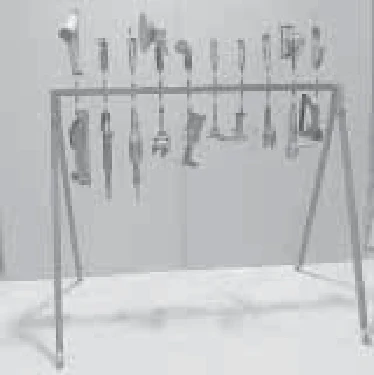
The Tool Tree is a 5-ft. wide, 51-in. high metal stand that mounts on four 3-in. caster wheels. The stand’s horizontal top pipe comes with 20 quick couplers and space for 20 air tools. There are 10 couplers on top of the pipe and 10 on the bottom. The tools simply snap onto the couplers.

Inventor Jerry Walstad says, “It works great for storing air ratchets, grinders, hammers, saws and so on. There’s no need to go through toolbox drawers looking for the tool you need. You can roll the stand right up to where you’re working. An optional heavy duty shelf snaps onto the base of the unit for storing small items.”

The company also offers models that hold six, 10, or 30 tools. A wall-mounted unit is also available.

The 6-tool Tool Tree sells for $59 plus S&H; the 10-tool model for $95; and the 30-tool model for $269. The shelf sells for $50 and the wall-mount unit for $159. A locking cover to prevent unauthorized use sells for $50.

Contact: FARM SHOW Followup, The Tool Tree Co., 279 Shoreline Drive, Toledo, Wash. 98591 (ph 360 892-4009; fax 360 864-2428; E-mail: [email protected]).

From the archive · Full text
Feature story

Big Metal Bender Built From Pickup, Combine Parts

Featured source:

Using a combine final drive, a pickup differential, and a used hydraulic motor, Clair and Warren Wilson made a bender that can handle just about any bending job on the farm. They’ve used it successfully on solid steel rebar up to 1 1/4 in. in diameter.

They built the bender entirely from scratch, enclosing it neatly inside a cabinet that’s 3 by 4 ft. and stands 41 in. tall.

A salvaged hydraulic orbit motor chain-drives the differential which came off a Datsun pickup. Its gears were welded together solid. Above the differential is a final drive from a Deere 95 combine. It’s fitted with a large steel pin that rotates in the center of a turntable that was cut from 2-in. steel plate. The piece of metal to be bent is inserted between two adjustable pins in the turntable and rested against an angled steel block. The motor is then activated until the metal is bent to the correct angle.

The top of the cabinet has three rows of pin anchor holes.

Contact: FARM SHOW Followup, Clair and Warren Wilson, 132 Hillview Rd., Win-chester, Ill. 62694 (ph 217 742-3918).

From the archive · Full text
Feature story

Garden Tractor Repower Kits

Featured source:

Is your garden tractor engine shot? A new engine from the manufacturer will cost a bundle, if it’s available. Rebuilding an engine isn’t cheap either, unless you can do it yourself. Tim Padgett, at the Small Engine Warehouse, Inc., says he has a better idea.

“Our conversion kits with new engines are just as easy to install as original engines but the cost is similar to a rebuilt one,” explains Padgett.

The do-it-yourself conversion kits allow you to substitute Honda and Kohler engines for the original engines in Deere, Simplicity and Allis Chalmers garden tractors.

Kohler 20 and 25 horsepower OHV engine conversion kits are available for John Deere 400 series tractors. The new Kohlers, at $1,300 and $1,600 respectively, are a steal compared to Deere’s $3,400 list price for replacement engines (which were actually discontinued two years ago). A Kohler Com-mand OHV twin engine conversion kit starts at $1,200, compared to $1,700 for the OEM Deere 317 engine.

Padgett offers Honda conversion kits for the Simplicity 4040, 4041, 920 and 9020 and the Allis Chalmers 620 and 720. The 24 hp engine kits are priced at $1,615.

All kits come complete with engine, muffler, throttle and choke controls. The replacement engines are prewired to match the existing OEM wire harnesses.

“No special wiring is needed,” he says.

“Just plug it in. The stub shaft or fly wheel adapter can be bolted right in place. A guy can take the original engine out and have our kit installed in two and a half hours.”

Padgett explains that any needed alterations are minor and in the case of any holes that need to be drilled, templates are included. Other conversion kits are in the works with the Simplicity 7100 Series and Allis 700 Series just introduced. He reports that with 25,000 engines on hand, Small Engine Warehouse has one that fits just about any use. In many cases, he says, a buyer will increase the horsepower when replacing an engine.

“These are well-built tractors,” says Padgett.

“The way the Allis is built, you could put a 40 hp engine in there. It’s built like a tank.”

Contact FARM SHOW Followup, Tim Padgett, Small Engine Warehouse, Inc., 2347 S. 800 E., Dunkirk, Ind. 47336 (ph 800 321-6725; Website: www.Small EngineWarehouse.com).

From the archive · Full text
Feature story

Exhaust Pipe Disassembly Tool

Featured source:

If you’ve ever spent an hour or so trying to pull a stuck muffler joint apart, you’ll like this new tool from the Eastwood Company, a mail order tool outfit that specializes in hard-to-find auto tools.

The tool consists of a double clamp that grips both sides of an exhaust pipe joint. A pair of drive bolts forces the joint apart. Fits pipe 2 to 2 1/4 in. dia.

Sells for $34.95. For a free copy of the company catalog, which features the exhaust pipe tool, contact: FARM SHOW Followup, Eastwood, 263 Shoemaker Rd., Pottstown, Penn. 19464 (ph 800 345-1178; Website: www.eastwoodcompany.com).

From the archive · Full text
Feature story

Parts For Restoration Projects

Featured source:

Having trouble finding parts for an old pickup or car? Restoration Specialties and Supply, Inc., Windber, Penn., may have just what you’ve been looking for.

Owned by Dave Mihalko and his sons, Jeff and Dave, the business stocks thousands of original and reproduction parts like window channel, weatherstrip, roll rubber matting, rubber bumpers and grommets, wire loom, panel board and cowl board, sedan decking, clips, fasteners, speed nuts, and more.

“A lot of what we sell are new original production parts, some of which are still in production from the original manufacturers. We also make some reproduction parts,” says Jeff Mihalko.

The company specializes in International and Dodge pickups.

“We have parts for all older pickups,” Mihalko says, “but no one else has as much for Internationals and Dodges as we do.”

They even have parts for motorcycles and motor bikes. Much of what they offer is listed on their Website: www.restorationspecialties.com. Or you can call or fax for information and prices. A catalog is available for $3.50 (it’s free on-line).

Contact: FARM SHOW Followup, Restoration Specialties and Supply, Inc., Box 328, Windber, Penn. 15963 (ph 814 467-9842; fax 814 467-5323; E-mail: [email protected]; Website: www.restorationspecialties.com).

From the archive · Full text
Feature story

Brake Repair Tool For Ford Tractors

Featured source:

“The brake drum housings on Ford 9N and 2N tractors are a common source of leaking. The fluid leaks on the brakes, causing them to fail,” says Dan Gingell of J&D Produc-tions.

“The problem is that replacing that seal was always a major repair until Tisco came out with its Sure Seal, which goes right over the old seal.”

Gingell, who runs a Massey dealership in Metamora, Mich., says it solves the problem, but you need a way to put the Sure Seal in place. He came up with a simple solution that he uses at his dealership and shows to customers.

The brake repair tool is made from a 3-in. dia. piece of schedule 40 PVC pipe, 28 in. long; a 3-in. cap; and a 3-in. reducer. The parts are glued together. The Sure Seal fits over the tool and then the tool is used to push it into place.

Gingell has also produced a Ford brake re-pair video that shows in detail how to repair the brakes on older Ford tractors, one of the biggest weak points on those otherwise reliable chore tractors. Gingell, along with his wife, Jennifer, produces a full line of tractor repair videos that have been featured in FARM SHOW.

Gingell sells the Sure Seal by mail (part #TC SS92) for $9.95 plus $3 S&H. If you don’t want to make the tool yourself, he’ll provide that for $15 plus S&H..

Contact: FARM SHOW Followup, Dan & Jennifer Gingell, J&D Productions, Inc., P.O. Box 38, 3507 S. Lapeer Rd., Metamora, Mich. 48455 (ph 810 678-3960; E-mail: [email protected]).

From the archive · Full text
Feature story

Cheap Tractor Spindle Repair

Featured source:

Maurice Tack thought he was going to have to junk his mid-1970's vintage David Brown 1210 mechanical front wheel drive tractor. He’d broken a spindle on the front axle and the $900 price the dealer quoted him for the new part would have been hard to justify.

It wasn’t the first time he’d broken a spindle on it.

“My dad bought the tractor new in 1976. It came with a Kramer front end. When that one broke, we hunted around and found the front end from a mid-1980s 1390 David Brown that would work.

“The spindles on these tractors are inher-ently weak,” says the Valier, Montana farmer.

“They’re made of cast iron and have a groove cut in them all the way around where the bearing and seal are mounted.”

Instead of buying a new spindle, he called Tim Nickol, who runs Precision Machine and Welding in nearby Conrad, Montana.

“I asked him if he could weld the cast iron pieces back together,” Tack recalls.

“He said he could do better than that.”

He started with a piece of solid steel, not cast, and made a piece that was identical to the one that broke off. He had to machine it from a solid round bar, heat-shrinking the metal, and finally, welding the new piece to the cast iron, he explains.

Tack recently broke the other spindle and Nickol repaired that one, too.

Nickol says he used 4140 chrome-moly steel shaft to make the new spindles.

“It has probably twice the hardness as the original cast material, so I don’t think there’s any way he’s going to break these. But if he does, I can make him another one,” he says.

Tack says Nickol’s fix cost around $450, or about half the price of the new part. He says there are hundreds of older David Brown mechanical front wheel drive tractors out there with problem spindles, and he figures a good machinist like Nickol can put a lot of them back to work.

“This is my backup tractor now. It’s only 68 hp, but I use it all the time for loader work, pounding fence posts, and gravel work. I move bales, clean corrals, and set up building trusses with it. It has about 12,000 hours on it and is still going,” he says.

“I want to keep this one going because it’s hard to find a small loader tractor with front wheel assist for a reasonable price these days.”

Contact: FARM SHOW Followup, Maurice Tack, 78 Tower Road, Valier, Mont. 59486 (ph 406 278-3887); or Tim Nickol, Precision Machine and Welding, Four 8th Ave. N.E., Conrad, Mont. 59425 (ph 406 278-5095).

From the archive · Full text
Feature story

Change To 12-Volts Keeps Old Tractor Running

Featured source:

Neil Ohler’s Ford Jubilee (9 NNA) tractor is 50 years old this year and still going strong. But Ohler nearly had to retire it for lack of a regulator.

“The regulator on the original 6-volt generator went bad and I couldn’t find a new one,” he says.

Then it came to him that he could convert the tractor to a 12-volt electrical system.

“I simply removed the tractor’s generator and replaced it with an old Delco 12-volt auto generator from a salvage yard,” he says.

The 12-volt generator was no problem to mount on the tractor. He replaced the 6-volt battery with a new 12-volt one the same size and put on a new 12-volt regulator. Once he had the generator and battery in place, all he had to do was install a 12-volt condenser in the distributor.

“Since 6-volt wiring is heavier than 12-volt, I didn’t need to make any changes to the wiring or the starter,” he says.

“I would have had to replace the light bulbs, except the lights on it quit working a long time ago,” he notes.

“Alternators are easier to find these days than generators so that would probably be a better way to go,” he notes.

“And while re-placing the generator was fairly simple, hooking in a single-wire alternator with a built-in regulator would have been even easier. The problem I had was the alternators I found able to find a generator that did, so it saved me from having to make a new mounting bracket.”

Before he switched over to 12 volts, the tractor’s old starter was a little slow, especially on cold days.

“It starts better with 12-volts,” he says.

“Now, you just hit the switch and it’s going.”

Contact: FARM SHOW Followup, Neil Ohler, Box 127, Stavely, Alberta, Canada T0L 1Z0 (ph 403 549-2480; E-mail: [email protected]).

From the archive · Full text
Feature story

Reworked 3-Pt. Control On Deere 3010

Featured source:

“The 3-pt. lift lever on my Deere 3010 mounts on the dash of the tractor so it’s not too convenient to use when you’re looking back at the hitch. When the control cable got corroded, I decided to make a change rather than just install a new cable,” says Larry Schulze, Clifton, Texas.

He cut a 2 by 4-in. hole in the sheet metal housing that surrounds the 3-pt. controller valve arm just above the rear axle on the right side of the tractor. Then he bolted a 1-in. piece of flat iron to the control arm by tapping a 5/ 16-in. hole in the valve arm and using a 5/16 by 3/4-in. long bolt. He cut a slot in the bottom of the flat iron handle that’s 5/16 in. by 1 1/4 in. so the bolt will not bind up when the handle is moved back and forth. The handle pivots on another 5/16-in. bolt a few inches above the valve, which is bolted to the sheet metal housing.

“Now the handle is just below and to the right of the seat. Very convenient and easy to operate. I wish I had made this change a long time ago,” says Schulze.

Contact: FARM SHOW Followup, Larry Schulze, 135 CR 3250, Clifton, Texas 76634 (ph 254 675-8195).

From the archive · Full text
Feature story

“Foot-Operated” Tire Changer

Featured source:

“It’s simple but it works,” says Richard Layden, Hoopeston, Ill., about the “foot-op-erated” tire changing lift support he made from a few pieces of 1-in. sq. tubing.

“When you’re changing bigger tires, you often need more than two hands. I came up with this lift tool that you can use anywhere to make it easy to lift a tire to position it for putting on lug nuts.

“You can use it on dry or wet ground, level or unlevel.”

The device is made of three pieces of hollow sq. tubing plus a piece of flat steel. It’s welded into an “A” pattern, with the piece of flat steel at the top of the “A”, which is the foot pad. The cross piece of the “A” is the pivot point.

To use, you slip the legs of the “A” under the tire and put a board under the pivot point. Pressing down on the foot pad raises the tire. You can add extra boards as needed to boost height.

Contact: FARM SHOW Followup, Richard Layden, 11443 E. 4200 North Rd., Hoopeston, Ill. 60942.

From the archive · Full text
Feature story

Sprayer Filter Keeps Tractor Fuel Lines Open

Featured source:

Rust and dirt clogging the fuel line on your antique tractor or stationary engine?

“Most older engines have a settling bulb in the fuel line, but that only catches water and the largest sediment,” says Bill Mossbach, Pocahontas, Arkansas.

“A lot of old fuel tanks are loaded with years of dirt and rust so the fuel lines are bound to plug up.”

But Mossbach has the solution. He devised a way to use an ordinary stainless steel sprayer filter to screen fuel as it leaves the tank.

“I buy brass sprayer filter bodies – the kind with the brass retaining screw - and mount them on the top of the sediment bulb, where the bracket that holds it mounts to the fuel tank. Using JB Weld, I glue the filter body to a stem made of copper or steel tubing. Then I glue the other end of the stem into the fuel inlet at the top of the settling bulb bracket. That way, all fuel first goes through the screen before getting into the fuel line.

“I use 50 to 100-mesh filter screens on these. Any sediment that can pass through the screen will pass through the fuel line without clogging it,” he says.

He recommends the stem on the filter be left long enough that the filter body is about 5/8 in. above the sediment bulb assembly.

He says the size of the hole in the fuel inlet in the top of the sediment bulb assembly may require that it be drilled out to fit his filter assembly.

“Or you may need a bushing to shim the hole if it’s larger than the stem tube,” he says.

While he uses JB Weld to put his filter together, he says any type of epoxy can be used.

Mossbach sells the complete fuel filter assembly for $5.50, plus $1.50 for shipping and handling. While he says installing the filter is not difficult, for a slight additional cost, plus return shipping, you can send him your sediment bulb bracket and he’ll install the filter for you.

Contact: FARM SHOW Followup, Bill Mossbach, Little Bit Ranch, 8506 Hwy 113, Pocahontas, Ark. 72455 (ph 870 647-2169). .