
Practical ideas from FARM SHOW MagazineSubscribe · Free issue · Send us your shop tip
Subscribe to FARM SHOW
Issues / Vol. 28, No. 3 (2004)

Vol. 28, No. 3 (2004)

Money-Saving Repairs & Maintenance Shortcuts · Printed section pp. 36–39

39 selected entries · Complete text of selected entries

This issue’s section includes reader tips and feature-length shop stories. Held items and editorial notices are not reproduced.

Archive text: prices, coupons, availability and contact details reflect the original publication, not current offers. Reader methods are not universal instructions; follow manufacturer guidance and proper safety practices.

Reader shop tips

From the archive · Full text
Reader shop tip

Clendon Nichols

Clendon Nichols, Union, Ky.

After years of having tractor wheel rims rust out due to the corrosive effect of the calcium solution he put into the tires, Clendon says he finally came up with a rustproofing solution that works great.

He had already used Herculiner pickup bed liner in unusual ways (see story on page 32). So he decided to experiment with it.

He first mixed up an extra strong batch of calcium chloride and then applied a layer of Herculiner to a piece of metal. After it had dried to a hard surface, he dropped it into the vat of calcium and let it sit for two months. After two months, the hard plastic surface of the Herculiner lining had not deteriorated at all so he figured it would hold up inside a tire.

So Nichols bought a new set of rims for one of his tractors and then coated the inside with Herculiner. He notes that he coated everthing except the edge where the bead seats against the wheel. Once the liner had dried, he put the rims back on and filled them up.

After several years, he still has no sign of rust on the rims. He pays special attention to the valve stems because that’s where he had the worst problem in the past. So far, nothing on the treated rims.

Contact: FARM SHOW Followup, Clendon Nichols, 12226 Kite Lane, Union, Ky. 41091 (ph 859 485-7676).

From the archive · Full text
Reader shop tip

Mark James

Mark James, Walla Walla, Wash.

“Here’s an idea we came up with as a short term repair for spray and fertilizer couplings. If they start leaking when we’re in the field, we use plastic tie wraps as shims to tighten them up. On a banjo coupler, this allows you to keep running in the field without damaging the coupler end. It’s a good short term solution until you can get the machine into the shop for repair.”

From the archive · Full text
Reader shop tip 1 of 4

Bill Reeks

Individual tip 1 of 4 from this reader’s published contribution.
Bill Reeks, Cromwell, Ky.

“I modified a couple of garden tractors to make maintenance easier. The first thing I do is remove the hoods, which improves the site lines when mowing, lets the engine run cooler, and makes routine maintenance easier. It also allows me to install a ‘push bar’ on front of the tractor to prevent front-end damage and let me push equipment when needed.

From the archive · Full text
Reader shop tip 2 of 4

Bill Reeks

Individual tip 2 of 4 from this reader’s published contribution.
Bill Reeks, Cromwell, Ky.

On top of the push bar I install a large eyebolt that lets me raise the front end of the tractor with a chain lift, making it easy to sharpen the blades without taking the deck off. Saves a lot of time.

From the archive · Full text
Reader shop tip 4 of 4

Bill Reeks

Individual tip 4 of 4 from this reader’s published contribution.
Bill Reeks, Cromwell, Ky.

Finally, I mount beach-type umbrellas on the tractor for mowing on hot days.”

From the archive · Full text
Reader shop tip

Paula Vogelgesang

Paula Vogelgesang, Pennywise, Box 518, Kadoka, S. Dak. 57543; email

penny [email protected]: Here’s a way to clean grease or oil stains off concrete garage floors or driveways using two common materials – paint thinner and cat litter. It comes from Paula’s monthly newsletter, “Pennywise”.

First, wipe off excess grease or oil with a rag. Then pour paint thinner over the spot and let it soak in a bit. Then pour a good amount of cat litter on top of the paint thinner and let it sit overnight. The next day, you should be able to sweep up all the litter, which will pull the liquified oil or grease stain right out of the concrete. It may take two treatments.

From the archive · Full text
Reader shop tip

Harold C. Goodwin

Harold C. Goodwin, Sr., Yulee, Florida

“This photo shows one of two handy, low-cost stands that I made for my chop saw. It works great for cutting pipe and rebar, etc. The base is an old brake drum filled with concrete. A length of pipe is welded to the center of the drum and supports a cradle on top made out of angle iron. Material to be cut is supported by a 3/4-in. dia. length of horizontal pipe which has a length of 1/2-in. dia. rebar running through it. The rebar rides inside a plug welded onto each end of the cradle, allowing the pipe to roll freely on the rebar. The cradle’s height can be adjusted by turning a nut on a bolt welded to the top of the vertical pipe stand.

“I used a brake drum for the base because it’s tall enough and heavy enough that it won’t likely fall over. And it’s narrower than a wheel rim so I’m less likely to stumble over it.”

From the archive · Full text
Reader shop tip

Ben Kambeitz

Ben Kambeitz, Box 23027, Medicine Hat, Alberta, Canada T1B 4C7

“By making use of an old furnace fan and a pair of used tractor air filters, I was able to come up with a low-cost air cleaner for my shop. It’s a low-cost method of removing particles from the air inside a closed shop. The assembly mounts on the ceiling. The fan mounts on an L-shaped metal bracket that’s fastened to the ceiling and is operated by a 1/4 hp electric motor. The filters mount below the fan and are turned upside down so the large opening is on top. The filters collect dust and even take the smoke caused by welding out of the air. The charcoal filters out the paint smell from auto painting as well as the mist. It works great. When the filters get dirty I simply throw them away and install two more used ones. I get the filters at our local dump and use a compressor to blow the dust out of them.

“The filters fit onto a pair of holes cut from plywood into the bottom part of the bracket. To attach the filters to the fan, I ran a length of redi rod through a pipe that runs vertically inside each filter. The pipe keeps the char-coal from falling out the bottom. The flanges on top of the filter were bent over to fit onto the fan. To change filters I just unscrew the filter from the flange.”

From the archive · Full text
Reader shop tip

Marvin Henry

Marvin Henry, Box 9, Maywood, Neb. 69038 ph 308 362-4251

“I recently started manufacturing a magneto coupling for regular Farmall tractors. This coupling also fits International Harvester 10-20 and 15-30 series tractors and maybe others. These tractors were built from 1924 to about 1932.

“The coupling is about 1 1/4 in. long and goes between the drive mechanism off the engine and the magneto. It has two prongs on one end and two slots on the other end. Over time, both the prongs and the slots get worn bad and then the magneto gets out of time. I’ve been told that it’s hard to find a replacement coupling, and if you do find one it will probably have a lot of wear. It sells for $28 postage paid.”

From the archive · Full text
Reader shop tip

Pat Prom

Pat Prom, Eden Prairie, Minn.

“I used 1/4-in. thick scrap metal to build my own 5 1/2-ft. high engine hoist. The hoist is raised and lowered by a 5-in. dia., 3-ton hydraulic cylinder. I use it to lift engines and transmissions out of cars and to raise the front end of garden tractors so I can change the mower blades. Anyone wanting to build a hoist for use with trucks and tractors would want to build a little bigger hoist.”

From the archive · Full text
Reader shop tip

Trevor Shute

Trevor Shute, RR 6, Guelph, Ontario, Canada N1H 6J3 (ph 519 822-6705)

“Here’s a tip to prevent scalping or ripping out chunks of lawn when plowing snow. I removed the skid plate from the bottom of my 7-ft. scraper blade and replaced it with a section that I cut from an old 8.75 by 16.5 truck tire. I used a Sawzall to cut the tire about 3 in. around the sidewall and the same around the tread, leaving an L-shaped rubber ring. Then I rolled out the rubber and used 5/8-in. bolts to attach it to the blade. To drill the holes, I clamped the rubber in the desired place on the blade and marked the holes, using spray paint from the backside. This made drilling in a press a lot easier than using a handheld drill. I’ve used this idea for about five years now and haven’t torn up our lawn once. I can plow snow off a paved driveway and onto the lawn without damaging it.”

From the archive · Full text
Reader shop tip

Rusty Olson

Rusty Olson, 2255 280 th St., Garner, Iowa 50438 ph 515 291-2082; email

[email protected]: “Don’t throw out your electrode (stick) welder. Some day you’ll be glad you still have it. Around our shop most things are built with ‘recycled steel,’ and while we do have a nice mig welder we’ve found that it’s hard to beat a small diameter 6011 welding rod for welding rusty old steel. Electrode welders penetrate rusted metal much better than a mig welder ever will. And, you can weld in the wind and reach farther than the mig welder will allow.”

From the archive · Full text
Reader shop tip

Richard Bergman

Richard Bergman, Chippewa Falls, Wis.

“I bought a 4-ft. pull-type rotary brush mower in the early 1960’s. I didn’t have an over-running clutch for the pto, so once the mower got up to speed it drove the rear wheels as long as the transmission on my Farmall B was in gear. The inertia of the mower could drive you up a tree. Besides being hard to operate, it was too long to maneuver in our woodlot.

“Belly mount was the obvious solution, but that complicated the power train. No one at that time had any confidence that hydraulics would drive the mower except me, so I did it anyway. I bought a pair of 22 gpm Gresen gear pump/motors that fit on the drive shafts. I had a local blacksmith build a 20-gal. tank with valves attached to the top and axle mounts on the bottom. I reversed the trailing mower so the tractor drawbar pushed rather than pulled the mower. Two hydraulic cylinders on the clutch housing of the tractor provide lift. I added a one-way hydraulic valve to the mower motor for over-running.”

From the archive · Full text
Reader shop tip

Donald J. Woehl

Donald J. Woehl, 8740 Kenton Road, Morrison, Ill. 61270 ph 815 772-3765

“I’d like to thank FARM SHOW and its readers for helping me with a problem I had with my Deere 720 2-cyl. tractor, which I had changed over to electronic ignition. The problem was that the coil was getting hot. One caller suggested I install a 1955 Chevy coil with a built-in ballast and resister. I paid $35 for the coil, and it was the best investment I’ve ever made for any repair. Now the tractor starts and runs 95 to 100 percent better than it ever did. I’d also like to thank all the other callers who had suggestions.”

From the archive · Full text
Reader shop tip

David Rowlett

David Rowlett, 1209 S. Ash St., Ozark, Ark. 72949

“By inserting a small round magnet into the end of a rubber line, you can retrieve a nut or bolt from just about anywhere, such as down an engine intake manifold.”

From the archive · Full text
Reader shop tip

Arthur H. Harms

Arthur H. Harms, Estelline, S. Dak.

“I have two vehicles that both ran hot during the summer - a 1976 Dodge pickup and a 1981 Mercury car equipped with a 302 cu. in. engine. I made two modifications to solve the problem. First, I installed a new timing chain. Second, I went to a racing shop and bought an offset cam half moon key to advance the timing of the cam. Now both engines breathe much better and both vehicles run cool. The fuel economy on the Dodge didn’t change much, but the vehicle starts and runs much better. The Mercury also starts and runs better and also gets better mileage. It was at 14 mpg but now it gets 24 mpg on long trips. Also, both engines have better compression and run cool regardless of summer temperatures.”

From the archive · Full text
Reader shop tip

Pete M. Friesen

Pete M. Friesen, Meade, Kansas

“I had a problem with the anhydrous ammonia hitch on my V-blade tillage implement. It was hard to reach to pull the spring-loaded pin and, with the other arm, pull the hitch back at the same time. So I made this lever to pull out the spring-loaded pin. I’ve used this idea for one summer. It’s now much easier to hook onto the anhydrous trailer.”

From the archive · Full text
Reader shop tip

Donald Struckhoff

Donald Struckhoff, Augusta, Mo.

“The self-energized disc brakes on Farmall Super C to International 660 models tend to lock up after wet weather or whenever they’re not in use for a while. To solve the problem I put several squirts of gas into the brake housing. The gas seems to lubricate the rust that starts on the metal surface, just enough to allow the brake discs to shine up the housing and allow the discs to release.”

From the archive · Full text
Reader shop tip 1 of 5

Lonnie J. Wallace

Individual tip 1 of 5 from this reader’s published contribution.
Lonnie J. Wallace, Jerico Springs, Mo.

“To stop an engine from fouling up plugs, I hooked up two coils together. This set-up re-ally sends a jolt of current to the plugs. The plug fouling slowed way down.

From the archive · Full text
Reader shop tip 2 of 5

Lonnie J. Wallace

Individual tip 2 of 5 from this reader’s published contribution.
Lonnie J. Wallace, Jerico Springs, Mo.

“When cleaning cast iron carburetors, I mix a can of lye and a half cup of soap in a plastic bucket filled with two gallons of hot water. This idea also works in a cruddy fuel tank.

From the archive · Full text
Reader shop tip 3 of 5

Lonnie J. Wallace

Individual tip 3 of 5 from this reader’s published contribution.
Lonnie J. Wallace, Jerico Springs, Mo.

“I installed a 10-ton floor jack instead of a 4-ton model. I don’t have to worry about overloading such a heavy duty jack.

From the archive · Full text
Reader shop tip 4 of 5

Lonnie J. Wallace

Individual tip 4 of 5 from this reader’s published contribution.
Lonnie J. Wallace, Jerico Springs, Mo.

“I’ve found that General Electric soft white 60-watt light bulbs make the best rough service bulbs. They’re fluorescent so they don’t get hot.

From the archive · Full text
Reader shop tip 5 of 5

Lonnie J. Wallace

Individual tip 5 of 5 from this reader’s published contribution.
Lonnie J. Wallace, Jerico Springs, Mo.

“I drill a small hole in all bearing seals and fill them full of grease. Then I clean the holes with brake cleaning fluid and seal them up with silicone sealer. The bearings then last like they should. I use a grease needle that’s used for hard-to-get-at fittings on U-joints.”

From the archive · Full text
Reader shop tip

Chris Elliott

Chris Elliott, 4404 Breezy Point Road, McConnellsburg, Penn. 17233

“The rubber on the rolls on our Deere 1460 disc mower was coming off, which caused the machine to plug up. After pricing new rolls, we decided to fix the problem on our own. We stripped the rest of the rubber off and welded six, 1 1/2-in. solid steel bars onto each roll.

Now the machine does a nice job of crimping, and it hasn’t plugged up once. We didn’t have to make any modifications to the machine at all. However, this idea will work only on disc mowers equipped with timed rolls. Otherwise the steel bars would hit each other and cause big problems.”

From the archive · Full text
Reader shop tip

Donald Struckhoff

Donald Struckhoff, 5266 Hackmann Rd., Augusta, Mo. 63332 ph 636 228-4396

“The self-energized disc brakes on Farmall Super C to International 660 tractors tend to lock up after wet weather or if they haven’t been used for a while. Rust can form on the metal surface. I’ve found that several squirts of gas into the brake housing seems to lubricate the rust, enough that the brake discs shine up the housing which allows the discs to re-lease.”

From the archive · Full text
Reader shop tip

Michael Pigorsh

Michael Pigorsh, Northco Products LLC, P.O. Box 1093, Big Rapids, Mich. 49307 (ph 231 527-1660; fax 231 527-1665; email

[email protected]; website: www.rustreaper.com): “We think our new

multi-purpose lubricant and penetrating oil, called Rust Reaper, works better than anything else on the market. It pen-etrates better than WD-40 and has more film strength.

“This wintergreen-smelling product consists of a unique combination of state-of-the-art surfactants and esters, synthetics and friction modifiers. It works great on stuck and frozen parts in antique tractors, bulldozers, and trucks, and is a fine salvage and mainte-

nance tool for automotive and heavy equipment vehicles. The unique combination of solvents, lubricants and additives lubricates parts without causing them to become gummy.

“The product can be used before, during, and after you disassemble or assemble a machine that’s being rebuilt. It’s great as a penetrating oil to free up rusted parts. Once the parts are disassembled, you can use it as a solvent to clean them. When you start to put things back together, a few drops of Rust Reaper will keep things moving and functioning freely.”

An 8-oz. bottle sells for $7 plus S&H; a 16-oz. bottle for $12.50 plus S&H; and a 1-gal. jug for $42.50 plus S&H. Various precision oilers are also available.

From the archive · Full text
Reader shop tip

Bob Hudspeth

Bob Hudspeth, Era, Texas

He recently sent FARM SHOW photos of a couple of slick add-ons he made for his extension ladder.

“It makes the ladder safer to use, and also reduces damage to shingles and siding,” says Hudspeth.

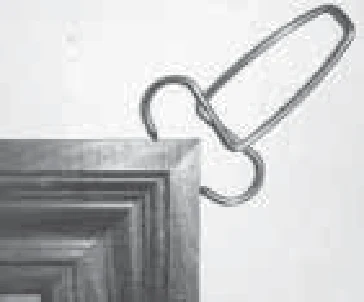
He used 10 ft. of electrical conduit, two U-bolts, two 1/ 4-in. bolts, and two rubber tips off crutches.

It consists of a 3-ft. wide, 14-in. deep U-shaped length of conduit that U-bolts to the top of the ladder. A crutch tip is affixed to each end. Another length of conduit is bent into a “P” shape and serves as a handhold on one side of the ladder. The leg of the “P” bolts to the ladder.

Shop feature stories

From the archive · Full text
Feature story

Rim Guard Prevents Rust, Star Seal Prevents Flats

Featured source:

Rust and corrosion on tire rims, valves, gauges, and pumps can now be prevented, thanks to a new patented, non-toxic, biodegradable product called Rim Guard Tire Ballast.

It’s heavier than sodium chloride and can be used with either tube or tubeless tires. Rim Guard provides a protective polymer coating over the metal to reduce corrosion. It weighs about 10.7 lbs. per gallon, providing excellent weight for the volume, and with-stands temperatures of up to at least 30 degrees below zero without freezing.

Rim Guard is non-flammable and dark brown in color. Since it’s non-abrasive to metal, rubber, plastic and other materials, it can be pumped through your current pumping and storage system.

“It does not require specialized pumps, piping, couplers or storage tanks,” according to the company.

“Rim Guard can be stored in poly, steel, or fiberglass tanks. It’s water soluble, so it will readily wash off your hands without burning and cracking, and it won’t destroy leather shoes and gloves, or rust the eyelets out of work boots, as do chlorides and salt brines. Rim Guard is economical compared to adding cast iron or steel weights to the equipment or the use of injectable foams in tires, which can double or even triple the original cost of the new tire.”

According to the northeast Mid-Atlantic distributor, Ballast Star, Inc., tests done with Rim Guard showed dramatic results.

“Nails left in a container of calcium chloride for 15 months were completely rusted over, whereas the Rim Guard treated nails were shiny and brightly colored, with no rust.”

Another new product called “Star Seal Ballast Plus” is a ceramic fiber material suspended in a gelatin solution, and is injected into the tire with Rim Guard or any other liquid ballast. Nash says the product is delivered in drums, with pumps supplied.

Star Seal stays suspended in the liquid. When a hole is punctured in a tire and the liquid begins leaking from the tire, it carries the Star Seal fibers to the hole, forming a plug.

“Most of the time, you don’t even know you have a hole, because within four revolu-tions of the tire, it seals,” Nash says.

“It’s good for the life of the tire.”

Star Seal Ballast Plus retails for $15 per gal. (1 gal. of Ballast Plus for every 10 gal. of liquid ballast solution).

Rim Guard retails for $3 per gallon. Contact: FARM SHOW Followup, Ballast Star, Inc., 776 Watervliet-Shaker Rd., Latham, N.Y. 12110 (ph 888 678-2707 or 518 783-5655; fax 518 783-5461; email: [email protected]; website: www.ballaststar.com).

From the archive · Full text
Feature story

“Miter Clamps”

Featured source:

Getting mitered corners to fit tightly together is a piece of cake with these new meter clamps that keep the pressure on while glue dries, says Collins Tool Co., Plain City, Ohio.

The spring-loaded clamps have sharp points that grip the wood firmly without cutting wood fibers so it’s easy to clean up the marks.

The company’s miter clamp pliers make it easier to open the clamps to their maximum 2-in. spread. A dozen clamps sell for $30 plus S&H; the pliers sell for $14.95 plus S&H.

Contact: FARM SHOW Followup, Collins Tool Co., P.O. Box 417, Plain City, Ohio 43064 (ph 888 838-8988 or 614 873-6219; fax 614 873-1676; email: [email protected]; website: www.collinstool.com).

From the archive · Full text
Feature story

Portable “Oil Vac” Built From Old Propane Tank

Featured source:

By cutting down an old 1,000-gal. propane tank, Lonnie Nichols, Copeland, Kansas, was able to build a portable “oil vac” that he uses to remove used oil from irrigation engines. A second tank on the trailer carries fresh oil to pump into the engines.

“It lets me recycle used oil with a minimum of spillage. I spent about $300 to build it. A comparable commercial unit would sell for up to $8,000,” says Nichols.

The trailer-mounted rig has twin 200-gal. tanks. A 5 1/2 hp gas engine and portable air compressor mount in the bed of his pickup, with compressor hoses hooked up to one of the tanks. The compressor creates vacuum inside the tank. A hydraulic hose sucks used oil out of the engine oil pan and into the tank. After the old oil is removed, Nichols hooks up another set of hoses to the second tank and blows new oil into the engine.

To make the tanks, he cut a section out of the middle of the 1,000-gal. tank and sealed off the open end of each of the two remaining sections.

“It turned out pretty neat. Whenever we pull it around people want to know what’s going on,” says Nichols.

“I don’t recommend anyone use a cutting torch on a propane tank because it can be extremely dangerous. However, we knew it would be safe because we had kept the tank valve open for two years. Also, before we did any cutting, we filled the tank with carbon monoxide from our pickup exhaust. That way no oxygen could get inside the tank.”

Contact: FARM SHOW Followup, Lonnie Nichols, 2189 40th Road, Copeland, Kansas 67837 (ph 620 668-5276; cell 620 272-4915).

From the archive · Full text
Feature story

Carburetor Repair Kit For Deere 2-Cyl. Tractors

Featured source:

If you own an older Deere 2-cylinder tractor equipped with a single barrel carburetor, you’ll be interested in this carburetor repair kit from Marvin Henry, Maywood, Neb.

“The single barrel carburetor on these tractors has a nut with a screw-on insert thread at the bottom that holds the bowl in place,” says Henry.

“Any water that condenses in the gas tank eventually ends up in the bowl. If the water freezes, the ice expands and breaks off the stem bottom, making the carburetor useless. A new single barrel carburetor for these tractors can sell for $300 or more. The part I make allows you to rebuild the stem bottom. You machine off the bottom of the bowl stem, then screw in the thread repair kit. The original nut is used to hold the carburetor bowl in place.”

The unit can be used on the Deere A, B, G, and D tractors, as well as on Marvel-Schribler DLX carburetors.

Sells for $28 including S&H. It comes with an instruction sheet.

Contact: FARM SHOW Followup, Marvin Henry, Box 9, Maywood, Neb. 69038 (ph 308 362-4251).

From the archive · Full text
Feature story

Kits Make Refrigerator Look Like A Toolbox, Gas Pump

Featured source:

An old refrigerator in your shop or garage can be easily converted to look like a big toolbox or vintage gas pump with these new kits that’ll fit most any fridge.

“Too Cool Kits” contain all the paint, handles, locks, and door panels needed. The authentic gas pump kit comes with a hose and nozzle. The decals are magnetic for easy attachment.

Prices range from $79.95 for a mini-fridge kit to $159.95 for a side-by-side.

Contact: FARM SHOW Followup, Too Cool Kits, 11135 SW Matzen Dr., Wilsonville, Oregon 97070 (ph 800 456-3171 or 503 740-7347; website: www.toocoolkits.com).

From the archive · Full text
Feature story

Nifty Brake Trick

Featured source:

Here’s an idea we recently spotted in Four Wheeler Magazine (www.fourwheeler.com).

Reader Craig Passeno of Cheboygan, Mich., was tired of the parking brakes on his truck wearing out. He said road salt, and constant dunkings in lake water when backing up boat trailers, caused the lines to rust out. He noticed that the emergency brake lines usually remain sound from inside the cab to a few feet under the cab. So he cut off the cable where the rust starts and then turned it 180 degrees back through the floorboard and connected it to the normal brake pedal. Now when he steps on the ratcheting emergency brake pedal, it pulls down on the regular brake pedal and holds it, creating a 4-wheel hydraulic parking brake.

He notes that every truck is different so how you hook it up will vary.

From the archive · Full text
Feature story

Replacement Tailgate

Featured source:

If you own an older Ford pickup with a rusted-out tailgate, you’ll be interested in this replacement tailgate that looks just like the original. It’s available from an Oklahoma company that specializes in classic pickup bed parts for older Chevy, Ford, Dodge and custom pickups.

The tailgate is designed for 1953 to 1972 Ford flare-side pickups and has the name “Ford” embossed in it. It’s made from original Ford tooling with the correct gauge thickness, welded construction like the original, and accurate bends and dimensions. It comes with a chain latch. Tailgate hinges and chains are also available.

Sells for $325 plus S&H. You can order online for free UPS ground shipping.

The tailgate is included as part of the company’s metal parts kits designed for 1953 to 1960, and for 1961 to 1972 Ford pickups. The kits include the bedsides, tailgate, cross sills, rear cross sill, front bed panel, chains, hinges, and all hardware required to bolt the bed together. The kit for 1953 to 1960 models sells for $1,140.25; the kit for 1961 to 1972 models sells for $1,120.25. The company offers an online catalog with many other parts for pickup beds.

Contact: FARM SHOW Followup, Mar-K Quality Parts, 6625 W. Wilshire Blvd., Oklahoma City, Okla. 73132 (ph 405 721-7945; fax 405 721-8906; website: www.mark.com).

From the archive · Full text
Feature story

Raised Shop Lets In Lots Of Light

Featured source:

“If I was putting up a new building, I’d build it this way. It gives me more room to work and also lets in a lot of light,” says Mark Bruellman, Rolfe, Iowa, who raised a section of his shop 4 ft. and added clear plastic paneling between the old and new roof line.

Bruellman’s 42 by 72-ft. shop was originally equipped with a 9 1/2-ft. ceiling. He raised half the shop 4 ft. to make the ceiling 13 1/2 ft. high. He covered the section of the wall between the old and new roof line with clear plastic paneling on the outside and heavy plastic inside.

“Since there’s no overhang on the roof, in winter the sun bathes the whole inside of the building just beautifully, since the raised section of the wall faces south,” says Bruellman.

“In the summer, the sun is directly overhead and just peeks onto the floor but excess heat is not a problem. On overcast days I’ll occasionally turn on the lights but otherwise, no lights are needed.

“Before I raised the building, the cabs on our tractors and trucks were right up against the ceiling. Now I have a lot more room to work on equipment.”

Bruellman operates a grain bin moving business (Vol. 26, No. 4). He used some of his bin moving equipment, including a hydraulic forklift mast on back of a truck as well as hydraulic jacks and portable movers, to raise the building. He raised one wall an inch or so, then switched to the other side.

“It took 40,000 lbs. of lift just to get one wall up,” he says.

Once the building had been raised, he covered the bottom 4 ft. with black siding all the way around the exterior. The inside bottom 4 ft. is lined with sheet plastic over 1-in. thick plywood.

He bought the clear plastic paneling at Menards.

“It’s a high impact tough clear plastic that makes the whole building glow. On a sunny day, it’s as bright inside the building as if I was working outside. The paneling is so clear that I can actually watch the clouds go by. I have windows on the south, east, and north sides of the building so I get a bit of fill light from those windows, too.”

Contact: FARM SHOW Followup, Mark Bruellman, 29731 410th St., Rolfe, Iowa 50581 (ph 800 370-2467 or 712 848-3247).

From the archive · Full text
Feature story

Hydraulic-Powered Vise Doubles As Hydraulic Press

Featured source:

This new hydraulic-operated bench vise is as simple to use as stepping on a pedal. And, it doubles as a hydraulic press.

The Posi Lock hydraulic bench vise works off an air compressor (not supplied) that connects to a foot-operated air valve. Air pressure activates a hydraulic pump that mounts inside the vise and operates a cylinder, which is used to squeeze the jaws together. A gauge shows how much pressure is being applied.

“It’s easy to use and has three to ten times more clamping power than a conventional hand-operated vise with up to five tons of force. That’s enough to do some serious straightening work,” says Mitch Trostad, Posi Lock Puller, Inc., Cooperstown, N. Dak.

A pair of aluminum jaw liners called “Hold-ets” can be used to convert the vise to a hydraulic press. By attaching a small socket to one jaw liner and a larger socket to the other one you can push out U-joints.

The same jaw liners can be used to hold threaded steel shafts without damaging the threads. Since aluminum is softer than steel, the material will “mushroom” around the threads. When you loosen the vise and re-move the shaft, you’ll still be able to thread a nut on the shaft,” says Trostad.

The vise sells for $1,295. The Hold-ets sell for $14.95 a pair. Trostad says a smaller version of the vise, with 1 1/2 to 2 tons of clamping force, will be on the market later this year. It will be equipped with a manually-operated foot pump.

Contact: FARM SHOW Followup, Posi Lock Puller, Inc., 805 Sunflower Ave., P.O. Box 246, Cooperstown, N. Dak. 58425 (ph 800 533-5761 or 701 797-2600; fax 800 339-4159; email: [email protected]; website: www.posilock.com).

From the archive · Full text
Feature story

Giant Brake Press

Featured source:

Not many people build their own brake presses to bend sheet metal, but Wilfred Mollenbeck made a giant one with a 20-ft. wide bed. It measures 15 ft. high and weighs about 18,000 lbs. A hydraulic power pack driven by a 17 hp electric motor is used to operate it.

Mollenbeck farms and also operates a custom fabricating shop with his brother Robert and sons Dennis and Kevin. They custom build everything from wheel chair lifts to grain trailers, hopper cones, etc. Their farm shop measures 8,800 sq. ft.

“We use it every day on sheet metal up to 1/4 in. thick,” says Mollenbeck.

“We’ve built a number of different dies for it. We used mostly salvaged steel to build it and spent a total of about $5,500. Commercial presses of comparable size sell for $200,000 or more.

The brake press is built from 12 by 36-in. steel I-beams and is equipped with eleven 4-in. dia. cylinders that provide down pressure. A 17 hp electric motor operates a 2-stage hydraulic pump. One side of the pump operates at 30 gal. per minute and the other side at 5 gal. per minute. When the high capacity side of the pump reaches 1,500 lbs. it cuts out, and the other side takes over.

“We’re on single phase power so we couldn’t use an electric motor big enough to operate a conventional hydraulic pump of the size we needed. The two-stage pump solves that problem,” he says.

The unit has a leveling cylinder on each side, with one of the cylinders mounted upside down. Oil from the top end of one cylinder goes to the bottom end of the upside-down cylinder, which keeps the volume the same on both sides of the bed to keep it level at all times.

“We built it because we needed more capacity, and we couldn’t justify the cost of a commercial model,” says Mollenbeck.

“We had been using a 10-ft. home-built brake for our own use. Then we started building 27-ft. hopper cone grain bins and needed a bigger model.”

Contact: FARM SHOW Followup, Wilfred Mollenbeck, Box 46, St. Gregor, Sask., Canada S0K 3X0 (ph 306 366-2113).

From the archive · Full text
Feature story

Simple Fix Solves Auger Problem

Featured source:

A Minnesota farmer has come up with a simple fix for a common problem on newer-style, Case IH 2200 series corn headers.

“The headers can be operated at either high or low speed, allowing you to speed up or slow down the rolls and gathering chains depending on crop conditions. Unfortunately, when you speed up the rolls and gathering chains you also speed up the auger. Switching from low to high range increases auger speed from 123 rpm’s to 147 rpm’s, which is way too fast. As a result, a lot of ears get thrown out onto the ground. The losses can be quite high,” says Larry Palmby, of Dover.

His solution was to install a hydraulic motor on one end of the header that operates off the combine’s reel speed control and drives the auger independently of the rolls and gathering chains. Motor speed is controlled by adjusting a knob in the cab.

To install the motor, Palmby drilled a 2-in. dia. hole in the side of the header for the motor’s shaft to fit through. He also drilled two 1/2-in. dia. holes so he could bolt on the motor’s mounting plate.

“It allows me to operate the auger at anywhere from zero to 147 rpm’s, independent of the speed of the rolls and gathering chains,” says Palmby.

“I usually operate the auger at 60 rpm’s. But if crop conditions get tough I can just rotate the knob to run the auger faster.

“I came up with the idea after I bought a 2200 series header three years ago. I liked being able to operate the rolls and gathering chains at higher speeds in tough conditions. However, I got tired of high ear losses from operating the auger too fast.

“I used it last fall on corn that yielded more than 200 bushels per acre, and it worked slick. We had a lot of dry stalks with a lot of trash running into the header, but ear losses were minimal. I figure it paid for itself after the first 100 acres of use.”

Palmby says this modification will work on any Case IH 2200 series header, which have been on the market for three years.

He has put together a kit that includes the motor, sprocket, and hydraulic hoses. It sells for less than $1,000.

Contact: FARM SHOW Followup, Larry Palmby, Palmby Farms, 607 County Road 10 S.E., Dover, Minn. 55929 (ph 507 932-3358).