Practical ideas from FARM SHOW MagazineSubscribe · Free issue · Send us your shop tip
Subscribe to FARM SHOW
Issues / Vol. 39, No. 6 (2015)

Vol. 39, No. 6 (2015)

Money-Saving Repairs & Maintenance Shortcuts · Printed section pp. 36–39

34 selected entries · Complete text of selected entries

This issue’s section includes reader tips and feature-length shop stories. Held items and editorial notices are not reproduced.

Archive text: prices, coupons, availability and contact details reflect the original publication, not current offers. Reader methods are not universal instructions; follow manufacturer guidance and proper safety practices.

Reader shop tips

From the archive · Full text
Reader shop tip

Connor Bishop

Connor Bishop, Guilford, Ct.

“I needed a strap wrench to hold onto a Kohler engine flywheel as I tightened the flywheel nut, but I didn’t have a wrench that was large enough. Instead of buying one, I made one from a length of angle iron and an old serpentine belt. I cut a notch near one end of the angle iron where I permanently attached one end of the belt, and then cut 2 more notches several inches away. Once I’ve got the belt adjusted to the right length I wind it through the second 2 notches to lock it in place with the looped end of the belt over the flywheel. Works great and can be made smaller or larger as needed depending on what you want to use it on.”

From the archive · Full text
Reader shop tip

Bernis Ingvaldson

Bernis Ingvaldson, The Honeyberry Farm, Bagley, Minn.

“With little snow cover last winter, the water line from the well to our house froze. By connecting some tubing from the outlet on a pressure cooker into the water line, we were able to produce enough steam to thaw the pipe in no time, saving $200 on a service call.”

From the archive · Full text
Reader shop tip

Christopher McKay

Christopher McKay, Twin Evil Enterprises, Saint Albans, W. Va.

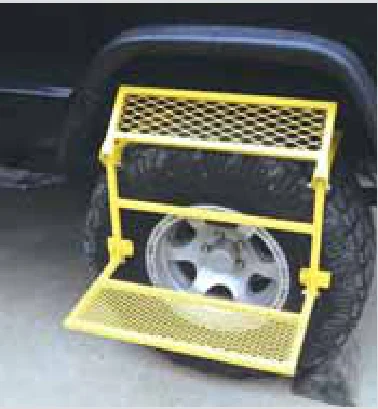
“The frame on our new folding step slips over a tire, just like on our original heavy duty pickup step (Vol. 39, No. 2). However, this patent pending model has 2 fold-down steps instead of one to provide a greater reach and easier access.

“You slip the frame over the top of the tire and then fold the steps down. A pair of wide tabs welded onto the back side of the frame come in contact with the tire to keep the frame from damaging the sidewall. The steps are made from powder-coated expanded metal and designed to hold up to 500 lbs. They’re available in bright red or safety yellow for high visibility.

“Works great for safely reaching gear stored on your vehicle’s roof. It also provides access to semi truck engines and flatbed trailers. Both the original step and the new 2-step models work on either single or dual wheels, 2 1/2-ton military trucks, Jeeps, SUV’s and even ATV’s. The second step also doubles as a seat, if desired.

“The 2-step model sells for $115 plus S&H. If you already have a one-step model, you can convert it to a 2-step by purchasing the second step and bolting it on. The 2-step upgrade sells for $45 plus S&H.”

From the archive · Full text
Reader shop tip

Mack Myers

Mack Myers, Kirbyville, Texas

“I made this loader-mounted, all-purpose carrier to haul everything I need to cut wood. I use my skid loader’s forks to lift trees off the ground so I don’t have to bend over to saw them up, and the carrier lets me take everything with me in one trip.

“I made it by nailing 2 by 8 boards onto a wooden pallet. Dividers keep everything neatly in place. I keep oil and gas containers in one corner and use the other compartments to carry my chainsaws and tools. I use the flat 2 by 12 board on top for servicing saws.”

From the archive · Full text
Reader shop tip

Jim Weaver

Jim Weaver, Fairview, Mich.

“I was designing small equipment for a company and needed a press that could bend metal with nice looking corners, so I came up with this ‘poor man’s’ brake press that’s made out of 2 lengths of 1 1/2-in. angle iron.

“I welded 2 pieces of pipe along the bottom of one angle iron with the ‘V’ part of the angle iron facing up. Then I welded a short steel plate into the open bottom of another angle iron and welded a 1-in. dia. vertical steel ‘push rod’ onto it. I also welded on a pair of diagonal strap iron braces.

“To bend the metal I just place one angle iron on top of the other. The strap iron braces reinforce both ends of the top angle iron so it doesn’t bow up from the pressure.”

From the archive · Full text
Reader shop tip

Chuck Hollar

Chuck Hollar, Boone, N.C.

“I had a lubrication problem with the small front end on my mid 1980’s Massey Ferguson 1030 compact 4-WD tractor, so I modified the ring gear on it to run in grease instead of oil. I got the idea after the tractor’s front end broke and fell apart 2 or 3 times, and each time I had to take the front end apart and replace several very expensive parts. The job takes at least a half day to do.

“The problem is the front end’s 8-in. dia. ring gear is filled with ball bearings that are supposed to run in oil. However, the oil doesn’t get where it’s supposed to go. To solve the problem I drilled a series of holes around the ring gear and installed grease zerks in them, allowing me to use a grease gun any time I want. I made this modification 10 years ago and haven’t had any problems since.

“There have been other problems with this tractor’s front end. For example, the CV joints would get dry and fall off, the seals leaked, and I couldn’t keep the wheels locked.”

From the archive · Full text
Reader shop tip

Rex Gogerty

Rex Gogerty, Hubbard, Iowa

“We used a jack to raise the rear end on our Deere lawn tractor in order to keep the pto level with the pto on our grain auger. We also raised the tractor’s front end so we can keep the engine oil level, making the engine less likely to overheat.”

From the archive · Full text
Reader shop tip

COX North America

COX North America, Inc., Haslett, Mich. ph 800 822-8114 or 517 339-3330; www.cox-applicators.com

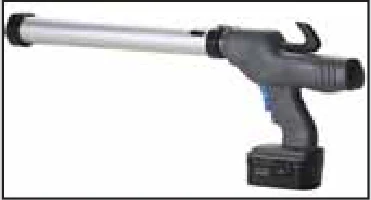
The company’s battery-powered caulk gun comes with a 14.4-volt NiMh battery pack, a battery charger and several nozzles. The caulk gun can be used with 10 or 20-oz.

“sausage packs” or a 10-oz. cartridge and features 745 lbs. of maximum force for tough jobs. The unit has variable speed control with 9 separate settings, which lets you apply caulk at anywhere from a very slow to a very fast flow rate. The caulk gun comes with automatic pressure release, causing the drive rod to retract a bit when the trigger is released to minimize dripping. It also has a release button, a trigger lock switch, and a hanging latch on top of the handle. Sells for $299.99 plus S&H. The company has a second model that has the same features except that it uses a 12-volt Lithium ion battery and sells for about $100 less.

From the archive · Full text
Reader shop tip

Crescent Marketing

Crescent Marketing, Apex Tool Group, Sparks, Md.; ph 913 362-1670; www.crescenttool.com)

Crescent’s self-adjusting, 12-in. pipe wrench is designed for one-handed use and is lighter weight than standard pipe wrenches. It also has a slim profile so it can be used where other wrenches won’t fit, says the company. The self-adjusting head instantly grabs and releases pipes. You position the wrench around the material, then press the head forward or pull up on the jaw to release and re-engage. Unlike conventional pipe wrenches that require turning a wheel to adjust the jaws, the self-adjusting wrench tightens against the pipe when you turn it one way and loosens when you turn it the other way. The wrench works with pipe from 5/8 to 1 1/2 in. in dia., including black-iron, galvanized, pvc, and copper. According to the manufacturer, it can also be used like a ratcheting tool to quickly tighten nuts, bolts, and couplings.

From the archive · Full text
Reader shop tip

Brad Miller

Brad Miller, Ridgeville Corners, Ohio

“I was constantly losing the chuck key on my drill press, but I found a simple way to keep it always close at hand.

“I took a metal key holder with retractable cable and fastened it with a hose clamp to the drill press post. Then I attached the chuck key to a wooden dowel and hooked it to the retractable cable.

Problem solved.”

From the archive · Full text
Reader shop tip 1 of 3

Chris Born

Individual tip 1 of 3 from this reader’s published contribution.
Chris Born, Minneapolis, Minn.

“If you use spray cans such as WD-40 that come with a straw, put a couple of rubber bands around the can to hold the straw on when not in use.

From the archive · Full text
Reader shop tip 2 of 3

Chris Born

Individual tip 2 of 3 from this reader’s published contribution.
Chris Born, Minneapolis, Minn.

Also, put a small piece of tape on the straw itself. That way if the straw shoots off the tip of the nozzle, the tape will shorten the straw’s flight and make the straw easier to find.

From the archive · Full text
Reader shop tip 3 of 3

Chris Born

Individual tip 3 of 3 from this reader’s published contribution.
Chris Born, Minneapolis, Minn.

You can use WD-40 with the straw to flush out the tips on paint spray cans, but be careful to keep the oil out of your eyes.”

From the archive · Full text
Reader shop tip

John Lubinski

John Lubinski, Plainview, Minn.

“I use portable wooden blocks fitted with homemade handles to jack up everything from tractor wheels to trailer tongues. The handles make it easy to take several blocks with me at a time.

“I make the handles by inserting a 3/16-in. dia. steel cable inside a short length of garden hose. The cable ends are fastened to lag bolts and washers on both sides of the block. The hose provides a soft handle and keeps my hands from getting cut.”

From the archive · Full text
Reader shop tip

Jeff Guidry

Jeff Guidry, Breaux Bridge, La.

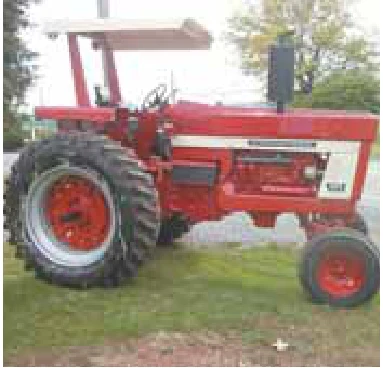
“I had to weld a piece of cast iron on our IH 784 tractor using cast iron nickel welding rods. I preheated the part, welded it, then buried the part in masonry sand until cool. This kept the part from cracking.”

From the archive · Full text
Reader shop tip

E-TIP

E-TIP, Inc., North Aurora, Ill. ph 630 966-8992; www.etipinc.com

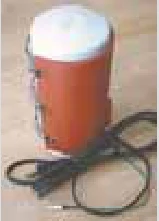
E-TIP’s new Universal Bulk Tank Filter Preheater is designed to prevent diesel fuel from gelling and keep fuel flowing when the temperature drops below freezing. It wraps around the metal filter and plugs into 120-volt power. The unit is held in place with 3 springs and nylon ties. Fuel can be continuously pumped, as the Preheater thermostat controls the temperature. Fits metal filters from 3 1/2 to 4 in. dia. and from 7 to 10 in. tall. Sells for $225 plus S&H. Comes with a 3-year warranty.

From the archive · Full text
Reader shop tip

Ronald Lankford

Ronald Lankford, South Rockwood, Mich.

“I had to replace the roller height adjuster on my 84-in. Mott 3-pt. flail mower. I had steel pipe cut to length, made end caps, and used Cat III hitch pins welded to the caps for spindles. It cost less than 1/3 the cost Mott charges for a new roller and it’s better than the old one because it has sealed bearings.”

From the archive · Full text
Reader shop tip 1 of 2

Jonathan Dean

Individual tip 1 of 2 from this reader’s published contribution.
Jonathan Dean, Baskin, La.

“I have had terrible trouble with starters on Deere 4020’s not holding up. However, I discovered that if you replace them with a gear reduction starter, or one from a larger Deere tractor, they’ll start easily.

From the archive · Full text
Reader shop tip 2 of 2

Jonathan Dean

Individual tip 2 of 2 from this reader’s published contribution.
Jonathan Dean, Baskin, La.

“To keep hydraulic lines from rubbing against frame rails on equipment and wearing holes in them, take a piece of 1 or 2-in. flexible conduit and a hose clamp and mount it to the equipment. This will form a sleeve that protects hoses.”

From the archive · Full text
Reader shop tip 1 of 2

Russell Spears

Individual tip 1 of 2 from this reader’s published contribution.
Russell Spears, Magnolia, Texas

“The steering bearing on my Ford 3600 tractor broke inside the steering gearbox. It was originally oil-filled but the oil goes bad and then the bearing is not lubricated. I fixed the problem by fitting the gearbox with a grease zerk so I can grease it with a grease gun. The new bearing will last a lot longer.

From the archive · Full text
Reader shop tip 2 of 2

Russell Spears

Individual tip 2 of 2 from this reader’s published contribution.
Russell Spears, Magnolia, Texas

“The fan belt on that 3600 tractor was always loose. I solved the problem by placing 3 small washers under the AC compressor to raise the compressor slightly, keeping the belt tight. Worked great.”

From the archive · Full text
Reader shop tip

David A Crooks

David A Crooks, Ottawa, Kan.

“Having to deal with alcohol in gasoline has been a constant headache for me, particularly on small engines. After trying everything else, I became familiar with VP Racing Fuel’s 110-octane gas (www.vpracingfuels.com; ph 210 635-7744). I now mix 25 percent 110 VP fuel to 75 percent 91 octane gas. Problem solved! All my small engines run great and don’t jell up, even when stored all winter.”

From the archive · Full text
Reader shop tip

Lester L. Kinzer

Lester L. Kinzer, Edon, Ohio

“I made a modification for my older model Deere 1560 grain drill that protects the seed deflector strap.

“The problem is that the press wheel drops down onto the strap when out of the ground, which ends up making a hook on the end of the strap. This causes the strap to rake seed out of the trench.

“I added a strap to stop the wheel from dropping down on the seed strap. It eliminated the problem.”

Shop feature stories

From the archive · Full text
Feature story

Simple Fix For Gathering Wheels On A Round Baler

Featured source: Fritz Dillon

Fritz Dillon, Glouster, Ohio, didn’t want to spend a lot of money to repair the gathering wheels on his 2008 Hesston 540 round baler, so he came up with a quick solution that saved him about $500.

“I use the baler to make 400 to 500 bales per year, so it gets a lot of use,” says Dillon.

“As a result, the rubber lining on the gathering wheels was starting to dry rot and even falling off the wheels. Once that happened, the baler started leaving a lot of hay in the field.” The company wanted $250 apiece for replacement wheels. Instead, Dillon removed the rubber lining from each wheel and welded a series of teeth off an old junked rake onto both sides of the wheels. The teeth are spaced about 2 in. apart and extend about 3 in. beyond the perimeter of the wheel.

“It works great. I think the same idea would work on any brand of round baler that’s equipped with gathering wheels,” says Dillon. Contact: FARM SHOW Followup, Fritz Dillon, 10877 Red Rock Rd., Glouster, Ohio 45732 (ph 740 767-4178).

From the archive · Full text
Feature story

Electronic Module Helps Control Throttle Response

Featured source: BD Diesel Performance

Get faster response from gas and diesel engines with a Throttle Sensitivity Booster (TSB) from BD Diesel Performance. Step on the fuel pedal in most modern vehicles, and you’re stepping on an electronic sensor, not a mechanical linkage. A computer controls the throttle, and that can produce throttle-lag,” explains Ron Clift, BD Diesel Performance.

“Our Throttle Sensitivity Booster speeds up the performance curve and lets a driver get into traffic faster with more control.” Factory programming of the electronic control module (EMC) determines how fast the engine responds, not how fast and hard you step down. The TSB connects with the throttle position sensor, and it then boosts the signal to the EMC. This is what gives it a “snappier” response. The module has 3 modes: stock, low and high. Low increases the throttle response by 50 percent, while high increases it by 100 percent. Installation is relatively simple with easy to follow instructions for replacing the factory throttle harness with a new harness. An optional push button switch kit lets the driver change modes on the fly. It also adds 3 additional modes.

“Medium” enhances throttle response by 75 percent, and “Ludicrous” increases it by 400 percent.

“Valet” mode decreases throttle response by 50 percent.

“It’s designed for drivers who have souped up their horsepower, but want to let others safely drive their vehicles,” says Clift.

“They can put it in Valet mode, and it essentially negates the horsepower increase. It is also recommended for weather conditions when a less responsive throttle is called for.” Clift says the TSB is available for a large number of domestic cars, vans, pickups and SUV’s.

“The application list keeps growing for both gas and diesel,” he says. The TSB is priced at $278. The Push Button Switch Kit is priced at $52. Contact: FARM SHOW Followup, BD Diesel Performance, P.O. Box 231, Sumas, Wash. 98295 (ph 604 853-6096; [email protected]; www.dieselperformance.com).

From the archive · Full text
Feature story

Overhead Sliding Drawer For Pickup Toppers

Featured source: Mitch Johnson

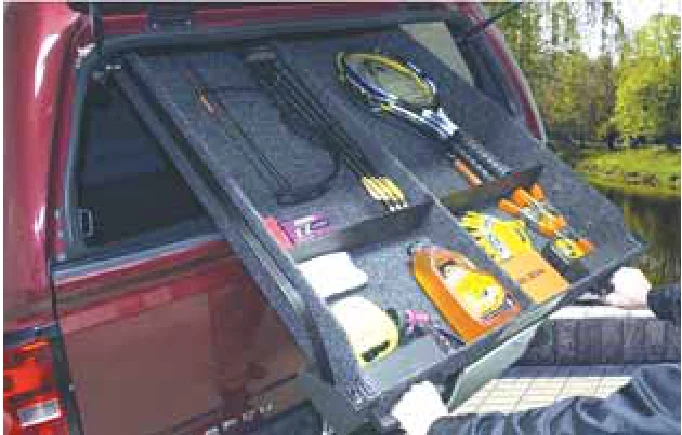
“Our new overhead sliding drawer uses the wasted space directly beneath your pickup topper to organize and secure tools and other equipment. It’s really handy to use,” says Mitch Johnson, Radco, Fargo, N. Dak. The Leer Locker consists of a 36-in. wide lightweight aluminum drawer wrapped in marine grade carpet that mounts on a steel frame. The ceiling-mounted storage system slides on ball bearing rollers and is fitted with adjustable storage dividers. To access the contents the operator grabs a pair of handles on back and then pulls the drawer back and down. The unit has a dual rotary latching system and dual push button locks, one on each handle. Drawer capacity is 100 lbs. The system extends 8 in. below the top of the topper and has about 6 in. of storage depth.

“Installation requires drilling 4 holes in the topper and then bolting it on. Rubber dampeners on the bolts keep water out,” says Johnson. The Leer Locker is available in 50 and 60-in. lengths. Both sell for $799.95 plus S&H. Contact: FARM SHOW Followup, Radco, 14336 Dellwood Drive., Baxter, Minn. 56425 (ph 888 637-9638; [email protected]; www.radco.com).

From the archive · Full text
Feature story

“Dolly Lift” Makes Mower Service Work Easy

Featured source: Lee Egleston

Lee Egleston keeps his Dixon zero-turn riding mower in great working condition, thanks to his 2-wheeled dolly service lift.

“It lets me access the blades and change the belts without having to remove the deck. I can raise the mower in only about 15 seconds,” says the Marshalltown, Iowa man. The dolly is made from 1-in. sq., steel tubing and rides on two 6-in. rubber wheels. It measures about 36 in. long and 10 in. wide and has a pair of 9-in. long, horizontal lift fingers on front that are fitted with 2-piece metal brackets. The brackets form a cradle for a 1/2-in. dia. metal “lift rod” that Egleston bolted on under the front end of the mower.

“I push the dolly forward to engage the lift fingers into the lift rod, and then I pull the lift handle forward and down to the ground. At this point the weight of the mower goes past center on the dolly’s axle and the dolly stays flat on the ground,” says Egleston.

“The lift rod is bolted to a pair of metal brackets already on the mower so it could be used with other attachments.

“I used 1/2-in. cold rolled steel to make the axle and fitted the wheels with ball bearings so they roll easily.” Contact: FARM SHOW Followup, Lee Egleston, 1805 Wiese Garden Rd., Marshalltown, Iowa 50158 (ph 641 752-1630).

From the archive · Full text
Feature story

Salvage Seat Parts “Fixed” Deere 5525

Featured source: James Ryant

James Ryant could barely walk after a day in his new Deere 5525 90-hp. utility tractor. The problem was the seat.

“After a day of planting, I could hardly get off the tractor,” recalls Ryant.

“I checked with Deere and even New Holland dealers, as utility tractors from both use the same seat. Nobody had a solution.” The problem was that while the tractor seat could move up and down, there was no movement back and forth. Ryant realized he needed a ball bearing isolator like the seat on the Deere 4050 he had traded in.

“I went to a salvage yard and got one from a 4240, which had the same or similar seat to the 4050,” says Ryant.

“I installed the isolator between the platform and the seat. All I had to do was drill a few holes.” With his modified seat in place, Ryant went out to rake hay.

“It was like a new tractor,” he says.

“It took all of the shock out of the ride. Now the seat goes back and forth smoothly.” Ryant suggests anyone with a late model Deere or New Holland that doesn’t have a ball bearing isolator under the seat head for a salvage yard.

“The salvaged isolator cost me about $100,” he recalls.

“I would have paid the dealership much more for a better seat.” Contact: FARM SHOW Followup, James Ryant, 2899 210th St., Calmar, Iowa 52132 (ph 563 737-2780; [email protected]).

From the archive · Full text
Feature story

Belarus Distributor Warns Of Fake Tractor Parts

Featured source: MTZ Ltd.

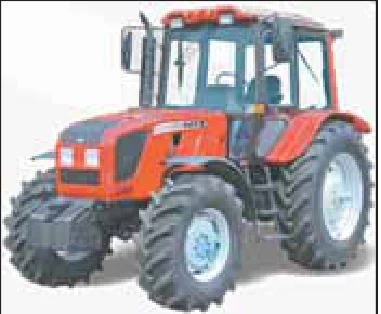
MTZ Ltd., the North American distributor of Belarus Tractors, says owners should beware of fake parts at a low price sold by scam distributors in the U.S. and Canada. Some are even identified with a Belarus metal stamp or tag. The MTZ website lists more than 3 1/2 pages of possible counterfeit parts sold illegally. According to MTZ, Belarus Tractors and authorized parts produced by the Minsk Tractor Works in Belarus are only sold by 26 U.S. dealers in 18 states and 25 Canadian dealers in 8 provinces. MTZ is the exclusive distrubutor in the U.S. and Canada and has no association with Milwaukee-based Belarus Tractors International. MTZ says only tractors supplied to dealers by MTZ have the proper engines with approved emission standards that meet U.S. and Canadian environmental regulations. The company also says only their tractors have guaranteed specifications, genuine OEM parts, and are warranted by MTZ and the factory. Owners of Belarus tractors have sometimes complained about parts quality for their equipment, a problem that MTZ says is caused by counterfeit replacement parts made in China.

MTZ currently markets 12 Belarus tractor models ranging from the 85 hp MTZ 920 to the 303 hp MTZ 3023. All tractors have diesel engines, comfort cabs, mechanical front wheel drive and excellent hydraulics packages. The company also offers 2 different loaders and a full line of certified OEM replacement tractor parts. Contact: FARM SHOW Followup, MTZ Equipment Ltd., 3-1136 Centre St., Suite 124, Thornhill, Ontario L4J 3M8, Canada (ph 855-246-4689; [email protected]).

From the archive · Full text
Feature story

Dolly Makes Shop Storage Easier

Featured source: Douglas Fisk

“I bought a 7-ft. wide, 3-pt. mounted Deere snowblower about 3 years ago. Upon receiving it I realized the snowblower was too heavy to move by myself, so I built a dolly for it,” says Douglas Fisk of Mondovi, Wis. The dolly is made from welded-together 6-in. channel iron and measures 7 ft. wide and 46 in. deep. It rides on 7 steel caster wheels.

“With the dolly I can place the snowblower where I sometimes couldn’t maneuver the tractor with the snowblower on it,” says Fisk.

“It maneuvers well on cement and blacktop.

It’s only 8 in. wide in the upright position so during the offseason it takes up very little space. In the winter I use the dolly to push the snowblower from its storage place and position it for mounting on the tractor, which takes only 3 to 5 min.

“I found that steel rollers work the best. I bought the channel iron and dolly wheels used and spent a total of less than $50.” Contact: FARM SHOW Followup, Douglas Fisk, S269 Wergeland Road, Mondovi, Wis. 54755 (ph 715 926-4572).

From the archive · Full text
Feature story

Overhead Shop Hoist Built With Independent Footings

Featured source: Marion Shaner

Marion Shaner, Lebo, Kansas, recently sent FARM SHOW photos of an overhead shop hoist he built with a non-bearing floor load. The hoist is free to move back and forth on a 24-ft. long I-beam that’s supported at each end by a vertical steel beam and extends from one side of the shop to the other.

“My fiancée and I were anticipating an approaching wedding and, at the same time, planning to build a new 48 by 96-ft. slant walled shop. I told her if she would take care of the church activities, I’d take care of the wedding reception and hold it on our farm,” says Shaner.

“My plan was to pour the shop’s 6-in. thick concrete floor and then rent a big tent and put it up over the floor. I planned to build the rest of the shop later on after the wedding.

“The floor had to be smooth and clear, with nothing on it or around it that could puncture the tent material as the workers spread it out before erecting it.

“I wanted an overhead hoist, but I didn’t want one that bolts to the floor because I thought the hoist’s concentrated weight might crack the concrete.” He first dug four 6-ft. deep, 18-in. dia. holes, 2 on each side of the floor for 2 vertical 8-in. support beams. He inserted a heavy duty, 18-in. dia. ribbed poly culvert into each hole and poured 2 ft. of concrete into the bottom to hold the culvert in place. Then he poured the concrete floor and let it dry. He also covered the opening at the top of each culvert with a 1/4-in. thick steel plate set flush to the floor, and it remained covered during the wedding reception. After the wedding he welded a steel shoe plate to the bottom of each support beam. Then he set the beam into the hole, added sand and packed it down, and topped the hole off with 2 ft. of concrete to hold the beam in place.

“It’s an easy way to make a support beam footing independent of the building,” says Shaner. Contact: FARM SHOW Followup, Marion J. Shaner, 458 22nd Rd. N.W., Lebo, Kansas 66856 (ph 620 256-6653).

From the archive · Full text
Feature story

Labels Make Grabbing Tools Easy

Featured source: Marie Golden

Stick-on-labels make finding tools and parts easy. Marie Golden started the company, Steel Labels, to make labels for keys, but her husband Bob suggested labels for sockets and toolboxes.

“I came up with them because I can’t see the engraved numbers anymore,” says Bob.

“Everything we do is to help people see.” What they do has grown exponentially, and now they offer dozens of different labels for crafts, electrical boxes, pill bottles, fishing tackle and more. All the labels are made with oil and gas resistant adhesive and come 60 to a sheet. Some also are available with magnetic backing and come 30 to a sheet. Special limited edition theme labels including classic cars, police, veteran and 12 other designs are also available. The 4-layer composite process starts with a precision cut chrome foil base and the adhesive. Eye-saver color combinations - bright white on a blue background, white on green for metric sockets, and white on red for SAE - are printed on the foil. A clear coat is applied to protect against wear and scratches. All single sheet sets are priced at $3.95 plus $1.98 shipping. Multiple sets, groups and combinations are available at discounts depending on kind and number of sets. Shipping is free on any purchase of 2 or more sets.

“We are introducing a special Master Set that includes all our labels for $45,” says Golden. Contact: FARM SHOW Followup, Steel Labels, 4439 Casa Rio Dr., Ontario, Ore. 97914 (ph 541 889-1014; [email protected]; www.steellabels.com).

From the archive · Full text
Feature story

Restoration Specialist Makes Old Tractors New Again

Featured source: Jeff Weller

“I grew up on a farm and enjoyed working on tractors from age 12 on, so you might say I’ve been working at it for 40 years,” says Jeff Weller, who owns and operates Elite Restorations in Pennsylvania.

“From the farm I went into the Air Force and spent several years painting F-4 and F-14 jets. After that, it was back to my small town, driving truck, restoring cars and an occasional tractor.” Weller initially planned to refurbish and restore maybe one or two tractors a year, but his customers had other ideas.

“Every few weeks someone would call and want me to work on a tractor, so that’s what I did,” says Weller. Tractor restoration became his full time business in 1995 and today he has a full time employee and his 2 sons work part time in the business.

“We’re turning out at least one tractor a month, and sometimes more than that,” Weller says. Most of Weller’s customers are repeat buyers who choose him because of the excellent quality work he turns out. An accountant and small farm owner “sends me one tractor after another and has for quite awhile,” Weller says. He also has two large farmers who give him a different tractor to work on every year.

“Personally I like working on IH and Farmall tractors, because that’s what I grew up with,” Weller says.

“However, I also work on Minneapolis Molines, an occasional Oliver, and my boys are always working on something green.”

Weller started his business in a small workspace. It has since grown to include a large shop for teardown and assembly and a custom made paint booth. In the warmer months the crew also works outside in a carport next to the shop.

“For most restorations we rebuild the engine, carburetor, exhaust system, drive train and brakes. We put in a new ignition system, repair all the metal, sandblast it clean, then give it 3 coats of paint and 3 coats of enamel. New decals and new tires round out the work so the collector has a ‘like new’ tractor when we’re done.” One customer sent him an old and thoroughly rusted Oliver 70 to be completely rebuilt and repainted.

“I told the man he could probably find a nice one at auction for way less than what I’d charge, but he was very emphatic. He told me his grandpa had bought the tractor new and that he’d followed my work on Facebook for 2 years. I was the one he wanted to do the work.” Weller gladly accepted. Some customers, he says, may end up paying 2 to 3 times more than what a tractor is worth for restoration because of sentimental value. Weller says they ocassionally work on a car or truck, but about 95 percent of their business is restoring tractors. He also sells repair parts for old tractors and ag tires. Contact: FARM SHOW Followup, Jeff Weller, Elite Restorations, 2212 Woodbury Pike, Loysburg, Penn. 16659 (ph 814 766-9929; [email protected]).

From the archive · Full text
Feature story

Easier Way To Drill Into Ceilings

Featured source: Reed Felton

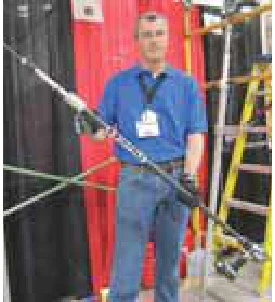
You can easily and safely drill holes into ceilings or trusses while standing on the floor with this new KwikPole invented by Reed Felton.

“It’s much safer to use than a ladder or loader bucket. Works great for attaching fasteners such as clevis hangers or lag screws that can be used to hang pipes or electrical conduit, etc.,” says Felton. The company offers 2 sizes of KwikPoles – one reaches 12 ft. high and the other 16 ft.

“Both poles are made of high tolerance, anodized pneumatic cylinder tubing inside a carbon fiber outer pole. This combination of high quality materials allows you to telescope the pole to its limit without having excessive waggle due to sloppy fitting parts,” says Felton.

“Both poles have a solid aluminum collar that houses a spring-loaded, 3/8-in. dia metal pin, allowing the pole to be extended in 6-in. increments. Since the pole’s position is held by the solid 3/8-in. metal pin, the poles can be used as drill extensions in applications where high torque is needed.” The company even offers a KwikPole drill press. It’s designed to drill holes into a concrete or metal ceiling and can be equipped with either a standard cordless drill or an SDS+ drill. Once the pole is set into place, a lever pushes the drill upward like a press. The short KwikPole sells for $525 plus S&H, the long KwikPole sells for $625, and the KwikPole drill press sells for $825. Contact: FARM SHOW Followup, Accelerated Fastening LLC, Kwikpole Fastening Systems, 10929 W. Hope Ave., Wauwatosa, Wis. 53222 (ph 414 881-6630; [email protected]).