Practical ideas from FARM SHOW MagazineSubscribe · Free issue · Send us your shop tip
Subscribe to FARM SHOW
Issues / Vol. 46, No. 6 (2022)

Vol. 46, No. 6 (2022)

Money-Saving Repairs & Maintenance Shortcuts · Printed section pp. 32–35

42 selected entries · Complete text of selected entries

This issue’s section includes reader tips and feature-length shop stories. Held items and editorial notices are not reproduced.

Archive text: prices, coupons, availability and contact details reflect the original publication, not current offers. Reader methods are not universal instructions; follow manufacturer guidance and proper safety practices.

Reader shop tips

From the archive · Full text
Reader shop tip

Allan Von Werder

Allan Von Werder, Morgan City, La.

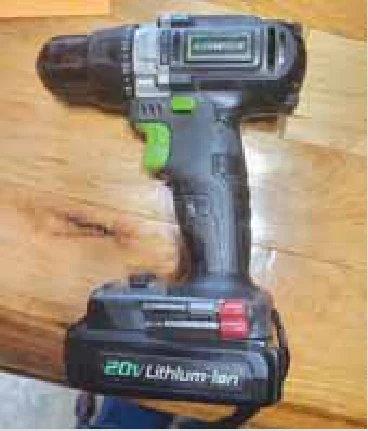
“Power tool batteries are expensive. However, if you keep your eyes open for special tool deals, you can save. DeWalt often sells a drill with two batteries for $99, which is cheaper than the cost of two replacement batteries. I stock up on these, so I always have plenty of cheaply acquired batteries on hand.”

From the archive · Full text
Reader shop tip

Ed Doucette

Ed Doucette, Fort Ripley, Minn.

“My Allis Chalmers diesel would not start after replacing the fuel filter on the 1970 Perkins 3-cyl. diesel. Bio-diesel ruined my entire fuel system. I spent $800 to have the injection pump rebuilt and you should have seen the crap that came out of it. I now run fuel oil in my tractor. Much better than bio-diesel, which grows bacteria and wrecks your entire system.”

From the archive · Full text
Reader shop tip

Gary Sampson

Gary Sampson, Freedom, N.Y.

“I glued a plastic piece of bit holder onto the side of my screw gun so when I have to change bits, I’ve got them handy right where I need them. I also glued a small bar magnet onto the battery to hold bolts and screws.”

From the archive · Full text
Reader shop tip

John Johnston

John Johnston

“I make these turnbuckles to tighten up a run of barbed wire. They cost almost nothing and take only 15 min. to make versus paying $20 for something similar in town. All you need is 5 or 6 in. of threaded rod and 2 in. of light angle iron. I drill a 1/2-in. hole in one side of the angle iron and slide the rod through it. I drill a 1/4-in. hole in the other side for the brace wire to go around the anchor post. Lastly, I weld a large nut to the end of the threaded rod to run the wire through. Lets me tighten up the wire until it has the same tone as the 4th string on my banjo.”

From the archive · Full text
Reader shop tip

Gary Swensen

Gary Swensen, Yankton, S.D.

“My dad called this big 1/2-in. electric drill ‘Big Bertha’. It’s a 1938 model which was patented in 1917 by Black & Decker. It takes a big man to operate and takes two trigger pulls to start and two to stop it. If the bit gets into a tough spot, you’ve got to really hang on or you will go for a merry-go-round ride.”

From the archive · Full text
Reader shop tip

Ready Davis

Ready Davis, Bigfoot Equipment & Repair, Willow Creek, Calif.

“As a Husqvarna dealer I feel I should respond to recent readers who have had issues starting their 562XP chainsaws. I understand their frustration. The manual is less than clear and the ‘universal’ symbols on the starting decal are virtually unintelligible. I’m guessing their dealer was not too clear when explaining the new control switch design.

“To start, pump the push bulb a few times to prefill the hose and carb with fresh fuel. Next, grab the red control lever and pull it straight out and up before releasing it in the locked ‘choke’ position. Pull the rip cord until the engine pops or you hit four pulls. Then put the control lever in the ‘run’ position. Don’t touch the trigger yet. Pull the cord once or twice and your saw should start and be running at high throttle until the trigger is pressed, which will release the throttle lock.

“Push down on the control lever to stop. Air-cooled engines tend to heat up after being turned off, which can sometimes make them hard to restart. For a reliable restart, pump the fuel bulb four to six times to push overheated fuel out of the cab and replace it with cooler fuel from the tank. Then raise the control lever to the choke position before lowering it right back down to the run position. This will set the throttle lock until the trigger is touched again. One or two pulls should start the saw right up again.

“I have sold and serviced more than 100 of these chainsaws and would not continue to do so if I felt that the saw had inherent flaws.”

From the archive · Full text
Reader shop tip

Dale Fisher

Dale Fisher, Jackson, Mich.

“I have discovered that when alkaline batteries die in a device there is often still a little life left. By testing with a voltmeter, generally, if one battery is dead the other one may not be because the draw might be stronger in one position than another. If you switch the batteries around, you should get a little more use. Batteries are expensive so every little bit helps.”

From the archive · Full text
Reader shop tip

Jim Heaslip

Jim Heaslip, Hagersville, Ont.

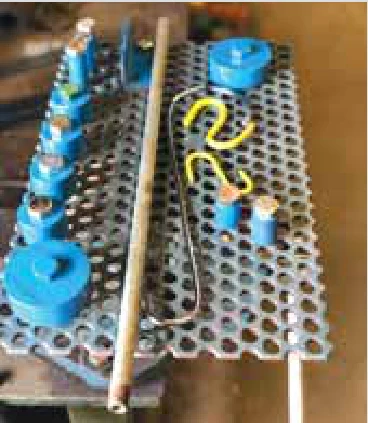
“I made a tool to make S-hooks and J-hooks. It consists of a piece of 1/2-in. hammermill screen flattened out with a piece of 2-in. angle iron welded on the bottom to hold it in a vice. It works well for bending 3/16 and 1/4-in. steel rod but 5/16 and 3/8-in. rod requires some heat to make the bends. I use a piece of pipe to help bend the rods around various size discs and tubes that are bolted to the hammermill screen. Comes in handy more times than you would think.”

From the archive · Full text
Reader shop tip

David Simpler

David Simpler, Elkton, Md.

“Sometimes filling a chainsaw with a gas can is just too cumbersome. It’s hard to get gas in without spillage and if the saw is hot, it can spark a fire. I’ve found that a large detergent bottle works very well. You can easily squirt gas into the small hole without spillage and it has a snap lid for easy closure. You can also carry it in a coat pocket. I do the same thing with bar oil.”

From the archive · Full text
Reader shop tip

Tom Donahue

Tom Donahue, Mound, Minn.

“I was working on a tractor gearbox and dropped a nut inside where it fell to the bottom of the box. I tried to get it with my flex magnet, but it kept sticking to everything but the nut. I slipped a piece of flexible plastic tubing over the entire flex magnet except for the very tip of the magnet. That stopped it from grabbing onto everything. I got the nut the very first try.”

From the archive · Full text
Reader shop tip 1 of 2

William Sanford

Individual tip 1 of 2 from this reader’s published contribution.
William Sanford, Roxboro, N.C.

“I watch YouTube videos on equipment repair and product testing. It saves me a lot of time and money on repair jobs and helps me make good purchases.

From the archive · Full text
Reader shop tip 2 of 2

William Sanford

Individual tip 2 of 2 from this reader’s published contribution.
William Sanford, Roxboro, N.C.

“In my shop, I put everything I can on wheels or casters so I can move benches and tools to wherever I’m working. Big time saver.”

From the archive · Full text
Reader shop tip

Tony Kramer

Tony Kramer, Converse, Texas

“The plastic radiator reservoir on our 2002 Dodge 2500 truck cracked on the bottom. Instead of buying an expensive replacement, I put four coats of clear Flex Seal over the cracked area. Months later the repair is still holding up.”

From the archive · Full text
Reader shop tip

Dave Mertell

Dave Mertell, Independence, Mo.

“The steering shaft mountings on my Gravely ZT mower were poorly mounted from the factory. The steering levers were only attached on one end. The weld on one of them broke out of the frame and left me steering with one arm, which is not easy on a ZT. I added a new steel mounting plate on both sides of each shaft. At 96 years old I’m still fixing manufacturer mistakes!”

From the archive · Full text
Reader shop tip

John Brennan

John Brennan, Ellicottville, N.Y.

“I’d like to suggest guys pick up an inexpensive set of impact wrench sockets to use with a breaker bar. It might well save you some grief from time to time. However, make sure you wear goggles since the sockets can turn into shrapnel if working on a tough nut or bolt.”

From the archive · Full text
Reader shop tip

Bruce Warren

Bruce Warren, Wellsboro, Penn.

“Ask your local auto parts dealer if you can trade a dead battery for a core exchange battery with some life left in it. All my seldom-used 6 and 12-volt equipment with coils use them. I’ve saved hundreds over the years, and it costs the dealer nothing. They like it because it keeps me coming back for parts. Can’t get that kind of service from Amazon.”

From the archive · Full text
Reader shop tip

Mike Frantz

Mike Frantz, Seymour, Mo.

“One money-saving tip I came up with is taking apart 2-piece idler pulleys on my riding lawn mower and replacing or repacking the bearing. These pulleys are meant to be replaced when the bearings go bad but I just drill out the rivets and spot welds so I can take out the bearing. If the sealed bearing is not rough but just dry, you can use a razor blade knife to gently work out the seal on one side and pack grease in before bolting the pulley back together. When the bearing wears out again, it’s a simple matter of unbolting the pulley. Saves a lot of money over buying new pulleys.”

From the archive · Full text
Reader shop tip

James E. Laumeyer

James E. Laumeyer, Rice, Minn.

“To break the bead on a small lawnmower tire, place the wheel on a drill press table and run the chuck down on the bead several times around the circumference of the wheel.”

From the archive · Full text
Reader shop tip

Maurice Kaiser

Maurice Kaiser, Cedar Grove, Ind.

“It’s hard to change closing wheel springs on Deere and Kinze corn planters. I invented the Easy-Spring fastener, which was featured in FARM SHOW recently. It’s easy to install and repairs the worn casting hole where the closing wheel spring fastens to the corn planter. Sold in a 4-row kit for $95 and can be installed quickly in the field. (www.easy-spring.com; ph 513-280-1681).”

From the archive · Full text
Reader shop tip

Dexter Brahn

Dexter Brahn, Ionia, Iowa

“I replaced the fluorescent lights in my shop with LED high bay lights. My shop is now brighter than outside. Well worth the time and money.”

From the archive · Full text
Reader shop tip

Frank Peters

Frank Peters, Lacombe, Alta.

“I was changing a bearing on my baler by myself. Seems like I can never find a kid when I need one. The carriage bolts that fit the bearing flange are inserted from inside the baler. Then you mount the bearing flange. As you do that, the bolts inevitably slip back out. What I did was put a tiny O-ring on the threads of each bolt to hold them in position. I could then fit the outer flange and the nuts. The O-rings can just be left in place as the nuts will tighten down normally. Saved a lot of frustration.”

From the archive · Full text
Reader shop tip

Tony Ryba

Tony Ryba, Johnstown, Penn.

“My Briggs & Stratton lawnmower engine lost compression due to carbon buildup on the exhaust valve, which held it open. After cleaning and lapping in both valves and seats, it was time for reassembly.

“Lacking a proper valve spring compressor, I used two small nylon zip ties on each spring to hold it compressed. Once the keeper was installed, the ties were cut and removed. An arduous task was simplified and over in a few minutes. A few pulls on the starter rope and the 21-year-old mower came back to life.”

From the archive · Full text
Reader shop tip

Dale Fisher

Dale Fisher, Jackson, Mich.

“When you install a turnbuckle that’s going to be there a while, you need to add a jam nut to keep it from working its way loose from where you set it. Then you still might need to adjust the jam nut later if it starts working loose.

“I found that if I weld a small weight to one side of the adjusting yoke, the turnbuckle will hold. The weighted side will swing to the bottom and stay there. I’ve used this idea for several applications but using it on my 3-pt. hitch arms is the most satisfying.”

From the archive · Full text
Reader shop tip

Rick Bohl

Rick Bohl, Cedaredge, Colo.

“I found a good use for empty coffee containers. I fill them with Sakrete and put a U-bolt in the center. Makes a great anchor for holding down canopies, tarps, or as a portable dog/leash anchor. It’s especially handy when you have to set up on a street or parking lot where you can’t drive stakes.”

From the archive · Full text
Reader shop tip

John Rochester

John Rochester, Deerfield, Fla.

“It’s hard to hold a funnel in place when refueling my flatbed pickup. A C-clamp works great to hold the funnel steady against the sideboards. No more spills.”

From the archive · Full text
Reader shop tip

Ryan Neuman

Ryan Neuman, Fenton, Mo.

“My portable air tank could only be filled through a built-in Schrader valve, which was cumbersome and time-consuming. So, I replaced the chuck on the tank’s hose with a female quick coupler. Then I built an adapter using two male quick coupler fittings and a shut-off valve. Makes it quick to fill the tank by back-feeding through the hose and you can also fit the adaptor with a blow gun for cleaning off radiators, blowing out garden hoses, or cleaning an exhaust fan in your bathroom. All the parts you need can be purchased at Harbor Freight for $12.”

From the archive · Full text
Reader shop tip

Gerald Ripps

Gerald Ripps, San Antonio, Texas

“Some trucks have a winch under the bed to let down the spare. It can be clumsy and awkward to do. I cobbled together a pipe with a lug nut on the end that fits over the winch nut. The pipe extends out past the bumper on my older Dodge truck. Makes it easy to drop the spare.”

From the archive · Full text
Reader shop tip

Mick Hartsock

Mick Hartsock, Laurens, Iowa

“Every year the rockshafts on our Deere 7800 and 8000 Series tractors get stuck in the up position. We wrap a chain around a post and hook it to the top of the quick hitch. Then we lower the hitch and give a little tug by driving forward. Works every time.”

From the archive · Full text
Reader shop tip

Gary Swensen

Gary Swensen, Yankton, S.Dak.

“I have 200 ft. of 3/4-in. hose for my impact wrench. It was always getting tangled, and it was too big for the hose reels I had around my place. So, I started storing the hose in this 55-gal. barrel. Doesn’t tangle up nearly as bad as it would if it were left out on the shop floor.”

Shop feature stories

From the archive · Full text
Feature story

Using Ultrasonics To Clean Dirty Parts

By Jim Ruen, Contributing Editor
Featured source: Jim Ruen, La Crescent, Minn.

When FARM SHOW editors saw an article in Green magazine on an ultrasonic cleaner, they told this writer to get one and try it out. The results were impressive.

Decades of oil and dirt residue on an old spring-bottom oil can disappeared. Jewelry was brighter and cleaner. A string trimmer replacement head unused for years but covered in old plant juice and grime cleaned up with a little light brushing.

Overall, the results were positive for the 5-pint machine. While the 5 1/2-in. by 9 1/2-in. by 2 1/2-in. high size limited its use to small parts, it could prove useful in most farm shops.

Ultrasonic cleaners work by creating high-frequency sound waves that agitate a liquid, creating bubbles. The agitation releases contaminants on most surfaces, including metals, plastic, glass, rubber and ceramics. However, the ultrasound waves also penetrate cracks and crevices, pulling out undetected dirt and grime.

Ultrasonic cleaners are easy to find online as well as in retail stores. We bought ours at Harbor Freight. The unit and a recommended cleaning agent came in at less than $100.

The Central Machinery Ultrasonic Cleaner offers different settings from 90 to 480 sec. and the option of added heat. We experimented with different settings, repeating when unsatisfied with the initial cleaning or increasing the duration. Naturally, the more grime, the longer cleaning took.

The manufacturer recommends activating no more than three cycles in a 15-min. period to avoid overheating. An automatic shut-off will activate after 45 min. of continuous use. Use can resume after cooling off for 15 min.

Contact: FARM SHOW Followup, Jim Ruen, 33750 Forster Rd., La Crescent, Minn. 55947 (ph 507-895-2229; [email protected]).

From the archive · Full text
Feature story

Lift Tables Move And Lift Safely

Featured source: Bill Coleman, Waco, Texas

LiftWise lift tables are a mobile and efficient way to lift and lower a variety of parts into position for tasks like maintenance and other needs around the shop or farmyard.

“Some of America’s largest agricultural manufacturers use our lifts,” says Bill Coleman, LiftWise Product Manager.

“They include Case IH, New Holland, and Deere.”

He says many companies lift heavy items with implements like cranes, suspending the heavy loads in mid-air. LiftWise says using ground-based equipment is a safer way of moving loads around the farm or shop.

“We have scissor arms on both our lift tables,” he says.

“They both have heavy-duty caster wheels that hold up well on the shop floor.”

The LiftMaster 4000 has a 4,000 lb. capacity and has a single member in the middle.

“If you want to lift something wider, we have a plate attachment that will spread out like a set of arms,” Coleman says.

“A person could adapt it to virtually anything they need to lift because it’s adjustable.

“The 7000 has a larger top plate,” he says.

“It’s roughly 24 by 36 in., and there are holes in the plate farmers can use to anchor chains.”

The lift tables are similar to most shop jacks in that they have a pump handle. You can pump the jack to either raise or lower a table.

“No matter what, the lift tables are extremely durable,” Coleman says.

“We build them strong, so they’ll last a long, long time.”

The 4000 has a lower profile and is built to fit into small spaces. Load capacity is 4,000 lbs. The LiftMaster 7000 has a capacity of 7,000 lbs. LiftWise has representatives around the country, and locations are available on the company website. The LW4000 is $9,222 and the LW7000 retails for $18,969.

Contact: FARM SHOW Followup, Bill Coleman, LiftWise Product Manager, Diversified Product Development, 700 Research Avenue, Waco, Texas 76705 (ph 254-757-1177; [email protected]; www.lift-wise.com).

From the archive · Full text
Feature story

Windshield Treatment Makes Glass Stronger

Featured source: C-Bond nanoShield, Houston, Texas

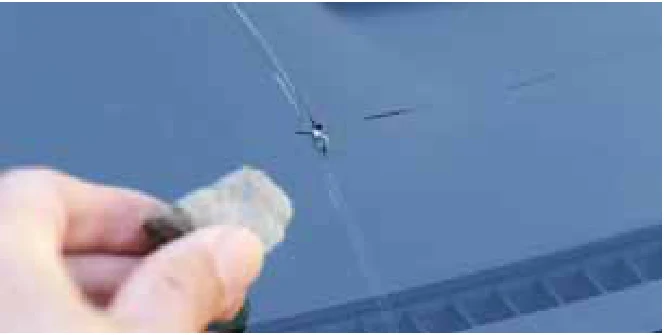
For vehicle operators hoping to save their windshields from cracks and chips, C-Bond’s nanoShield might be the answer.

NanoShield is a liquid chemical that dries to an invisible finish post application, helping to increase the strength, durability and structural integrity of glass windshields.

C-Bond explains all glass contains microscopic flaws and defects. When left untreated, these weaken the glass and cause small cracks and breaks. NanoShield bonds to glass to help protect it.

Application of nanoShield should take place in a climate-controlled, dry area ranging from 50 to 90 F. You simply spray it on and squeegee it off.

Vehicles can be driven immediately after application, although heavy rains should be avoided for up to 24 hours.

C-Bond claims testing shows glass strength is increased up to 80 percent when compared to untreated glass. This reduces chipping and cracking and reduces repairs and replacement costs by up to 83 percent.

NanoShield was developed in cooperation with Rice University’s Chemical and Mechanical Engineering Departments and has been privately validated by independent third-party laboratories.

It’s manufactured in Houston, Texas, and is available at automotive dealers throughout the country. Kits start at $50 plus shipping.

Contact: FARM SHOW Followup, C-Bond nanoShield, 6035 South Loop East, Houston, Texas 77033 (ph 832-649-5658; www.cbond-nanoshield.com).

From the archive · Full text
Feature story

“No Weld” Tractor Forks

Featured source: Boyd Brue, Rochester, Minn.

When Boyd Brue built a forklift to move pallet-stored firewood, he did it with wood and steel and no welding. The forks are held in place with U-bolts, threaded rod, and angle iron.

“I don’t have a welder, so I make do with salvaged wood and steel,” says Brue, a retired mechanical engineer.

The foundation for the forklift is a wooden base plate made with 6-in. thick wood blocks at either end and 2-in. thick planks in between. The blocks are bolted to a quick attach plate for Brue’s skid steer.

Two by two-in. angle irons, two on top and one on the bottom sandwich the wood base. The forks are 2-in. steel pipe. The pipes are bolted to the bottom of the wood base. Threaded pipe extends through the upper angle irons in notches cut into the wood base blocks to an angle iron laid across the top of the pipes. U-bolts secure the pipes to this angle iron. Brue also ran threaded pipe through the base end of the pipes ensuring pressure on any one pipe or group would be shared by other pipes.

A slotted and angled length of wood mounted in the lower base angle iron helps maintain the spacing of the pipes. The combined pipes lift 4-ft. wide by 4-ft. high by 32-in. deep pallets, designed to store a third of a full cord of wood. Each loaded pallet has a metal roof to cover the wood when stored outside.

“I needed a way to move the wood into my garage for winter where it would be convenient for heating the house,” says Brue.

“I built this forklift attachment and used it for many years. A grandson lives in the house now, and still uses my firewood storage system.”

Contact: FARM SHOW Followup, Boyd Brue, Rochester, Minn. (ph 507-269-4087; [email protected]).

From the archive · Full text
Feature story

Metal Clean Up Using Baking Soda And Vinegar

Featured source: Jim Deardorff, Chillicothe, Mo.

When Jim Deardorff started restoring an 1893 brass bell for a nearby church, a local body shop operator gave him the recipe to clean it. He advised Deardorff to use baking soda and vinegar.

“I had a company lined up to sandblast it and polish the brass, but they wanted me to remove the grime first,” says Deardorff.

“The baking soda and vinegar worked great. I later used it on an old toolbox, and it brought it back to a brand-new appearance. It worked great on the hinges.”

He notes that hinges can be especially difficult to clean and often rust out as a result. Once he cleans them with the solution, he sprays them with Picklex 20, his preferred rust preventative.

Deardorff uses a mixture of a cup each of baking soda, vinegar, and hot water on projects.

“Mix the baking soda and water and then add the vinegar,” he says.

“Let it foam up and then brush it on. Let it sit overnight. I’ll come back the next day with rubbing alcohol and a scrub sponge to get any remaining dirt.

Depending on the amount of material, it can take several rounds.”

The baking soda has an added benefit for Deardorff, a long-time advocate of preventative coatings for extending the life of all types of equipment. It leaves a white residue on dirt. One of his favorite tools for ensuring a proper paint job is a black light (Vol. 24, No. 1). He uses a fluorescing undercoat. When the final coats have been laid down, he uses a blacklight to find spots that were missed.

“Baking soda contains an optical brightener that shows up under black light,” says Deardorff.

“It shows pits and cracks in a coating before they can create a problem, as well as where I need to do extra cleaning. A regular application would let you see where maintenance is needed.”

Contact: FARM SHOW Followup, Superior Coatings Co., 205 McCormick St., Chillicothe, Mo. 64601 (ph 660-646-6355; [email protected]; www.classicblast.com).

From the archive · Full text
Feature story

Making Ladders More Secure

Featured source: John Rochester, Deerfield, Fla.

“We had to remove bees high up on our house on a piece of uneven ground. Two men were going to be up on two ladders, so we wanted to make it safe for them,” says John Rochester, Deerfield, Fla.

“We took a rigid piece of 3/4-in. plywood and blocked it level with pieces of wood and then screwed the blocks to the plywood with drywall screws. Then we placed an anti-skid strip on top and tied the two ladders together at the top. We added a ratchet strap at 6 ft. The men were up there most of the day and said they appreciated having a solid platform to work from.” Contact: FARM SHOW Followup, John Rochester, Deerfield, Fla.

From the archive · Full text
Feature story

Pipe Repair Isolator Saves Time

Featured source: EasyFit Isolator U.S.A., Cerritos, Calif.

With the EasyFit Isolator, there’s no need to drain or freeze pressurized pipes before repair. The UK-based product is now available in the U.S. for HVAC, plumbing and mechanical contractors in commercial, industrial and agricultural industries.

“We discovered EasyFit Isolator because we had an application for work at the Veterans Administration Hospital. Instead of freezing lines, we looked at other products and decided this was the best for that project,” says Andrew Kan for the California-based company serving as the U.S. manufacturing representative. Because of their technical skills, the UK company partnered with them.

Videos on the website show how to clamp on the valve and drill into the pipe to install the EasyFit Isolator. Once in place, it’s a permanent valve that can be closed whenever work is needed.

“If you have to rent a machine to freeze the lines, it’s an expensive and tricky process. Also, with the unfreeze, there can be problems. This product is much faster and cleaner,” Kan says.

With EasyFit, you don’t have to shut off water to other areas to make repairs.

“In Arizona and Nevada, they can’t shut down the cooling loop, so in hotter states, there is interest from the HVAC side,” he says.

Currently, the California company sells EasyFit Isolators in three sizes for 1/2, 3/4 and 1-in. copper and PEX lines. Prices start at $250. In the future, they may add larger lines (up to 8-in.) for industrial use, Kan says.

Contact: FARM SHOW Followup, EasyFit Isolator U.S.A., 16626 Parkside Ave., Cerritos, Calif. 90703 (ph 562-452-4202; [email protected]; www.easyfitisolator.us).

From the archive · Full text
Feature story

Air-Tight Primer Stops Rust

Featured source: Pat Mastrincola, West Milford, N.J.

Pat Mastrincola figured a primer designed to stand up to 5,000 hrs. of salt spray would do the job on the cars he restores. It worked so well that he started making and selling a special formulation he calls Mastercoat Permanent Rust Sealer (MPRS). With his additives and application process, he claims it will withstand 14,000 hrs. of salt spray. For Mastrincola, developing the process began with his frustration as a restorer in the 1970’s.

“I could put 14 coats of paint on a car, sanding every coat and have a rust bubble develop in a year,” he recalls.

“I met a guy at a paint industry show, and he told me about this primer that had been developed for bridges exposed to saltwater. I made some changes in it and have been using it and selling it ever since.” While most of Mastrincola’s customers are car restorers, the primer has found an additional market for restoring older steel roofs. As with cars, the silver-colored Mastercoat seals in and stops rust. He also recommends it for equipment subject to corrosion, like salt and fertilizer application equipment. Mastrincola recommends at least two coats of his Mastercoat Permanent Rust Sealer and one coat of Mastercoat Chassis Black or AG111 as a topcoat. He notes that MPRS also accepts any choice of topcoat paint. He compares it to a standard restoration using two coats of automotive epoxy, five coats of color and two coats of clear. While Mastrincola concedes that any paint is technically a rust preventative, if it doesn’t cut off oxygen, the rust will continue to develop.

“Our Mastercoat is the only one that’s airtight,” says Mastrincola.

“That’s why I have restoration companies who have been with me for 30 years. Every car they do is primed with Mastercoat.” Mastrincola continues to restore old cars himself. He owns eight older cars. However, having used his product, repainting is not on the calendar.

PM Industries is a two-person family business. Mastrincola and his daughter Angela make every batch of primer in small quantities. With minimal advertising and virtually no social media presence, word of mouth from satisfied customers is the source of most new orders.

“We sell five to 10 orders a day,” says Mastrincola.

“Every individual gets personal service.” Based on calls he gets, Mastrincola says that younger people are getting involved in restoration.

“They’re fun because they don’t have a lot of experience,” he says.

“I can spend half an hour explaining the process to them.” Mastercoat Permanent Rust Sealer is priced at $39.95 per quart or $128 per gallon. Contact: FARM SHOW Followup, PM Industries Mastercoat, 939 Westbrook Rd., West Milford, N.J. 07480 (ph toll-free 800-833-8933; [email protected]; www.nomorerust.com).

From the archive · Full text
Feature story

Old Laundry Tub Makes Handy Oil Reservoir

Featured source: Chris Nielsen, Farmington, Minn.

Chris Nielsen has invented several handy gadgets to make jobs simpler around his farm and repair shop, but none of them helps keep his shop clean as well as his used oil reservoir.

Nielsen changes a lot of oil in trucks, cars, campers and tractors that he dumps in large 50 gal. steel barrels for recycling.

“I used different size funnels for quite a while, but the screens were never large enough, and getting the waste oil into the drum was always a long process,” Nielsen says.

“One day, it dawned on me that an old laundry tub would work a lot better as a big reservoir because of its large drain and solid square bottom.”

Nielsen set a sturdy old laundry tub on top of a 50 gal. waste drum with the tub drain extending into the top of the barrel. He placed a wire basket with 1-in. feet inside the tub to act as a strainer.

“Most of the time, I just run the oil into the tub basket from my waste oil transfer pump. I can also put a smaller screen on top of the basket to remove smaller debris,” Nielsen says.

The setup also works great to drain filters. He stands them on the large screen and any oil in the filters runs out through the screen into the bottom of the tub and into the barrel.

“The best part of this idea is that it cost nothing and works great,” Nielsen says.

“The worst part is that I didn’t think of it the first time a funnel tipped over and dumped a gallon of dirty oil on my shop floor,” he says.

Contact: FARM SHOW Followup, Nielsen Truck Repair, 25757 Galaxie Ave. West, Farmington, Minn. 55024.

From the archive · Full text
Feature story

Forklift-Mounted Trailer Mover

Featured source: Jerald Schlabach, Sullivan, Ill.

The Quick Spotter from Norden Manufacturing is designed to mount on forklift forks to move trailers and wagons smoothly into place. The Quick Spotter slides on and self-locks to most 5,000-lb. and less forks. Drop the forks to the ground and the locks release, letting you slide them out.

“The Quick Spotter lets you move a trailer into place and then quickly slide the forks out to use them loading the trailer or for other jobs,” says Jerald Schlabach, inventor of the Quick Spotter.

“We designed it with multiple hitch types for the most popular and common types of trailers.”

Schlabach initially made and marketed the Quick Spotter as the Trailer Mover. He recently turned over manufacturing and distribution of the 57-in. long by 33-in. wide by 16 3/4-in. tall device to Norden Manufacturing. It is made from 3/16-in. thick mild steel and has a lift capacity of 5,100 lbs. They rebranded it and are selling it for $950 plus shipping.

“With the Quick Spotter there is no need to get on and off to lock it on the forks,” says Glendon Kuhns, Norden Manufacturing.

Choose from a clevis pin hitch or any one of three ball sizes, 1 7/8-in., 2-in. or 2 5/16-in. for bumper hitch trailers. A gooseneck hitch ball is centered on the mover. The Quick Spotter even offers storage for an extra pin.

“The Quick Spotter makes it easy to get under the jack on heavy deck-over, bumper-pull trailers,” says Schlabach.

“Centering the load between the forks adds stability to moving a loaded trailer.”

Schlabach designed the mover for use at his pallet company. He notes that it is a safer alternative to simply drilling a hole in a fork and installing a ball.

“Drilling a hole in a fork weakens it and can cause it to bend,” says Schlabach.

“OSHA has a rule against it for that reason.”

Contact: FARM SHOW Followup, Jerald Schlabach, 1858 County Rd. 1300 E, Sullivan, Ill. 61951 (ph 217-543-3555); or Norden Manufacturing, 4210 Kinsman Rd. NW, North Bloomfield, Ohio 44450 (ph 877-296-5851; www.nordenmfg.com).