
Practical ideas from FARM SHOW MagazineSubscribe · Free issue · Send us your shop tip
Subscribe to FARM SHOW
Issues / Vol. 21, No. 5 (1997)

Vol. 21, No. 5 (1997)

Money-Saving Repairs & Maintenance Shortcuts · Printed section pp. 32–34

52 selected entries · Complete text of selected entries

This issue’s section includes reader tips and feature-length shop stories. Held items and editorial notices are not reproduced.

Archive text: prices, coupons, availability and contact details reflect the original publication, not current offers. Reader methods are not universal instructions; follow manufacturer guidance and proper safety practices.

Reader shop tips

From the archive · Full text
Reader shop tip

Duane Martin

Duane Martin, Rochester, Ind.

Source context: Printed page 32 is PDF page 31: the scanned printed22–23 spread occupies one PDF page in this issue.

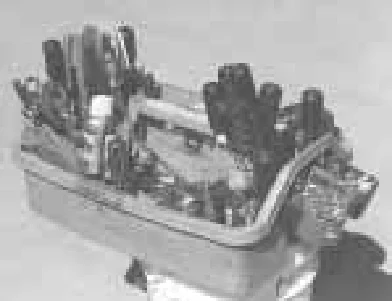
“Here are before and after photos of a 1,500-gal. VanDale tank wagon that imploded as it was being emptied. We replaced the tank for about half of what it would have cost had parts and labor been done at the factory.

“That’s our business, rebuilding virtually any brand tank, vacuum or topfill. We manufacture replacement tanks for Clay, VanDale, Badger, Better-Bilt, Calumet and Harvestore wagons, to name a few, out of 1/4-in. thick steel, which is 1/8 in. thicker than the original tanks many wagons are equipped with. We start with 800 gal. tanks for $2,300 and build up to 6,000 gal. Prices include remount-ing good original parts; any valves, fittings and/or plumbing is extra. Replacing tanks typically takes two to three weeks.

“We also manufacture replacement components such as moisture traps. We also stock a large number of replacement parts and manufacture tanks only.”

Contact: FARM SHOW Followup, Du-Mar Welding, 2858 E. 650 N., Rochester, Ind. 46975 (ph 888 223-9891 or 219 223-9889).
From the archive · Full text
Reader shop tip

Oral Francis

Oral Francis, Kirksville, Mo.

Source context: Printed page 32 is PDF page 31: the scanned printed22–23 spread occupies one PDF page in this issue.

Oral and his son Howard have found an inexpensive way to make storage racks for scrap angle iron, pipe, and other miscellaneous parts. They use wooden pallets that they get for free from area auto parts stores and lumber yards.

”We use only 4 by 4-ft. or 5 by 5-ft. oak pallets which will last up to 10 years. We stack them two wide and 5 or 6 ft. high, which is an ideal height and width for holding our scrap iron. We use the top pallets as a ‘catch-all.’”

From the archive · Full text
Reader shop tip

Harlan Larkin

Harlan Larkin, Brookings, S. Dak.

Source context: Printed page 32 is PDF page 31: the scanned printed22–23 spread occupies one PDF page in this issue.

“I built this welding table for my shop out of scrap materials for about $20,” Harlan says.

“The top is an old wheel out of a stationary silage cutter. It’s 34 in. in dia. and is 3/4-in. thick. It has holes spaced throughout and I left the stub shaft axle in the middle so I can use it to bend light gauage iron. The three legs are made from 2-in. dia. pipe braced with 1/4 by 2-in. angle iron.

“I mounted a grated shelf, which I use to store my metal chop saw and miscellaneous materials, underneath the table. I fitted pegs on the front to hold my chipping hammer and steel brushes. I fitted the back two legs with 4-in. dia. caster wheels so the table is easy to move around the shop. The table is 36 in. high and is heavy-duty enough to hammer on.”

From the archive · Full text
Reader shop tip

George Peroni

George Peroni, Miami, Fla.

Source context: Printed page 32 is PDF page 31: the scanned printed22–23 spread occupies one PDF page in this issue.

George’s company sells a life-extending product for heavy-duty batteries.

Hydrocap vent caps combine the hydro-gen gas escaping from the battery with the oxygen in the air to make pure water which is returned back into the battery virtually eliminating the need to add water.

The vent caps, which have a platinum lining that acts as the catalyst, simply replace the battery’s originals. Peroni says they help reduce battery maintenance, increase battery life, remove acid fumes from the air and virtually eliminate corrosion of metal around batteries.

They sell for $5.50 per cap plus S&H. Contact: FARM SHOW Followup, Hydrocap Corp., 975 NW 95 St., Miami, Fla. 33150 (ph 305 696-2504).

From the archive · Full text
Reader shop tip

Ben Meister

Ben Meister, Fairbury, Ill.

Source context: Printed page 32 is PDF page 31: the scanned printed22–23 spread occupies one PDF page in this issue.

Ben offers a low-cost solution to problems associated with drums jumping on certain Case-IH Cyclo planters when they’re used to plant corn.

“A year or two ago, Case-IH came out with a newly designed 36-hole drum that has dimples between each of the holes,” Ben says.

“That was supposed to stop the drum from jumping and, thus, improve seed spacing. However, the new drums sell for as much as $285 apiece, so it’d cost over $500 to retrofit a 12-row planter.

“I sell rolls of a special adhesive-backed plastic strip with bumps that can be used to accomplish the same thing for a fraction of the cost. You simply cut the roll to length, peel off the backed tape and apply to the spaces between the holes.

“A roll big enough for a 12-row planter runs about $70 plus $5 S&H. A roll big enough for a 16-row planter runs about $80. The strips were used on about 80 units in my part of the country last year with good re-sults.”

Contact: FARM SHOW Followup, Ben Meister, 700 W. Ash St., Fairbury, Ill. 61739 (ph 815 692-4481).

From the archive · Full text
Reader shop tip

Wilfred Weber

Wilfred Weber, Clayton, Wis.

Source context: Printed page 32 is PDF page 31: the scanned printed22–23 spread occupies one PDF page in this issue.

Wilfred built a handy tool rack for his shop out of a spoked steel wheel he had lying around.

“It came off an old horse-drawn implement and is about 2 ft. in dia.,” he says.

“We welded 2 or 3-in. steel pegs at various intervals around the outside of the wheel and mounted it on a shaft that attaches to a ceiling joist in a corner of our shop. It hangs down about 1 1/2 ft. from our 8 ft. ceiling. We hang any tools with hooks from the spokes, while we hang tools such as crescent wrenches from the steel pegs we welded onto it. It really works slick.”

From the archive · Full text
Reader shop tip

Jim Donald

Jim Donald, Woodland, Wash.

Source context: Printed page 33 is PDF page 32: the scanned printed22–23 spread occupies one PDF page in this issue.

“We’ve discovered that you can shake frozen rusted bolts and parts loose by using an air chisel with a dull bit to vibrate them. Ninety percent of frozen parts will come apart readily after vibrating them for a bit. Some take longer than others, but it usually works.”

From the archive · Full text
Reader shop tip

Milo Rifenberg

Milo Rifenberg, Hillsboro, W.V.

Source context: Printed page 33 is PDF page 32: the scanned printed22–23 spread occupies one PDF page in this issue.

“You can make your own lock nut by screwing a nut halfway onto a bolt and then placing the nut on an anvil and distorting it with a large hammer. Then when you screw it down, it will lock in place.”

From the archive · Full text
Reader shop tip

Donald Burton

Donald Burton, Glen Arm, Md

Source context: Printed page 33 is PDF page 32: the scanned printed22–23 spread occupies one PDF page in this issue.

“If the disc brakes on your old International or Deere tractor stick or are hard to stop, you can solve the problem by lubing the expansion disc balls inside the expansion discs. Just take off the small springs that hold the discs together and give the balls a thorough cleaning. Then coat the balls with lubricant. Make sure to keep the lube off the brake pads.”

From the archive · Full text
Reader shop tip

Dean Hertzler

Dean Hertzler, Veteran, Wyo.

Source context: Printed page 33 is PDF page 32: the scanned printed22–23 spread occupies one PDF page in this issue.

“We had carburation problems with two 1976-78 International 1800 Loadstar 446 gas trucks. Instead of rebuilding the expensive original Holly carburetors, we replaced them with high-performance Holly carbs, increasing horsepower for less cost.”

From the archive · Full text
Reader shop tip

Fred M. Schrader

Fred M. Schrader, West Lafayette, Ind.

Source context: Printed page 33 is PDF page 32: the scanned printed22–23 spread occupies one PDF page in this issue.

“I run my log splitter off the wet kit on my semi-truck. The truck only has to run at slow idle. It’s quiet, fast and has plenty of power. Saves maintenance on one more engine and doesn’t use a lot of fuel.”

From the archive · Full text
Reader shop tip

Stuart James

Stuart James, Hammond, Ill.

Source context: Printed page 33 is PDF page 32: the scanned printed22–23 spread occupies one PDF page in this issue.

“When spraying weeds around my barn lots and farmyard with a hand-held sprayer, my back was taking the worst of it. I solved the problem by mounting the sprayer on a hand-pulled golf cart.”

From the archive · Full text
Reader shop tip

Lorne Orr

Lorne Orr, London, Ontario

Source context: Printed page 33 is PDF page 32: the scanned printed22–23 spread occupies one PDF page in this issue.

“Here’s how I repair worn-out tie rod ends. I make up two short pieces of angle iron and drill a hole in one that slips over the bolt on top of the steering arm. The second piece goes under the tie rod end and then I weld the two pieces together so they can’t fall off. The makeshift bracket holds the joint tightly together. Turns freely with the tie rod since it’s not bolted down or welded to the tie rod. It’s strong, safe and costs next to nothing.”

From the archive · Full text
Reader shop tip

Dale Hallett

Dale Hallett, Carstairs, Alberta

Source context: Printed page 33 is PDF page 32: the scanned printed22–23 spread occupies one PDF page in this issue.

“One of the handiest ideas we came up with for our shop is building a couple enclosed heavy-built wood boxes for resting equipment on in the shop. The boxes are about 24 by 20 by 16 in. and are internally reinforced with 2 by 4’s. The three different dimensions of the boxes make them handy for support various types of equipment or parts by just turning them one way or another.”

From the archive · Full text
Reader shop tip 1 of 2

Richard Siems

Individual tip 1 of 2 from this reader’s published contribution.
Richard Siems, Melvin, Ill.

Source context: Printed page 33 is PDF page 32: the scanned printed22–23 spread occupies one PDF page in this issue.

“My father took an old set of vice grips locking C-clamp pliers and fashioned screwdriver tips on the ends of the jaws. They’re perfect for removing grease caps from wagon hubs. Saves your hands.

From the archive · Full text
Reader shop tip 2 of 2

Richard Siems

Individual tip 2 of 2 from this reader’s published contribution.
Richard Siems, Melvin, Ill.

Source context: Printed page 33 is PDF page 32: the scanned printed22–23 spread occupies one PDF page in this issue.

“Neighbors showed me how to use candle wax to remove stubborn frozen parts or rusted bolts. Just heat the metal red hot and put the candle to it. The wax will follow the threads or the shaft and make separation much easier.”

From the archive · Full text
Reader shop tip

Kenneth LaHaye

Kenneth LaHaye, Ville Platte, La

Source context: Printed page 33 is PDF page 32: the scanned printed22–23 spread occupies one PDF page in this issue.

“Instead of paying $10 apiece to replace sweeps on my field cultivator, I use my Mig welder to build the worn sweeps back up with hard surfacing. Works good, they last longer, and saves money.”

From the archive · Full text
Reader shop tip

Mark Blakely

Mark Blakely, Avon, N.Y.

Source context: Printed page 33 is PDF page 32: the scanned printed22–23 spread occupies one PDF page in this issue.

“When hanging flexible duct or anything else that you would normally hang with perforated steel strapping, I’ve found that old 300 ohm outdoor antenna wire makes a great substitute. It’s flexible, corrosion-proof, and easy to cut and install with a deck screw between the copper leads. It’s strong, too.”

From the archive · Full text
Reader shop tip

Russ Bayne

Russ Bayne, Eddyville, Neb.

Source context: Printed page 33 is PDF page 32: the scanned printed22–23 spread occupies one PDF page in this issue.

“I use 8 by 16 by 2-in. thick concrete patio blocks on top of my welding table to absorb splatter and help keep the table clean and cool. Works great.”

From the archive · Full text
Reader shop tip 1 of 2

Joyce Miller

Individual tip 1 of 2 from this reader’s published contribution.
Joyce Miller, Independence, Kan.

Source context: Printed page 33 is PDF page 32: the scanned printed22–23 spread occupies one PDF page in this issue.

“I’ve built bumpers on all six of my tractors to prevent front-end damage. On some of them I also installed radiator guards that are heavy enough to push with the full force of the tractor.

From the archive · Full text
Reader shop tip 2 of 2

Joyce Miller

Individual tip 2 of 2 from this reader’s published contribution.
Joyce Miller, Independence, Kan.

Source context: Printed page 33 is PDF page 32: the scanned printed22–23 spread occupies one PDF page in this issue.

“I’m 89 years old and still work 8 hrs. a day, 6 days a week and don’t plan to retire until I have to. My best maintenance tip for equipment is nothing unusual but it works: Just service it regularly. Grease properly and change oil and air filters regularly.”

From the archive · Full text
Reader shop tip

Denis G. Phillips

Denis G. Phillips, Tisdale, Sask.

Source context: Printed page 33 is PDF page 32: the scanned printed22–23 spread occupies one PDF page in this issue.

“My Massey 90 had poor traction until we installed an 8-in. higher hitch for field work. It eliminated the need for extra wheel weights. When you’re doing light field work you don’t have to carry the extra ballast, which would compact the land. We’ve since installed higher hitches on all field tractors.”

From the archive · Full text
Reader shop tip

Ronnie Reedy

Ronnie Reedy, Roscoe, Texas

Source context: Printed page 33 is PDF page 32: the scanned printed22–23 spread occupies one PDF page in this issue.

“When we were pouring the floor in our garage, the contractor suggested we put in a 2-in. slope from back to front in order to make it easier to wash down the floor. It works well and the slight slope is not noticeable when walking or standing.”

From the archive · Full text
Reader shop tip

Danny Bigler

Danny Bigler, Floyd, N.Mex.

Source context: Printed page 33 is PDF page 32: the scanned printed22–23 spread occupies one PDF page in this issue.

“I was working in my shop last winter and needed steel cut at a different angle so I went to town and bought several steel cutting blades for my electric saw. They were expensive and I used them all up. Then I thought about all those blades from my cut-off saw that I threw away when they got worn down. They were the right size but the hole in the center was too large so I found a washer that would fit the shaft of my saw and the hole in the blade, putting a larger washer on each side of the blade. It worked as good as the expensive blades I was buying and they last as long or maybe longer.”

From the archive · Full text
Reader shop tip 1 of 3

Bill Reeks

Individual tip 1 of 3 from this reader’s published contribution.
Bill Reeks, Cromwell, Kent.

Source context: Printed page 33 is PDF page 32: the scanned printed22–23 spread occupies one PDF page in this issue.

“I buy grease in bulk and have found that if I mix about a can of STP oil treatment into a gallon of grease, it feeds out of the grease gun a lot smoother and seems to do a better job of lubrication. Bearings run quieter.

From the archive · Full text
Reader shop tip 2 of 3

Bill Reeks

Individual tip 2 of 3 from this reader’s published contribution.
Bill Reeks, Cromwell, Kent.

Source context: Printed page 33 is PDF page 32: the scanned printed22–23 spread occupies one PDF page in this issue.

“I’ve also had good luck filling a grease gun with rear end oil or manual transmission oil in order to pump the oil into hard-to-reach spots.

From the archive · Full text
Reader shop tip 3 of 3

Bill Reeks

Individual tip 3 of 3 from this reader’s published contribution.
Bill Reeks, Cromwell, Kent.

Source context: Printed page 33 is PDF page 32: the scanned printed22–23 spread occupies one PDF page in this issue.

I’ve also had good luck putting nuts, bolts and other small parts into plastic peanut butter jars. I carry a bunch of jars around in 5-gal. buckets. They don’t break and you can easily see what’s inside.”

From the archive · Full text
Reader shop tip 1 of 2

Daniel J. Krenzel

Individual tip 1 of 2 from this reader’s published contribution.
Daniel J. Krenzel, Cullman, Ala.

Source context: Printed page 33 is PDF page 32: the scanned printed22–23 spread occupies one PDF page in this issue.

“In Vol. 19, No. 5, Glen Grice of Beechy, Sask., says he uses a piece of 4-in. I-beam to change the sickle blades on swathers and mowers. He rests the main bar of the knife on the beam and then pounds the blade sections with a sledge hammer to break both rivets. Based on my experience, I think one should use caution with that idea. My uncle used the same idea on our 16-ft. Deere swather sickle and he ended up with a ‘corkscrew’ knife back, and when he tried to straighten the knife it ended up in a long curve. He had to buy a new sickle bar. In general, the less pounding you do on a sickle the better it will stay aligned.

From the archive · Full text
Reader shop tip 2 of 2

Daniel J. Krenzel

Individual tip 2 of 2 from this reader’s published contribution.
Daniel J. Krenzel, Cullman, Ala.

Source context: Printed page 33 is PDF page 32: the scanned printed22–23 spread occupies one PDF page in this issue.

“The motor on my grinder rotates at 1,750 rpms while the wheel turns at 3,450 rpms. Optimum surface grinding speed is 5,500 ft. per minute, which is about 60 mph. A 6-in. dia. wheel that turns at 3,400 rpm’s has a face speed of about 5,500 ft. per min. You should shoot for that wheel speed if you ever make your own grinder. The rpm’s are important because at an improper speed the wheel can shatter and come apart like a ‘hand grenade’, possibly causing injury. You won’t appreciate the problem until you have a grinding wheel explode in front of you. Hopefully, you’ll be able to ‘walk’ away from it.”

From the archive · Full text
Reader shop tip

Landis Shelton

Landis Shelton, Webbers Falls, Okla.

Source context: Printed page 33 is PDF page 32: the scanned printed22–23 spread occupies one PDF page in this issue.

“I made a portable battery charger using a 2 1/2 hp gas motor that belt-drives an alternator. The motor is equipped with a centrifugal clutch. I mounted a small pulley on the clutch and a larger pulley on the alternator. Jumper cables run from the alternator to the battery. All I do is push a button on an amperage meter to start the recharging process. The 70-amp alternator has a built-in regulator that limits output to 30 amps. It takes only about 10 minutes to start up a dead battery. The centrifugal clutch makes the engine easy to start.”

From the archive · Full text
Reader shop tip

Alan MacLean

Alan MacLean, Kingston, Ontario

Source context: Printed page 34 is PDF page 33: the scanned printed22–23 spread occupies one PDF page in this issue.

“Large holes can be bored on a lathe without having to use a time-consuming face plate mounting. A 1 1/2-in. long piece of pipe, faced square, and with an inside diameter slightly larger than the outside diameter of the desired hole, is accurately positioned on the plate. Attach to the plate with 3 1/2-in. long welds positioned 120 degrees apart. Put the pipe in a 3-jaw universal chuck and bore the hole. Use a disc grinder to carefully re-move the tach welds.”

From the archive · Full text
Reader shop tip

Lane Damberger

Lane Damberger, Box 133, Donalda, Alberta, Canada T0B 1H0 (ph 403 883- 2362 or 2400)

Source context: Printed page 34 is PDF page 33: the scanned printed22–23 spread occupies one PDF page in this issue.

“I work for an oilfield manufacturing plant and made a small motorized cutting machine which I use on my job. I use it every day. It lets me make perfect cuts in carbon steel using an acetylene torch or stainless steel torch equipped with a plasma cutter. It’ll cut straight or beveled. I’ve used it to cut steel from 1/8 to 4 in. thick with no problems as long as the proper tip and pressure settings are used. I call it the RD100 Tracmac. I’ve got plans and a video tape I’d be willing to sell if there’s interest.”

From the archive · Full text
Reader shop tip

Herb Klassen

Herb Klassen, Kendall, Kan.

Source context: Printed page 34 is PDF page 33: the scanned printed22–23 spread occupies one PDF page in this issue.

“When I built my machine shed and shop I included an oil-changing pit in the floor at one corner, complete with electric outlets in the walls. I just drive the vehicle over it. Lets me work on the underside of vehicles without having to lay on my back. It’s very handy.”

From the archive · Full text
Reader shop tip

Larry Wiebe

Larry Wiebe, Whitewater, Kan.

Source context: Printed page 34 is PDF page 33: the scanned printed22–23 spread occupies one PDF page in this issue.

“I had problems with the 454 cu. in. engine over-heating on my 1977 Chevrolet pickup. The problem was that hot water that comes off the heater was being pumped back into the cool water side of the radiator. I put a shut-off on the heater hose to prevent hot water from going into the cool water side of the radiator. I cut the heater hose and mounted a clamp on each side of it.”

From the archive · Full text
Reader shop tip

Alan Russell

Alan Russell, Eckville, Alberta

Source context: Printed page 34 is PDF page 33: the scanned printed22–23 spread occupies one PDF page in this issue.

“I re-moved the generator on my Deere 4010 tractor and replaced it with an alternator. However, when all the tractor lights were on, the alternator stator got so hot that it would ‘spit’ whenever I touched it with a wet finger. I checked with those ‘in the know’ to confirm that my wiring was correct. Then the problem became clear and obvious - the alternator fan was mounted in front of the tractor’s radiator fan, which kept the alternator fan from pulling air forward toward the tractor radiator.

“Against advise I was given by ‘text book’ mechanics, I removed the alternator fan and let the radiator fan cool the alternator. Now the alternator runs cool with no problems at all.

“How many tractor-mounted alternators out there are positioned next to the radiator fan so they can’t cool down properly?”

From the archive · Full text
Reader shop tip 1 of 2

Bert Rosenbalm

Individual tip 1 of 2 from this reader’s published contribution.
Bert Rosenbalm, Luttrell, Tenn.

Source context: Printed page 34 is PDF page 33: the scanned printed22–23 spread occupies one PDF page in this issue.

“When putting a new metal roof on a building I clamp a vise grip locking pliers onto one end of each sheet of tin, then tie a rope onto the pliers. One person is on top of the building and pulls up on the rope while an-other person on the ground clamps the pliers to the tin. Lets you pull up the sheets one at a time all the way to the top of the building. The person on the ground has to watch as the tin goes up because the vise grips could get hung up on something and come unlatched, allowing the tin to fall to the ground.

From the archive · Full text
Reader shop tip 2 of 2

Bert Rosenbalm

Individual tip 2 of 2 from this reader’s published contribution.
Bert Rosenbalm, Luttrell, Tenn.

Source context: Printed page 34 is PDF page 33: the scanned printed22–23 spread occupies one PDF page in this issue.

“Here’s an easy way to unload round bales from a pickup. Put a rope with a loop in it around the bottom of the bale, about knee-high, and tie the other end to a tractor, fence post, building, tree, or anything solid. Then just pull the pickup forward to unload the bale. My neighbor, who doesn’t own a tractor, has used this idea for many years.”

From the archive · Full text
Reader shop tip

Henry E. Perrin

Henry E. Perrin, Barre, Vt.

Source context: Printed page 34 is PDF page 33: the scanned printed22–23 spread occupies one PDF page in this issue.

Regarding the story on a hammer with a magnetized nail holding slot at the top that makes it easy to start nails (Vol. 20, No. 3), it sounds like someone is reinventing the wheel. Back in the 1940’s my father had a carpenter’s hammer that could hold nails to start them. It had a slot in the head with a pair of spring-loaded balls that held the nail.”

From the archive · Full text
Reader shop tip 1 of 2

Terry Therkilsen

Individual tip 1 of 2 from this reader’s published contribution.
Terry Therkilsen, Comfrey, Minn.

Source context: Printed page 34 is PDF page 33: the scanned printed22–23 spread occupies one PDF page in this issue.

“I saved money by building my own open bed press which I use for general straightening work. It’s equipped with a 5-in. dia., 30-in.

long cylinder that I can move on a carriage from side to side, allowing me to use different size dies and pushers for pushing out bearings, flat stock, etc. I use a selector valve to switch between the press brake and open bed press.

From the archive · Full text
Reader shop tip 2 of 2

Terry Therkilsen

Individual tip 2 of 2 from this reader’s published contribution.
Terry Therkilsen, Comfrey, Minn.

Source context: Printed page 34 is PDF page 33: the scanned printed22–23 spread occupies one PDF page in this issue.

“I used flat stock and steel rods to make a high capacity air hose reel for 1/2 in. dia. or larger hoses. The reel mounts on a swivel made from stainless steel components and turns by grabbing a knob mounted on a handle. I sell them for $90 without the hose.”

From the archive · Full text
Reader shop tip 1 of 6

Cary Urka

Individual tip 1 of 6 from this reader’s published contribution.
Cary Urka, Brethren, Mich.

Source context: Printed page 34 is PDF page 33: the scanned printed22–23 spread occupies one PDF page in this issue.

“As a farmer and multi-trade mechanic I do a lot of welding, wiring, and piping work. To make it easier to carry my tools I converted a Rubbermaid basket - originally designed to hold kitchen cleaning supplies - into a toolbox. The 2-ft. long, 15-in. wide basket comes with a compartment on each side and a handle in the middle. One problem was that when I laid the tools flat in the compartments everything was cluttered and I couldn’t find the tool I needed.

“To solve the problem I drilled small holes into the handle to hold screwdrivers and pliers. I also riveted lengths of conduit and flat metal into the compartments to make a lot of small pockets that keep various tools and accessories separate. There’s even a pocket for my notebook. I keep a utility knife in a pocket that was already in the handle. I also pop riveted a metal tray on front of the basket that serves as a “catchall” for screws, nuts, wire connectors, etc. Everything stays organized and all the tools are upright which makes them easy to see. I carry the toolbox with me in my pickup.

From the archive · Full text
Reader shop tip 2 of 6

Cary Urka

Individual tip 2 of 6 from this reader’s published contribution.
Cary Urka, Brethren, Mich.

Source context: Printed page 34 is PDF page 33: the scanned printed22–23 spread occupies one PDF page in this issue.

I also screwed a length of conduit onto the dash in order to make a handy flashlight holder.

From the archive · Full text
Reader shop tip 3 of 6

Cary Urka

Individual tip 3 of 6 from this reader’s published contribution.
Cary Urka, Brethren, Mich.

Source context: Printed page 34 is PDF page 33: the scanned printed22–23 spread occupies one PDF page in this issue.

“I screwed a Rubbermaid paper towel rack at the back of the pickup cab, just above the rear window on the passenger side. It’s handy to have a clean towel whenever you need one.

From the archive · Full text
Reader shop tip 4 of 6

Cary Urka

Individual tip 4 of 6 from this reader’s published contribution.
Cary Urka, Brethren, Mich.

Source context: Printed page 34 is PDF page 33: the scanned printed22–23 spread occupies one PDF page in this issue.

“I cut off part of an anti-freeze jug and screwed it onto the liner on the side of my pickup bed. It’s really handy for keeping spray cans of WD-40 lubricating oil.

From the archive · Full text
Reader shop tip 5 of 6

Cary Urka

Individual tip 5 of 6 from this reader’s published contribution.
Cary Urka, Brethren, Mich.

Source context: Printed page 34 is PDF page 33: the scanned printed22–23 spread occupies one PDF page in this issue.

I screwed metal straps onto the liner next to the jug where I keep a crowbar and iron worker sleever.

From the archive · Full text
Reader shop tip 6 of 6

Cary Urka

Individual tip 6 of 6 from this reader’s published contribution.
Cary Urka, Brethren, Mich.

Source context: Printed page 34 is PDF page 33: the scanned printed22–23 spread occupies one PDF page in this issue.

“A set of mobile home steps makes it easy for me to access truck engines. I use a 2-wheel hand cart to move the steps.”

From the archive · Full text
Reader shop tip

Skipper Dodd

Skipper Dodd, Sunflower, Miss.

Source context: Printed page 34 is PDF page 33: the scanned printed22–23 spread occupies one PDF page in this issue.

“If you have a worn-out bearing with a race that’s hard to drive out, here’s an easy way to re-move the race. Weld a bead at two places on opposite sides of the race. The beads should be 1 to 3 in. depending on the size of the race. As the welded beads cool they contract the race to drive it out.”

From the archive · Full text
Reader shop tip

Eugene M. Banning

Eugene M. Banning, Columbia City, Ind.

Source context: Printed page 34 is PDF page 33: the scanned printed22–23 spread occupies one PDF page in this issue.

“I converted the narrow front end on my Oliver 1650 to a wide front by fitting it with the steering axle off an old Massey Ferguson 205 combine. It worked well and cost very little since the combine was junked. The tractor’s front pedestal bolts onto the tractor frame and was equipped with a power steering cylinder that was connected to the front wheels by a steel shaft. I cut off the part of the pedestal containing the shaft and bolted and welded an 8-in. sq., 1 1/4-in. thick steel plate onto the bottom side. To this plate I bolted and welded a pair of 8-in. wide, 9 1/2-in. long, 1-in. thick steel plates and drilled a 1 1/4-in. dia. hole to make room for the front axle bolt.

“I disconnected the hydraulic hoses that were originally hooked up to the power steering cylinder and hooked them up to the combine’s power steering cylinder, adding 14 in. of 3/8-in. dia. hose. I used the axle from a Massey-Ferguson 205 but I think any combine model would work. I reinforced the combine axle, but it probably wasn’t necessary.

“I use the tractor’s front wheels instead of the combine’s steering wheels because the tractor tires were wider and provided more flotation. The Oliver tractor is powered by a turbocharged diesel engine which makes the front end heavy.”

From the archive · Full text
Reader shop tip

Jack Griffith

Jack Griffith, Arlington, Texas

Source context: Printed page 34 is PDF page 33: the scanned printed22–23 spread occupies one PDF page in this issue.

“I needed an extension cord for my 50-amp, 220-volt welder. I knew the thick cable would be unwieldy. To make it easy to handle, I bought a waterhose reel at the local Walmart and threw away all of the hose connection fittings. It even has wheels for rolling in and out of the garage.”

Shop feature stories

From the archive · Full text
Feature story

Easy-To-Move Rolling “Service Ladder”

Featured source:

Source context: Printed page 32 is PDF page 31: the scanned printed22–23 spread occupies one PDF page in this issue.

Using the axle and wheels off a grain auger and the steel ladder off an old combine, Jess Alger, Denton, Mont., put together a rolling “service ladder” that he says works great for doing various chores around his farm.

He mounted the 5-ft. ladder on the axle with four pieces of steel rod. To move the ladder Alger simply picks up the bottom end and rolls it around.

“It’s more solid than a step ladder and doesn’t scratch the paint like an extension ladder,” says Alger.

“The platform on top is 18 by 10 in. The L-shaped step below the platform is about 8 in. deep and works great for holding tools in place as I move the ladder.

“I originally built it for cleaning out grain in the back corners of trucks, but it also works great for checking and filling fluids on my Versatile 700 tractor. I’m only 5 ft. 6 in. and the top of the tractor’s hood is about 6 ft. off the ground. The 5-ft. wide axle just fits around the tractor’s dual wheels so I can move it right up against the side of the tractor if I want. It also comes in handy in my shop where I use a hoist to raise cars and pickups about 6 ft. off the floor. It’s also helpful for building and painting projects.”

Contact: FARM SHOW Followup, Jess Alger, Box 311, Denton, Mont. 59430 (ph 406 566-2483).

From the archive · Full text
Feature story

Shop Hoist Built From Plow Beams

Featured source:

Source context: Printed page 33 is PDF page 32: the scanned printed22–23 spread occupies one PDF page in this issue.

David and Jason Baan built a heavy-duty, versatile shop hoist out of plow beams.

“We used the two main beams off a Massey Ferguson 880 5-row (16-in.) plow,” says Jason who helped his dad with the project.

“We used one section to make the 13-ft. tall base post, which is sunk in concrete and bolted to the end of the loft above the shop.”

They cut the other plow beam down to 9 ft. to make the horizontal swing arm, which pivots 360 degrees. It attaches to the base post with plates from the plow frame and stainless steel pins from an old Behlen silo unloader.

The mounting brackets and kicker are made from the stabilizer arms of a 3-pt. hitch off a Massey 1085 tractor.

“We bolted an old stable cleaner chain/hook on the end of the horizontal member as an extra feature,” notes David.

“The 2-ton chain hoist cost me a total of $149 (Canadian) to build. I first saw this principle used in a metal shop years ago.”

Contact: FARM SHOW Followup, David Baan, R.R. 3, Walton, Ontario, Canada NOK 1ZO (ph 519 887-6622).

From the archive · Full text
Feature story

Heavy-Duty Home-Built Bridge Crane

Featured source:

Source context: Printed page 33 is PDF page 32: the scanned printed22–23 spread occupies one PDF page in this issue.

This might be the handiest shop crane we’ve ever seen. It’s fitted with two heavy-duty hoists so you can turn a piece of equipment to any angle in midair to make it easy to work on.

Duane Sorben mounted the hoists on a 14-in. steel I-beam that travels back and forth on a pair of 30-ft. steel I-beams mounted along the sides of his shop. An electric motor and gearbox walks the I-beam “bridge crane” across the shop. A separate electric motor and gearbox powers each hoist. Sorben made one of the hoists out of a 6,000-lb. Garrwood winch. The other hoist is a commercial Benson and Meyers model. A wired remote control hangs from each hoist.

“I do a lot of welding and machining so the crane gets used a lot,” says Sorben.

“At first I used only one hoist. However, I later decided that two would work better because it lets me position equipment in the most convenient working position. For example, I was recently able to install a hoist on a truck box with the box tipped up. After I got the hoist on, I set the box down on the truck. Each hoist has a 1-ton capacity rating.”

Contact: FARM SHOW Followup, Duane Sorben, 1107 Hwy. 5 N.E., Bottineau, N. Dak. 58318 (ph 701 228-3325).